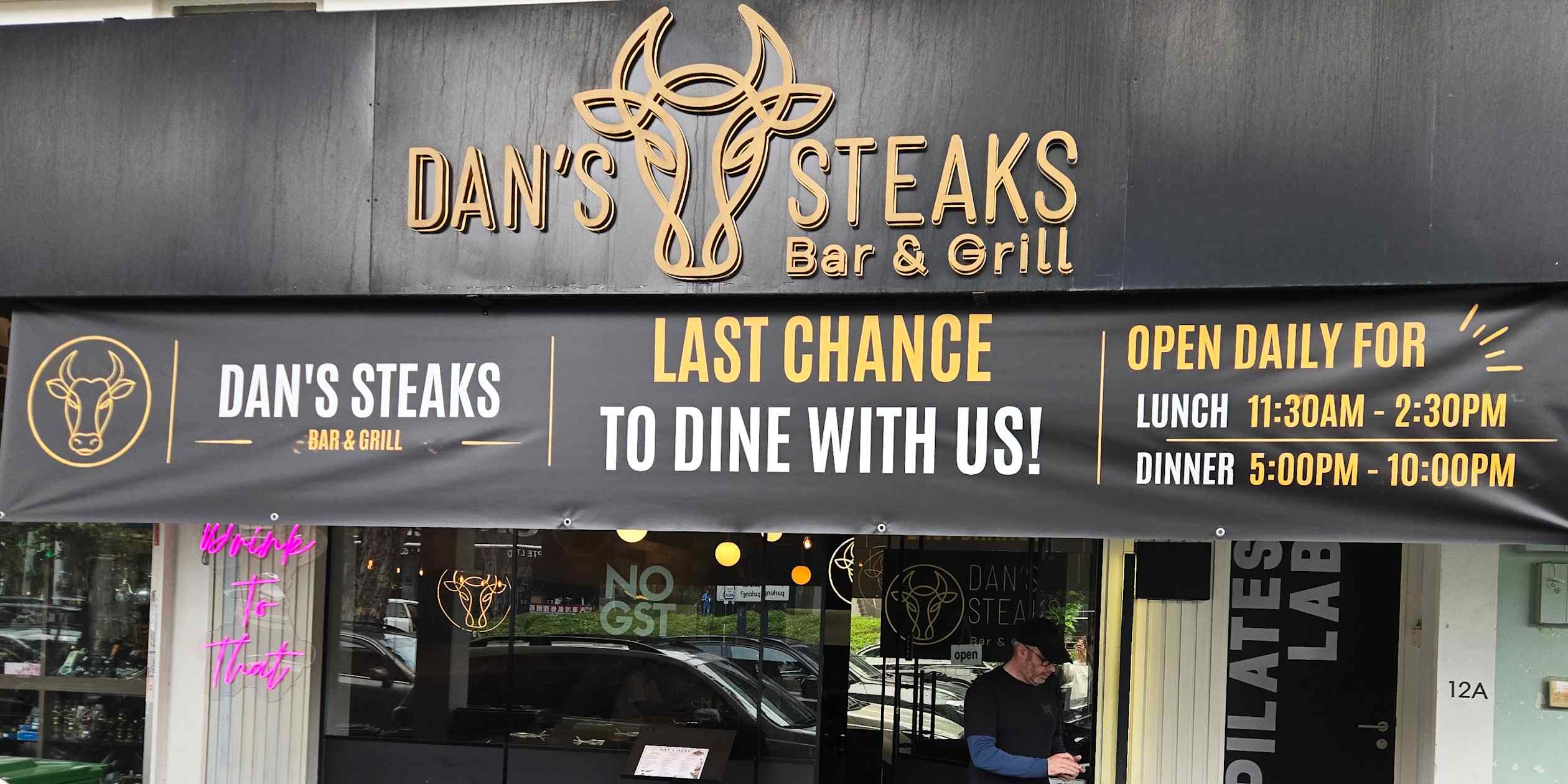
新加坡 — 丹牛排餐厅(Dan's Steaks)是一家由前广播电台DJ丹尼尔·翁(Daniel Ong)经营的连锁餐厅,在新加坡疫情期间通过向饥饿的顾客提供多汁的牛肉块而得以存活,如今却被另一股其无法控制的力量所击垮:通货膨胀。
SINGAPORE -- Dan's Steaks, a restaurant chain run by former radio DJ Daniel Ong that survived the COVID-19 pandemic serving up succulent cuts of beef to hungry customers in Singapore, is being humbled by another force beyond its control: inflation.
翁在7月宣布,他的餐饮业务正进入“最终章节”,准备在未来几个月“说再见”。目前已有三家分店关闭,他正准备关闭位于该城邦东北部住宅区的最后一家餐厅。
Ong in July announced his food and beverage business was entering its "final chapter," preparing to "say goodbye in the next months." With three outlets already closed, he is preparing to shut the remaining restaurant in the city-state's northeastern residential area.
“经营餐厅的现实已经改变。食材成本持续上升。人力成本持续上升。租金持续上升,”翁在其Facebook页面上解释道。“随着我们周围竞争日益激烈,持续经营已变得不可能。”翁的故事反映了新加坡服务业所感受到的压力,尽管该国近几个月因全球对人工智能的热情推动了对新加坡电子产品出口的需求,因而报告了亮眼的经济数据。
"The reality of running a restaurant has changed. Food costs continue to rise. Staff costs continue to rise. Rent continues to rise," Ong explained on his Facebook page. "With increasing competition all around us, it has become impossible to keep going sustainably." Ong's story reflects pressures felt across Singapore's services industry, even as the country has reported stellar economic numbers in recent months, thanks to the global fervor for artificial intelligence lifting demand for Singapore's electronics exports.
上周公布的7月至9月季度初步国内生产总值数据显示,较去年同期增长5.4%,因为稳定的人工智能相关需求提振了该城邦的制造业。尽管这一增速较4月至6月期间的6.2%有所放缓,但已连续第四个季度保持在5%以上,对发达经济体而言仍属较高水平。
Preliminary gross domestic product figures for the July-September quarter released last week showed growth of 5.4% from a year earlier, as steady AI-related demand boosted the city-state's manufacturing. While the expansion slowed from 6.2% in the April-June period, it topped 5%, still high for a developed economy, for the fourth consecutive quarter.
然而,这一技术浪潮对其他行业帮助不大,这些行业仍在努力应对消费者价格和企业开支的上涨。涵盖食品、房地产以及行政和支持服务的子行业在7月至9月期间的增长率从上一季度的2.4%降至2.1%。
The technology wave, however, has not given much help to other industries, which continue to struggle with rising consumer prices and business expenses. Growth in the subsector covering food, real estate and administrative and support services slipped to 2.1% in the July-September period from 2.4% in the previous quarter.
本月,反对党政治家林俊茂在议会中就餐饮服务行业拉响警报。“与制造业或其他可贸易服务如金融或软件不同,非贸易服务如餐饮(F&B)的生产率提升通常要低得多,”林俊茂说,他受过经济学家训练。“该行业本就微薄的利润空间被迫更直接地面临租金上涨和人力成本高企的双重打击,这种情况比大多数行业更为严峻。”根据9月份发布的官方统计数据,新加坡核心消费者通胀率在7月达到2%后,8月份同比升至2.2%。8月份的数据接近两年来的高点。
This month, opposition politician Jamus Lim sounded the alarm in parliament over the food services sector. "Unlike manufacturing, or other tradeable services like finance or software, productivity gains are generally much lower for nontradable services like F&B (food and beverages)," said Lim, an economist by training. "The sector's already razor-thin margins have been forced to confront the double whammy of rising rent and costly labor more directly than most." Singapore's core consumer inflation rose to 2.2%, year on year, in August after hitting 2% in July, according to official statistics released in September. The August figure was near a two-year high.
油价波动在过去几个月里推动了全球价格飙升,因为伊朗与美国及以色列之间的冲突使紧张局势持续升高,并限制了能源供应。新加坡的一些餐饮场所今年因成本飙升而提高了价格,例如电费增加。
Volatile oil prices have fueled price spikes globally in previous months, as the conflict between Iran and the U.S. and Israel keeps tensions high and constrains energy supplies. Some food and beverage outlets in Singapore raised prices this year in response to soaring costs, such as higher power bills.
而且,商业环境似乎恶化了。根据新加坡统计局本月发布的数据,餐饮业细分领域的销售额在8月份同比下降了1.6%。按类别划分,餐厅销售额下降了2.1%,咖啡馆销售额下降了5.3%,而美食广场及其他用餐场所的销售额下降了4.8%。
And the business environment appears to have worsened. According to data released this month by the Singaporean statistics department, sales in the food and beverage segment fell 1.6% on the year in August. By category, restaurant sales declined 2.1%, while cafe sales were down 5.3%, and food courts and other eating places saw them fall 4.8%.
“金融、信息与通信以及专业服务继续以稳健的步伐扩张,而面向消费者的及其他国内服务则落后,”新加坡华侨银行首席经济学家凌雪兰指出。
"Finance, information and communications, and professional services also continued to expand at a solid pace, while consumer-facing and other domestic services lagged," noted Selena Ling, chief economist at Singapore's Oversea-Chinese Banking Corp.
“这种分化导致了双速扩张:与建筑、贸易和先进电子相关的企业可能继续受益于强劲需求,而面向消费者的行业则面临更具挑战性的环境,尤其是在国内成本方面和金融条件收紧方面,”她说。
"This divergence creates a dual-speed expansion where businesses linked to construction, trade and advanced electronics may continue to benefit from strong demand, while consumer-oriented sectors face a more challenging environment, especially on the domestic cost front and tightening financial conditions," she said.
同样地,标普全球市场情报首席经济学家艾哈迈德·莫宾表示:“零售和餐饮服务业的疲软表现表明,国内需求不如GDP总体数据所暗示的那样旺盛。”政府正试图帮助受影响的企业。7月,它宣布为当地市场的小吃摊提供财政支持,从9月到明年2月为期六个月,以“减轻成本上涨的影响”。经营者每月将获得200新元(约156美元),可用于抵消每月租金。
Likewise, Ahmad Mobeen, principal economist at S&P Global Market Intelligence, said: "The softer performance of retail and food services suggests that domestic demand is less buoyant than the headline GDP figures imply." The government is trying to help affected businesses. In July, it announced financial support for food stalls at local markets, providing assistance "in mitigating the impact of cost increases" for six months, from September to February next year. Operators will receive 200 Singapore dollars ($156) a month, which they can use to offset their monthly rent.
新加坡金融管理局(即中央银行)上周在宏观经济形势审议中指出,通胀预计将“在接下来的几个季度左右维持在当前水平”,并“将在2027年中更明显地放缓”。该局预计,今年核心通胀平均将为1.5%至2.0%,2027年为1.5%至2.5%。与此同时,随着“人工智能驱动的技术上行周期放缓”和全球金融状况收紧,经济增长预计将放缓,它表示。
The Monetary Authority of Singapore, the central bank, in a review of macroeconomic conditions last week, highlighted that inflation is expected to remain "around current rates in the immediate quarters ahead," and "ease more discernibly from the middle of 2027." The authority expects core inflation to average 1.5% to 2.0% this year and 1.5% to 2.5% in 2027. Meanwhile, economic growth is predicted to slow as the "AI-driven technology upcycle moderates" and global financial conditions tighten, it said.