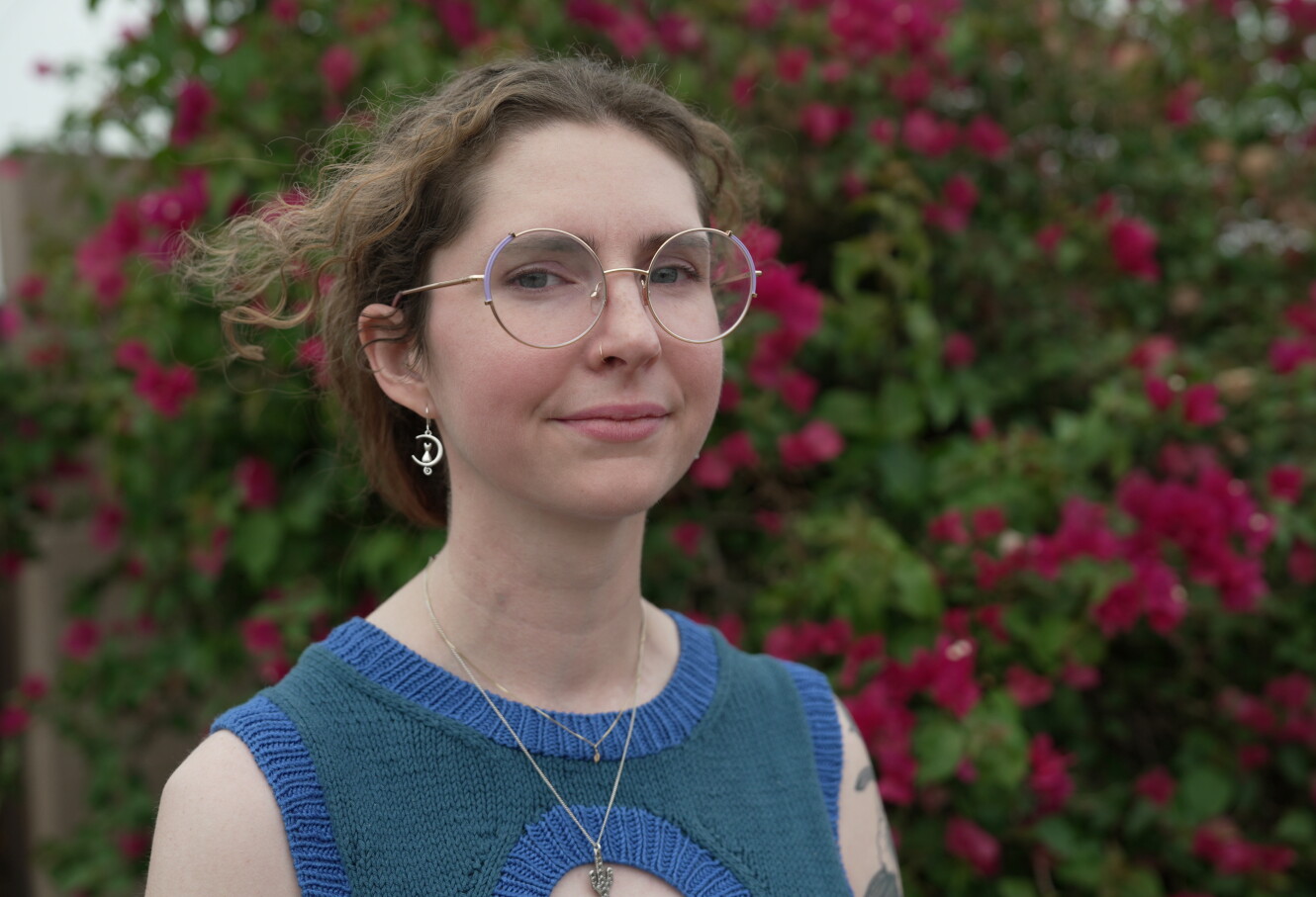
美联社记者 劳伦·尼尔高德(LAURAN NEERGAARD)报道 一场车祸摧毁了凯瑟琳·斯克鲁斯(Katherine Screws)的小肠,导致她无法进食,只能依靠静脉营养维持生命,经常病得连床都下不来。但这位凤凰城女子紧抓医院的预测不放:大约六个月后她就能接受肠移植。现实远非如此。直到车祸发生三年后,她才等来移植。
LAURAN NEERGAARD A car crash destroyed Katherine Screws’ small intestine, leaving her unable to eat, dependent on IV nutrition and often too sick to get out of bed. But the Phoenix woman clung to her hospital’s prediction that she could get an intestine transplant in about six months. That was way off. She wouldn’t get one until three years after the crash.
如果不是一次与器官获取组织(OPO)的不同寻常会面,等待时间可能更长。这次会面让备受折磨的斯克鲁斯了解到,不同医院接受或拒绝器官的标准各不相同——于是她飞越半个美国,去另一家医院碰运气。
It could have been longer if not for an unusual meeting with an organ procurement organization, or OPO, that taught the frustrated Screws how hospitals vary in which organs they accept or refuse — and she flew across the country for a better chance.
“我希望患者能更清楚地知道:什么时候会有适配的器官出现,为什么不适配,”斯克鲁斯说。她在新医院短短几周内就完成了移植。她后悔没有早点问:“到底是什么在拖延这一切?” 斯克鲁斯的经历表明,移植系统往往难以让患者了解那些极其难以自行驾驭的选择。这些选择包括:去哪里就医、是否登记多家医院的移植等待名单、如何讨论是否接受非完美器官而不是继续等待。而在幕后,有效器官可能被浪费。约五分之一的捐献器官未被使用,通常是因为来不及找到合适受体。
“I wish that there was more clarity with patients about when is an organ coming up that could be a match for you and why is it not a match,” said Screws, who received a transplant at her new hospital in just weeks. She wishes she had asked sooner, “What is the thing that’s holding this up?”Screws’ journey shows how the transplant system often struggles to inform patients about options that can be incredibly difficult to navigate on their own. Among them are where to seek care, whether to get on multiple hospitals’ transplant lists, and how to discuss if you’d accept a less-than-perfect organ rather than continue waiting. And in the background, viable organs can be wasted. About 1 in 5 donated organs go unused, usually because a recipient wasn’t found in time.
对于最常见的肾移植,一项大型研究发现,“不同中心患者获得移植的速度存在约16倍的差异,”纽约大学朗格尼健康中心(NYU Langone Health)的赛义德·阿里·侯赛因(Dr. Syed Ali Husain)医生表示,他研究此类差异。
For kidney transplants, the most common type, a large study found “there’s about a 16-fold variation in how quickly a patient will get transplanted at one center versus another,” said Dr. Syed Ali Husain of NYU Langone Health, who researches such differences.
他说,原因之一是有些外科医生在使用解剖结构复杂(如多出动脉)的肾脏,或来自年老、身体较差捐献者的肾脏方面经验更丰富,而这些肾脏对合适的患者而言,仍可能优于透析。
One reason is that some surgeons have more experience than others using kidneys with complex anatomy like extra arteries, or those from older, sicker donors that still may be better than dialysis for the right patient, he said.
关于肠道移植等罕见移植类型的信息要少得多,肠道在生物学上比某些其他器官更难处理。
There’s far less information about rare types of transplants like the intestine, which is biologically more difficult to handle than some other organs.
“我们提供,但它们被拒绝的次数太多,令人沮丧,”加州OneLegacy组织的丽莎·斯托克斯说,该组织是美国最大的器官采购组织之一,她向斯克鲁斯展示了相关数据。
“We offer them but they’re declined so often that it’s demoralizing,” said Lisa Stocks of California’s OneLegacy, one of the nation’s largest OPOs, who showed the data to Screws.
去年,美国仅有88人接受了新肠道移植,而肾脏移植则超过27000例。
Screws was one of just 88 people in the U.S. to receive a new intestine last year, compared with more than 27,000 kidney transplants.
无论是什么器官,大多数患者都不知道该问什么,明尼苏达州亨内平医疗保健研究院的艾莉森·哈特博士说。她帮助设计了一个新的患者友好型在线数据库的工具,该数据库可以帮助人们比较不同移植医院的等待时间和其他特征。
Whatever the organ, most patients don’t know what to ask, said Dr. Allyson Hart of Minnesota’s Hennepin Healthcare Research Institute. She helped design tools for a new patient-friendly online database that can help people compare waiting times and other characteristics of different transplant hospitals.
哈特说,太多患者认为“他们只需要等五年就能接受移植”,而实际上“情况往往并非如此”。去年美国进行了4万多例移植手术,有史以来最多的人正在接受新器官。这主要归功于过去十多年来来自已故捐赠者的捐赠不断增加,器官采购组织作为移植医院的桥梁,负责回收这些器官。
Too many patients think “they just needed to wait for five years and they would get transplanted,” Hart said, when often “that’s actually not what happens.”With just over 49,000 transplants performed in the U.S. last year, more people than ever are getting new organs. That’s mostly thanks to over a decade of increases in donations from the deceased, recovered by OPOs that act as a bridge to transplant hospitals.
但目前约有10万人等待移植,绝大多数人需要肾脏。捐赠者登记人数近期有所下降,人口老龄化意味着器官越来越多来自年龄较大、健康状况较差的捐赠者,因此对回收和使用更多捐赠器官的压力日益增大。与此同时,政府正在对移植系统进行为期数年的改革。
But about 100,000 people are awaiting a transplant, the vast majority of whom need a kidney. There’s growing pressure to retrieve and use more donated organs , even as donor registrations recently dipped and an aging population means organs increasingly come from older, sicker donors. And the government is in the midst of a yearslong overhaul of the transplant system.
一项待定的举措威胁要根据一项有争议的评级体系关闭美国55家器官采购组织中的一些,该体系要求它们对所获取器官的数量以及实际移植的数量负责——它们认为后者不在其控制范围之内,因为外科医生决定哪个器官适合其患者。包括OneLegacy在内的一些组织正参与旨在阻止此类关闭的诉讼。
One pending move threatens to close some of the nation’s 55 OPOs under a controversial grading system that holds them accountable for the number of organs they procure and how many are transplanted — the latter, they argue, being out of their control because surgeons decide when an organ is right for their patient. Some, including OneLegacy, are part of lawsuits seeking to block such closures.
监管机构也会对医院进行评估;Husain指出,医院之所以不愿意使用质量稍有问题的器官,很大程度上是因为担心如果这些器官出现故障,医院的评估分数会下降。
Regulators also grade hospitals, and Husain said some of the reluctance to use less-than-perfect organs has long stemmed from concern about getting a lower score if even a few of them fail.
美国医疗保险系统(Medicare)正在开展一项试点项目,旨在通过经济激励或处罚措施来促使医院增加肾脏移植手术的数量,从而减少捐赠器官的浪费。
Medicare is running a pilot project to see if financial incentives or penalties will push hospitals to perform more kidney transplants, so fewer of those donated organs go to waste.
2024年底,全国各地的器官采购组织(Organ Procurement Organizations, OPOs)开始收到Screws及其家人的来信。信中详细讲述了Screws在2022年5月遭遇车祸的经过:那次车祸发生在她结婚一个月后,导致她的小肠被切除(小肠是负责消化食物和吸收营养的器官)。这位自称“热爱美食”的女性现在只能通过静脉输液来获取营养,但这让她感到极度恶心,无法继续从事工程师的工作,也无法实现与丈夫共同组建家庭的计划。
In late 2024, OPOs around the country began receiving emotional letters from Screws and some of her family members. They detailed how a May 2022 car crash, a month after her wedding, required the removal of Screws’ small intestine, the organ that breaks down food and absorbs nutrients. The self-described “passionate foodie” who loves to cook now got all her nutrition from an overnight IV drip that left her severely nauseous and unable to return to her engineering job or pursue plans with her husband to start a family.
Screws写道:“这场事故彻底毁了我的生活,等待新器官的过程简直痛苦不堪。”她还提到,她的主治医生认为“器官采购组织可能对小肠移植手术的重要性认识不足”。她请求器官采购组织确认他们的匹配程序是否能够正确地寻找和优先处理小肠捐赠。对于那些需要尽可能多回收器官的器官采购组织来说,这个问题的提出令人震惊——他们虽然与逝者家属保持着密切合作,但很少收到潜在受赠者的咨询。
“This accident completely derailed my life and the wait for a new organ has been excruciating,” wrote Screws, adding that her original transplant doctors “feel that it is possible there is a lack of awareness of small bowel transplant among organ procurement organizations.”She asked that the OPOs “confirm your organization’s matching programs are properly searching for and prioritizing small intestine donations.”To OPOs required to recover as many organs as possible, it was a shocking question. They work closely with grieving relatives of deceased donors but seldom get questions from would-be recipients.
护士Stocks意识到,器官采购组织掌握着能够帮助患者为自己争取权益的重要信息,于是开始仔细查阅相关记录。
Stocks, the OneLegacy nurse, realized OPOs have data that could help patients advocate for themselves, and started combing records.
每个移植中心都有自己的器官专用等待名单,这些名单连接到全国自动匹配系统。负责每位捐献者的器官采购组织(OPO)录入被认为适合使用的器官信息,从而在多家医院生成按优先顺序排列的可能匹配名单。即使患者符合基本生物学特征,如果外科医生增加了一些额外要求——例如希望捐献者年龄在40岁以下——该患者仍可能不会出现在候选名单上。
Every transplant center has its own organ-specific waiting list linked to a nationwide automated matching system. The OPO in charge of each deceased donor enters information about organs deemed suitable for use, which generates lists of possible matches at multiple hospitals in order of priority. A patient who matches baseline biological characteristics still might not show up as a candidate if the surgeon added some additional requirements, such as wanting a donor to be younger than 40.
移植团队必须根据化验检查、扫描和其他医疗记录,快速决定是否接受器官。如果拒绝,该器官将转而提供给下一位可能匹配的医院。
Transplant teams must quickly decide on an offer, based on lab tests, scans and other medical records. If they decline, the organ then is offered to the hospital with the next-in-line possible match.
“这是正确的捐献者,在正确的时间。这些事情你永远无法预测,”华盛顿梅德斯塔乔治城大学医院的卡尔·马茨莫托医生说。这是斯克鲁斯登记的第二家移植中心,也是她最终接受新肠移植的地方。
“It’s the right donor at the right time. You can never predict these things,” said Dr. Cal Matsumoto at MedStar Georgetown University Hospital in Washington, the second transplant center where Screws registered, and where she wound up getting a new intestine.
器官回收手术开始前,匹配过程就已启动,距离也起着作用,因为有些器官在体外能保存的时间比其他器官更长。通常,外科医生会亲自前往取出某些难以处理的器官,而不是依赖当地外科医生取回并运输。
Matching begins before surgery to recover the organs, and distance also plays a role, as some organs last longer than others outside the body. Oftentimes, surgeons travel to personally remove certain tricky-to-handle organs rather than relying on a local surgeon to retrieve and ship them.
“一般来说,如果是一个非常好的捐献者,可以说,会有心脏团队、肺团队、胰腺团队和肝脏团队,因此即使只是安排回收手术,也需要大量协调,”马茨莫托说。对于肠道移植,他补充说,还涉及外科医生协商如何分配附近腹部器官共享的关键血管。
“Generally if it’s a very good donor, so to speak, there’s going to be a heart team, a lung team, a pancreas team and a liver team, so there’s a lot of coordination” even to schedule recovery, said Matsumoto. For intestines, he said, that also involves surgeons negotiating how they’ll divide critical blood vessels shared by nearby abdominal organs.
但这一过程远非完美:去年发表的一项研究显示,一组在等待名单上死亡的肾脏患者,其移植团队拒绝的器官报价中位数为25个——这些器官最终被用于其他人。
But the process is far from perfect: In a study published last year, a group of kidney patients who died on the waiting list had a median of 25 organ offers their transplant team had declined — organs that were eventually used in someone else.
事实证明,在2024年期间,Screws所在地区的器官采购组织(OneLegacy)曾向她提出过九次器官移植的提议,但都被她拒绝了。Screws表示,她与移植团队进行了坦诚的沟通,了解了这些提议被拒绝的具体原因(例如在器官获取技术方面的要求),这有助于她更好地评估未来的潜在捐赠者。
It turned out that Screws’ local OPO, OneLegacy, had made nine offers for her during 2024 that were all rejected. Stocks said she had “candid conversations” with the transplant team about why they were declined, such as technical preferences about the retrieval, so she’d know better how to evaluate potential new donors.
与此同时,Screws还向医生学习了如何使用由“科学移植受者登记系统”(Scientific Registry of Transplant Recipients)提供的数据库,以决定是否应该前往那些更擅长进行肠道移植手术的医院寻求治疗。
Meanwhile, Stocks also showed Screws how to use a database run by the Scientific Registry of Transplant Recipients to decide whether to also seek care at a hospital that does more intestine transplants.
2025年6月,在经历了“器官信息双重登记”(即她的信息被同时录入多个器官采购系统的过程)几周后,Screws在乔治城大学医院接受了新的肠道移植手术。她得知,这枚捐赠器官来自芝加哥的捐赠者。虽然这枚器官的长度超过了常规移植所需的长度,但Matsumoto医生表示移植手术最终仍然成功完成了。
In June 2025, just a few weeks after “double listing,” Screws received a new intestine at Georgetown. It came, she learned, from a donor in Chicago. It was longer than is usually transplanted, but Matsumoto said it wound up fitting fine.
Screws最初的就诊医院——UCLA Health医院以患者隐私为由拒绝置评,仅表示他们遵循联邦移植指南,并且移植团队“一直在努力改进服务流程”。尽管UCLA Health医院的肠道移植项目规模较小,但该医院仍是肾脏等器官移植手术的主要提供者。
Screws’ original hospital, UCLA Health, cited patient privacy rules in declining to comment except to say that it follows federal transplant guidelines and that its transplant teams “continuously strive to enhance processes in service to our patients.”While its intestine program is small, UCLA is a major provider of kidney and other transplants.
Screws明确表示,她的不满并非针对医生个人,而是针对缺乏关于移植流程的统一、易于理解的信息。在她遇到移植协调员之前,她根本不知道还有这样的器官采购组织存在;她也没有意识到在捐赠者和移植医生之间必须有一个有效的沟通桥梁。
Screws is careful to say her frustration wasn’t with her doctors, but with the lack of centralized, easy-to-understand information about what to expect. She had never heard of OPOs until her transplant coordinator mentioned them or realized there had to be a bridge between donors and transplant surgeons.
“我最大的感悟是,选择合适的器官其实比我之前想象的要复杂得多、主观性也更强,”Screws说道。“我的移植器官体积较大,也许换作其他医生可能就不会接受它了。”
“My main takeaway was that there is more subjectivity to selecting an organ than I would have previously thought,” Screws said. Hers was “larger than average and maybe another surgeon wouldn’t have accepted that.”