
丹麦金融监管机构指出,随着诺和诺德公司引领的制药业热潮逐渐降温,该国经济增速预计将有所放缓,行业增长步伐也将趋于与整体经济水平相当。
Denmark‘s economy is heading for slower growth as the pharmaceutical boom led by Novo Nordisk A/S loses steam and the industry settles into a pace more in line with the rest of the economy, the country’s financial watchdog said.
诺和诺德及其他丹麦制药企业的兴衰正日益影响本国经济,波及劳动力市场、利率乃至丹麦克朗汇率。总体而言影响积极:诺和诺德研发的奥泽美匹克与韦戈维这两款畅销药物有力推动了这个仅有600万人口的北欧国家的经济增长。不过,由于肥胖症治疗领域的竞争日趋激烈,该公司近期发展势头有所减弱,这一趋势已开始体现在各项宏观经济指标中。
The shifting fortunes of Novo and its Danish peers are increasingly influencing the local economy, affecting the labor market, interest rates and even the country’s currency, the krone. The impact has largely been positive, with Novo’s blockbuster drugs Ozempic and Wegovy powering growth in the Nordic country of 6 million people, but the company’s recent slowdown amid intensifying competition in obesity treatments is starting to show up in national indicators.
这家独立政府咨询机构“经济委员会”在周二发布的秋季报告中预测:尽管药品销售将推动今年国内生产总值增长4.2%,但到2027年增速将降至1.8%,次年更将进一步降至1.3%。
While medicine sales will help gross domestic product grow 4.2% this year, the pace will slow to 1.8% in 2027 and to 1.3% the year after, the Economic Councils, an independent government adviser, said in its autumn report published on Tuesday.
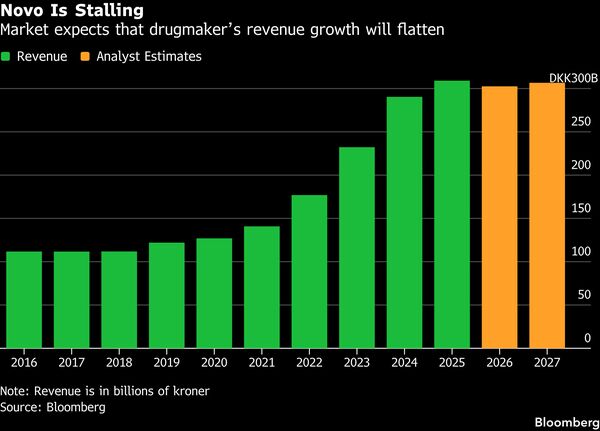
该监管机构称:“各类指标显示,未来一段时期制药业的生产增速将趋于平缓。未来几年该行业的特殊贡献效应将逐渐消失,其增长水平预计也将与普通城市私营产业基本持平。”诺和诺德及其他丹麦制药企业的成功还显著增加了政府财政收入,致使财政部多次上调2035年之前的财政盈余预期。不过监管机构周二指出,财政部的预测过于乐观:实际盈余预计仅为860亿丹麦克朗(约合129亿美元),较政府预期少了约180亿丹麦克朗。
“Indicators for the pharmaceutical industry point to more moderate production growth in the coming period,” the watchdog said. “The extraordinary contribution from the pharmaceutical industry will cease in the coming years, and its growth is instead forecast to be roughly the same level as the remaining part of private urban industries.”The success of Novo and other Danish drugmakers has also bolstered government revenue with the finance ministry repeatedly upgrading its estimate of the fiscal space available through 2035. However, the watchdog said on Tuesday that the ministry is too optimistic, estimating the surplus at 86 billion kroner ($12.9 billion), or about 18 billion kroner less than the government forecast.