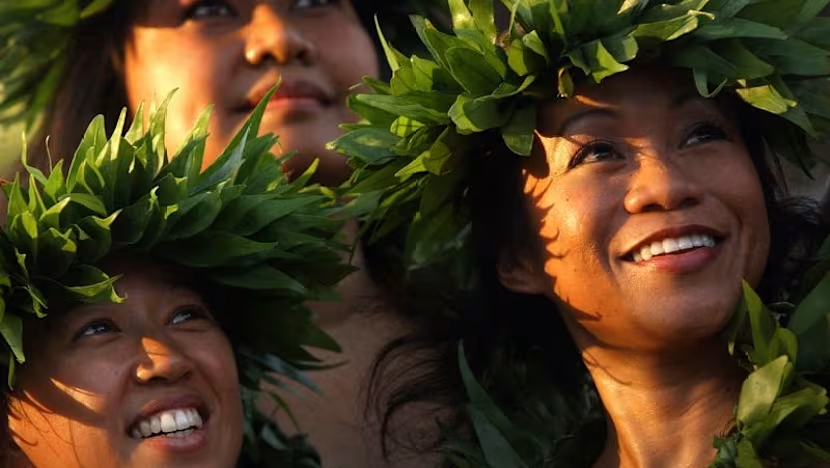
10月20日:这是一项艰难、几乎难以理解的壮举。一群来自南太平洋复活节岛的航海者乘坐双体帆船出发,横渡地球上最大的海洋,航程超过4400英里(7100公里),最终抵达夏威夷——北半球唯一的波利尼西亚岛屿。
Oct 20 : It was a difficult, almost incomprehensible, feat. A band of seafarers from Easter Island in the South Pacific set off in double-hulled sailing canoes on a voyage across Earth's largest ocean that ended more than 4,400 miles (7,100 km) away in Hawaii, the only Polynesian island in the Northern Hemisphere.
但几个世纪前的这场海洋奇迹并非神话。新的基因研究确定,夏威夷原住民与复活节岛(又称拉帕努伊)居民的基因关系最为密切。
But this oceanic odyssey centuries ago was no myth. New genetic research has determined that Native Hawaiians are genetically most closely related to the people of Easter Island, also called Rapa Nui.
“利用全基因组,我们的算法可以找到不同岛屿个体之间完全匹配的DNA序列,这是共同祖先留下的遗产。从这些数据中,我们可以构建各岛屿的家谱,”斯坦福大学计算遗传学家亚历山大·伊奥安尼迪斯说,他是该研究的共同高级作者,该研究发表在《科学》杂志上。
"Using whole genomes, our algorithms can find DNA sequences matching perfectly between individuals on different islands, the legacy of common ancestors. From these data we can create family trees of the islands," said Stanford University computational geneticist Alexander Ioannidis, co-senior author of the study published in the journal Science.
研究结果表明,来自复活节岛的人口是夏威夷的奠基人口,他们是首批定居这个茂密火山岛链的人类。
The findings point to a founding population of people from Easter Island arriving in Hawaii as the first humans to settle the lush volcanic island chain.
数据显示,定居复活节岛的人是在1200年代从法属波利尼西亚的芒加雷瓦岛(距离超过1500英里,即2400公里)迁徙而来的,随后其中一部分人出发前往夏威夷。伊奥安尼迪斯表示,这次航行很可能发生在同一个世纪。
The data indicated that the people who settled Easter Island arrived there in the 1200s after journeying from Mangareva island in French Polynesia, more than 1,500 miles (2,400 km) away, and that a subset of them subsequently set off for Hawaii. That voyage likely occurred in the same century, Ioannidis said.
“我们检查了共享DNA片段、遗传变异以及数千个重建的家谱。在61%的家谱中,夏威夷和拉帕努伊被配对在一起。我们用四种不同的方法进行了核查,因为坦率地说,我们一开始都目瞪口呆,自己都不敢相信,”加州大学圣地亚哥分校基因组学家、该研究共同高级作者凯奥卢·福克斯说。伊奥安尼迪斯表示,这将是一次不可思议的旅程。
"We examined shared segments of DNA, genetic variation and thousands of reconstructed family trees. In 61 per cent of those trees, Hawaii and Rapa Nui were paired together. We checked it four different ways because, frankly, we were dumbfounded and couldn't believe it ourselves at first," said genome scientist and study co-senior author Keolu Fox of the University of California, San Diego. It would have been an incredible journey, Ioannidis said.
伊奥安尼迪斯说:“他们乘坐独木舟,带上了在新定居的岛屿上所需的植物,包括香蕉、芋头和红薯,以及鸡等动物。据信,波利尼西亚人会横跨数千英里的海洋出航,以发现资源丰富、适合定居的新岛屿。”
"In their canoes, they brought with them plants that they would need on the newly settled island, and they included bananas, taro and sweet potato, as well as animals like the chicken. It is believed that the Polynesians would embark on these voyages across thousands of miles of ocean in order to discover new islands rich in resources and land to settle," Ioannidis said.
研究人员根据揭示当今各波利尼西亚岛屿居民之间亲缘关系的基因数据,拼凑出这些久远的航程,分析了1000多名波利尼西亚人的DNA。其中包括317名夏威夷原住民、12名拉帕努伊人和8名芒加雷瓦人,以及来自社会群岛、土阿莫图群岛、马萨斯群岛、奥斯特拉尔群岛、萨摩亚群岛和汤加群岛的其他人。
The researchers pieced together these long-ago journeys based on genetic data revealing the relatedness of present-day people from various Polynesian islands, analyzing DNA from more than 1,000 Polynesian people. These included 317 Native Hawaiians, 12 Rapa Nui and 8 Mangarevans, as well as others from the Society, Tuamotu, Marquesas, Austral, Samoan and Tongan islands.
基因数据显示,对于夏威夷原住民来说,芒加雷瓦人的血统仅次于复活节岛血统。
The genetic data showed Mangarevan ancestry was second only to Easter Island ancestry for Native Hawaiians.
巨大的海上横渡 研究人员将这些巨大的海上横渡归功于一个他们称之为“霍洛莫阿努伊”的超级航海族群,这是夏威夷语中“伟大的海洋航行”的说法,夏威夷是到达的最后一个目的地。
MONUMENTAL SEA CROSSINGS The researchers attribute these monumental sea crossings to an ultravoyaging population they call Holomoana Nui, the Hawaiian phrase for "great ocean voyaging," with Hawaii as the last destination reached.
福克斯说,他们是人类历史上最伟大的航海社群。福克斯本人是夏威夷原住民。
They were the greatest voyaging community in human history, according to Fox, who is a Native Hawaiian.
福克斯说:“波利尼西亚人在欧洲人开始其著名的发现航行几个世纪前,就已在探索和定居太平洋。也许是时候重新思考我们称谁为探险家了。”利用基因数据,研究人员此前曾追踪波利尼西亚航海者在数个世纪中到达一系列岛屿,这是人类历史上最令人印象深刻的定居壮举之一,但那项研究只将他们追踪到复活节岛。
"Polynesians were exploring and settling the Pacific centuries before Europeans began their celebrated voyages of discovery," Fox said. "Perhaps it's time to rethink who we call explorers." Using genetic data, the researchers previously tracked how Polynesian voyagers reached a succession of islands over a period of centuries in one of the most impressive settlement feats in human history, but that study traced them only as far as Easter Island.
塔希提的建立 新研究对社会群岛之一、也是研究人员拥有最多基因组数据的地点塔希提的人群进行了详细的基因组分析。他们能够估算建立一代人的规模和时间——大约800人在公元1070年左右到达塔希提。
THE FOUNDING OF TAHITI The new study included a detailed genomic analysis of people from Tahiti, one of the Society Islands and the locale for which the researchers had the most genomes. They were able to estimate the size and date of the founding generation — roughly 800 people reaching Tahiti around the year 1070.
“由于前往夏威夷的航程要长得多,我们预期其建立种群的规模不会更大,而且很可能更小,”伊安尼迪斯说。
"Since the voyage to Hawaii was much longer, we would expect its founding population size to have been no larger and likely smaller," Ioannidis said.
夏威夷原住民和复活节岛民与东波利尼西亚人共享许多文化特征,包括相似的南岛语系语言和相似的食物,伊安尼迪斯说。
Native Hawaiians and Easter Islanders share many cultural traits found among eastern Polynesians, including a similar Austronesian language and similar foods, Ioannidis said.
这项研究对夏威夷原住民及其他波利尼西亚人的疾病风险具有影响,原因是被称为“奠基者效应”的基因瓶颈。当人口的一小部分分离出来并建立新种群时就会产生这种现象,就像波利尼西亚人每次前往并定居新岛屿时所做的那样。这种基因库的缩小会放大某些有时与疾病相关的罕见遗传变异的频率,而其他变异则完全消失,伊安尼迪斯说。波利尼西亚人反复在新土地上定居的模式加剧了这种效应。
The study has implications for disease risk among Native Hawaiians and other Polynesians due to genetic bottlenecks called "founder effects." These arise when a small portion of a population separates and founds a new population, as the Polynesians did each time they ventured to and settled on a new island. This narrowing of the gene pool can amplify the frequency of some rare genetic variants sometimes related to diseases, while others vanish entirely, Ioannidis said. The Polynesians repeated the pattern of settling on new lands, intensifying the effect.
“反复的奠基者效应使波利尼西亚人群中的罕见疾病相关变异集中。我们在法属波利尼西亚发现了与肾脏疾病和失明相关的变异,其频率出奇地高,”福克斯说。
"Repeated founder effects concentrated rare disease-associated variants in Polynesian populations. We identified variants linked to kidney disease and blindness that occur at surprisingly high frequencies in French Polynesia," Fox said.
奠基者效应在包括阿米什人、阿什肯纳兹犹太人和芬兰人在内的某些人群中已得到广泛研究,从而为他们中的某些遗传病制定了标准筛查。“为什么夏威夷人不行呢?”福克斯问道。
Founder effects have been extensively studied in certain populations including the Amish, Ashkenazi Jews and Finns, leading to standard screenings for certain genetic conditions for them. "Why not Hawaiians?" Fox asked.