别再纠结于那些位于地球上的数据中心了——在今年年底之前,惠普企业(Hewlett Packard Enterprise,简称HPE)的AI技术将会在月球上得到应用!这可不是某个高管异想天开的幻想。多年来,HPE一直在为国际空间站(ISS)开发用于太空计算的硬件平台。如今,他们将第四代“Spaceborne Computer”通过Astrolab公司的“Flex Lunar Innovation Platform”(FLIP)月球探测车送上了月球。
Forget space datacenters. Before the end of the year, Hewlett Packard Enterprise (HPE) will have AI running on the Moon. This isn’t some exec’s loony fantasy either. HPE has been building orbital compute platforms for the International Space Station (ISS) for years. Now, it’s sending its fourth-gen Spaceborne Computer to the Moon aboard Astrolab’s Flex Lunar Innovation Platform (FLIP) lunar rover.
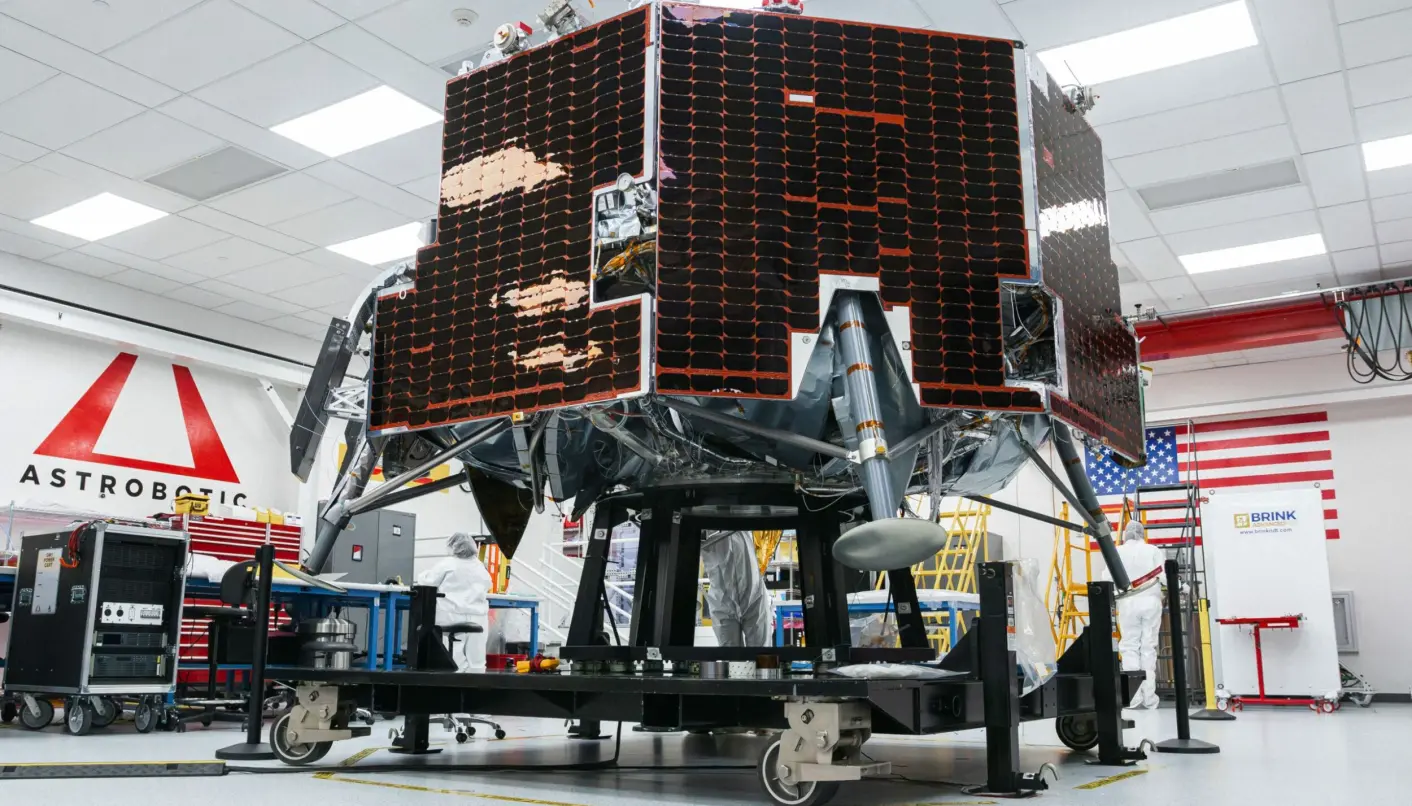
作为NASA“商业月球载荷服务”(Commercial Lunar Payload Services,简称CLPS)计划的一部分,这辆探测车将由Voyager Technologies公司的Griffin-1着陆器在今年晚些时候部署在月球南极附近。如果着陆成功,FLIP将成为多种新兴技术的测试平台,其中包括HPE最新的太空计算系统——我们简称其为“SBC4”。
Part of NASA’s Commercial Lunar Payload Services (CLPS) program, the rover is set to be deployed near the Moon’s south pole by the Voyager Technologies Griffin-1 lander later this year. Assuming a safe landing on the surface, FLIP will serve as a test bed for a range of emerging technologies including HPE’s latest space-faring compute platform. Specifically, Spaceborne Computer 4, which for the sake of brevity we’ll just call SBC4, will carry out a number of AI and HPC-centric experiments during the rover’s year long mission on the lunar pole.
关于SBC4的详细信息:目前我们还不清楚其具体的硬件配置。据透露,这种保密措施主要是由于任务本身的高风险性所致:如果硬件出现故障,HPE的合作伙伴自然不希望自己的名字因此而受到负面影响。不过,Kioxia公司似乎对此并不太在意。我们知道的是,SBC4配备了低功耗的中央处理器和图形处理器,并配备了总容量为1TB的Kioxia固态硬盘。
What we know about SBC4 so far The actual silicon powering SBC4 is still a bit of a mystery. We’re told the reason for the secrecy largely comes down to the high-risk nature of the mission. If the hardware fails, HPE’s compute partner doesn’t want their name tied to it. No guts but for the glory, we suppose, though Kioxia doesn't seem too worried. What we do know is that it is equipped with a low-power central processing unit, a graphics processor, and will be equipped with a pair of mirrored Kioxia SSDs totaling 1 TB of capacity.
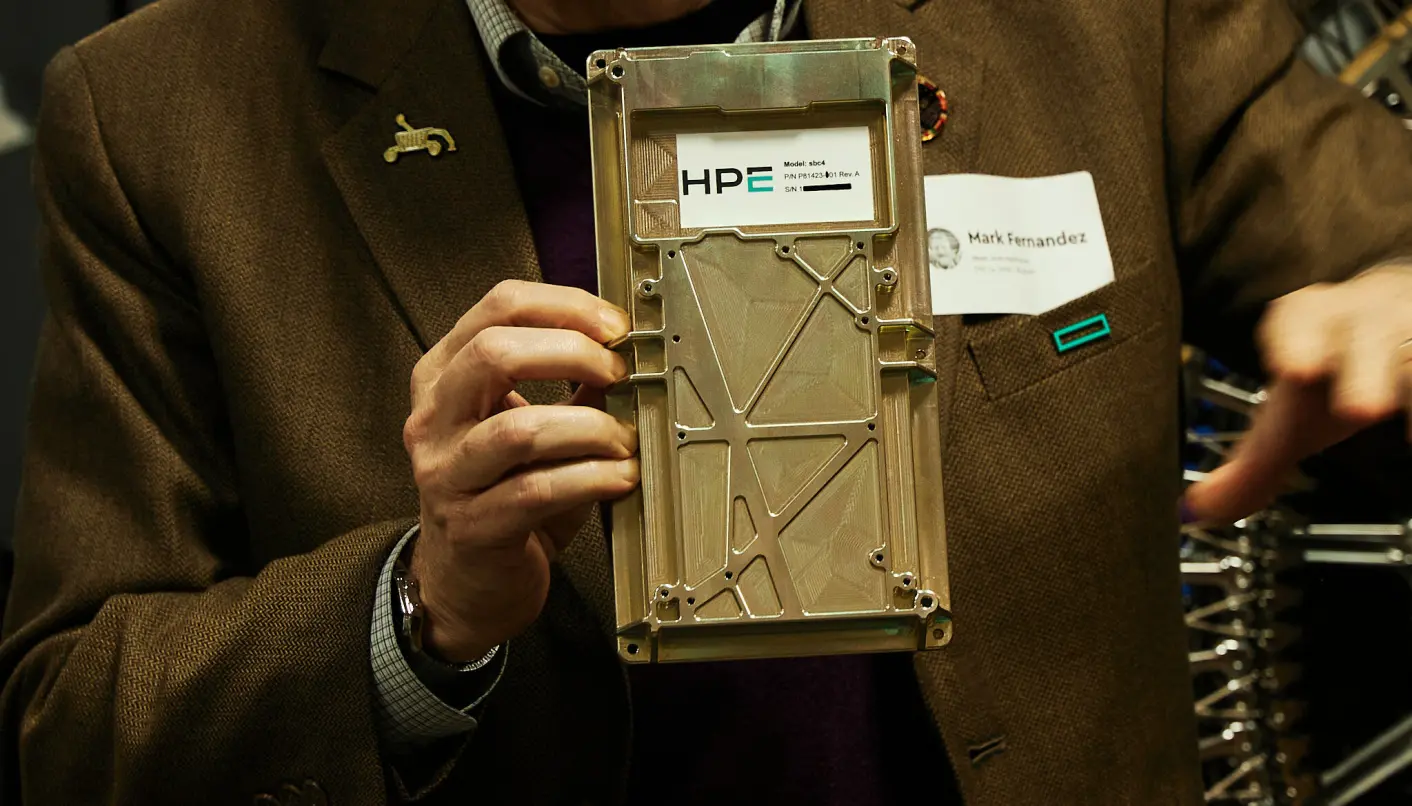
尽管SBC4将是月球上最强大的计算机之一,但它本身的体积仍然非常小巧。由于FLIP探测车的能源和散热能力有限,它的体积也受到了限制(尺寸约为5×10英寸,厚度约1英寸)。虽然不算特别大,但它仍然足以容纳多种计算设备。事实上,SBC4可能使用的是Nvidia的GB10处理器、AMD的Xilinx Versal AI芯片,或者甚至是旧智能手机的硬件组件来运行。
That said, while it'll be among the most powerful computers on the Moon, it's still a pretty small system. The FLIP rover doesn't have an unlimited power or thermal budget. The rover's radiators can only dissipate so much heat. Measuring in at around 5x10 inches and about an inch thick, while not a particularly big system, it's still large enough to house any number of existing compute platforms. For all we know, it could be powered by Nvidia’s GB10, AMD’s Xilinx Versal AI, or the guts of an old smartphone.
我们只有等到它启动才能知道。不那么神秘的是,SBC4将运行什么以及运行在哪里。美国宇航局计划在该系统上运行一系列经过调优的大语言模型测试,包括一个检索增强生成(RAG)系统,用于协助搜索和解读船载文档。此外,该系统还将负责对摄像头和激光雷达数据运行机器学习算法。然而,由于不知道这些大语言模型有多大,很难推断底层硬件的性质。
We won't know until the thing powers up. Less of a mystery is what SBC4 will be running and where. NASA plans to run a series of tuned LLM tests on the system, including a retrieval augmented generation (RAG) system to assist with searching and interpreting onboard documents. Additionally, the system will be tasked with running machine learning algorithms against camera and LiDAR data. However, without knowing how large these LLMs are, it’s hard to infer the nature of the underlying hardware.
我们被告知,等SBC4运行起来后,将会有更多关于为其提供动力的芯片的细节。与人工智能一道,SBC4还将运行多项高性能计算(HPC)基准测试,旨在将系统推向极限。这些基准测试包括高性能Linpack(HPL)和高性能共轭梯度(HPCG),这意味着HPE和Astrolab很快将拥有首个从天体提交的Top500成绩的殊荣。HPE的系统不仅为地球上一些最快的超级计算机提供动力,很快还可能在月球上占据第一名——不过那并不是什么很高的门槛。
We’re told to expect more details about the chips powering SBC4 once it’s up and running. Alongside AI, SBC4 will also run several high performance computing (HPC) benchmarks designed to push the system to its limits. These benchmarks include high performance Linpack (HPL) and high performance conjugate gradient (HPCG), which means HPE and Astrolab will soon hold the distinction of the first Top500 submission made from a celestial body. Not only do HPE’s systems power some of the fastest supercomputers on Earth, but they could soon hold the number one spot on the Moon — not that that’s a particularly high bar.
除了吹嘘的资本,像HPL这样的工作负载可能还有其他好处,例如帮助月球车在其任务期间反复经历的大约14天长的夜间循环中避免结冰。为月球强化SBC4月球车及其延伸的SBC4将不得不应对发射和着陆期间的极端振动应力、剧烈的温度波动,更不用说宇宙射线和太阳辐射,因为月球缺乏保护地球计算设备的厚厚大气层和磁场。
Beyond bragging rights, a workload like HPL could have other benefits like helping to keep the rover from icing over during the roughly 14-day-long night cycles the rover will repeatedly endure over the course of its mission. Hardening SBC4 for the Moon The Rover and by extension SBC4 will have to contend with extreme vibration stresses during launch and landing, wild temperature swings, not to mention cosmic rays and solar radiation since the Moon lacks the thick atmosphere and magnetic field that shields terrestrial compute.
但事实证明,辐射可能没有你想象中那么大的问题。据Fernandez介绍,SBC4主要由现成组件组装而成,包括固态硬盘。该计算平台使用标准的Kioxia BG6 M.2驱动器,主要保护手段是软件RAID 1。“这是一个静默镜像。
But, as it turns out, radiation might not be as big a problem as you’d think. According to Fernandez, SBC4 is largely assembled from off-the-shelf components, including the solid state drives. The compute platform is using standard Kioxia BG6 M.2 drives with the main line of protection being a software RAID 1.
HPE太空技术与解决方案首席科学家马克·费尔南德斯解释说:“启动顺序是先尝试这个,如果它出了问题,再转到下一个。凭借我们在空间站使用硬盘九年的经验,我们甚至让他们相信,我们不需要为太空环境做任何特殊处理。”然而,情况并非一直如此。正如我们当时报道的那样,早期的星载计算机曾饱受固态硬盘高故障率之苦。
“It’s a silent mirror. The boot order is to try this and if something has happened to it, go here,” Mark Fernandez, HPE’s chief scientist of space tech and solutions, explained. “With our nine years' experience in the Space Station using drives, we’ve even convinced them we don’t need to do anything special for space.”However, this wasn’t always the thinking. As we reported at the time, early Spaceborne Computers suffered from high SSD failure rates.
但事实证明,在地面部署的同类硬盘也是如此。他解释说,故障的原因不是宇宙射线或来自太阳的高能粒子,而是劣质电容器。“自2019年以来,我没有出现过一次固态硬盘故障。”尽管商用现成电子设备抗辐射能力出奇地强——至少在FLIP的任务参数范围内是如此——但HPE仍在基于软件的冗余和恢复方面投入了大量资金。
But as it turned out, so did the same drives deployed terrestrially. The cause of the failures wasn’t cosmic rays or energetic particles from the Sun, but rather bad capacitors, he explained. “I’ve had zero SSD failure since 2019.”While off-the-shelf electronics are surprisingly radiation resistant — at least within FLIP’s mission parameters — HPE has invested heavily in software based redundancy and recovery.
费尔南德斯称之为“用软件实现硬件加固”。其理念是利用空闲的CPU周期持续监控硬件指标,并将其与状态表进行比对。如果某个参数超过规定阈值,SBC4将采取行动保护自身。他解释说:“从高层面上说,我希望全速运行。我做不到,那我就降速运行。如果还不行,我希望保持开机但不运行任何东西,然后也许服务器会恢复。最坏的情况下,我宁愿断电,也不愿被摧毁。”
Fernandez calls this “hardware hardening in software.”The idea being that the spare CPU cycles are used to continuously monitor and compare hardware metrics against a state table. If a parameter exceeds the specified threshold, SBC4 will take action to protect itself. “At a high level, I say, I like to be running at full speed. I can't do that. I'll run at a slower speed. If I can't do that, I'd like to be booted, but not running anything, and then maybe the server will recover. And worst case, I'd like to be powered down rather than get destroyed,” he explained.
边缘的边缘FLIP主要被设计为一款概念验证飞行器,也就是说,它是各种技术的试验平台,这些技术最终可能会在其他任务中被送上月球。搭载SBC4反映了在地球轨道最远端运行的现实情况。
At the edge of the edge FLIP is primarily intended as a proof of concept vehicle, which is to say it’s a test bed for technologies that may eventually find their way to the Moon on other missions. The inclusion of SBC4 reflects the realities of operating at the far edge of Earth’s orbit.
地球与月球之间的通信延迟远没有火星那么严重(火星的往返通信时间最长可达44分钟),但即便只有2.5秒的延迟,也使得从休斯顿(或者在这个案例中是从位于加利福尼亚州霍桑市的Astrolab任务控制中心)进行实时控制变得相当困难。更复杂的是火星车所拥有的带宽限制:今年早些时候,当“阿尔忒弥斯2号”探测器在月球表面活动时,由于带宽不足,宇航员无法实时发送高分辨率的照片;直到探测器返回地球后,他们才成功建立了足够的通信通道来传输这些高分辨率图像。
The latency between Earth and the Moon is nowhere near as bad as Mars's up to 44 minute round-trip communication time, but even 2.5 seconds makes real-time control from Houston, or in this case Astrolab’s mission control, which by the way is also powered by HPE's Greenlake Private Cloud stack, in Hawthorne, California a bit unwieldy. Further complicating matters is the bandwidth afforded the rover. When Artemis 2 traveled around the Moon earlier this year, astronauts weren’t able to send back high-res photographs in real time due to the lack of bandwidth.
因此,Fernandez表示,“SBC4”被设计成能够在“边缘计算”环境中运行(即在数据采集的现场直接进行处理)。鉴于带宽的限制,将探测器上的摄像头、激光雷达和环境传感器收集到的大部分数据及遥测信息在本地进行处理会更为高效。“尽可能将处理后的结果传回地球,而不是将所有原始数据都发送回来,这一点非常重要。”
It was only after the mission was on its way back to Earth that they were able to establish a big enough pipe to transmit the full-res images. For this reason, SBC4 is designed to operate “at the edge of the edge,” Fernandez said. Given the bandwidth constraints, it’s far easier to process as much of the data and telemetry gathered by the rover’s array of cameras, lidars, and environmental sensors locally. “It’s important to ship back insight to Earth rather than all the raw data whenever possible. So having the edge compute capability to process the raw data locally, save on bandwidth back to Earth,” Astrolab CEO Jaret Matthews said.
Astrolab公司的首席执行官Jaret Matthews说道。Matthews并非唯一持有这种观点的人——今年早些时候,Nvidia公司的首席执行官Jensen Huang在公司的第一季度财报电话会议上也曾与分析师们讨论过基于太空的计算技术所面临的挑战与机遇。“实际上,有很多计算任务真正适合在太空中完成,”他当时说道,“GPU在太空中的最佳应用之一就是图像处理。要在极大规模、极高分辨率的背景下进行快速图像处理,如果将海量图像数据传回地球进行处理的话,难度非常大;而在太空中直接进行处理会更为便捷。”
Matthews isn’t the only one to share this perspective. Earlier this year, Nvidia CEO Jensen Huang described the challenges and opportunities of space-based computing with analysts during the company’s Q1 earnings call. "There are many different computing problems that really want to be done in space," he said at the time. "One of the best use cases of GPUs in space is imaging. To be able to do imaging at very large, very high resolutions, extremely large scales and very, very fast, it's hard to do that by sending petabytes and petabytes of imaging data back here on Earth and doing that work, it's easier just to do it out in space." Though others' ambitions are far greater.
不过,其他公司的野心显然更为远大……谷歌、亚马逊和SpaceX都在大力推广那些由太阳能驱动的轨道数据中心,认为这是解决地球能源限制问题的有效方案。埃隆·马斯克声称自己最终会在月球上建造数据中心,并利用“质量推进器”将这些数据中心发射到太阳系的遥远角落。然而,将这些数据中心送入近地轨道的经济可行性至今仍未得到证实,因此目前仍不可行。
Google, Amazon, and SpaceX are all touting orbital datacenters powered by the Sun as the answer to terrestrial power constraints — Elon Musk wants you to believe he'll eventually be manufacturing deep-space datacenters on the Moon and lobbing them into the far reaches of the solar system using mass drivers — the economics of getting those bit barns into low Earth orbit remain unproven and so far unviable. Despite this, executives and administrators at HPE, Astrolab, Kioxia, and NASA believe that space-based datacenters are still feasible long term.
尽管如此,HPE、Astrolab、Kioxia和NASA的高管们仍然认为,从长远来看,基于太空的数据中心是可行的。HPE的“Spaceborne Computer 4”将成为FLIP探测车上的重要载荷之一。FLIP将是美国自阿波罗计划以来发射的最大型月球探测车:它的长度约为7英尺(2.13米),重量约为半吨,内部配备了大量摄像头、传感器,甚至还有一个投影仪——这个投影仪未来可能会被用于替代月球表面任务中的液晶显示器。
FLIP HPE’s Spaceborne Computer 4 will be one of several payloads aboard the FLIP rover. FLIP will be the largest rover launched by the US since the Apollo program’s manned Moon buggy. And it is by no means small. Designed by Astrolab while measuring roughly 7 feet (2.13 meters) in length and weighing about half a ton, the rover is packed to the gills with cameras, sensors, and even a projector which will eventually be used in place of LCDs on future manned missions to the lunar surface.
FLIP的主要用途是将合作伙伴的标志投影到月球表面,以此作为一种广告手段,为Astrolab位于霍桑的设施提供电力支持(这些设施在FLIP工作时需要持续运行)。FLIP的这些设备其实属于Astrolab开发的FLEX探测车的一部分;FLEX可以被比作专为月球设计的“F150皮卡”或“卡特彼勒拖拉机”。除了科学设备、太阳能电池板和散热器外,FLIP最引人注目的特征莫过于其异常庞大的轮子。
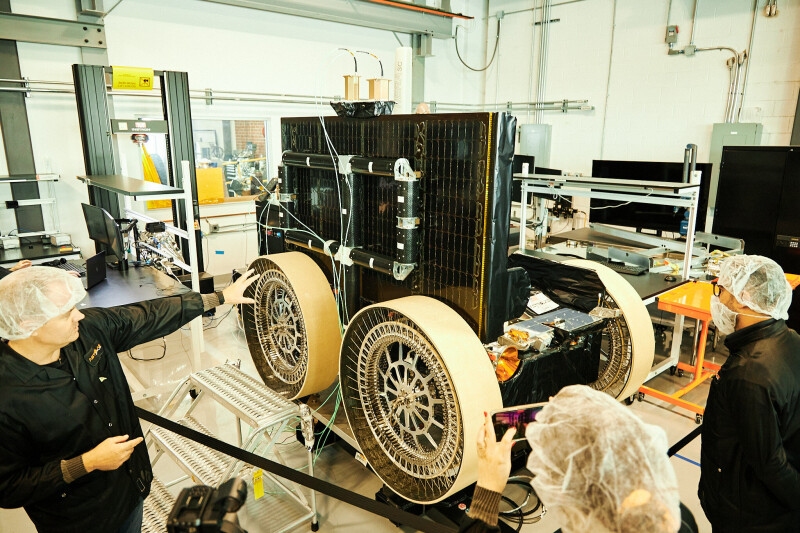
For FLIP’s purposes, it’ll mostly be used to project partners' logos onto the Moon’s surface as a sorta advertising gimmick to keep the lights on back at Astrolab’s facilities in Hawthorne while it works on its FLEX rover, which Matthews characterizes as a sort of F150 or Caterpillar tractor for the Moon. Beyond the scientific equipment, solar panels, and radiators, arguably FLIP’s most striking feature is its disproportionately large wheels.
这些轮子由Venturi Space公司开发,其设计原理类似于充气轮胎(只不过没有空气和橡胶成分)。这些轮子同样也将被应用于NASA计划于2028年发射的CLV-1探测车上。正如FLIP为HPE提供了测试其月球计算平台的平台一样,CLV-1探测车也将成为验证Venturi公司轮子性能的重要工具。
Developed by Venturi Space, along with the rover’s battery pack, these wheels are designed to function much like a pneumatic tire, just without air or rubber. Their size is also intentional. The same wheels found on FLIP are intended for use on NASA’s CLV-1 rover, which is slated to launch in 2028. Much like FLIP offers HPE as a proving ground to test its lunar compute platform, the rover will do the same for Venturi’s wheels.
“Spaceborne Computer 4”和“FLIP”计划于今年晚些时候通过SpaceX的“Falcon Heavy”火箭发射升空,随后将由Astrobotic公司的“Griffin-1”着陆器将它们送至月球南极。
Spaceborne Computer 4 and FLIP are slated to launch aboard a SpaceX Falcon Heavy rocket later this year and will fly to the Moon’s south pole by Astrobotic’s Griffin-1 lander.
“Griffin-1”属于中型着陆器,直径约为15英尺(约4.5米),高度为6.5英尺(约2米);对于那些在科学领域之外也使用公制单位的国家来说,这些数据应该很容易理解。该着陆器配备了七台主发动机,负责完成从月球转移轨道插入、轨道修正、进入月球轨道到最终降落到月球表面的所有关键任务。同时,四组姿态控制推进器将确保着陆器始终保持正确的朝向。预计“FLIP”将在今年年底前降落在月球南极边缘的“Mons Mouton”区域附近。
Griffin is classified as a medium class lander measuring roughly 15 feet around and 6.5 feet tall (that’s about 4.5 and 2 meters for those of you living in a nation civilized enough to use metric outside the sciences). The lander is equipped with seven main engines responsible for everything from trans-lunar injection, trajectory correction, lunar orbit insertion, and powered descent to the surface. Four clusters of attitude control thrusters, meanwhile, will (hopefully) keep the thing pointed the right way up. FLIP is expected to touch down near the Mons Mouton area along the edge of the South Pole before the end of the year. ®