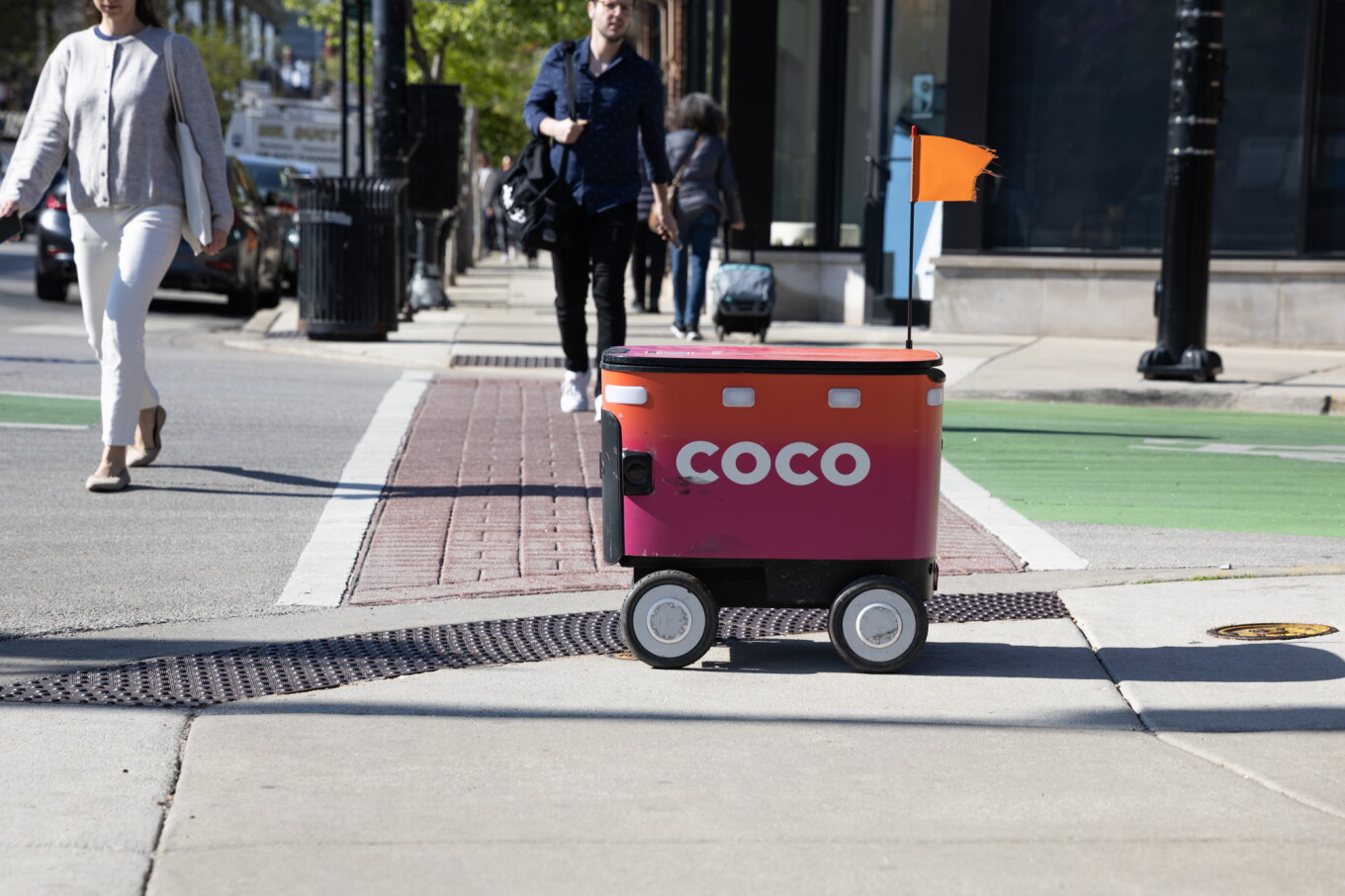
芝加哥外卖配送机器人之争已演变为法律诉讼,两名顾客指控相关公司未经同意收集其生物识别数据。
The battle over Chicago’s food delivery robots has reached the courts, with two customers accusing the companies behind them of collecting their biometric data without consent.
KADE HEATHER/Block Club Chicago 芝加哥外卖配送机器人之争已演变为法律诉讼,两名顾客指控相关公司未经同意收集其生物识别数据。
KADE HEATHER/Block Club Chicago The battle over Chicago’s food delivery robots has reached the courts, with two customers accusing the companies behind them of collecting their biometric data without consent.
这两名男子于10月9日在库克县法院分别对Coco Robotics和Serve Robotics提起集体诉讼,指控两家公司违反了伊利诺伊州的一项隐私法。他们声称,公司的机器在未经他们知情或同意的情况下扫描了他们的面部和手部。两家公司均否认上述指控。
The men filed separate class-action lawsuits in Cook County court Oct. 9 against Coco Robotics and Serve Robotics, alleging the companies violated a state privacy law. They claim the companies’ machines scanned their faces and hands without their knowledge or consent. Both companies dispute the allegations.
诉讼称,机器人的摄像头和激光雷达——一种通过发射激光脉冲来测量距离并绘制周围环境地图的技术——在顾客走近机器取餐时,捕捉了顾客面部和手部的测量数据。
The lawsuits allege the robots’ cameras and LiDAR — a technology that sends out laser pulses to measure distances and map the surrounding environment — captured measurements of customers’ faces and hands as they approached the machines to retrieve their orders.
来自近北区的Mitchell Breidinger称,他于2025年9月通过DoorDash订购杂货,并未选择机器人配送。但根据其诉状,该订单被分配给了一台Coco机器人。机器人送达后,他不得不站在机器附近输入取餐码以取走杂货。
Mitchell Breidinger, from the Near North Side, says he ordered groceries through DoorDash in September 2025 and never chose robot delivery. But his order was assigned to a Coco robot, according to his lawsuit. When it arrived, he had to stand close to the machine to enter a code and retrieve his groceries.
Breidinger指控,该机器人的摄像头记录了他的面部、头部和手部,而其激光雷达传感器测量了这些部位的几何形态。他的诉状还指控,一名远程操作员实时观看了配送过程的视频。他表示,Coco未以书面形式告知他将收集其生物识别信息,未解释数据保留期限,也未获得他的书面同意。
Breidinger alleges the robot’s cameras recorded his face, head and hands, while its LiDAR sensors measured their geometry. His lawsuit also alleges a remote operator watched video of the delivery in real time. He says Coco did not tell him in writing that it would collect his biometric information, explain how long it would keep the data or obtain his written consent.
林肯公园居民Barry Schain指控其与Serve Robotics有过类似经历。他称已收到三次Serve机器人配送,最近一次是10月4日,当时一个Uber Eats订单被分配给机器人,尽管他并未选择机器人配送,据诉状称。
Barry Schain, a Lincoln Park resident, alleges a similar experience with Serve Robotics. He says he has received three deliveries from Serve robots, most recently Oct. 4, when an Uber Eats order was assigned to a robot even though he had not selected robot delivery, according to the lawsuit.
两起诉讼均指控这些公司保留视频和传感器数据,用于训练人工智能系统。Schain 的诉讼还指出,Serve 披露将视频和激光雷达数据集授权给第三方用于 AI 训练。Breidinger 的诉讼则声称,Coco 曾与 OpenAI 及其他第三方共享机器人收集的数据。
Both lawsuits claim the companies retain video and sensor data to train artificial intelligence systems. Schain’s lawsuit also points to Serve’s disclosures about licensing video and LiDAR datasets to third parties for AI training. Breidinger’s lawsuit claims Coco has shared robot-collected data with OpenAI and other third parties.
根据诉讼内容,客户的生物特征测量数据随后与其姓名和地址一起存储在公司的数据系统中,将这些数据与可识别的个人关联起来。
Customers’ biometric measurements are then stored alongside their names and addresses in the companies’ data systems, according to the lawsuits, linking the data to identifiable individuals.
诉讼指控这些公司违反了《伊利诺伊州生物特征信息隐私法案》,该法案要求收集生物特征数据的公司提供书面通知,说明收集何种数据及收集目的,获得书面同意,并保留数据保存和销毁的政策。
The lawsuits accuse the companies of violating the Illinois Biometric Privacy Act, which requires companies collecting biometric data to provide written notice explaining what they collect and why, obtain written consent and maintain a policy for retaining and destroying the data.
Coco 和 Serve 的发言人均否认公司从客户或路人处收集生物特征信息。Serve 发言人表示,公司“将对该诉讼进行抗辩”,而 Coco 发言人则称公司“确信这起毫无根据的诉讼将不了了之”。“这起诉讼从根本上误解了我们的技术,我们并未在芝加哥收集生物特征数据,”Coco 发言人在声明中表示,并补充说遵守隐私法是公司的“首要任务”。
Spokespersons for both Coco and Serve denied that the companies collect biometric information from customers or passersby. A Serve spokesperson said the company “will defend against” the lawsuit, while a Coco spokesperson said the company is “confident that this frivolous lawsuit will go away.”“This lawsuit fundamentally misunderstands our technology, we have not collected biometric data in Chicago,” the Coco spokesperson said in a statement, adding that complying with privacy laws is a “top priority” for the company.
“我们共享的是用于让所有人行道使用者更安全的导航数据,”Coco 发言人继续说道。“例如,我们向 BlindSquare 提供实时人行道隐患信息,这是一款为盲人或弱视人群打造的导航应用。在我们的数据共享合作伙伴关系下,我们不共享配送行程起点或终点的数据。隐私和遵守法律是我们所做一切的首要任务。”Serve 发言人表示,公司的机器人利用摄像头和传感器安全地在人行道上导航。
“The data we share is navigational data used to make sidewalks safer for all users,” the Coco spokesperson continued. “For example, we provide real-time sidewalk hazard information to BlindSquare, a navigation app built for people who are blind or have low vision. We do not share data from the beginning or end of delivery trips under our data sharing partnerships. Privacy and compliance with the law are top priorities in everything we do.”The Serve spokesperson said the company’s robots use cameras and sensors to navigate sidewalks safely. “Serve does not use that data to identify individuals and our systems are not designed to identify individuals or create biometric profiles,” the spokesperson said in a statement. The lawsuits seek statutory damages of $1,000 per negligent violation or $5,000 per intentional or reckless violation, as well as other relief.
“Serve 不使用这些数据来识别个人,我们的系统也不是为了识别个人或创建生物特征档案而设计的,”该发言人在一份声明中说。
The lawsuits add to growing scrutiny of delivery robots that have become a regular sight on Chicago sidewalks, where residents have raised concerns about safety, accessibility, surveillance and the potential loss of delivery jobs.
这些诉讼要求每起疏忽违规行为赔偿 1000 美元法定损害赔偿金,每起故意或鲁莽违规行为赔偿 5000 美元,以及其他救济。
Chicago launched its delivery robot pilot program in 2022 under former Mayor Lori Lightfoot. Coco began operating in the city in late 2024, followed by Serve Robotics in September 2025.
这些诉讼加剧了外界对送货机器人的审视,此类机器人已成为芝加哥人行道上的常见景象,居民们对安全、无障碍通行、监控以及送货工作可能流失等问题提出了担忧。
The program, overseen by the Chicago Department of Transportation and the Department of Business Affairs and Consumer Protection, is set to expire in May 2027 unless the City Council approves an extension.
芝加哥于 2022 年在前市长洛丽·莱特富特任内启动了送货机器人试点项目。Coco 于 2024 年底开始在该市运营,Serve Robotics 则于 2025 年 9 月跟进。该项目由芝加哥交通局和商业事务与消费者保护局共同监管,除非市议会批准延期,否则将于 2027 年 5 月到期。
Lincoln Park resident Josh Robertson started a petition last year calling on the city to pause the program until officials release safety and accessibility data, hold a public hearing and establish clearer rules. More than 4,500 people had signed the petition as of last month. Residents have reported robots blocking sidewalks and crosswalks, creating obstacles for people with disabilities and raising concerns about cameras recording pedestrians. The pushback has also reached City Hall.
林肯公园居民乔什·罗伯逊去年发起了一项请愿,呼吁市政府暂停该项目,直到官方发布安全和无障碍数据、举行公开听证会并制定更明确的规则。截至上个月,已有超过 4500 人签署了该请愿书。居民们反映,机器人堵塞人行道和斑马线,给残疾人制造障碍,并引发了对摄像头录制行人的担忧。
Ald. Daniel La Spata (1st) rejected plans to expand the robots across much of his ward in February after more than 83 percent of residents who responded to an online survey strongly opposed the expansion. The city has also created a 311 category for residents to report safety concerns and other complaints about the devices. In March, a Serve robot smashed through the glass of a CTA bus shelter in West Town, scattering shards of glass across the sidewalk.
抵制声浪也传到了市政厅。今年 2 月,在在线调查中超过 83% 的受访居民强烈反对扩大部署后,第 1 区市政委员丹尼尔·拉·斯帕塔否决了在其辖区大部分范围内推广机器人的计划。
Days later, a Coco robot collided with another bus shelter in Old Town. Both companies said they were investigating the crashes and took responsibility for repair costs. In September, a video showing more than a dozen Coco robots apparently circling one another and getting stuck on a Lincoln Park sidewalk went viral, drawing hundreds of thousands of views and renewing criticism of the technology.
市政府还设立了 311 服务类别,供居民举报设备的安全隐患和其他投诉。
The companies have defended the robots as a safer, more sustainable option for short distance deliveries that can reduce car trips and traffic congestion.