在开源峰会欧洲站上,推广 Linux 发行版的组织出奇地少。我们发现的唯一专门展位属于两个中国项目,其中 openEuler 占据了较大的展位。对于习惯了西方企业级发行版的用户来说,openEuler 可能是个不太熟悉的名字,但它拥有令人印象深刻的历史。它是华为 EulerOS 的现代免费社区版本,EulerOS 的一个版本曾获得官方 UNIX™ 认证。
Surprisingly few organizations were promoting Linux distros at Open Source Summit Europe. The only dedicated stands we found belonged to two Chinese projects, with openEuler occupying the larger booth. For users accustomed to Western enterprise distros, openEuler may be a less familiar name, but it has an impressive history. It's the modern free community version of Huawei's EulerOS, a version of which achieved official official UNIX™ certification. openEuler is no longer a solely Huawei project, though.
不过,openEuler 不再是一个纯粹的华为项目。此后,它已开放,并由开放原子开源基金会运营。开放原子开源基金会由华为联合阿里巴巴、百度、腾讯等中国大厂于 2020 年共同发起。另一位发起方浪潮此前曾开发自己的发行版 K/UX —— 其一个版本也曾获得官方 UNIX™ 认证。浪潮 K/UX 于 2016 年 2 月获得 Unix 认证,EulerOS 则在七个月后获证。
Since then, it's been opened up, and it is now run by the OpenAtom Foundation. OpenAtom was co-founded in 2020 by Huawei along with some other big Chinese names, such as Alibaba, Baidu, and Tencent. Another of the co-founders was Inspur, which formerly developed its own distro, K/UX – a version of which also achieved official UNIX™ certification. Inspur K/UX won Unix certification in February 2016, and EulerOS seven months later. K/UX's Unix certification expired in 2019.
K/UX 的 Unix 认证于 2019 年到期。几个月后,即 2019 年 5 月,美国对华为实施了更广泛的制裁。这可能是促使华为有意加强与中国 Linux 领域其他公司合作的原因。据我们了解,K/UX 在 3 版本后未再推出新版本。作为合作的额外动力,EulerOS 和 K/UX 最初均基于 CentOS Linux,而当然,CentOS 项目于 2020 年 12 月宣布将重心从 CentOS Linux 转向 CentOS Stream。
A few months later, in May 2019, the US placed wider sanctions on Huawei. It is possible that the fresh restrictions on American sales prompted Huawei's interest in closer co-operation with other companies in the Chinese Linux space. As far as we can see, there were no further versions of K/UX after version 3. As additional motivation for cooperation, both EulerOS and K/UX were originally based on CentOS Linux, and of course, in December 2020, the CentOS Project announced it would shift its focus from CentOS Linux to CentOS Stream. The openEuler community has taken the platform in new directions.
openEuler 社区已将该平台推向新方向。它构建了自己的工具栈,用于开发、部署和运行大语言模型,称为 Intelligence BooM。它还有一个用于将 CentOS Linux 系统迁移到 openEuler 的工具,称为 x2openEuler。正如预期,它支持 Kubernetes、Docker 和 Podman,但也拥有自己的容器引擎 iSula(以一种蚂蚁命名)。
It has built its own stack of tools for developing, deploying, and running LLMs, called Intelligence BooM. It has a tool for migrating CentOS Linux systems to openEuler, called x2openEuler. As you would expect, it supports Kubernetes, as well as Docker and Podman, but it also has its own container engine called iSula (named after a species of ant). Aware that it's less known outside Asia, at the Open Source Summit, OpenAtom was handing out copies of a special "Focus Guide" from Admin Magazine, which is also available as a free download.
在开源峰会上,OpenAtom向与会者分发了《Admin Magazine》杂志中发布的特别指南《Focus Guide》,该指南也可免费下载。其中部分内容无需注册即可在线查看,涉及人工智能(AI)、BooM Stack技术以及将系统迁移到openEuler的相关内容。openEuler采用与Ubuntu类似的双轨发布机制:一方面提供长期支持(LTS)版本,另一方面发布更频繁的“创新版本”。
Some parts of this are also available online without registration, such as AI and the BooM Stack and Automating Migration to openEuler. openEuler has a dual-strand release cycle, akin to Ubuntu rather than the RHELatives, with LTS versions and more frequent "innovation releases." The current LTS is version 24.03, released in June 2024, while the latest version is 26.09. There is a plethora of versions and editions available on the downloads page: the latest release is for x86-64 and 64-bit Arm.
当前的LTS版本是24.03(发布于2024年6月),最新版本为26.09。在下载页面上可以找到多种不同版本和配置选项:最新版本支持x86-64和64位Arm架构;LTS版本新增了对RISC-V和LoongArch架构的支持,同时也提供了针对32位Arm架构的简化版。较旧的22.03 LTS版本也曾适用于SunWay RISC处理器(该处理器曾在2016年被The Next Platform网站报道过)。
The LTS version adds support for RISC-V and LoongArch, and there are minimal versions for 32-bit Arm as well. The older 22.03 LTS was also available for SW-64, meaning the SunWay RISC processors that sister site The Next Platform looked at in 2016. As LWN put it last year, this is a "non-upstream kernel port."
正如LWN去年所提到的,这个版本属于“非上游内核移植版本”(即并非直接从Linux内核源代码开发而来的版本)。OpenAtom提供了五种类型的安装镜像:离线标准版(文件大小为24.9GB)、离线全功能版(文件大小为1.5GB)、网络安装版,以及两种桌面版(DevStation)——基础版文件大小为3.3GB,全功能版文件大小为25GB)。
There are five types of installation ISO available: Offline Standard, Offline Everything (a hefty 24.9 GB), Network Install (a still significant 1.5 GB), and two variants of the desktop "DevStation" version – a basic one at 3.3 GB and an "everything" edition at 25 GB. We gave the DevStation a very quick whirl in VirtualBox.
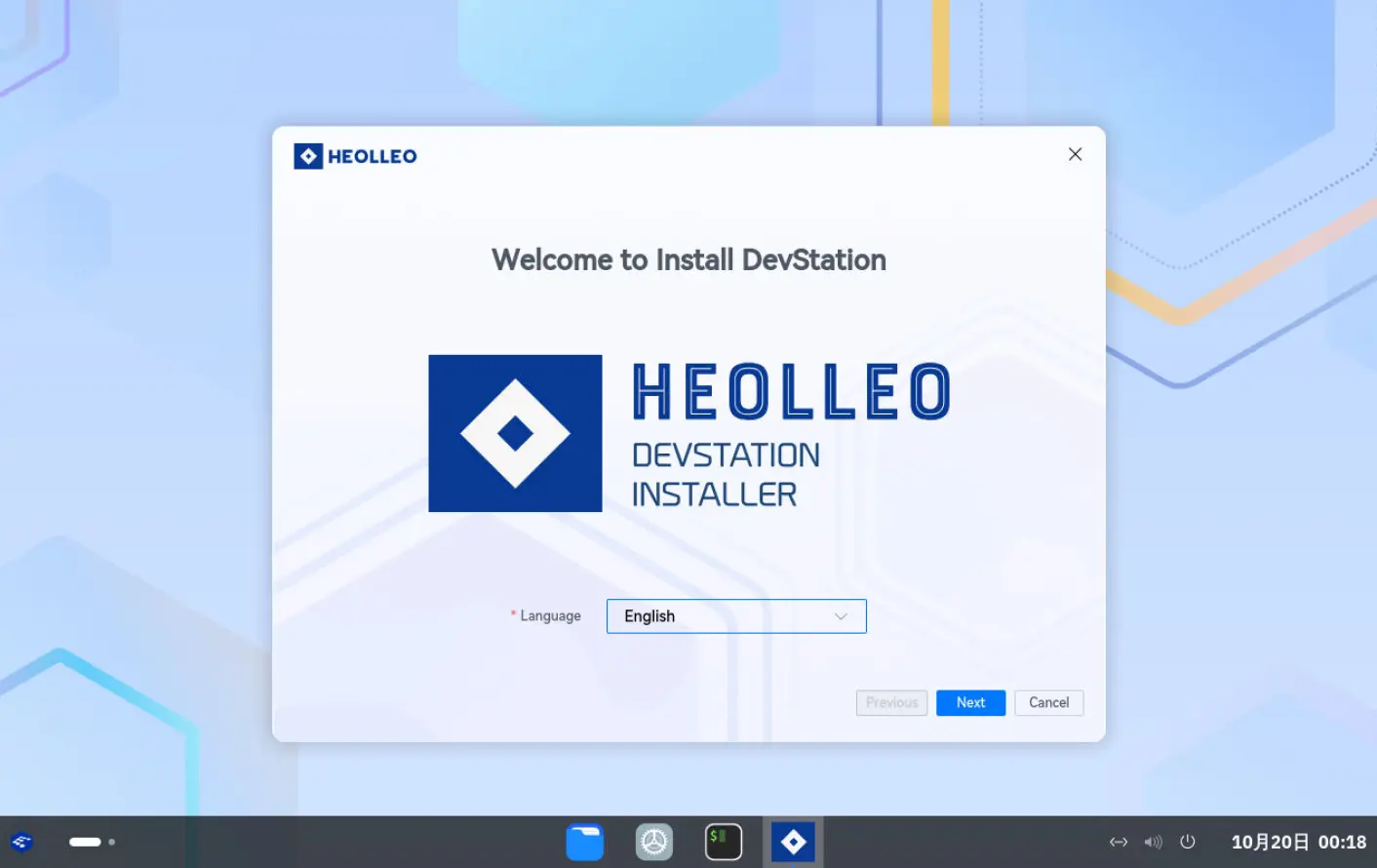
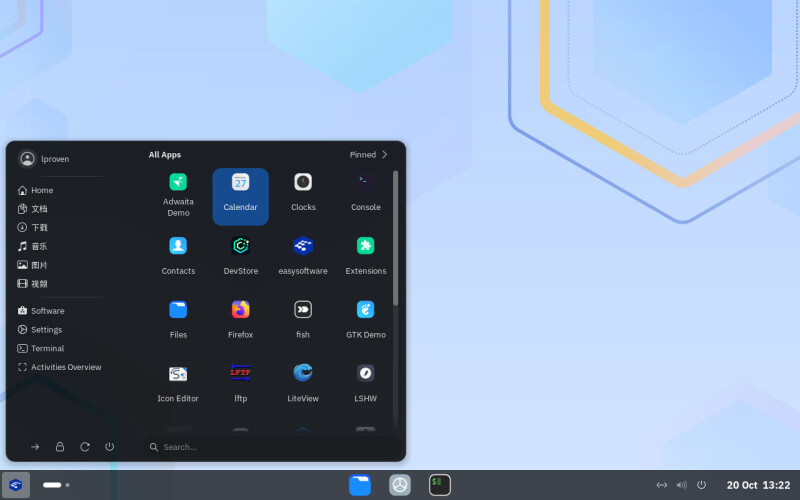
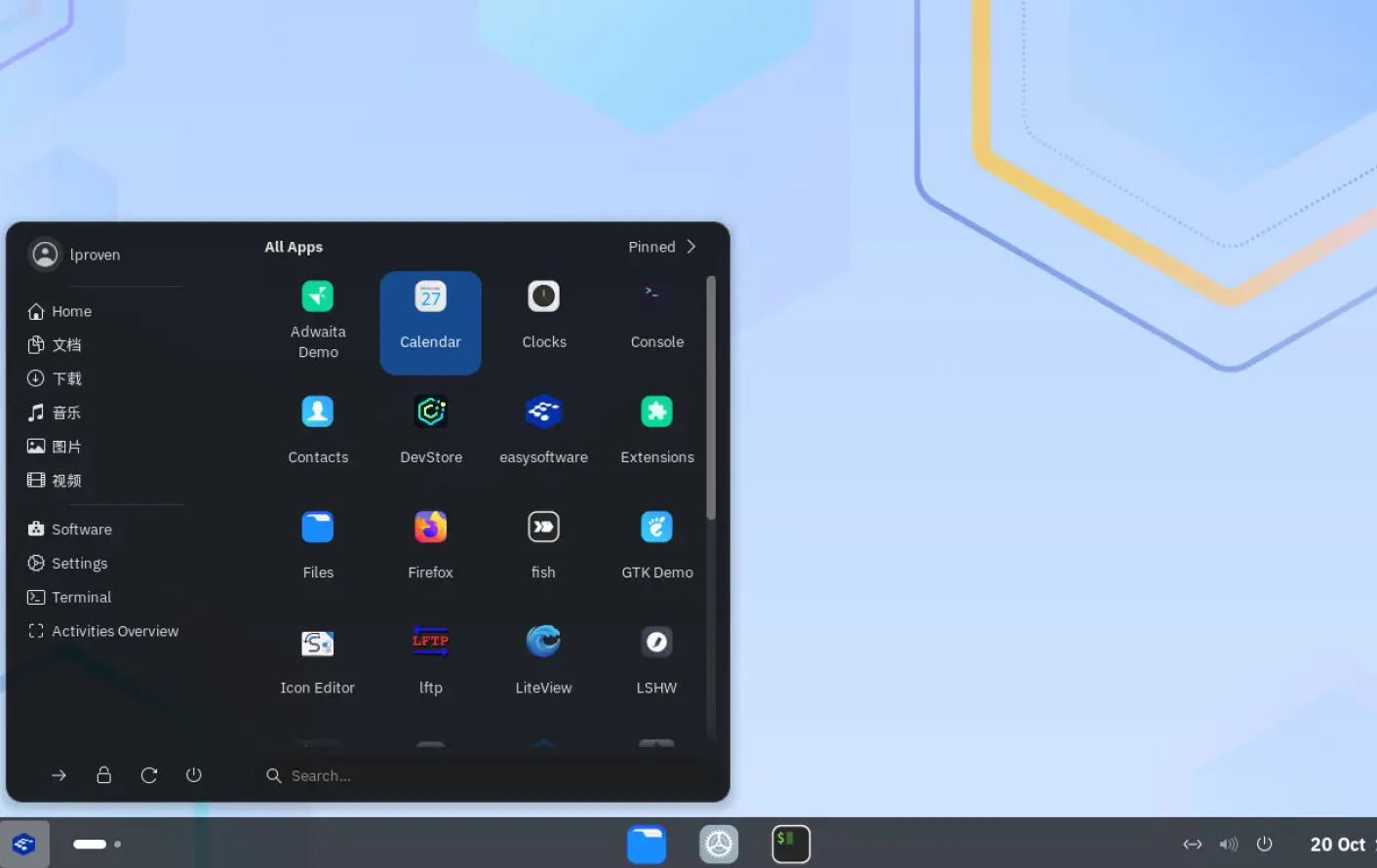
我们使用VirtualBox简单试用了DevStation版本:该系统会启动一个名为Heolleo的安装程序,支持简体中文和英文界面。安装过程中系统会自动下载更新,因此耗时较长。最终我们获得了一个配置为中文界面的GNOME桌面环境;虽然部分程序组和界面元素仍显示为中文,但通过一些尝试仍可以正常使用该系统。该系统基于GNOME 49版本,预装了Dash到Panel和Arc Menu等扩展组件,使得界面布局更加熟悉。
It boots into its own installation program called Heolleo, which offers the choice of Simplified Chinese or English. Installation took a while, as it automatically fetches updates as it goes. We ended up with a GNOME desktop configured for Chinese, but we opened Settings, typed "language" into the Search box, and picked English. After a reboot, we could read most of the desktop.
打开终端后,我们看到欢迎信息:Welcome to 6.18.48-0.0.0.15.oe2609.x86_64。它还提供 Deepin 桌面环境、UKUI(如 Ubuntu Kylin 所用)、MATE、Xfce 以及 Kiran 桌面环境,后者对我们来说是新面孔。在部分 openEuler 的英文资料中,提到的是中国 CPU 厂商而非西方厂商——在上下文中这是可以理解的。例子包括海光的处理器,海光是 AMD 设计的中国被许可方;还有飞腾和鲲鹏,这解释了为何提供 Arm 架构支持。
Program groups and some other elements are still in Chinese, but it's navigable with a bit of guesswork. It's GNOME 49, with the Dash to Panel and Arc Menu extensions preinstalled for a slightly more familiar layout. Opening a terminal, we were greeted with: Welcome to 6.18.48-0.0.0.15.oe2609.x86_64 It also offers the Deepin Desktop Environment, UKUI (as seen in Ubuntu Kylin), MATE, Xfce, and the Kiran Desktop Environment, which is a new one to us. In places, the English-language materials for openEuler mention Chinese CPU makers rather than western ones – which is understandable, in context.
在西方世界,Red Hat 用户社区针对 CentOS Linux 的终止,构建了尽可能贴近其上游的新免费发行版:Rocky Linux 和 AlmaLinux 项目,均基于 Red Hat 源代码重建。随后,当这家 IBM 子公司在 2023 年将该源代码的访问权限限制为仅限客户时,Rocky 和 AlmaLinux 项目开始出现分化。Rocky 以尽可能接近 RHEL 兼容性为目标,其最显著的创新是自建了全新的构建服务。
Examples include processors from Hygon, a Chinese licensee of AMD designs, as well as Phytium and Kunpeng, which explain the Arm support on offer. In the western world, the Red Hat user community responded to the end of CentOS Linux by building new free distros that stay as close as they can to their progenitor: the Rocky Linux and AlmaLinux projects, rebuilt from Red Hat source code. Then, when the IBM subsidiary restricted access to that source to its customers in 2023, the Rocky and AlmaLinux projects started to diverge.
它还找到了一个巧妙的变通方法来获取 Red Hat 的内核源代码。AlmaLinux 仍以 RHEL 兼容性为目标,但通过在 Red Hat 放弃支持后继续保留对旧设备和旧 CPU 架构的支持来实现差异化。
Rocky aims for the closest possible RHEL compatibility, and its most visible innovation is that it's built its own new build service. It also found a clever workaround to get Red Hat's kernel source code.
中国厂商的反应截然不同。那些提供基于 CentOS Linux 操作系统的厂商联合起来,放弃了各自的竞争版本和 UNIX 兼容性工作,转而共同开发新工具和子系统。正如欧洲对数字主权的关注一样,这在一定程度上源于特朗普政府。在被切断上游源代码半个十年后,openEuler 平台正蓬勃发展、持续壮大,即使西方世界极少有人关注。®
AlmaLinux still targets RHEL compatibility, but differentiates itself by retaining older device support and older CPU architectures after Red Hat drops them. Chinese vendors have responded very differently. Those offering CentOS Linux-based OSes clubbed together, dropped their rival versions and their UNIX compatibility efforts, and instead are working on new tools and subsystems. Much like European interest in digital sovereignty, this is in part due to the Trump administration. Half a decade after it was cut off from its upstream sources, the openEuler platform is thriving and growing, even if few in the western world pay any attention at all. ®