贾斯汀·马斯特的生活因一株“半机械植物”而改变。几年前,马斯特在阅读科学文献时,偶然发现了一项关于连接电动支架的室内植物的研究。当植物需要更多光照时,电信号会流经其活体组织。控制板感应到电流后,会驱动支架将植物移向光源。
Justin Mast’s life was changed by a cyborg plant. A few years ago, Mast was reading through some scientific literature when he stumbled upon research about a houseplant wired to a motorized stand. When the plant wanted more light, electrical signals flowed through the living tissues. A control board sensed the current and wheeled the plant closer to the light source.
“我说,这到底是怎么回事?”马斯特告诉《TechCrunch》。“那是我钻进这个兔子洞的入口。”马斯特最终与曾为美国国防高级研究计划局(DARPA)工作的神经科学家李·冯·克劳斯合伙,创立了Electric Plant公司,过去三年里,该公司一直在收集数据,以构建一个名为“波巴迪尔”的大语言模型,该模型能够解读植物茎干中流动的细微电信号,并向种植者传达植物的生长需求。
“I’m like, what the heck?”Mast told TechCrunch. “That was the entry to the rabbit hole for me.”Mast wound up partnering with Lee von Kraus, a neuroscientist who has worked with DARPA, to found Electric Plant, which has been spending the past three years collecting data to build a large language model, Bombadil, capable of interpreting the subtle electrical signals coursing through a plant’s stem and relaying details about the plant’s needs to growers.
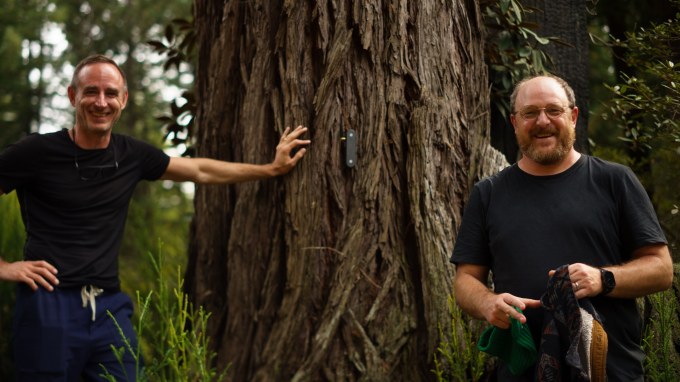
创始人相信,他们的模型未来有望催生一种工具,让人们能与植物“交谈”。“我们更多是在倾听而非说话,但倾听是第一步,”Electric Plant联合创始人兼首席执行官马斯特表示。
The founders believe their model could one day lead to a tool that would let people “speak” to plants. “We’re listening more than we’re speaking, but listening’s the first step,” said Mast, co-founder and CEO of Electric Plant.
为将其传感器和“波巴迪尔”推向市场,Electric Plant近期完成了一轮1120万美元的种子轮融资,由Onto Ventures和Climactic领投,Ponderosa、Endeavor Catalyst、Ludlow、Michigan Rise、The Fund、Schox VC和Dug Song跟投。
To bring its sensors and Bombadil to market, Electric Plant recently raised a $11.2 million seed round led by Onto Ventures and Climactic, with participation from Ponderosa, Endeavor Catalyst, Ludlow, Michigan Rise, The Fund, Schox VC, and Dug Song.
马斯特表示,即使在受控程度最高的温室中,农民和种植者也无法完全掌握植物的需求。传统上,农民、种植者和林业工作者依赖粗糙的工具来应对植物对水分、养分或光照的需求。土壤探针、手持光谱仪和卫星影像等工具虽然管用,但仍有很大提升空间,马斯特说。
Even in the most controlled greenhouses, farmers and growers don’t have full visibility of what their plants require, Mast said. Traditionally, farmers, growers and foresters have relied on coarse tools that react to plants’ demands for water, nutrients or light. And tools like soil probes, handheld spectroscopes, and satellite imagery work well enough, but they leave much to be desired, Mast said.
“这些技术很复杂,但它们深入植物内部的能力并不复杂。大多数这类手段仍严重滞后于植物的实时需求,”他说。
“That technology is sophisticated, but its ability to get at the inside of the plant isn’t very sophisticated. Most of that stuff still lags quite a bit behind the real-time needs of the plant,” he said.
Electric Plant公司必须从某个地方开始着手开发其产品,因此他们利用这些设备来训练他们的“Bombadil”模型。该模型能够识别大约125种不同植物的电信号。Mast表示:“我们相信这个模型的性能会超越现有的许多同类设备。”
Electric Plant had to start somewhere, though, so it used those devices to train its Bombadil model, which is capable of interpreting electrical signals in about 125 different species. “We know the model will surpass a lot of that equipment,” Mast said.
这家初创公司的传感器价格也远低于现有的同类产品——后者通常售价数千美元,而他们的传感器仅需几十美元而已。
The startup’s sensors are also significantly cheaper than existing tools, which generally cost thousands of dollars. “This is tens of dollars,” he said.
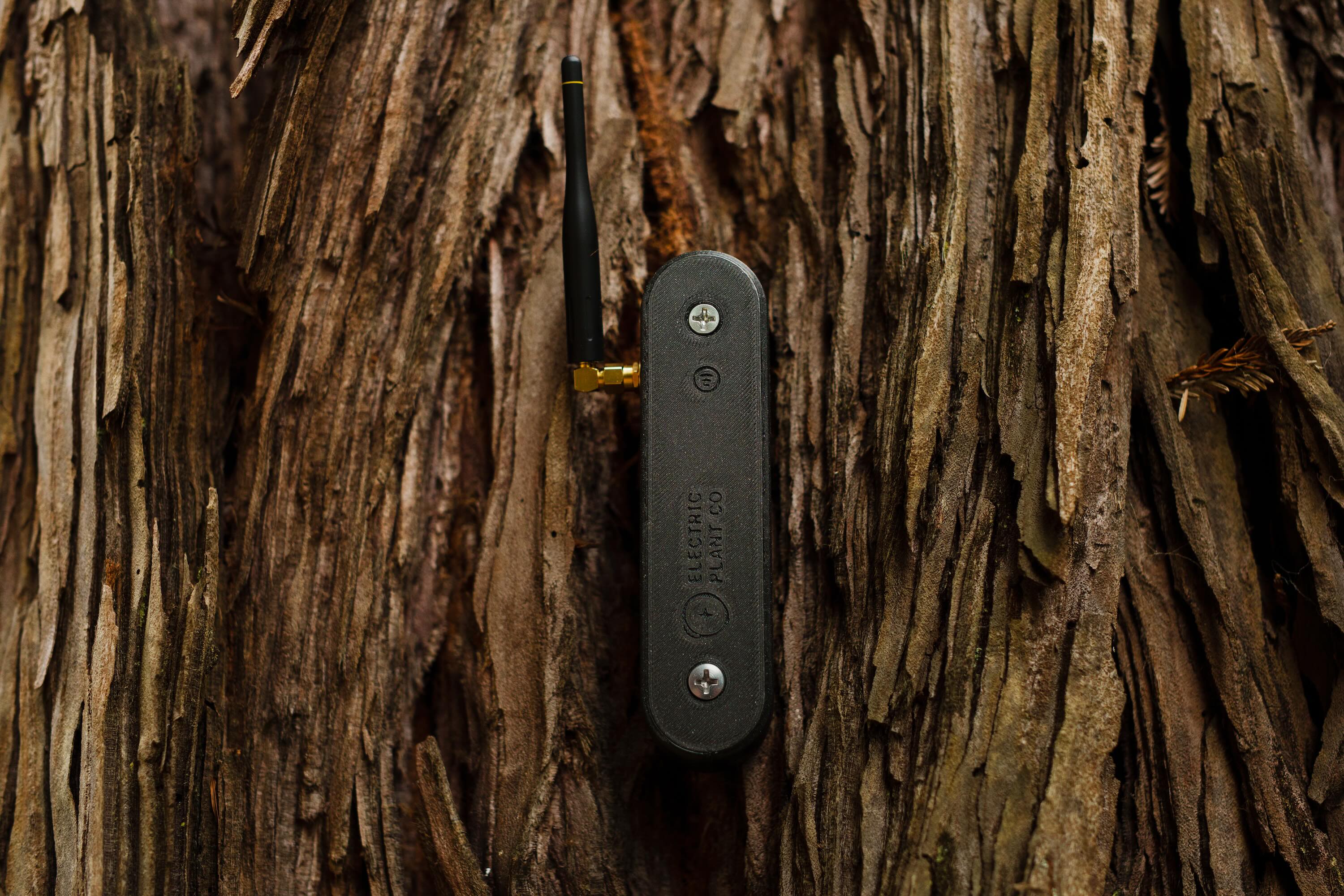
这些传感器的大小与普通的iPhone差不多(iPhone纵向折叠后的尺寸),它们通过不锈钢螺丝固定在植物上。这些螺丝需要穿透植物的形成层(即树皮下的活组织层),以便能够检测到植物内部发生的微电压变化。传感器收集的数据通过低功耗无线网络传输到基站。
The sensors, about the size of a regular iPhone folded lengthwise, are attached to a plant using stainless steel screws. The screws must penetrate the cambium — the layer of living tissue just under the bark — to connect to the microvolt changes occurring within the plant. Data collected from these sensors is sent to a base station via a low-power wireless network.
Mast指出,每英亩土地只需要安装几个传感器就能获得准确的数据结果。这些数据由云端的“Bombadil”模型进行处理后,再反馈给客户,客户可以根据这些信息调整浇水和施肥计划。Mast声称,这样的系统不仅可以提高作物产量,还能将用水量减少20%以上。
Electric Plant only needs a couple sensors per acre for accurate results, Mast said. The data gets interpreted by Bombadil in the cloud, and the results are sent back to the customer, who can use it to, for example, adjust their watering or fertilizer schedules. Mast claims such a system can boost yields while reducing water use by 20% or more.
Mast没有透露Electric Plant公司的首批客户是谁,但很容易想象这些传感器在农业和林业领域的应用前景。
Mast wouldn’t disclose who Electric Plant’s initial customers are, but it’s easy to imagine applications in agriculture and forestry.
Mast表示,“Bombadil”模型能够识别超过100种植物的电信号,涵盖了从蕨类植物、红杉、番茄到大丽花等各种植物类型。“这是迄今为止针对生物电信号开发的最多样化的模型;在动物领域,还没有任何人能够做到这一点。”
Bombadil’s first hundred-plus species runs the gamut of plant forms, from ferns, redwoods and tomatoes to dahlias, Mast said. “This is the most diverse model ever created on biological electrical signals,” he said. “No one’s ever done anything equivalent to this in the animal world.”