近四十年来,富时罗素在其基准指数中,始终将股票市值在成长型公司与价值型股票之间五五分账,前者因盈利潜力备受青睐,后者则因价格相对低廉受到追捧。如今,随着科技巨头日益主导市场,这家指数提供商正重新考量这一 50/50 的划分方式。
For almost four decades, FTSE Russell has divided the market value of stocks in its benchmarks evenly between growth companies prized for their earnings potential and value stocks favored for their relatively cheap prices. Now, as technology giants increasingly dominate the market, the index provider is reconsidering that 50/50 split.
根据周一发布的咨询文件,该基准指数提供商提议允许成长风格或价值风格在罗素 1000 指数或罗素 2000 指数中占比高达 60%,以应对少数股票占据主导地位,导致其风格指数不再能代表其旨在涵盖的公司范围这一问题。
Under a proposal released Monday, the benchmark provider would allow growth or value to represent as much as 60% of the Russell 1000 or Russell 2000 when the dominance of a handful of stocks makes its style indexes less representative of the range of companies they are meant to capture.
咨询将于 12 月 11 日结束,任何变更将在 2027 年 6 月的重组过程中生效。富时罗素估算显示,其成长、价值等风格指数去年作为基准追踪的资产约达 8 万亿美元。任何改革都可能促使跟踪这些指数的基金调整持仓。
The consultation ends Dec. 11, and any changes would take effect during the reconstitution process in June 2027. Russell estimates show its style indexes such as growth and value were benchmarked to about $8 trillion of assets last year. Any overhaul could prompt funds tracking those indexes to reshuffle their holdings.
拟议变更旨在解决指数提供商面临的一个日益突出的问题:科技巨头市值股的崛起,使得在保持两种风格广泛代表性的同时,将市场在成长与价值之间均分变得愈发困难。标普道琼斯指数也在权衡自身的改革。该指数提供商近期刚结束一项咨询,拟议变更包括将无形资产和自由现金流纳入用于分类价值股的指标中。目前尚未宣布决定。
The proposed changes address a growing problem for index providers: The rise of technology megacaps has made it increasingly difficult to divide the market evenly between growth and value while maintaining broad representation of both styles. S&P Dow Jones Indices is weighing its own overhaul. The index provider recently ended a consultation on changes that include incorporating intangible assets and free cash flow into the measures used to classify value stocks. It has yet to announce a decision.
“很明显,这些公司难以界定增长或价值,而且它们肯定担心如此多的资金会因单一指标而向这边或那边倾斜,”MarketGrader创始人Carlos Diez表示,MarketGrader是一个股票研究平台,在评估价值股时已纳入无形资产。“如果市场昂贵且昂贵股票高度集中,市值基准就需要反映这一点。”随着少数科技巨头占据市值份额日益增大,要求增长股代表基准一半的规定,给其他公司留下的空间越来越小。
“It’s clear that these companies are struggling to map growth or value and they definitely are concerned about so much money leaning one way or the other based on a single metric,” said Carlos Diez, founder of MarketGrader, an equity research platform that already incorporates intangible assets in assessing value stocks. “If the market is expensive and there’s concentration in the expensive names, a market-cap benchmark needs to reflect that.”As a handful of tech giants account for an increasingly large share of market capitalization, the requirement that growth represents half the benchmark leaves less room for other companies.
据伦敦证券交易所集团旗下的Russell编制的数据,Russell 1000指数中的增长型公司数量已从二十年前的626家减少至今年的368家。
The number of growth companies in the Russell 1000 has dwindled to 368 this year, down from 626 two decades ago, according to data compiled by Russell, a unit of London Stock Exchange Group.
为解决这一问题,Russell提议引入分散化因子。当市场集中度“实质性影响底层机会集的代表性”时,增长或价值股可偏离其50%的配置比例,幅度最多达10个百分点。
To address the issue, Russell proposed introducing a diversification factor. When market concentration “materially affects the representation of the underlying opportunity set,” growth or value could deviate from its 50% allocation by as much as 10 percentage points.
Russell表示:“通过允许在严格的50/50市值配置上进行适度偏离,分散化因子有助于确保具有更强增长特征的证券适当地向增长指数倾斜,而不是在当今高度集中的市场环境下被不成比例地分配到价值指数中。重要的是要注意,这10%的区间并非目标配置。”多年来,研究人员和资金管理者一直认为,价值股长期低迷部分反映了市净率等传统估值指标的缺陷。问题部分源于会计准则。工厂和设备支出通常会在公司资产负债表上形成资产,而内部开发的无形资产(如研发)通常被视为费用处理。
“By allowing a measured departure from the strict 50/50 market-value allocation, the diversification factor helps ensure that securities with stronger growth characteristics tilt appropriately to the growth index rather than being disproportionately assigned to value under today’s concentrated market environment,” Russell said. “It is important to note that, the 10% band is not a target allocation.”For years, researchers and money managers have argued that part of value’s long slump reflected shortcomings in traditional valuation measures like book-to-price. The problem is partly accounting. Spending on factories and equipment generally creates assets on a company’s balance sheet, while internally developed intangibles such as research are typically treated as expenses.
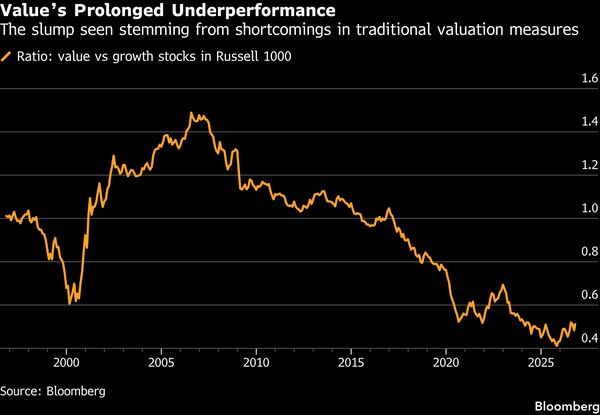
这会让严重依赖知识产权的公司在传统价值衡量指标上显得更昂贵,从而可能将其排除在旨在捕捉廉价股票的指数之外。
That can make companies built heavily on intellectual property look more expensive on traditional value measures, potentially excluding them from indexes designed to capture inexpensive stocks.
为拓宽价值的定义,罗素考虑了包括股息收益率和现金流在内的多种衡量指标,最终敲定采用市销率(销售额与股价之比),理由是其对市场换手率和主动基金的影响相对有限。与账面价值不同,销售额能反映那些最重要资产未体现在资产负债表上的公司的实际业务活动。这些变化还可能模糊成长与价值之间的界限。
To broaden its definition of value, Russell considered measures including dividend yields and cash flows before settling on sales-to-price, citing its relatively limited impact on market turnover and active funds. Unlike book value, sales can reflect the real-world business activity of companies whose most important assets don’t appear on their balance sheets. The changes could also blur the boundary between growth and value.
MarketGrader 的 Diez 表示:“他们可能收到了很多投资者的提问,即价值投资现在还有意义吗?这是一种把一些成长型公司塞进价值类别的‘后门’做法。”
“They’re probably getting the question from a lot of investors, which is, does value investing even matter anymore?” said Diez at MarketGrader. “That’s a backdoor way to get some growth companies into the value category.”