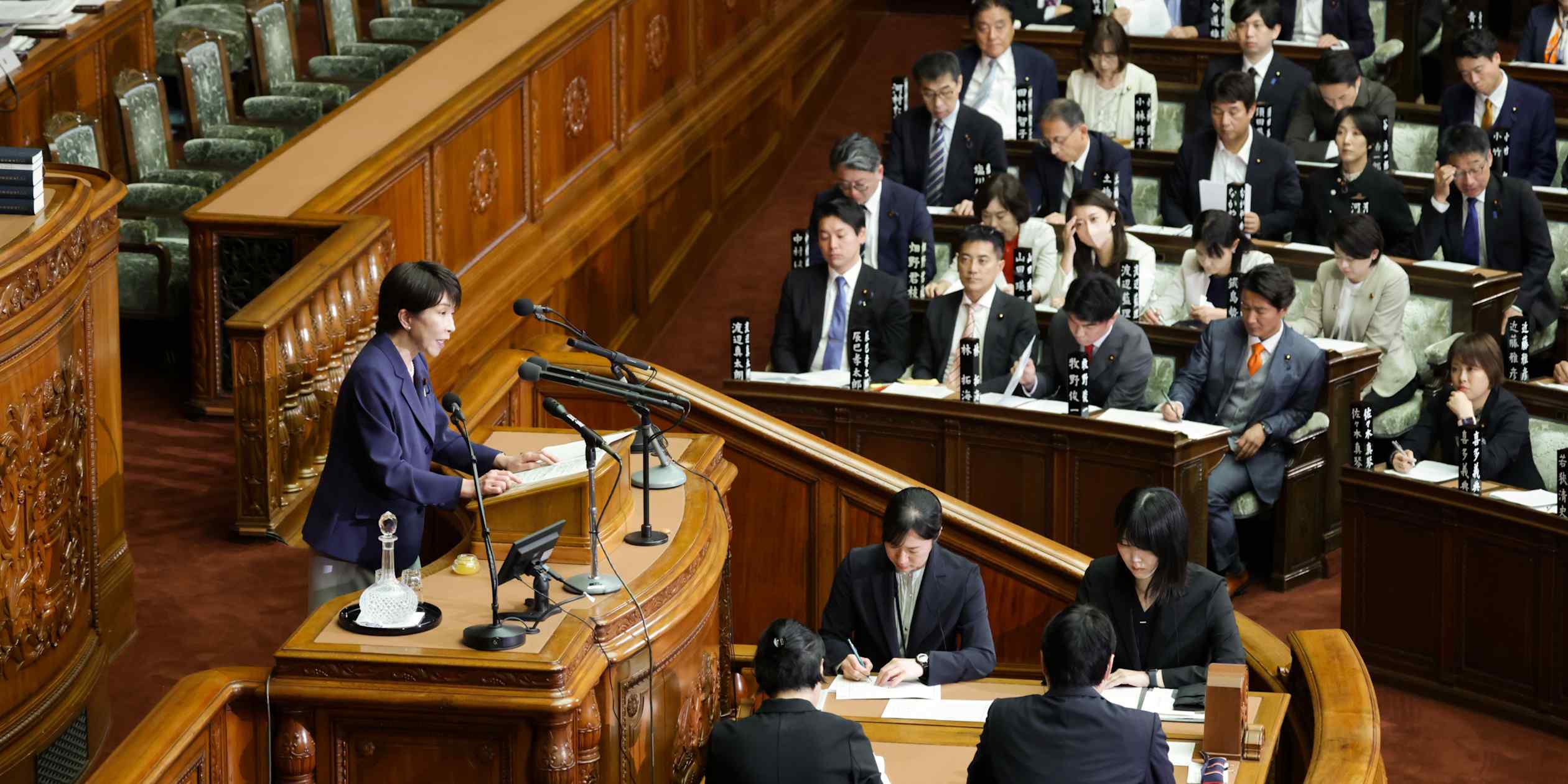
东京 —— 日本国会对一项拟议的食品减税法案预计将进行异常迅速的审议,这与以往修改该国最重要税收来源之一的情况形成鲜明对比。
TOKYO -- A proposed tax cut on food is expected to undergo unusually swift deliberations in Japan's parliament, compared with past changes to one of the country's most important revenue sources.
关于该立法的辩论于周二在众议院开始,由自由民主党领导的执政联盟力争在11月上旬获得通过。有提议将财务金融委员会的审议时间限制在大约20小时。
Debate on the legislation began Tuesday in the lower house, with the Liberal Democratic Party-led ruling coalition aiming for approval in early November. An idea has been floated to limit debate in the financial affairs committee to roughly 20 hours.
这一日程将远短于2012年将消费税分两阶段提高至10%法案所用的129小时审议时间。1988年提出的最初的3%消费税立法,在众议院委员阶段进行了88小时的辩论。
The schedule would be much shorter than the 129 hours taken to debate a 2012 bill that raised the consumption tax to 10% in two stages. The original 3% consumption tax legislation, introduced in 1988, was debated for 88 hours in the lower house committee.
在野党主张关于消费税减税的辩论应持续约30小时。这将与2016年法案的34小时审议时间持平,该法案在一般消费税升至10%的同时,将食品税率定为8%。
Opposition parties argue debate on the consumption tax cut should last around 30 hours. This would be in line with the 34 hours spent discussing a 2016 bill that applied an 8% rate to food while having the general consumption tax rise to 10%.
本月经内阁批准的现行法案旨在从4月起将食品和饮料的消费税税率从8%降至1%,为期两年。剩余的1%将通过向低收入和中等收入者发放补贴来覆盖,实际上将税率降至零。
The current bill approved by the cabinet this month seeks to lower the consumption tax on food and beverages to 1% from 8% for two years starting in April. The remaining 1% will be covered by payouts to low- and middle-income earners, in effect cutting the tax rate to zero.
政府和执政联盟表示,消费税减税是一项权宜之计,直到2029年4月开始全面推行基于收入的经济援助为止。
The government and the ruling coalition say the consumption tax cut is a stopgap measure until a full rollout of income-based financial assistance to begin in April 2029.
首相高市早苗周二对议员们表示,减税将与确保永久财源相结合考虑,并参考其他国家的类似政策。
Prime Minister Sanae Takaichi told lawmakers Tuesday that the tax cut will be considered in conjunction with securing permanent funding and take into account similar policies in other countries.
消费税是日本社会福利项目的主要资金来源,这将是该税种首次针对任何项目降低税率。批评人士对社会保险资金出现缺口的风险表示担忧,特别是如果因政治压力难以增税而导致减税最终变成永久性措施。“应避免仓促审议,”一位来自自民党的前内阁成员表示。
The consumption tax is a major source of funding for Japan's social welfare programs, and this would be the first time it is lowered for any item. Critics have raised concerns about the risk of a gap in funding for social insurance, especially if the cut ends up becoming permanent due to political pressure against raising the tax. "Hasty deliberation should be avoided," a former cabinet member from the LDP said.
该法案包含许多将由日后的政令细化的条款。这些条款包括对餐饮业和农户的支持,以及给付金额和资格标准。
The bill contains numerous items that will be fleshed out later by cabinet orders. They include support for restaurants and farmers, as well as the level of benefits and eligibility criteria.
“自民党通过作为其竞选承诺一部分的消费税减税,在政治上显而易见地合乎逻辑,”东京驹泽大学政治学教授富崎隆说。
"It makes obvious political sense that the Liberal Democratic Party would pass the consumption tax reduction, which was part of their election pledges," said Takashi Tomisaki, professor of political science at Komazawa University in Tokyo.
但“正因为许多人支持这一点,才有必要向选民表明该法案经过了充分审议,”富崎说。参议院的审议预计将由在该院占多数的在野党主导。
But "the very fact that many people supported this means it's necessary to demonstrate to voters that the bill was deliberated thoroughly," Tomisaki said. Deliberations in the upper house is expected to be led by opposition parties, which hold a majority in the chamber.
“需要进行相当详细的讨论,并有必要采取更广泛的视角,”参议院议员、立宪民主党国会对策委员长斋藤嘉隆周一对记者表示。许多在野党议员以减税为竞选平台,富崎说。“如果他们反对,就应仔细向选民解释为何改变了主张。”
The bill "needs to be discussed in considerable detail, and a broader approach is necessary," upper house lawmaker Yoshitaka Saito, chairman of the Constitutional Democratic Party's parliamentary affairs committee, told reporters Monday. Many opposition lawmakers campaigned on a platform of reducing the consumption tax, said Tomisaki. "If they oppose it, they should carefully explain to voters why their opinions have changed."