科里·威廉姆斯 詹姆斯·韦尔登·约翰逊仅用34行诗句,便讲述了前奴隶及其后代在一片被迫称为家园的土地和国家里所经历的痛苦、苦恼、挫折、信仰与希望。
COREY WILLIAMS In 34 lines, James Weldon Johnson told of the pain, anguish, frustration, faith and hope that former slaves and their descendants experienced in a land and country they were forced to call home.
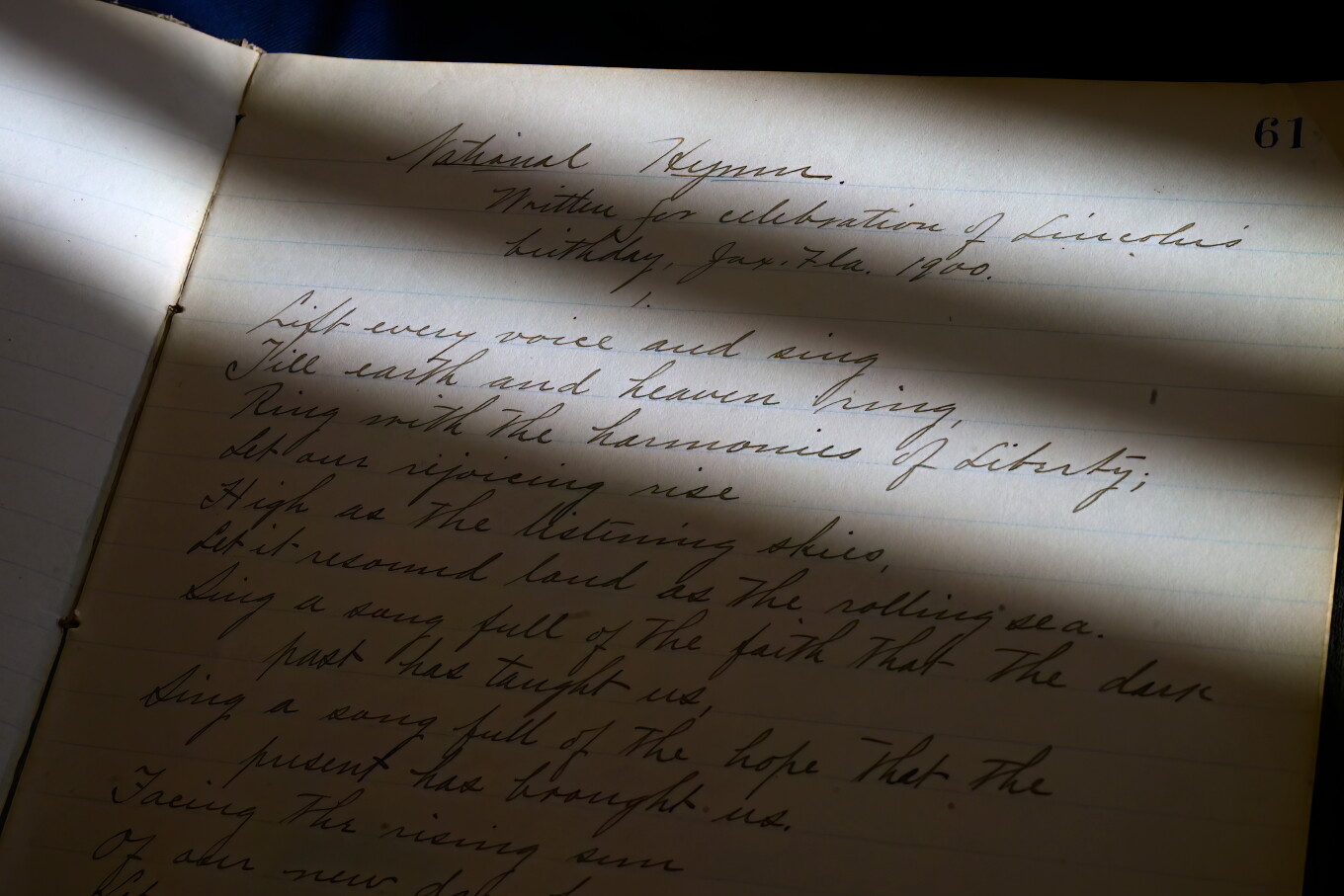
他通过《高声歌唱》这首诗做到了这一点,这首诗后来被谱曲成歌,如今被广泛称为“黑人国歌”。这首诗的原稿连同约翰逊的其他文稿——约翰逊是黑人——均由耶鲁大学贝尼克稀有图书与手稿图书馆收藏。
He did it in “Lift Ev’ry Voice and Sing,” a poem that later became a song and is now widely called the Black National Anthem. The original manuscript along with other papers by Johnson, who was Black, are held by the Beinecke Rare Book and Manuscript Library at Yale University.
约翰逊于1900年在佛罗里达州杰克逊维尔创作《高声歌唱》,作为纪念亚伯拉罕·林肯诞辰庆典的一部分。他的弟弟约翰·罗萨蒙德·约翰逊后来为其谱曲。这首歌首次由黑人儿童在杰克逊维尔的一所学校演出,当时詹姆斯·韦尔登·约翰逊担任该校校长。
Johnson wrote “Lift Ev’ry Voice and Sing” in Jacksonville, Florida, as part of a celebration in 1900 for Abraham Lincoln’s birthday. His brother, John Rosamond Johnson, later composed the music. It first was performed by Black children in a Jacksonville school where James Weldon Johnson was principal.
后来,这首歌被全美有色人种协进会(NAACP)采纳,并在1950年代和1960年代的民权运动游行及其他活动中传唱。歌手金·韦斯顿于2001年在华盛顿林肯纪念堂、乔治·W·布什总统首次就职典礼上演唱了这首歌。它已成为全美黑人教堂和黑人历史月活动中的保留曲目。
The song was later adopted by the NAACP and sung at marches and other events during the Civil Rights movement of the 1950s and 1960s. Singer Kim Weston performed it in 2001 at the Lincoln Memorial in Washington during the first inauguration of President George W. Bush. It has become a standard in Black churches and in Black History Month programs across the United States.
杰克逊维尔持证导游、Explore Jax Core负责人约利·科普兰表示,这首歌遗产的一部分在于:首演之后,它一代代传唱下来。
Yollie Copeland, a licensed tour guide in Jacksonville and owner of Explore Jax Core, says part of the song’s legacy is that after the initial performance, it was passed from generation to generation.
“那些孩子和学生们(长大后)又将这首歌传给了他们的学生,”科普兰说。“詹姆斯·韦尔登·约翰逊曾写道,他几乎忘记了这首歌的存在;几十年后,人们竟然还在唱这首歌,他简直不敢相信这首歌竟然会如此流行。”
“Those same children and students (as adults) taught the song to their students,” Copeland says. “James Weldon Johnson writes that he kind of forgot about the song. Decades later they were singing his song. He just couldn’t believe it caught.”The song’s lyrics tell of perseverance leading to freedom and “liberty” with Lincoln’s 1863g of the Emancipation Proclamation, which freed all slaves held in the Confederate states.
这首歌的歌词表达了坚持与奋斗最终带来自由的主题。1863年,林肯颁布了《解放黑奴宣言》,解放了南方各州的所有奴隶。歌词中写道:“我们走过的道路充满艰辛与苦难;在希望破灭的那些日子里,我们承受了无情的折磨。然而,凭借坚定的信念,我们终于走到了先辈们梦寐以求的地方。”
Lyrics include “Stony the road we trod, bitter the chastening rod felt in the days when hope unborn had died. Yet with a steady beat, have not our weary feet come to the place for which our fathers sighed?”That verse is followed by “We have come over a way that with tears has been watered. We have come, treading our path through the blood of the slaughtered. Out from the gloomy past, ’til now we stand at last where the white gleam of our bright star is cast.”
曼哈顿Middle Collegiate Church的首席牧师兼公共神学家杰奎琳·刘易斯将这首歌称为“美国的瑰宝”:“这首歌讲述了我的信仰,也是我们的信仰——那是一种相信上帝、相信上帝的使命就是解放所有人的信仰。因此,我认为美国可以从这首歌中找到希望;这首歌坦诚地面对了生活中的困境、痛苦与挣扎。”
Jacqueline Lewis, senior minister and public theologian at Middle Collegiate Church in Manhattan, calls “Lift Ev’ry Voice and Sing” an “American treasure.”“This is a song about my faith, our faith,” she says. “The faith is in the God whose destination is liberation, the God whose purpose is to free people, all the people. So, I think America could find its hope in this song that is honest about trouble and honest about pain and honest about struggle.”
这首歌属于一个名为“American Objects”的系列作品,旨在纪念美国独立250周年。
Part of a recurring series, “American Objects,” marking the 250th anniversary of the United States. For more American objects, click here . For more stories on the anniversary, click here .