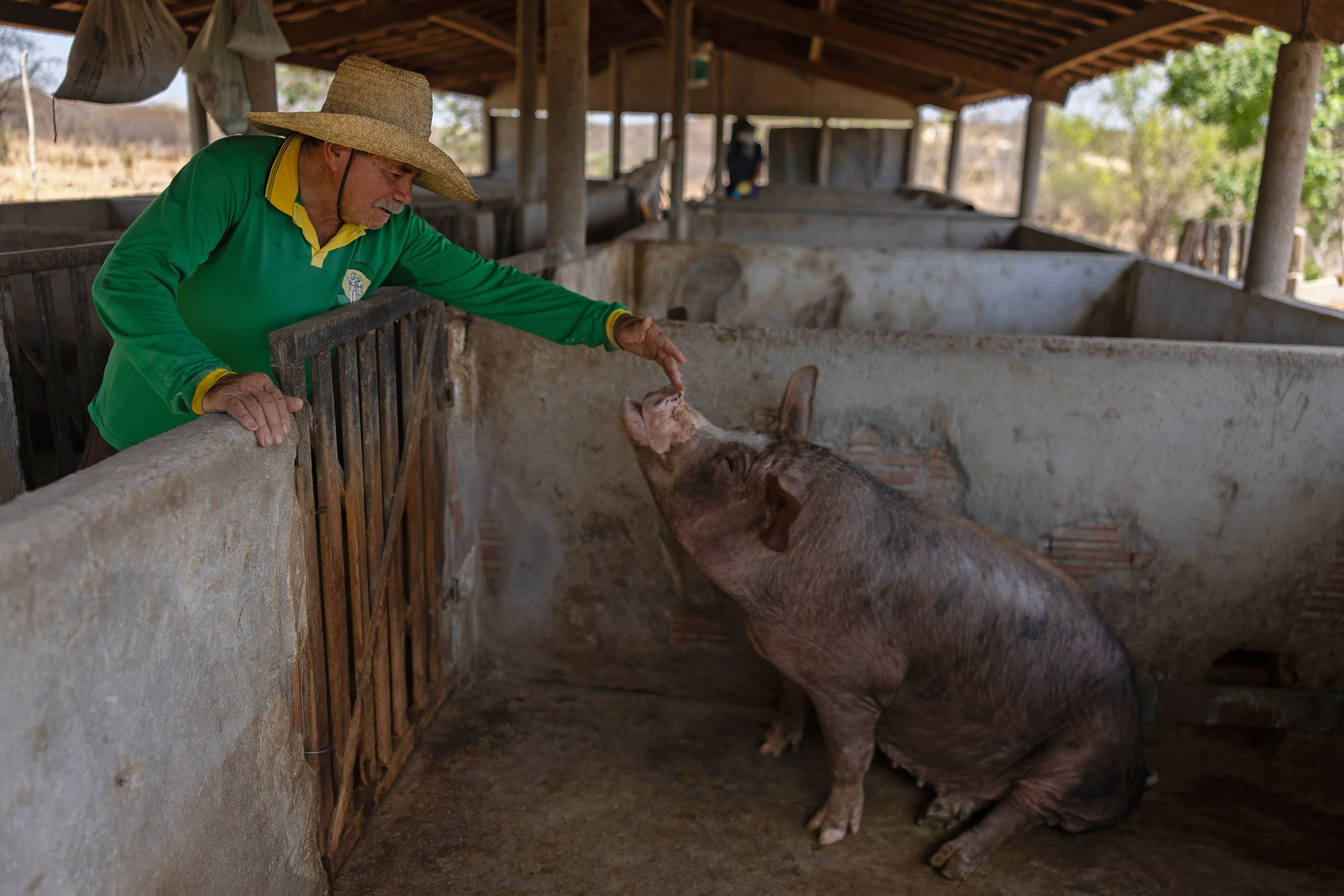
那些生产巴西大部分主食的家庭农场正在积极引进中国先进的人工智能技术,以期实现生产现代化并保障自身的未来发展。
The family farmers who produce the lion’s share of Brazil’s staple foods are opening their arms to cutting-edge Chinese artificial intelligence in a bid to modernise operations and secure their future.
去年9月,巴西和中国签署了一项为期五年的合作计划,旨在帮助那些构成巴西农业支柱的小农户——这些农户长期以来一直面临就业机会减少以及技术获取困难的问题。
Brazil and China agreed to a five-year cooperation programme in September aimed at giving smallholders – the backbone of the Brazilian agricultural sector – an AI boost after a decade of declining employment and limited access to affordable technology.
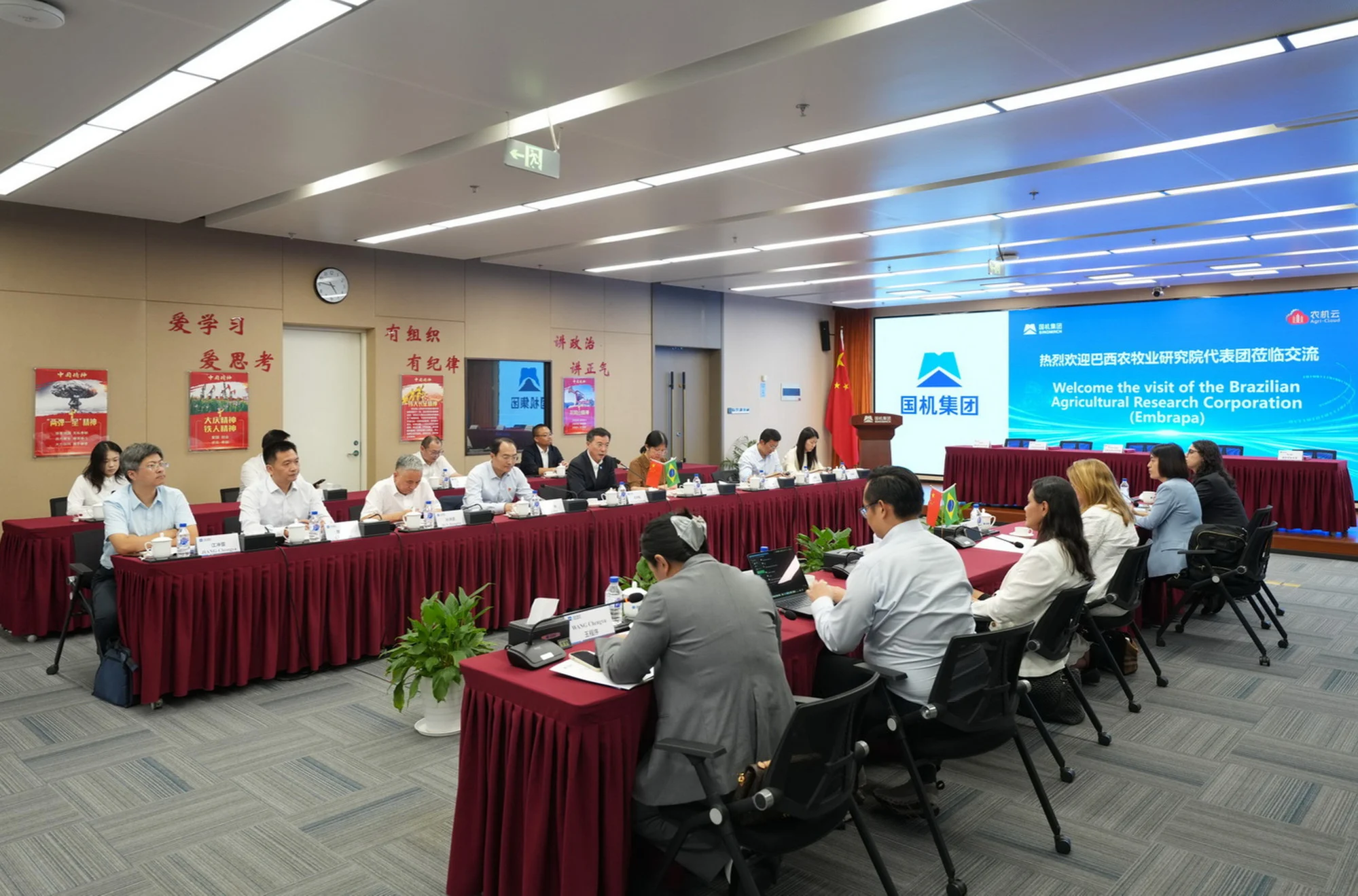
巴西农业研究公司(Embrapa)的代表与四家中国机构在江苏省省会南京签署了谅解备忘录。参与合作的中方机构包括:国有企业中机数字科技股份有限公司、南京农业大学、江苏省农业科学院以及国际人民合作协会。
Representatives of the Brazilian Agricultural Research Corporation (Embrapa) and four Chinese institutions signed the memorandum of understanding in Nanjing, capital of Jiangsu province. The Chinese parties were the state-owned Sinomach Digital Technology Corporation, Nanjing Agricultural University, the Jiangsu Academy of Agricultural Sciences and the International Association for People’s Cooperation.
根据该协议,双方将共同建立“中巴农业人工智能应用合作中心”,通过开发新技术和工具来推动巴西农业的发展。
The agreement includes the establishment of the Brazil-China Cooperation Centre for the Application of AI in Agriculture, aimed at strengthening this key sector of the Brazilian economy by developing new technologies and tools.
Embrapa数字农业部门的研究员卢西亚娜·罗曼尼(Luciana Romani)表示:“我们的目标是将两国的互补优势结合起来,根据巴西的生产、社会和环境条件来开发和调整相关技术。”她提到的互补优势包括“农学知识、人工智能技术、计算机视觉技术、自动化技术以及智能农业机械设备”。
“The idea is to combine complementary skills from both countries … to develop and adapt technologies to Brazilian production, social, and environmental conditions,” said Luciana Romani, a researcher at Embrapa Digital Agriculture. According to Romani, these complementary skills include “agronomic knowledge, artificial intelligence, computer vision, automation and smart agricultural machinery”.
世界银行的数据显示,家庭农场占据了巴西全部农村经营单位的77%;它们生产了全国87%的木薯和70%的豆类——这些作物都是巴西人的主要食物来源。此外,家庭农场还负责生产巴西60%的牛奶、50%的家禽产品以及34%的稻米。
The World Bank has reported that family farming accounts for around 77 per cent of Brazil’s five million rural establishments, producing 87 per cent of the country’s cassava and 70 per cent of its beans – a foundational and essential staple of the Brazilian diet. Family farms are also responsible for 60 per cent of Brazil’s milk, half of its poultry and 34 per cent of its rice.
巴西地理统计局(IBGE)在2017年农业普查中发现,家庭农场雇佣了约1010万人——占农业劳动力的67%,约占总人口的5%。
In its 2017 census of agriculture, the Brazilian Institute of Geography and Statistics (IBGE) found that family farms employed around 10.1 million people – 67 per cent of the agricultural workforce and around 5 per cent of the total population.
巴西农业研究公司(Embrapa)农业生物学部总监克里斯蒂安·阿曼西奥表示:“一个重要里程碑是扩大获取数字技术的渠道,这些技术能减轻健康可持续食品生产中的繁重劳动。这也是帮助留住农村地区工人的重要一步。”根据协议,智能农业机械中心将在巴西家庭农业试点地区建立,小型和中型机械、传感器、物联网设备和人工智能将支持作物监测和管理。
Cristhiane Amancio, general head of Embrapa Agrobiology, said “an important milestone is expanding access to digital technologies that reduce arduous labour in the production of healthy and sustainable food. That is an important step to help keep workers in rural areas as well.”Under the agreement, Smart Agricultural Machinery Centres will be established in pilot family farming areas of Brazil where small and medium-sized machines, sensors, Internet of Things devices and AI will support crop monitoring and management.
巴西农业研究公司数字农业部另一位研究员雅梅·巴尔贝多表示:“集成到农业机械中的技术近年来有了显著发展,并正在巴西得到采用。”
“The technologies integrated into agricultural machinery have evolved significantly in recent years and are being adopted in Brazil,” said Jayme Barbedo, another researcher at Embrapa Digital Agriculture.
不过,他指出,在许多情况下“这些机械要么太昂贵,要么尺寸不适合家庭农业的实际条件”。
However, he noted that in many cases “those machines are too expensive or have dimensions that do not suit the conditions found in family farming”.
罗马尼表示,中巴将共同“确定需求、开发技术,并验证针对家庭农业的人工智能解决方案和其他数字技术”。
According to Romani, China and Brazil will work together “to identify needs, develop technology and validate artificial intelligence solutions and other digital technologies aimed at family farming”.
不过,她表示,被认定在巴西具有潜在应用前景的中国技术是为特定农业条件开发的,必须经过验证、测试和调整,以适应巴西多样的生产体系和当地环境。
However, the Chinese technologies identified as offering potential applications in Brazil were developed for specific agricultural conditions and must be proven, tested and adapted to Brazil’s diverse production systems and local environments, she said.
阿曼西奥补充道,中国机械工业集团(Sinomach)特别是“拥有一个支持不同管理层级决策的综合平台,为农民以及协会、合作社联盟或公共部门的管理者增加价值”。
Amancio added that Sinomach in particular “has an integrated platform that supports decision-making at different management levels, adding value for both farmers and managers within associations, cooperative unions or in the public sector”.
罗马尼还强调了巴西研究团队在人工智能、计算机视觉和自动化方面的专长,这对于在巴西本地条件下测试和调整相关技术至关重要。
Romani also highlighted the expertise of the Brazilian research team in artificial intelligence, computer vision and automation, which will be essential to testing and adapting the technologies to local conditions in Brazil.
初始阶段预计将包括对巴西利亚大学巴中中心已在测试的设备和系统进行评估,并与中国研究人员开展技术交流。
The initial phase is expected to include an assessment of equipment and systems already being tested at the Brazil-China Centre of the University of Brasilia, alongside technical exchanges with Chinese researchers.
罗马尼表示,潜在应用包括“用于病虫害诊断、作物监测、决策支持、更高效利用投入品和自然资源的人工智能系统,以及将这些工具与智能农业机械和设备相集成”。
Romani said potential applications included “artificial intelligence-based systems for pest and disease diagnosis, crop monitoring, decision-making support, more efficient use of inputs and natural resources, as well as the integration of those tools with smart agricultural machinery and equipment”.
她说,中国在为小农户和中等规模农户开发技术方面的历史和传统,加上其在自动化和机器人技术方面的进步,是选择中国合作伙伴开展该项目的重要因素。
The history and tradition of China in developing technologies for smallholders and medium-scale farmers, together with its advances in automation and robotics, were an important factor in choosing Chinese partners for the project, she said.
“这些知识补充了巴西已有的成果,非常契合当前小农户和中等规模农户的需求。”研究人员表示,此次合作旨在超越技术转让,建立一个持续的联合开发、适配、验证和知识交流过程,为家庭农业提供切实可行的解决方案。
“This knowledge complements what has been developed in Brazil and fits very well with the current needs of smallholders and midscale farmers.”The researchers said the cooperation was intended to go beyond technology transfer, establishing a continuing process of joint development, adaptation, validation and knowledge exchange to deliver practical solutions for family farming.
巴尔贝多表示,人工智能的使用并不代表一种新的耕作模式。相反,它将“作为支持决策、自动化以及将技术适配到真实家庭农业条件的工具,发挥核心作用”。
According to Barbedo, the use of AI does not represent a new model of farming. Instead, it will “play a central role as a tool to support decision-making, automation and the adaptation of technologies to real family farming conditions”.
他说,通过结合来自传感器、机械和其他数字工具的数据,这些技术可用于解读、识别模式、优化资源、支持农业问题诊断,并改善投入品和自然资源的利用。
By combining data from sensors, machines and other digital tools, these technologies could be used to interpret, identify patterns, optimise resources, support the diagnosis of agricultural problems and improve the use of inputs and natural resources, he said.
“人工智能不应被视为目的本身,也不应被视为农学知识和农民经验的替代品,而应被视为一种能够拓展这些能力的技术。”巴尔贝多表示,该项目将主要集中于改良现有的人工智能模型,而非开发新模型。研究人员需要考虑到巴西多样化的生产体系、作物、环境条件和生产者概况。
“Artificial intelligence should not be seen as an end in itself, nor as a substitute for agronomic knowledge and the experience of farmers, but as a technology that can expand such capabilities.”According to Barbedo, the project will focus mainly on adapting existing AI models rather than developing new ones. The researchers will need to account for Brazil’s diverse production systems, crops, environmental conditions and producer profiles.
他说:“持续的数据收集、调整、测试和验证工作将至关重要,确保每一个开发出的解决方案都可靠且适合实际应用。”
“Consistent data collection, adjustment, testing and validation efforts will be essential, ensuring that each developed solution is reliable and suitable for real-world use,” he said.
罗马尼补充道:“该项目旨在将人工智能和自动化领域的进展转化为具体、负担得起且可靠的工具,这些工具有潜力提高效率、降低成本、改善可持续性,并拓展小农户和中等规模农户的管理能力。”该项目还需要考虑如何使这些技术变得负担得起。“一种可能的途径是让农民协会和合作社联合会参与进来,以便更快地推广应用,”巴尔贝多说。
Romani added: “The project aims to transform advances in AI and automation into concrete, affordable and reliable tools with the potential to increase efficiency, reduce costs, improve sustainability and expand the management capacity of smallholders and midscale farmers.”The project will also need to consider how to make these technologies affordable. “One possible approach is the involvement of farmers’ associations and cooperative unions to allow for quicker adoption,” Barbedo said.
巴西农业研究公司(Embrapa)总裁西尔维娅·马苏哈表示:“如果我们不在数字化方面纳入家庭农业中的小农户和中等规模农户,他们与大规模农户之间的差距将会扩大。”
Silvia Massruha, Embrapa president, said that “if we don’t digitally include smallholders and midscale farmers in family agriculture, the gap between them and large-scale farmers will grow”.
据巴西地理统计局(IBGE)数据,2006年至2017年间,巴西的家庭农业减少了9.5%,该领域的就业人数减少了约220万。同期,非家庭农业的就业人数增加了约70.3万。
Family farming in Brazil declined by 9.5 per cent between 2006 and 2017, according to the IBGE, while employment in the sector decreased by around 2.2 million people. Over the same period, employment in non-family farming increased by around 703,000.
巴西农业研究公司农业生物学研究中心的阿曼西奥强调了南南科学技术合作在增强国家能力和自主性、以及支持经济社会发展方面的重要性。
Embrapa Agrobiology’s Amancio highlighted the importance of South-South scientific and technological cooperation in strengthening national capabilities and autonomy as well as supporting economic and social development.
合作预计还将包括科学技术交流、培训和能力建设活动,例如让中国科学家有机会更多地了解巴西农业研究公司的经验,同时更好地了解家庭农业的社会文化条件。
The cooperation is also expected to include scientific and technical exchange, training and capacity-building activities, such as giving Chinese scientists the opportunity to learn more about the Brazilian Agricultural Research Corporation’s experience, while gaining a better understanding of the sociocultural conditions of family farming.
“提高对投资科技以促进国家发展重要性的认识至关重要,这样像这样的伙伴关系才能日益提升巴西科学家的素质,并增强国家工业和农业部门的实力,”阿曼西奥说。
“Raising awareness of the importance of investing in science and technology to promote national development is fundamental so that partnerships like this one can increasingly qualify Brazilian scientists and strengthen both the national industrial and agricultural sectors,” Amancio said. By Emiliano Martínez Viademonte