
一项调查发现,只有 3% 的香港企业已将人工智能(AI)全面融入工作流程,许多企业面临的障碍包括对组织变革的抵触以及陈旧的数字基础设施。
Only 3 per cent of Hong Kong companies have fully integrated AI into their workflows, with many facing hurdles including resistance to organisational change and outdated digital infrastructure, a survey has found.
咨询公司埃森哲(Accenture)周三发布了对 150 家公司的调查结果,称调查显示企业有强烈意愿在工作中采用人工智能,但许多企业难以付诸实践。
Consultancy Accenture, which polled 150 companies and released the results on Wednesday, said the survey suggested businesses had a strong desire to adopt artificial intelligence (AI) in their work but many struggled to put it into practice.
埃森哲香港办事处负责人夏礼德(Robert Hah)表示:“香港确实拥有强烈的 AI 野心和浓厚兴趣,坦白说,现在也具备了正确的要素。然而,极少有企业真正在全业务范围内规模化应用 AI。”
“Hong Kong really has strong AI ambitions and strong interest, and frankly, the right ingredients in place now. However, few enterprises have really scaled AI across the business,” said Robert Hah, the consultancy’s Hong Kong office lead.
夏礼德指出,政府推动 AI 产业发展和提升城市劳动力技能的举措,以及香港稳健的资本市场,都是企业采用 AI 的有利条件。
Hah pointed to government initiatives to promote the AI industry and upskill the city’s workforce, as well as Hong Kong’s robust capital markets, as favourable conditions for companies’ adoption of AI.
但他指出,运营和组织模式变革遭遇的阻力,以及企业内部陈旧的数字核心基础设施,正在拖延 AI 的采用。
But resistance to change in operational and organisational models, as well as outdated digital core infrastructure within companies, was delaying AI adoption, he noted.
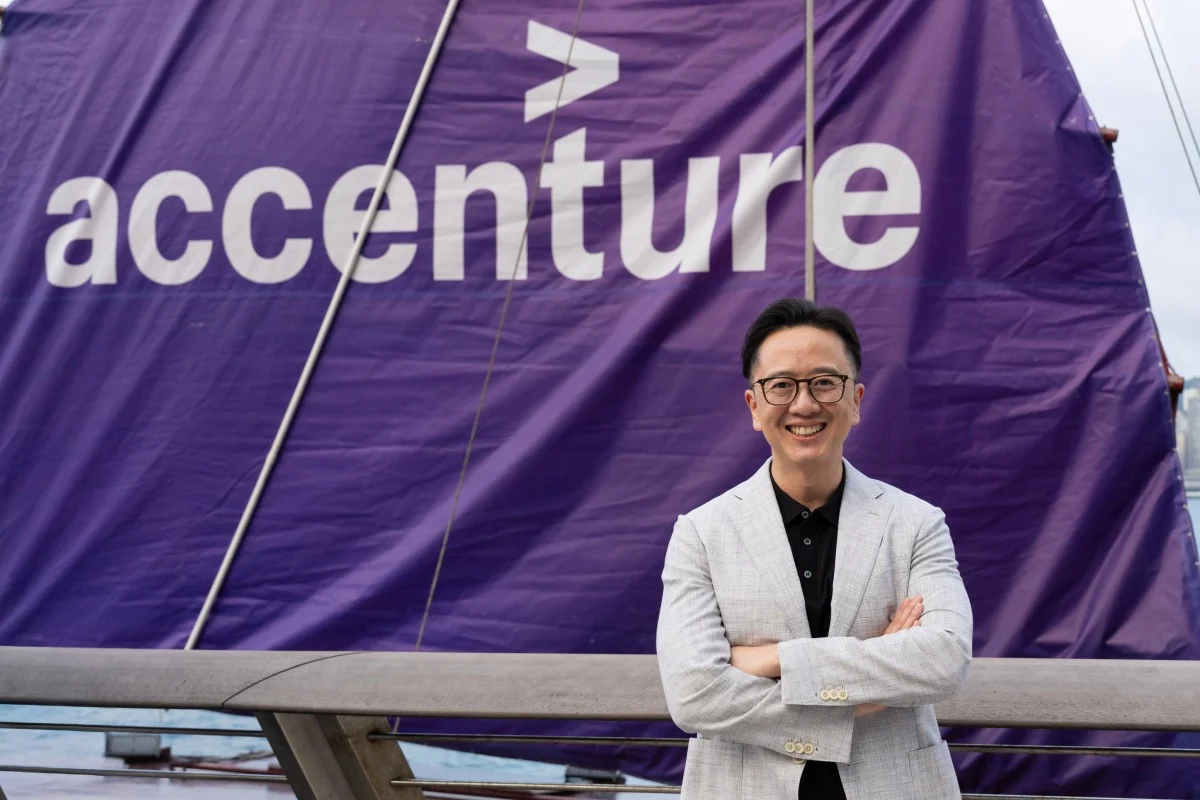
这项名为“香港 AI 指数”的调查于今年启动。它从 10 个维度评估受访者的 AI 就绪程度,分为两大类:基础能力和新 AI 与数据核心能力。
The survey, titled the “Hong Kong AI Index”, was launched this year. It evaluates respondents’ AI readiness across 10 dimensions, divided into two categories: foundational capabilities and new AI and data essential capabilities.
第一类评估受访者是否具备 AI 战略、数字基础设施、数据治理框架、伦理保障和整体员工 AI 素养等方面的基线能力。
The first category assesses whether the respondents have baseline capabilities in AI strategy, digital infrastructure, data governance frameworks, ethical safeguards and overall employee AI literacy.
第二类侧重于受访者能否大规模实现 AI 应用的产业化。这些包括大语言模型运维、现代数据库结构、数据源多样性、AI 模型与产品管理以及专业人才技能提升。
The second focuses on whether they can industrialise AI applications at scale. These include large language model operations, modern database structures, data source diversity, management of AI models and products and specialised talent upskilling.
在 0 到 1 的评分标准下,香港受访者在前一类别中的平均得分为 0.42,在后一类别中的平均得分为 0.47。
On a scale of 0 to 1, Hong Kong respondents reported an average score of 0.42 in the former category and 0.47 in the latter.
但夏警告不要直接将香港的表现与其他经济体进行比较,并表示每个市场都有其独特的情况。
But Hah cautioned against directly comparing the city’s performance with other economies, saying each market had its own unique circumstances.
调查发现,香港的企业领袖为人工智能应用设定了雄心勃勃的目标。
The survey found that business leaders in Hong Kong had set ambitious goals for AI adoption.
调查显示,受访企业平均预期,在人工智能的帮助下,在18个月内可实现生产力提升15%、收入增长14%、客户体验改善14%以及成本降低11%。
The companies on average expected to deliver a 15 per cent increase in productivity, a 14 per cent uplift in revenue, a 14 per cent improvement in customer experience and an 11 per cent reduction in costs over an 18-month period with the help of AI, the poll showed.
相比之下,目前仅有12%的受访者的人工智能举措已扩展至整个组织并产生实质性成果,而只有3%的组织能将人工智能完全融入其业务战略,凸显了雄心与运营之间的差距。
In contrast, only 12 per cent of the respondents’ AI initiatives had currently expanded across an organisation to deliver impactful outcomes, while only 3 per cent of the organisations could fully integrate AI into their business strategies, highlighting an ambition-operation gap.
夏表示:“我真心认为,在当今的环境下,[人工智能]部署面临的最大问题与技术无关。真正关乎的是人、思维模式[和]运营模式。”
“I truly believe in today’s environment, the biggest issue with [AI] deployment has nothing to do with technology. It really is about people, mindset [and] operating models,” Hah said.
调查发现,45%的企业将停滞不前的运营模式视为其更广泛应用人工智能的障碍。其他常见障碍包括对组织变革的抵触,以及无法预判挑战和机遇。
The survey found that 45 per cent of firms had identified stagnant operating models as a barrier to their wider AI adoption. Other common obstacles included resistance to organisational change and an inability to anticipate challenges and opportunities.
据夏介绍,企业不应盲目地将人工智能引入现有工作流,而应通过人工智能的视角重塑其运营。
According to Hah, rather than blindly introducing AI to existing workflows, companies should instead re-engineer their operations through the lens of AI.
夏举了一个利用人工智能制作PowerPoint幻灯片的例子,他表示这可能很耗时,因为用户必须反复优化提示词,才能生成符合其需求的幻灯片。
Hah cited the example of using AI to make PowerPoint slides, which he said could be time-consuming as users had to repeatedly refine their prompts to produce slides consistent with their needs.
他说:“你需要重新思考:考虑到生成式人工智能的运作方式,这个流程未来是否还需要存在?它真的是像今天这样线性的流程吗?”
“You need to rethink: does this process even need to exist in the future, given how Gen AI works? Is it really a linear process like it is today?” he said.
报告中引用的一个成功案例是香港的旗舰航空公司国泰航空,该公司高度重视实验,使其能够快速测试并验证人工智能应用的新兴想法。
A successful example cited in the report was Hong Kong’s flagship carrier, Cathay Pacific Airways, which attached great importance to experimentation, making it quick to test and prove emerging ideas of AI adoption.
报告补充称,经过验证的用例随后进入了下一阶段,重点关注成果、整合与问责。
Proven use cases then moved into the next phase focused on outcomes, integration and accountability, the report added.
报告指出,这一举措使该运营商能够快速识别出能为其运营带来价值的 AI 计划。
This measure had enabled the carrier to quickly identify AI initiatives that could bring value to its operation, the report said.
夏先生表示,人力资源部门应重新思考 AI 时代所需的人才,而 IT 部门应重塑其数字基础设施,以利用组织运营中的非结构化数据。
Hah said human resources departments should rethink the talent needed in the AI world, while IT departments should rewire their digital infrastructure to make use of the unstructured data of their organisations’ operations.
此外,他表示,还需要一个完善的治理框架,以确保 AI 的负责任使用。
Beyond that, a sound governance framework would also be needed to ensure the responsible use of AI, he said.
科技发展,尤其是 AI,已成为香港首个五年规划和最新一份施政报告的核心议题,政府正致力于完善该技术的治理与法律框架、资助企业采用 AI 以及在 AI 时代提升劳动力技能。
The development of technology, especially AI, has taken a centre stage in Hong Kong’s first five-year plan and the latest annual policy address, with the government working to refine the governance and legal frameworks for the technology, subsidise enterprises in adopting AI and upskill the labour force amid the AI era.
夏先生表示,这些举措为企业营造了良好的政策环境,企业现在应审视其治理架构,以发挥该技术的价值。
Hah said these moves had set a good policy environment for companies and that it was time for them to review their governance structure to leverage the technology’s value.