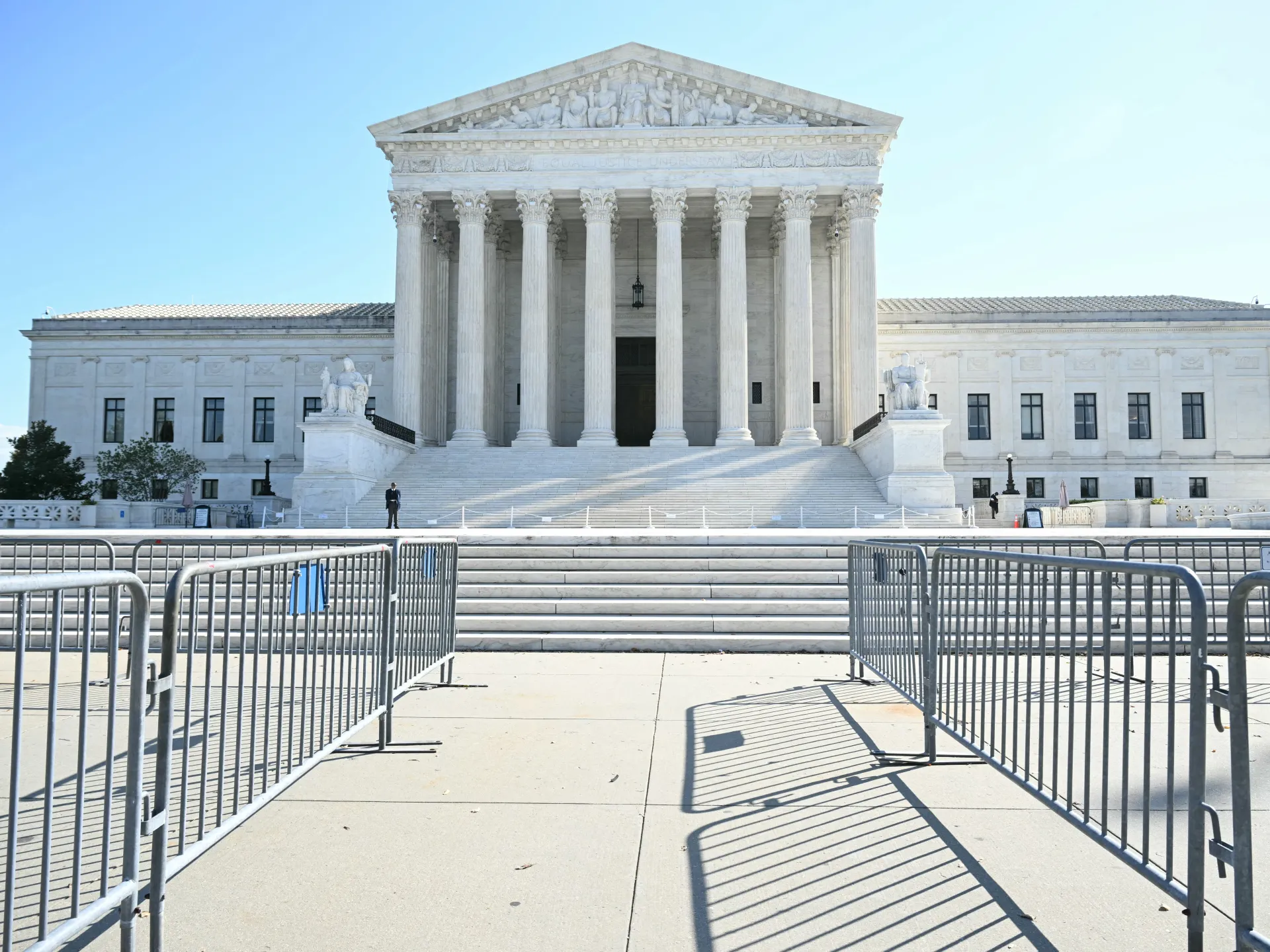
今年秋天,最高法院将审议一个对美国民事权利可能产生深远影响的问题:谁有权执行这些权利?11月30日,大法官们将审理一起案件,其核心是联邦资助大学的教职工是否可以依据《教育修正案第九条》(Title IX)就所谓的职场性别歧视提起诉讼。特朗普政府已敦促法院作出他们不能这样做的裁决,其论点是国会从未赋予大学员工提起此类索赔的私人诉讼权。
This autumn, the Supreme Court will consider a question with potentially far-reaching consequences for civil rights in the United States: Who gets to enforce them? On November 30, the justices will hear a case over whether employees of federally funded universities can sue under Title IX over alleged workplace sex discrimination. The Trump administration has urged the court to rule that they cannot, arguing that Congress never gave university employees a private right to bring such claims.
这场争议是更广泛法律攻势中的最新战线,该攻势旨在限制个人和倡导团体自行将权利侵犯行为诉诸法庭的能力。今年6月,最高法院拒绝审理针对一项联邦上诉法院裁决的上诉,该裁决禁止移民倡导组织“阿肯色团结”提起诉讼,以强制执行对需要投票协助的选民的保护。在越来越多的案件中,共和党主导的州和特朗普政府正在推进同一个基本原则:除非国会明确授权普通公民起诉,否则法律的执行应主要交由政府负责。
The dispute is the latest front in a broader legal push to restrict the ability of individuals and advocacy groups to take rights violations to court themselves. In June, the Supreme Court declined to hear a challenge to a federal appeals court ruling that barred Arkansas United, an immigrant advocacy organisation, from suing to enforce protections for voters who need assistance at the polls. Across a growing number of cases, Republican-led states and the Trump administration are advancing the same basic principle: Unless Congress has clearly authorised private citizens to sue, enforcement should largely be left to the government.
这听起来可能是一个晦涩难懂的法律论据,但其影响绝非如此。如果个人和民权组织在保护他们的法律遭到违反时无法诉诸法院,那么决定哪些权利能够真正得到执行的权力,将日益落在那些可能正在违反、忽视或选择不执行这些权利的政府手中。
That may sound like an arcane legal argument, but its implications are anything but. If individuals and civil rights groups cannot go to court when laws protecting them are violated, the power to decide which rights are actually enforced increasingly rests with the very government that may be violating, ignoring or choosing not to enforce them.
私人诉讼权允许个人或代表他们的群体提起诉讼,以执行法律保护的权利。此类诉讼可以寻求对法律的遵守或对过去违规行为的赔偿。在美国联邦和州法律下,私人诉讼权并非自动赋予。国会和州议会有时会明确授权私人诉讼。在未作明确授权的情况下,法院则必须判定某项法律是隐性地允许个人或群体起诉,还是执法权完全归属于政府主管机构。
A private right of action allows individuals, or groups acting on their behalf, to file lawsuits to enforce rights protected by law. These lawsuits can seek compliance with the law or compensation for past violations. Private rights of action are not automatic under US federal and state law. Congress and state legislatures sometimes explicitly authorise private lawsuits. Where they have not, courts have had to determine whether a law implicitly allows individuals or groups to sue, or whether enforcement rests solely with government authorities.
在实践中,私人诉讼在整个美国历史的大部分时间里一直是执行权利的重要组成部分。正如弗吉尼亚大学法学院教授乔治·拉瑟格伦在2015年一篇法律评论文章中写道:“民权的悠久历史可追溯到重建时期,使其本质上属于私人权利,其行使和执行应主要依赖于拥有这些权利的个人的主动性。公共执行无疑仍然必要,并且在民权法中拥有同样悠久而卓越的传统,但它不能完全取代个人对个人权利的控制。”
In practice, private litigation has been an essential part of enforcing rights throughout much of US history.
私人诉权的支持者,如美国退休人员协会,认为它们是弱势个人和群体在政府机构不愿或无法采取行动时保护自身权利的有效工具。然而,批评者,如美国商会法律改革研究所,则认为私人诉讼可能会鼓励无稽之诉。这些批评者通常来自政治右翼,曾试图通过反对私人诉讼理由的法律论据来限制私人诉讼。一个例子是2001年亚历山大诉桑多瓦尔案,当时由安东宁·斯卡利亚大法官领导的最高法院大多数法官裁定,第六章并未提供私人诉权来执行禁止对受保护群体产生不同影响的政策或做法的法规——这种歧视可能在没有明确意图证据的情况下发生。
As University of Virginia School of Law Professor George Rutherglen writes in a 2015 law review article (“The long history of civil rights, dating back to Reconstruction, makes them quintessentially private rights, whose exercise and enforcement should depend primarily on the initiative of the individuals who bear those rights. Public enforcement no doubt remains necessary, and it has an equally long and distinguished pedigree in civil rights law, but it cannot entirely displace individual control over individual rights.” Proponents of private rights of action, such as AARP, consider them an effective tool for vulnerable individuals and groups to protect their rights when government agencies are unwilling or unable to act. Critics, such as the US Chamber of Commerce Institute for Legal Reform, however, argue that private lawsuits can encourage frivolous litigation These critics, often from the political right, have attempted to restrict private litigation through legal arguments against private causes of action. An example is the 2001 Alexander v Sandoval decision, in which a Supreme Court majority led by Justice Antonin Scalia ruled that Title VI did not provide a private right of action to enforce regulations prohibiting policies or practices with a disparate impact on protected groups – discrimination that can occur without clear evidence of intent.
针对私人诉权的法律攻势近年来愈演愈烈。由共和党主导的州日益挑战默示私人诉权原则,主张法院应驳回旨在强制执行各类权利的私人诉讼。特朗普政府也采纳了这一立场。在法院审理一起2021年投票权案件时,大法官尼尔·戈萨奇提交了一段简短的协同意见,大法官克拉伦斯·托马斯加入,质疑“1965年《投票权法案》是否提供了默示诉因”,尽管该问题并未在案件本身中提出。
The legal push against private rights of action has intensified in recent years. Republican-led states have increasingly challenged the doctrine of implied private rights of action, arguing that courts should reject private suits to enforce various types of rights. The Trump administration has also adopted this stance. When the court decided a 2021 voting rights case, Justice Neil Gorsuch submitted a one-paragraph concurrence, joined by Justice Clarence Thomas, questioning whether “the Voting Rights Act of 1965 furnishes an implied cause of action,” despite that issue not being raised in the case itself.
保守派限制私人诉权的推动已延伸至多个领域。6月,最高法院在法轮功学员起诉思科系统公司协助中国政府开发用于迫害他们的监控技术一案中,裁定原告败诉,认定他们无法依据所援引的联邦法律提起协助教唆指控。
The conservative push to restrict private rights of action has extended to a variety of areas. In June, the Supreme Court ruled against Falun Gong practitioners who accused Cisco Systems of helping the Chinese government develop surveillance technology used to facilitate their persecution, concluding that they could not pursue those aiding-and-abetting claims under the federal laws they had invoked.
限制私人诉权最重大的影响之一是对投票权构成威胁。在“阿肯色联合”案中,第八巡回上诉法院裁定,该移民权益组织无权代表非英语母语人士提起诉讼,主张其在投票站获得语言协助的权利。该裁决涉及1965年《投票权法案》第208条。但它延伸适用了第八巡回法院已采纳的一项更宽泛的论点:即私人个人和权益组织不能提起诉讼以强制执行《投票权法案》的关键条款。最高法院6月拒绝受理“阿肯色联合”案,使该裁决继续生效。
One of the most consequential implications of restricting private rights of action is the threat to voting rights. In the Arkansas United case, the Eighth Circuit ruled that the immigrant advocacy organisation did not have the right to sue on behalf of non-native English speakers over the right to have language assistance in the voting booth. The ruling concerned Section 208 of the Voting Rights Act of 1965. But it extended a much broader argument already adopted by the Eighth Circuit: that private individuals and advocacy organisations cannot sue to enforce key provisions of the Voting Rights Act. The Supreme Court’s refusal in June to hear Arkansas United left that ruling in place.
这一论点也已被两个由共和党领导的政府在两起选区重划和选票稀释案件中推动:密西西比州的选举委员会诉全国有色人种协进会案,以及北达科他州的龟山切佩瓦印第安人部落诉豪案。5月,最高法院撤销了这两起案件的判决,并将其发回重新审议,以参考其在路易斯安那州诉卡莱案中的裁决,但未解决私人执行问题。
This argument has also been pushed by Republican-led governments in two redistricting and vote-dilution cases: Board of Election Commissioners v NAACP in Mississippi and Turtle Mountain Band of Chippewa Indians v Howe in North Dakota. In May, the Supreme Court vacated judgments in both cases and sent them back for reconsideration in light of its ruling in Louisiana v Callais without resolving the private-enforcement question.
该裁决大幅提高了部分种族选票稀释索赔的门槛,危及美国各地黑人、西班牙裔和美洲原住民社区的投票权。与此同时,由保守派控制的政府正试图剥夺这些社区成员及其倡导者将此类案件提交法院的权利,辩称只有司法部才能就此类投票权侵权行为发起诉讼。
That decision sharply raised the bar for some racial vote-dilution claims, endangering the voting power of Black, Hispanic and Native American communities across the US. At the same time, conservative-controlled governments are attempting to deny members and advocates for these communities the right to even bring some of these cases before the courts, arguing that only the Department of Justice can initiate action over such voting rights violations.
更广泛的危险在于,随着私人诉讼权受到限制,联邦法律的执行越来越取决于行政部门的决定。
The broader danger is that, as private rights of action are curtailed, enforcement of federal law increasingly depends on decisions made by the executive branch.
特朗普政府现在正在采取另一种手段限制私人执行。《清洁空气法》明确赋予私人公民提起某些诉讼的权利,但司法部试图介入并驳回一起针对xAI的案件,指控该公司位于密西西比州萨文的电力设施中的燃气涡轮机违反联邦环境法,污染周边社区。该设施为xAI位于附近孟菲斯的Colossus 2数据中心供电。9月,司法部向第五巡回上诉法院提起上诉,并寻求中止该案。
The Trump administration is now pursuing a different means of restricting private enforcement. The Clean Air Act explicitly gives private citizens the right to bring certain lawsuits, yet the Justice Department has sought to intervene and dismiss a case brought against xAI over allegations that gas turbines at its power facility in Southaven, Mississippi, are violating federal environmental law and polluting surrounding communities. The facility powers xAI’s Colossus 2 data centre in nearby Memphis. In September, the Justice Department appealed to the Fifth Circuit and sought to halt the case.
司法部辩称,允许该诉讼继续进行将威胁国家安全以及美国在人工智能领域追求全球领导地位的努力。这里的问题不在于国会是否创设了私人起诉权——它确实创设了——而在于行政部门是否仍可在该案与其优先事项相冲突时介入阻止此类案件。
The department has argued that allowing the suit to proceed would threaten national security and the US pursuit of global leadership in AI. Here, the issue is not whether Congress created a private right to sue – it did – but whether the executive branch can nevertheless step in to stop such a case when it conflicts with its priorities.
在当前政府治下,仅依靠司法部在联邦层面追究此类案件,是一个尤其可疑的主张。该部门还被武器化,用来针对特朗普总统的政治对手。其民权司已被引导偏离捍卫种族和族裔少数群体权利的职责,转而专注于白人原告提起的、指控所谓“反向歧视”的案件。司法部当前的政治化或许会在未来某届政府任内被逆转。但即便到那时,私人诉讼权的侵蚀也将使公民权利和政治权利的执行日益依赖一个资源有限、受政治方向左右的联邦机构。
Relying solely on the Justice Department to pursue such cases at the federal level is a particularly dubious proposition under the current administration. The department has also been weaponised to target political foes of President Trump.
例如,正如“民主案卷”在2024年所指出的,在其当时追踪的216起活跃的投票权和选区重划案件中,只有五起是由司法部提起的。正如拉瑟格伦教授在其文章中所指出的,主要依靠政府行为者来执行权利,“就是改变这些权利的性质:从私人变为公共,从个人变为群体,从原告的法律控制变为行政官员的政治控制。”私人诉讼权如今正被逐案侵蚀。
政界人士、公民自由倡导者和组织必须在更多执行途径被关闭之前挑战这一趋势。否则,数十年争取来的保护可能会日益依赖政府当局维护它们的意愿,使权利受侵害者寻求救济的途径越来越少。
Its Civil Rights Division has been steered away from defending the rights of racial and ethnic minorities and refocused on cases brought by white plaintiffs alleging so-called “reverse discrimination The Justice Department’s current politicisation may be reversed under a future administration. But even then, the erosion of private rights of action would leave the enforcement of civil and political rights increasingly dependent on a federal agency with limited resources and subject to political direction. For example, as Democracy Docket noted in 2024, of the 216 active voting rights and redistricting cases it was tracking at the time, only five were cases brought by the Justice Department. As Professor Rutherglen noted in his article, to rely primarily on government actors to enforce rights “is to transform the nature of those rights: from private to public, from individuals to groups, from legal control by plaintiffs to political control by administrators.” Private rights of action are now being eroded, case by case. Politicians, civil liberties advocates and organisations must challenge this trend before more avenues for enforcement are closed off. Otherwise, protections won over decades may become increasingly dependent on the willingness of government authorities to uphold them, leaving those whose rights are violated with fewer ways to seek redress.