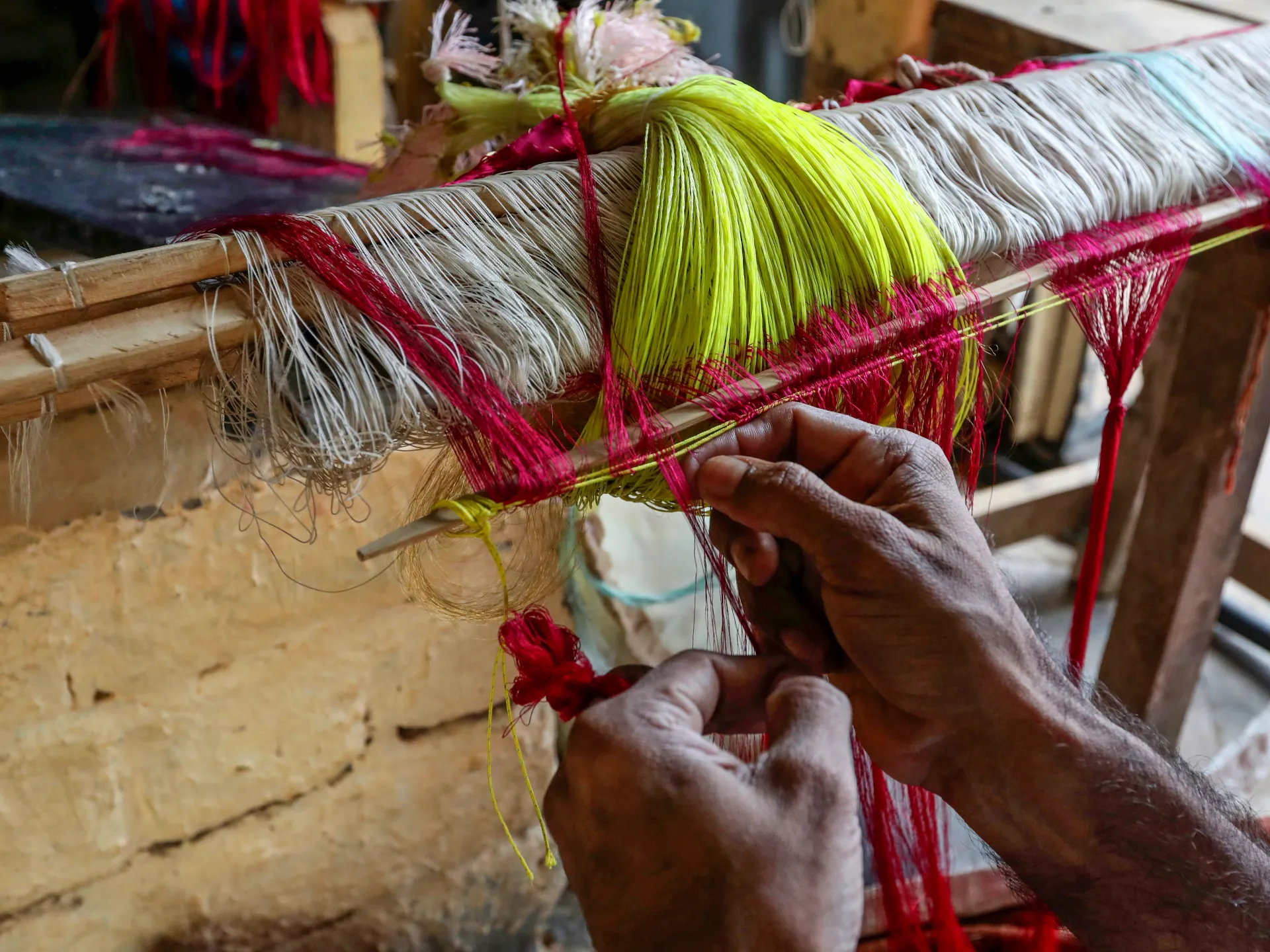
比图潘·德卡(Bitupan Deka)在印度东北部梅加拉亚邦与母亲购买“加穆萨”(传统围巾)时,注意到了一件不寻常的事情。
Bitupan Deka was out shopping for a “gamusa” (traditional scarf) with his mother in India`s northeastern state of Meghalaya when he noticed something unusual.
“每家出售这种围巾的商店都反复使用同样的几种图案,”他从梅加拉亚邦首府西隆通过电话告诉半岛电视台。
“Every shop selling the scarf had the same handful of patterns repeated over and over,” he told Al Jazeera over the telephone from Shillong, the capital of Meghalaya.
“当我打听时,发现邻近阿萨姆邦苏尔库奇地区的织工,为他们开发的每种设计只获得一次性约2000卢比(约合21美元)的报酬,而不是版税。减少设计数量是制造商采取的一种降本措施。”这一发现促使德卡——西隆麻省理工学院计算机技术助理教授——开发出一种能为此类面料生成无限新设计的系统。
“When I asked around, I found that weavers in Sualkuchi [district in neighbouring Assam state] are paid a one-time fee of roughly 2,000 rupees [$21] for each design they develop, instead of royalties. Cutting down the number of designs they produce was a cost-saving practice followed by the manufacturers.”This discovery prompted Deka, an assistant professor of computer technology at Shillong`s MIT University, to create a system that can produce infinite new designs for such fabrics.
“我的工作并非旨在取代传统设计师。我希望它能成为他们手中的工具,让他们更轻松地创作出新颖、现代的图案,让消费者有更多选择,”德卡表示。
“My work isn`t meant to replace the traditional designers. I hope, instead, that it will become a tool in their hands to create new and modern motifs more easily, so the consumers can have variety,” Deka said.
一旦该专利——目前正由其大学的研发部门申请——获得批准,德卡计划将该系统商业化,打造一家纺织行业可使用的商业设计服务。
Once the patent, which is being applied for under the research and development department of his university, comes through, Deka plans to monetise the system by making it a commercial designing service that the textile industry can avail.
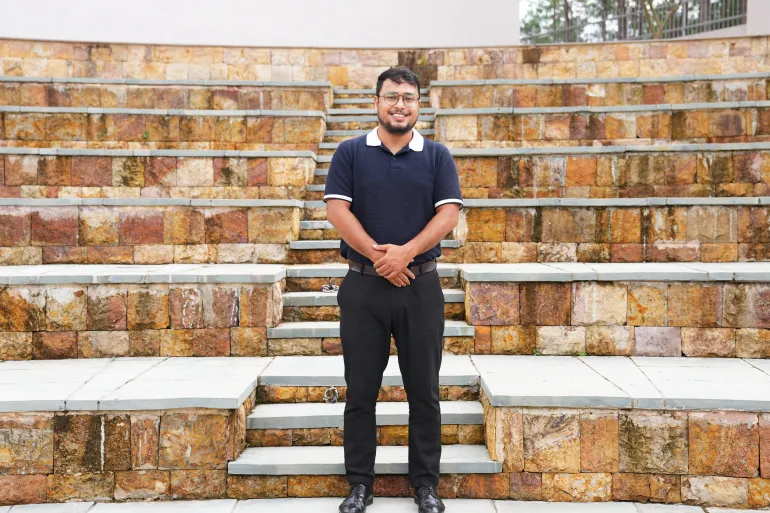
印度多样的纺织传统、图案和图样承载着一个地方的记忆和人民的神话——有时甚至承载着迁徙的历史。
dia`s varied textile traditions, patterns and motifs carry the memory of a place and the mythology of its people – sometimes even the history of migrations.
这些设计由织工从周围存在的事物中构思而成,然后使用当地可得的颜料绘制而成,多半使用雕刻的陶土和木制框架。这些织工并非简单地复制图案;他们继承了图案。他们的手在祖母曾犹豫之处也会犹豫,并且知道某朵特定的花必须朝左。
The designs are imagined by weavers from things that exist around them, and then painted with locally available colours, mostly using carved clay and wooden frames. These weavers do not simply reproduce a pattern; they inherit it. Their hands hesitate where their grandmother`s did, and they know why a particular flower must face left.
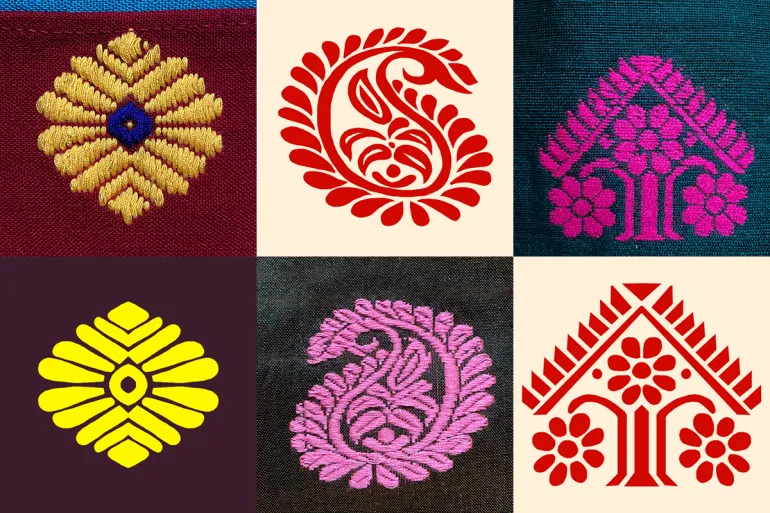
计算机没有这样的继承或犹豫。它通过分析图片并以无限变化重复它们来学习。然而,正如德卡的系统所显示的,计算机现在可以绘制并织出同一朵花。
A computer has no such inheritance or hesitation. It learns by analysing pictures and repeating them in endless variations. And yet, as Deka`s system shows, the computer can now draw and weave the same flower.
“Rekh Sanganeri”数据集是一个类似的项目,专为来自印度西部拉贾斯坦邦的手工版画纺织品(Sanganeri纺织品)而开发。该数据集包含了高分辨率的印花图案图像,并对这些图像中的细节(如墨水渗漏现象或轻微的印刷错位)进行了标注——这些瑕疵正是手工制作的典型特征。
The Rekh Sanganeri Dataset is a similar system developed for hand-block printed Sanganeri textiles from the western Indian state of Rajasthan. It includes high-resolution images of printed patterns, annotated down to ink bleed and slight misalignment – the imperfections that are the hallmark of the handmade work.
该数据集的开发者Reddy Sai Nivas C表示,该数据集应被用作研究和艺术创作的资源,而非替代传统工匠的工具。
Its developer, Reddy Sai Nivas C, says it should be used as a resource for research and art, not as a substitute for artisans.
然而,这里存在一个矛盾:那些旨在保护传统工艺的工具,实际上使得这些工艺的视觉特征更容易被数字化复制,而无需工匠的参与。
But the disclaimer is the paradox: Tools built to preserve a craft are making its visual language easier to digitally reproduce without involving the craftsperson.
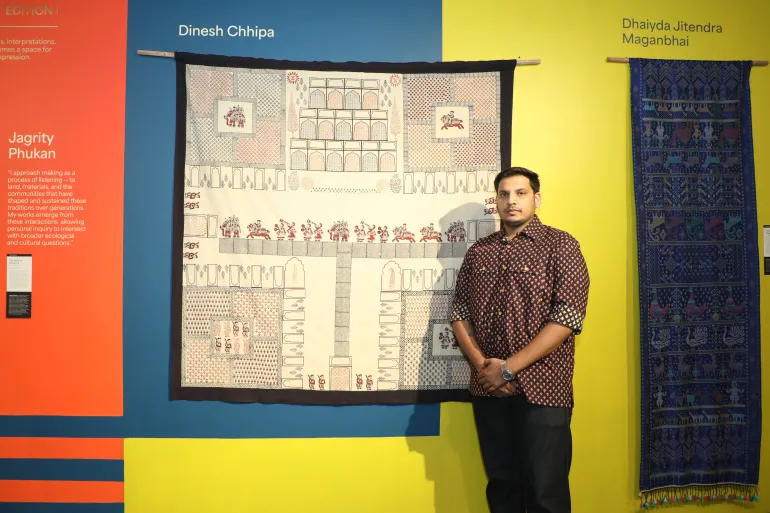
Dinesh Chhipa来自一个历史悠久的工匠世家,这个家族以染色和版画技术闻名。他既是Bagru版画技术的传承者(Bagru版画是一种源自拉贾斯坦邦Bagru镇的版画技术),也是一名纺织商人。他对Al Jazeera表示:“传统手工艺的生产速度非常缓慢;即使有人出高价,我们也无法大规模生产这些作品,因此我并不反对那些利用数字技术和人工智能来填补这一空白的人。不过,不要随意借用‘Bagru’或‘Jaipuri’(以拉贾斯坦邦首府命名的传统工艺名称)这样的传统名称——这些设计和图案其实源自特定社区的文化与生活需求。”
Dinesh Chhipa comes from one of the oldest Chhipa families, an artisan and merchant caste renowned for dyeing and block printing. He is a Bagru designer – a block printing technique from Bagru town in the western state of Rajasthan – and a textile businessman. “Traditional craft is slow to produce. Even if someone offered us a fortune, we wouldnt be able to produce these pieces in mass numbers, so I dont fault those using digital technology and AI to fill the gap,” he told Al Jazeera. “But don`t borrow craft and regional names like Bagru and Jaipuri [named after the capital city of Rajasthan]. These designs and motifs were born out of a culture and necessities of the communities they come from.”
多年来,印度一直在努力将其纺织文化遗产数字化,相关资料涵盖了印度植物调查局的珍贵历史收藏,以及由国家时尚技术研究所(National Institute of Fashion Technology)和先进计算发展中心(Centre for Development of Advanced Computing, C-DAC)共同建立的国家级纺织艺术门户网站“Bharatiya Vastra Shilpa Kosh”。如果没有这些数字化记录,这些脆弱的传统技艺和知识很可能会消失。不过,数字化也使得人工智能系统能够利用这些档案来大规模复制这些传统手工艺品。
India has been digitising its textile memory for years – from the Botanical Survey of India`s historical collections to the Bharatiya Vastra Shilpa Kosh, a national portal built by the state-run National Institute of Fashion Technology and the Centre for Development of Advanced Computing (C-DAC). Without documentation, the fragile traditions and knowledge could disappear. But digitisation also allows the same archive to be used by an AI system seeking to reproduce these crafts at scale.
在今年二月于新德里举行的印度人工智能影响峰会上,印度软件公司塔塔咨询服务公司(TCS)展示了 Bridgital Loom——一种将纺织图案转换为可直接用于织机的指令的人工智能系统。织机上的 LED 灯引导织工按照复杂的巴纳拉西(Banarasi)和坎奇普兰(Kanchipuram)图案的线序进行操作——这些图案以其发源城市命名。
At the India AI Impact Summit in New Delhi in February this year, Indian software company Tata Consultancy Services (TCS) showcased Bridgital Loom, an AI system that converts textile designs into loom-ready instructions. LED lights on the loom guide a weaver through the thread sequences of intricate Banarasi and Kanchipuram patterns – named after the cities where these iconic arts grew.
TCS 表示,该技术帮助织工更快完成复杂图案,且错误更少,旨在成为工匠与技术之间的桥梁。目前,已在泰米尔纳德邦南部的坎奇普兰镇启动了使用该织机的试点项目。
TCS says the technology helps weavers execute complex designs faster and with fewer errors, and is meant to be a bridge between the artisans and technology. A pilot project that uses the loom is already under way at Kanchipuram, a town in southern Tamil Nadu state.
在新德里峰会期间接受线上平台 Digit 采访时,Bridgital Loom 的人工智能战略负责人穆图拉克希米·内莱阿潘(Muthulakshmi Nellaiappan)指出,新手织工需要超过 15 年才能掌握这门技艺。
In an interview with the online platform Digit at the New Delhi summit, the head of AI strategy at Bridgital Loom, Muthulakshmi Nellaiappan, pointed out that a new weaver takes more than 15 years to master the art.
她说:“凭借我们手中的技术……刚入行的年轻织工可以更快成为大师。”
“With the technologies we have in hand … the younger weaver who has just entered the skill can become a master much sooner,” she said.
技术压平了传统知识体系中师徒层级的差距。织工不再需要自行构思或记忆图案、颜色和代码,而是盲目遵循机器指令,将创造力和记忆交给人工智能。
Technology flattens the master-apprentice hierarchy of traditional knowledge systems. The weaver no longer has to conceptualise or remember patterns, colours and codes; he blindly follows the machine`s instructions, handing creativity and memory to AI.
内莱阿潘表示,由于印度大量织机为非电子化,TCS 确保其系统同样适用于手工织机,这对技术的规模化推广至关重要。
Nellaiappan said that since a large percentage of India`s looms are non-electronic, TCS has ensured its system works with handlooms as well and that it was essential for scaling up the technology.
但数字织机也提出了另一个问题:当文化转化为纯粹的数据时,谁拥有它?
But digital looms also raise another question: Who owns culture when it turns into plain data?
几代以来,印度的纺织知识一直不在知识产权体系之内。它存在于社区记忆中,由师傅口传徒弟,未有所有权证书。坎奇普兰、Mekhela‑Sador、桑加内里(Sanganeri)和巴纳拉西等名称,指的是这些纺织品帮助塑造的地区,而非仅仅是其产生地。
For generations, India`s textile knowledge sat outside intellectual property systems. It lived in community memory, passed from master to apprentice with no certificate of ownership. Kanchipuram, Mekhela-Sador, Sanganeri and Banarasi are names for places that these textiles helped shape, not merely emerged from.
如今,这些知识正进入生成式模型,而这些模型并未向这些传统致敬。
Now, this knowledge is entering generative models that owe nothing to these traditions.
对设计师和制造商来说,可能性极具诱惑力:图案可随意组合,颜色可一键更改,数千种设计可瞬间生成。机器提供了丰富。而工匠则一直与匮乏为伴:缺乏资金、议价能力或认可度。
For designers and manufacturers, the possibilities are seductive: Motifs combined at will, colours changed with a command, and thousands of designs generated instantly. The machine offers abundance. The artisan, on the other hand, has always lived with scarcity: Of money, bargaining power, or recognition.
阿南塔拉克什米·瓦迪维尔是第三代织工,也是坎奇普拉姆瓦迪维尔丝绸织机的老板,她说,他们的企业已经在市场上与电子织机生产的更便宜的坎奇普拉姆纱丽竞争。
Ananthalakshmi Vadivel, a third-generation weaver and owner of Vadivel Silk Looms in Kanchipuram, says their venture is already competing in the market with cheaper Kanchipuram sarees produced on electronic looms.
“也许,借助AI,这些卖家可以更快、更便宜地创造流行设计,以吸引大众消费者。但这些仿制品永远无法取代原版,”她告诉半岛电视台。
“Perhaps, with AI, these sellers can create trending designs faster and cheaper to attract mass consumers. But these imitations can never replace the original,” she told Al Jazeera.
“无论技术让仿制品变得多么便宜,正宗的坎奇普拉姆和手工纺织品总会有市场。真正的坎奇普拉姆织法、颜色和设计只能手工制作,有眼光的买家知道这一点。”不过,问题不再是AI能否重现一种纺织品。它当然可以。问题是:当它这样做时,谁能得到报酬?
“There will always be a market for authentic Kanchipuram and handcrafted textiles, no matter how much technology makes the imitation cheaper. True Kanchipuram weave, colour, and designs can only be created by hand, and discerning buyers know this.”Then again, the question is no longer whether AI can recreate a textile. It sure can. The question is: Who gets paid when it does?
2025年12月,联邦政府的工业和国内贸易促进部提出了一项法定“全面许可”——这是一种系统,AI开发者可以在合法获得的受版权保护材料上训练模型,而无需征得每位权利人的许可。一旦这些系统商业化,就需要按照政府设定的费率向版权所有者支付版税。
In December 2025, the federal government`s Department for Promotion of Industry and Internal Trade floated a statutory “blanket licence” – a system where AI developers could train models on lawfully obtained copyrighted material without seeking permission from each rights holder. Once commercialised, those systems would owe royalties to copyright owners at rates set by the government.
但知识产权法假设存在可追溯的作品和可追溯的作者。而图案则不同,它是共有财产,其技术代代相传,没有单一的起源者。
But intellectual property (IP) laws assume a traceable work with a traceable author. A motif, on the other hand, is communal property, its technique passed down through generations with no single originator.
在这种情况下,谁有权获得版税和著作权呢?是最初设计该图案的工匠?是记录该图案的摄影师?是整理相关数据集的研究人员?还是开发了相关工具的开发者?印度的法律并没有给出明确的答案;那些名字从未出现在产品标签上的工匠,很可能会再次被忽视(即他们的贡献被遗忘)。
In such cases, who is entitled to royalty and copyright? The artisan who first created the design? The photographer who documented it? The researcher who assembled the dataset? The developer who built the tool? India`s laws offer no clear answers. The artisan whose name never appeared on a label may once again be missing from the paperwork.
与此同时,印度政府计划在位于新德里的印度理工学院(IIT)设立的“手工织机技术卓越中心”下成立一个专门研究人工智能与手工织机技术的部门。这个耗资140万美元的项目于8月正式启动,旨在通过将传统编织技艺与现代技术相结合来推动印度手工织机产业的发展。
Meanwhile, the government is planning a dedicated AI-handloom research department under the Centre of Excellence for Handloom Technology at the Indian Institute of Technology (IIT) in the capital, New Delhi. Inaugurated in August, the $1.4m facility aims to modernise India`s handloom sector by combining traditional weaving heritage with contemporary technology.
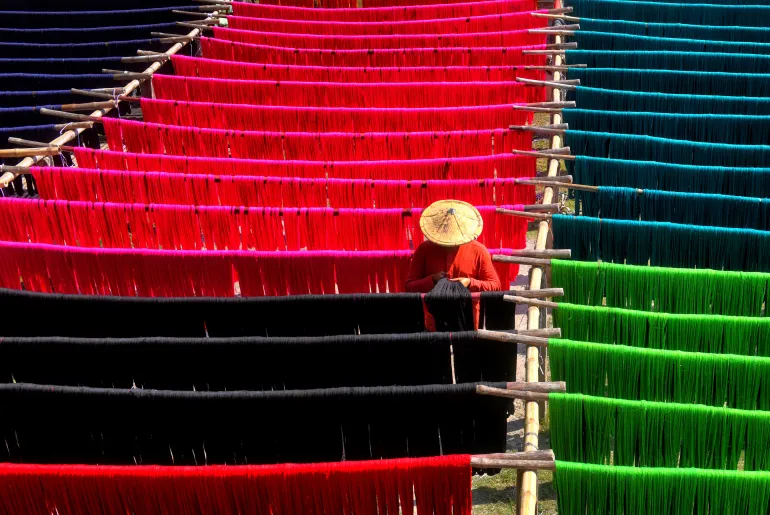
政府还计划为数千名织工配备传感器,这些传感器能够将编织图案转化为数字数据,并为每件作品生成二维码标签,以便追踪其来源。马哈拉施特拉邦的“Vingatha”系统也在州一级实施了类似措施,用于验证Paithani和Karvat Kathi等手工织造的纱丽产品的真实性。
The government also plans to thousands of weavers and fit their handlooms with sensors that convert weave patterns into digital data, and issue QR-coded tags to trace provenance. Maharashtra`s Vingatha system does something similar at the state level by authenticating handloom sarees such as Paithani and Karvat Kathi.
这个想法很简单:如果一件纱丽能够清楚地显示它的来源,那么制造这件纱丽的人的身份就更容易被记录下来(即他们的贡献更有可能被人们所知晓)。
The idea is simple: If a saree can tell you where it came from, the person who made it becomes harder to erase.
虽然这些措施无法完全阻止基于人工智能的设计和大规模生产,但它们至少可以为工匠们提供更多的曝光机会,让每一件手工制品都成为可以被记录和保存的“档案”。
While these measures cannot stop AI-enabled design and mass production, they may give artisans more visibility and turn each piece into an archive.
在艺术画廊中,传统纺织品正逐渐摆脱“工艺品”的标签,被归类为更具商业价值的“当代艺术”作品。
In art galleries, the traditional textiles are increasingly shedding the label of craft for the more lucrative category of contemporary art.
来自昌迪加尔市的艺术家Gurjeet Singh最近在纽约举办了一场以纺织品为主题的个人展览。他的作品将废弃的布料、纽扣和刺绣碎片转化为雕塑,探讨了与性别和性取向相关的社会偏见与身份认同问题。
Gurjeet Singh, an artist from Chandigarh city, recently hosted a textile-based solo show in New York. His work transforms discarded fabrics, buttons and embroidered scraps into sculptures that explore queer identity and social prejudices surrounding gender and sexuality.
萨扬·昌达(Sayan Chanda)是一位居住在伦敦的印度艺术家,她通过切割和重新拼接古老的孟加拉式被子来挑战人们对文化归属的固有观念;而居住在古尔冈(Gurugram)的艺术家苏玛克希·辛格(Sumakshi Singh)则利用精致的刺绣技术以及悬挂的线材结构来重现那些已消失的房屋、花园和个人历史的“建筑碎片”。类似这样的艺术家还有很多。
Sayan Chanda, an Indian artist based in London, works with cut and rewoven vintage Bengali quilts to question fixed notions of cultural belonging. Gurugram-based artist Sumakshi Singh uses delicate embroidery and suspended thread structures to reconstruct the architectural fragments of vanished homes, gardens and personal histories. There are many more.
上个月,在新德里举办的一场艺术展上,共有20位这样的手工艺人及其团队参与了展览,这场展览旨在庆祝传统的纺织工艺。
In New Delhi, 20 such artisans and craft-led collectives featured last month at an art show celebrating the traditional textile crafts.
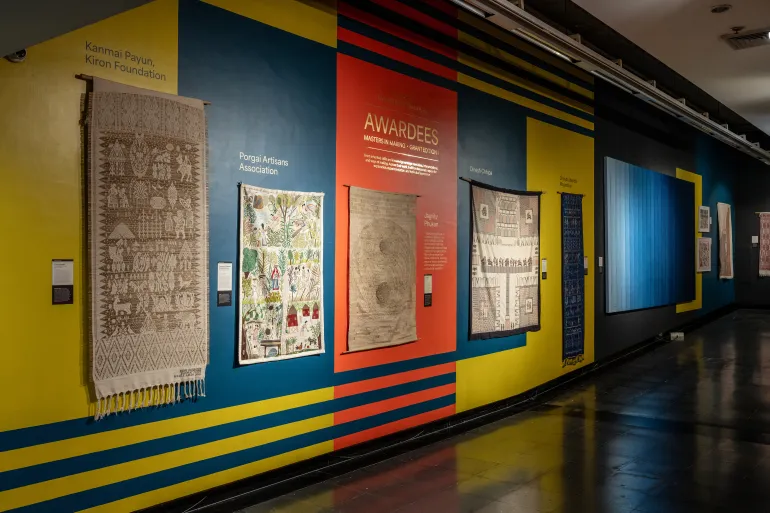
“我们的目标是将这些传统工艺呈现为仍在不断发展中的‘活着的实践’,而不仅仅是需要被保存下来的‘遗产’。例如,参展艺术家之一卡姆迈·帕云(Kanmai Payun)是阿萨姆族织工所使用的‘Fulor Saneki’花卉图案的最后一位传承者;我们鼓励她将自己的技艺传授给17岁的儿子,这样这项工艺才能在她之后继续传承下去,”展览策展人阿帕鲁帕·雷·甘古利(Aparupa Ray Ganguly)对半岛电视台(Al Jazeera)说道。
“Our aim is to present these traditional crafts as living practices that continue to evolve through contemporary artisans, rather than as heritage to be archived. Kanmai Payun, one of the artists featured in the show, for example, is the last practitioner of Fulor Saneki, a flower pattern used by Assamese weavers. We encouraged her to teach her 17-year-old son so the craft outlives her,” Aparupa Ray Ganguly, the curator of the show, told Al Jazeera.
然而,尽管纺织品在艺术画廊中的价值日益提升,但其创作者们并不一定能自动获得对自己作品的掌控权。
But as textiles gain value in art galleries, their makers do not necessarily gain automatic control over their work.
今年4月,在新德里举行的另一场名为“没有‘唯一’的创作者”(No ‘One’ Maker)的艺术展中,一些手工艺人并未出现在展览的预展中,这暴露出一个问题:传统纺织品虽然被赋予了美学价值,但那些掌握这些技艺的人却仍然被忽视了。
In April, another art exhibition in New Delhi, titled No ‘OneMaker, saw artisans missing from the shows preview, exposing how traditional textiles are aestheticised, but the people who carry that knowledge remain unrecognised.
“你不能将那些传统工艺的名字与它们所属的社区割裂开来;你可以将自己批量生产的产品称为‘数字印刷品’,但那些传统工艺的名字应该属于那些真正的创作者,”来自拉贾斯坦邦的手工艺人兼商人奇帕(Chhipa)说道。
“You cannot separate the names from the community. Call your mass-produced work digital prints and leave the traditional names to the original artisans,” says Chhipa, the artisan and merchant from Rajasthan.