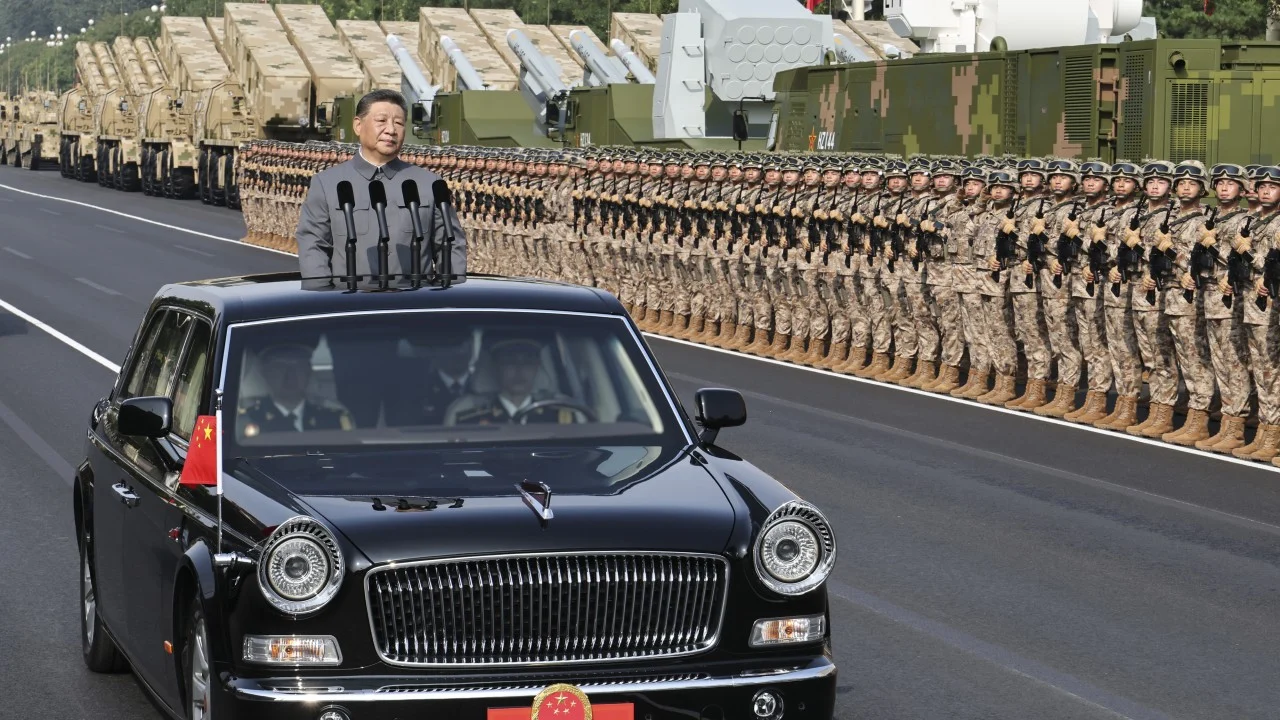
随着许多国家的动荡加剧,人们不禁会问,是否存在一个能够公正解决所有问题的全球霸权国家。
As turbulence grows in many countries, it is tempting to ask if there is a global hegemon that can sort everything out fairly.
美国总统唐纳德·特朗普曾威胁称,如果北约盟友未能将足够资金用于国防,美国将不会保护他们。加上新的贸易壁垒,他的言论表明美国正在缩减其全球领导雄心,并将更多精力集中在自身所在地区。
US President Donald Trump has threatened that his country would not defend Nato allies if they failed to spend enough on their defence. Together with new trade barriers, his words suggest that the US is scaling back its ambitions for global leadership and concentrating more on its own region.
我们对2027年国家实力的最新预测考虑了资源、领土、经济实力和军事力量。这些预测依然将中国排在第一位,且其对其他国家的领先优势正在扩大。但是,中国何时才能超越排名领先的地位,对世界的麻烦地区施加决定性影响,并成为全球仲裁者?
Our latest projections of national strength for 2027 take into account resources, territory, economic strength and military power. They still put China in first place, with its lead over other countries widening. But when might China move beyond leading the ranking to exert decisive influence over the world’s trouble spots and become a global arbiter?
为了探讨这个问题,我们首先应该看看各国的国家实力评估方式。古代统治者统计人口、税收、军队、船只和资源,但这些都是独立的评估,并非衡量国家实力的单一指标。
To explore that question, we should first look at how states have assessed national power. Ancient rulers counted people, revenues, troops, ships and resources but these were separate assessments, not a single measure of national power.
一种更具系统性的方法出现在17世纪后期。经济学家威廉·佩蒂的政治算术通过领土、人口、贸易、航运、公共财政和供养武装力量的能力,对英格兰、法国和荷兰进行了比较。这是通过综合考虑多项因素来评估国家实力的一次早期尝试。
A more systematic approach emerged in the late 17th century. Economist William Petty’s political arithmetic compared England with France and Holland through territory, population, trade, shipping, public revenue and the ability to support armed forces. It was an early attempt to assess a country’s strength by considering several factors together.
今天,计算能力和更先进的数据分析工具使得同时评估各国国家实力的多个维度成为可能。
Today, computing power and better tools for analysing data make it possible to assess many dimensions of national strength across countries at once.
国家实力指数就像是国家的仪表盘。一个仪表显示燃油水平,另一个显示速度,第三个显示发动机状况。司机需要整个仪表盘:每个仪表只能说明部分情况。国内生产总值显示了经济规模,而国防开支则显示了一个国家在武装力量上投入了多少。总体实力还取决于领土、资源、人口和科学,以及这些资产如何协同工作。
A national strength index is like a state’s dashboard. One gauge shows the fuel level, another the speed, a third the condition of the engine. A driver needs the whole panel: each gauge tells only part of the story. Gross domestic product shows the size of an economy, while defence spending shows how much a country devotes to its armed forces. Overall strength also depends on territory, resources, population and science, and on how these assets work together.
在我们指数涵盖的193个国家中,中国排名第一,美国第二,俄罗斯第三。
Among the 193 countries in our index, China ranks first, the US second and Russia third.
中国的领先地位主要建立在其经济规模和工业生产的基础之上。其庞大的国内市场、劳动力、基础设施和广泛的供应链提供了坚实的基础。这些都有助于中国发展科技能力、加强武装力量并增加其对世界经济的影响力。
China’s lead rests mainly on the scale of its economy and industrial production. Its large domestic market, workforce, infrastructure and extensive supply chains provide a strong base. They help China develop its scientific and technological capacity, strengthen its armed forces and increase its influence on the world economy.
我们的计算显示,美国的相对实力和在全球经济中所占份额正在逐渐下降。结构性失衡、增长放缓和日益加剧的债务压力是其中的一部分原因。美国每年支付的联邦债务利息超过1万亿美元。
Our calculations show a gradual decline in America’s relative strength and share of the global economy. Structural imbalances, slower growth and rising debt pressures are part of the picture. The US pays more than US$1 trillion in interest on federal debt every year.
我们指数的各个组成部分反映了国家的运作方式。每个部分都有其作用,同时也支持其他部分。在我们对2027年的评估中,经济权重最高,其次是武装力量。经济是军事的物质基础。国防开支通过工厂、设计中心、试验场、修理设施、交通、能源供应和熟练工人转化为真正的实力。
The components of our index reflect how a state works. Each has its role, but also supports the others. In our assessment for 2027, the economy carries the most weight, followed by the armed forces. The economy is the military’s material base. Defence spending becomes real power through factories, design centres, testing grounds, repair facilities, transport, energy supplies and skilled workers.
在长期的对抗中,大规模生产武器弹药、修理装备以及迅速提高产量的能力变得至关重要。因此,经济产能显示了一个国家的战略纵深及其持续开展军事行动的能力。
In a long confrontation, the ability to produce weapons and ammunition at scale, repair equipment and raise output quickly becomes crucial. Economic capacity thus shows the depth of a country’s reserves and its ability to sustain a military effort.
大量的国防订单也可以支撑经济。长期合同为工厂提供了稳定的工作,也为设备投资提供了理由。大规模生产创造了对金属、化学品、电子产品、机床、交通和软件的需求。培训培养了工程技能,而研究则可以产生产生民用用途的技术。新工厂和基础设施可以在未来多年扩大国家的生产能力。
Large defence orders can also support the economy. Long-term contracts give factories steady work and a reason to invest in equipment. Mass production creates demand for metals, chemicals, electronics, machine tools, transport and software. Training builds engineering skills, while research can produce technologies with civilian uses. New plants and infrastructure can expand a country’s productive capacity for years to come.
军事开支的趋势表明,大国将防卫能力视为长期优先事项。根据斯德哥尔摩国际和平研究所的数据,全球军费开支大幅上升。
Military spending trends show that major powers see defence capacity as a long-term priority. According to the Stockholm International Peace Research Institute, global military expenditure has risen significantly.
美国、中国和俄罗斯这三个军费开支最多的国家总计约为1.48万亿美元,占全球总额的51%。它们在顶部的集中度大致符合我们的国家实力排名,尽管顺序和差距有所不同。军费开支很重要,但总体实力取决于所有组成部分。
The three biggest spenders, the US, China and Russia, accounted for about US$1.48 trillion, or 51 per cent of the world total. Their concentration at the top broadly matches our national strength ranking, although the order and gaps differ. Military spending matters, but overall strength rests on all the components.
欧洲的增长尤为迅速:去年的军费开支达到8640亿美元,增长了14%。德国的军费开支增加了24%,达到1140亿美元,而西班牙则增加了50%,达到402亿美元。
Europe saw particularly rapid growth: military spending reached US$864 billion last year, up by 14 per cent. Germany increased spending by 24 per cent to US$114 billion, while Spain raised it by 50 per cent to US$40.2 billion.
但军事保护只是其中的一部分。这是对许多国际组织指出的全球经济向宏观区域分裂趋势的一种回应。这种分裂可能只是这一变化的第一个阶段。
But military protection is only part of the picture. It is one response to the fragmentation of the global economy into macro-regions, a trend noted by many international organisations. Fragmentation may be only the first stage of this change.
下一步可能是“裂变”,即大型区域经济体在其自身网络内部重现前全球系统的部分功能的进程。
The next could be “fractalisation”, a process in which large regional economies reproduce some of the functions of the former global system within their own networks.
它们连接市场并建立供应链、运输路线、支付系统、技术平台和标准。它们继续与更广泛的世界进行贸易,同时确保在特定的外部联系失效时,核心功能仍能继续运转。中国国家主席习近平上个月关于金砖国家特别经济区、数字平台和更紧密产业合作的提议,可能是这一进程的早期迹象。
They connect markets and build supply chains, transport routes, payment systems, technology platforms and standards. They continue to trade with the wider world, while making sure essential functions can keep working if particular external links fail. Chinese President Xi Jinping’s proposals last month for a Brics special economic zone, a digital platform and closer industrial cooperation may be early signs of this process.
我们对2027年的计算将中国排在国家实力第一位。但排名并不能告诉我们其他国家是否会接受中国的领导。这取决于中国提供的联系是否在其最紧密的伙伴之外发挥作用,以及其他人是否发现这些联系可靠且有益。
Our calculations for 2027 put China first in national strength. But a ranking cannot tell us whether other countries will accept its leadership. That depends on whether the links China offers work beyond its closest partners, and whether others find them reliable and beneficial.
如果更强大的区域系统开始更紧密地联系起来,它们可能会为新一阶段的全球化奠定基础。只有到那时,我们才能看到中国是否能够在塑造下一个世界秩序中发挥领导作用。
If stronger regional systems begin to connect more closely, they could lay the foundations for a new phase of globalisation. Only then will we see whether China can play a leading role in shaping the next world order.