气候讨论中一个恼人且挥之不去的迷思是,试图阻止地球变成一片烧焦的人间炼狱,与维持生活基本需求的可负担性是对立的。你见过烧焦的人间炼狱吗?它们往往缺乏基本物资,而物资短缺通常会让东西变得更贵。
By Mark Gongloff noying, persistent myth of climate discourse is the idea that trying to stop the planet from becoming a charred hellscape is antithetical to the affordability of life’s basic needs. Have you seen charred hellscapes? They tend to be short on the essentials, and shortages usually make things more expensive.
以住房为例。在全国许多地区,房屋保险已经贵得离谱,暴涨的成本让马斯洛需求层次理论中的这一基石对许多美国人来说更加遥不可及。保费自2021年以来上涨了超过46%,是通货膨胀率的三倍,其主要原因正是气候变化对自然灾害的影响。在住房以及许多其他基本需求中,环境直接影响着可负担性。
Consider housing. Home insurance is already ludicrously expensive in many parts of the country, and the soaring cost is putting this foundational material of Maslow’s pyramid even further out of reach for many Americans. And the main reason premiums have risen more than 46% since 2021, triple the rate of inflation, is the effect a changing climate is having on natural disasters. In housing, as in so many other basic needs, the environment directly influences affordability.
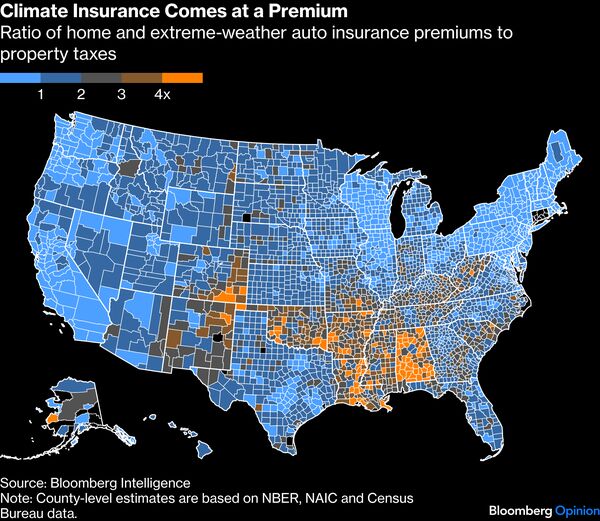
事实上,根据彭博行业研究(Bloomberg Intelligence)分析师安德鲁·约翰·史蒂文森(Andrew John Stevenson)的新研究,在三分之二的美国县市,房屋保险费现在的花费已经超过了房产税。如果算上防范极端天气损害的汽车保险,这一比例将扩大到75%的美国县市。而且与房产税不同,房主不能从所得税账单中扣除保险费。
In fact, in two-thirds of US counties, home-insurance premiums now cost more than property taxes, according to new research from Bloomberg Intelligence analyst Andrew John Stevenson. Throw in auto insurance against extreme-weather damage, and that gap stretches to 75% of US counties. And unlike property taxes, homeowners can’t deduct insurance premiums from their income-tax bills.
他们只能自己承担。J史蒂文森估计,按县市计算,这些“气候”保费的平均值为每年3160美元,而房产税为2423美元。在全国层面,平均房产税仍然较高,为4594美元,但这反映了加利福尼亚州和纽约州等高税收地区的影响。在得克萨斯州南部等低税收、多灾害地区,保险是一项沉重得多的负担,那里的保费可能是房产税的四倍。
They just have to eat them. On a county-by-county basis, the average of these “climate” premiums is $3,160 a year, compared with $2,423 for property taxes, Stevenson estimated. On a national level, property taxes are still higher, on average, at $4,594, but that reflects the impact of high-tax places such as California and New York. Insurance is a much bigger lift in low-tax, high-disaster areas such as the Deep South and the Plains, where premiums can cost four times more than property taxes.
保险越是让住房变得遥不可及并放缓房屋销售,它就越是威胁到这些县市的房产税基,导致政府服务减少或房产税增加,或者两者兼有。
And the more insurance puts housing out of reach and slows home sales, the more it threatens the property-tax base of these counties, resulting in either fewer government services or property-tax increases, or both.
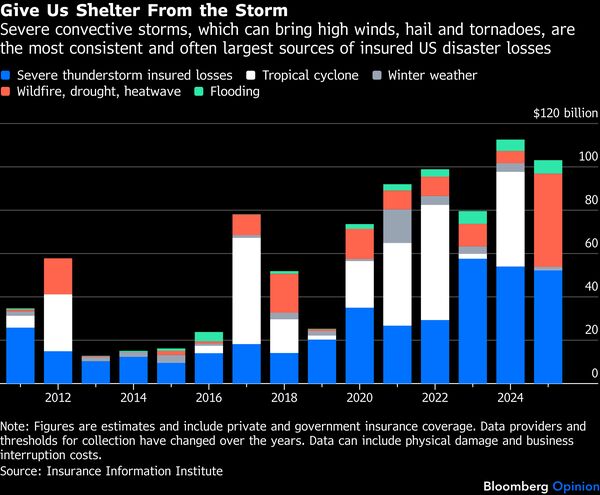
亚拉巴马州、科罗拉多州和俄克拉何马州并不像易发野火的加利福尼亚州或易受飓风袭击的佛罗里达州那样以灾难闻名。但更热的地球正在加剧这些地方遭遇的恶劣天气,特别是产生龙卷风、强风和巨大冰雹的雷暴。根据美国保险信息研究所(Insurance Information Institute)的数据,这些严重的对流风暴现在每年造成的投保损失比美国任何其他灾害都要多。这些损失从2015年的不到100亿美元上升到去年的52亿美元。
Alabama, Colorado and Oklahoma aren’t as well-known for catastrophes as wildfire-prone California or hurricane-prone Florida. But a hotter planet is juicing the bad weather these places get, particularly thunderstorms that produce tornadoes, high winds and massive hailstones. These severe convective storms now generate more insured damage each year than any other disaster in the US, according to the Insurance Information Institute. Those losses rose from less than $10 billion in 2015 to $52 billion last year.
与此同时,为了控制保费失控,免赔额正在上升。这意味着房主正在为他们遭受的任何财产损失支付越来越大比例的费用,从而加剧了他们的可负担性困境。根据史蒂文森的测算,在全国受灾最严重的地区,未投保的财产损失可能达到县总国内生产总值(GDP)的5%或更多。根据一项估计,仅人们支付的房屋保险费与洪水和野火造成的潜在损失之间的差距就可能达到2.7万亿美元,足以令整个房地产市场感到困扰。
Meanwhile, deductibles are rising as insurers try to keep premiums from getting out of control. That means homeowners are paying an increasing share of whatever property damage they suffer, adding to their affordability woes. In some of the hardest-hit parts of the country, uninsured property losses can run to 5% of total county GDP or more, by Stevenson’s measure. The gap between how much people pay for home insurance and potential damages due to floods and wildfires alone could run to $2.7 trillion, by one estimate, enough to bother the entire housing market.
世界各地的决策者似乎认为,可负担性和气候稳定在零和博弈中是对立的。例如,面对由伊朗战争引发的化石燃料价格上涨,政府的典型反应是让人们更容易购买更多化石燃料,用超过1万亿美元的政府补贴(在其已经享有的每年7万亿美元补贴之上)来润滑车轮。
Policymakers worldwide seem to think affordability and climate stability are diametrically opposed in a zero-sum contest. For example, the typical government reaction to the rising fossil-fuel prices triggered by the Iran war has been to make it easier for people to buy more fossil fuels, greasing the skids with more than $1 trillion in government subsidies (on top of the $7 trillion a year they already enjoy).
这不仅对环境不利,在经济上也令人怀疑:花钱让人购买更多稀缺商品绝对不会让它变得不那么稀缺。更好的方法是向需要的家庭提供直接支持,同时加速采用不会卡在霍尔木兹海峡且碰巧不会加热地球的能源。同理,解决保险危机必须在保持住房可负担性的同时,也不鼓励在灾区建设和重建。
This is not only environmentally unsound but economically dubious: Paying people to buy more of a scarce commodity certainly doesn’t make it less scarce. A better approach would be giving direct support to families that need it while hastening adoption of energy sources that can’t get stuck in the Strait of Hormuz and, as luck would have it, don’t heat the planet. Similarly, solving the insurance crisis must balance keeping housing affordable while also discouraging building and rebuilding in disaster zones.
抛弃加热地球的化石燃料最终将解决其中许多问题。但这种转型在短期内也可能是昂贵的,并会提高电费,从而加剧这种特定的可负担性危机。同样,即使在像纽约和加拿大这样据称对气候友好的政体中,最常见的反应也是把钱花在化石燃料基础设施上,而在可再生能源上花得更少。
Ditching the fossil fuels heating the planet would ultimately address many of these problems. But that transition can also be expensive in the short term and raise electricity bills, adding to that particular affordability crisis. Again, the all-too-common response, even in supposedly climate-friendly polities such as New York and Canada, is to spend more on fossil-fuel infrastructure and less on renewables.
这是将症状误认为是疾病。当环境变得危险时,获得庇护所、水、食物、能源和其他需求就会受到威胁。让这些东西变得更加实惠和普及,就像应对气候危机一样,可能是一场政治和后勤噩梦。但记住它们其实是同一个问题,会有所帮助。
This is mistaking the symptom for the disease. Access to shelter, water, food, energy and other needs is threatened when the environment grows dangerous. Making those things more affordable and accessible, like addressing the climate crisis, can be a political and logistical nightmare. But it would help to keep in mind that they’re one and the same problem.