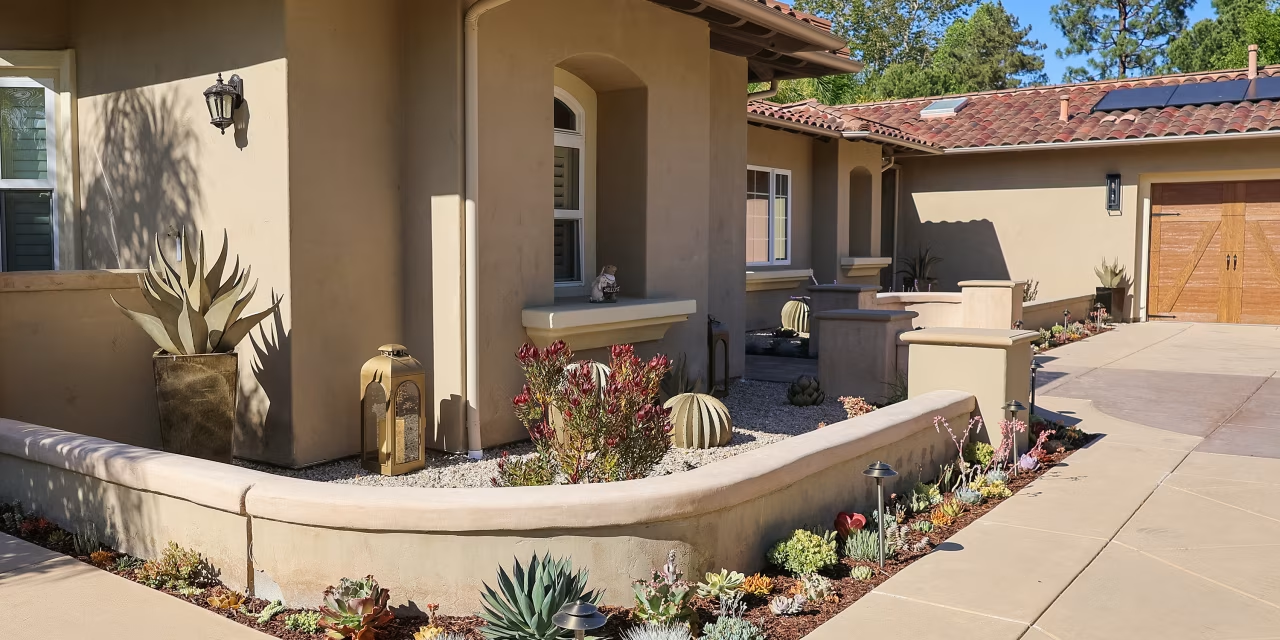
朱莉安娜和马克·海耶斯决定彻底改造位于北加利福尼亚马林县自家住宅的景观时,法律并未强制要求他们清理房屋周围 5 英尺(约 1.5 米)范围内的区域。即便如此,这对夫妇仍打算花费约 10 万美元,将他们郁郁葱葱的日式花园中几乎所有的基础种植植物替换为岩石、草皮和铺路石。
When Julianna and Mark Hayes decided to overhaul the landscaping at their home in Northern California’s Marin County, they weren’t legally required to clear a 5-foot perimeter surrounding their house. Still, the couple is spending around $100,000 to replace nearly all of their lush Japanese garden’s foundation plants with rocks, turf and pavers.
“在丈夫的潜意识里想的是:‘咱们就抢在前头把这事办了,’”朱莉安娜说。
“In the back of my husband’s mind is, ‘Let’s just get ahead of it,’” Juliana says.
“这事”指的就是“零号区域”:即环绕建筑物 0 至 5 英尺范围内的缓冲带,消防科学家称其为抵御野火毁灭性破坏的关键防线。该区域的最佳做法要求保持区域内无易燃物,从植物、树皮覆盖物到木质围栏、木质庭院家具,甚至黄麻门垫都在列。
“It” is Zone 0: the 0-to-5-foot buffer surrounding a structure that fire scientists call a critical defense against wildfire destruction. Best practices for this zone require keeping the area free of flammable materials, from plants and bark mulch to wooden fences, wooden patio furniture and even jute doormats.
海耶斯一家代表了加利福尼亚州更广泛的转变,在这个州,5 英尺缓冲带正迅速从一个事后才想到的问题,变成一种备受追捧的住宅特色。在日益加剧的气候威胁、保险选择日益减少以及现代消防科学的推动下,这个全美人口最多州的景观设计正在从根本上被重新定义。
The Hayes family represents a broader shift across California, where the 5-foot buffer is rapidly morphing from an afterthought into a sought-after home feature. Driven by mounting climate threats, shrinking insurance options and modern fire science, landscaping in the nation’s most populous state is being redefined from the ground up.
在全国性的景观设计与建造平台 Yardzen,对防火韧性设计的需求自 2024 年以来已增长两倍多。“没有什么能完全防止房屋被烧毁,但可以做出一些决策来提高房屋的韧性,”Yardzen 首席执行官艾莉森·梅斯纳说,她在自家住宅于 2017 年在索诺马县幸免于一场野火后创立了该公司。“零号区域就是其中一项决策。”监管机构也在跟进。
At national landscape design and build platform Yardzen, demand for fire-resilient design has more than tripled since 2024. “Nothing can keep a house from burning, but there are decisions that can be made to increase the house’s resilience,” says Yardzen CEO Allison Messner, who founded the company after her home survived a 2017 wildfire in Sonoma County. “Zone 0 is one decision.”Regulators are following suit.
8 月,加利福尼亚州林业和消防委员会批准了一项针对高野火风险地区的全州范围零号区域强制令。尽管该委员会于 9 月撤回了规则包以进行澄清性修改,但一位委员会发言人表示,预计将于 11 月将其重新提交给行政法办公室。如果获批,该强制令可能会重塑约 200 万座建筑的景观要求。
In August, the California Board of Forestry and Fire Protection approved a statewide Zone 0 mandate for high-risk wildfire areas. Although the Board withdrew the rules package in September to make clarity edits, it expects to resubmit it to the Office of Administrative Law in November, a Board spokesperson said. If approved, the mandate could reshape landscaping requirements for roughly 2 million structures.
即便如此,转变正在发生。2017-2018年火灾季过后,“零区”开始在全州范围内获得动力。一些地方消防法规、家庭保险公司和社区已经采纳了与“零区”及更广泛的可防御空间相关的各种最佳实践,后者从建筑物向外延伸最多可达100英尺,并划分为不同区域。
Even so, a shift is under way. Zone 0 started gaining statewide momentum after the 2017–2018 fire season. Some local fire codes, home insurers and communities have already adopted various best practices associated with Zone 0 and broader defensible space, which spans up to 100 feet from a structure across distinct zones.
尽管社区对“零区”强制令存在抵制,但主要来自少数大声疾呼的人,中央马林消防局大队长兼野火隐患减缓专家托德·兰多说。“我认为绝大多数居民都明白,这就是我们正在生活的世界,”他说。
While there has been community pushback to Zone 0 mandates, it’s mostly from a vocal minority, says Todd Lando, a battalion chief and wildfire hazard mitigation specialist with Central Marin Fire. “I think the vast majority of residents understand this is the world we’re living in,” he says.
2018年,兰多帮助马林县确立了针对新建建筑和大规模房屋翻修的5英尺缓冲带要求。这一地方强制令源于商业与住宅安全保险协会的研究,该研究表明,风驱火星——而非直接火焰接触——导致了60%至90%的建筑物起火。
In 2018, Lando helped establish a 5-foot buffer requirement for new construction and major home remodels in Marin County. That local mandate stemmed from research by the Insurance Institute for Business & Home Safety showing that wind-driven embers—not direct flame contact—cause 60% to 90% of structural ignitions.
兰多同时也是野火韧性非营利组织“马林防火安全”主席,他说:“西部30年来13.5万座被毁建筑教会我们的道理是,大多数起火发生在微小火星正好落在紧贴房屋的地方。”
“What 135,000 destroyed structures across the West have taught us over 30 years is that most ignitions happen when tiny embers land right against the house,” says Lando, who also serves as president of wildfire resilience nonprofit Fire Safe Marin.
这一科学依据促使德布拉和保罗·史密斯采取行动。2020年,这对夫妇在索拉诺县的家园毁于野火后,他们重建时采用了钢制围栏、铝制露台凉棚,并在新房周围铺设了约10英尺宽的混凝土和岩石缓冲带。防火已成为史密斯夫妇日复一日的生活心态。“我们思考能做些什么,以防止任何复燃的可能性,”保罗说。“这也适用于我们建房的方式。”
That science drove Debra and Paul Smith to act. After losing their Solano County home to wildfire in 2020, the couple rebuilt with a steel fence, an aluminum patio pergola and a roughly 10-foot concrete and rock buffer around their new house. Fire prevention is a mindset the Smiths live out every day. “We think about what we can do to prevent any possibility of a recurrence,” Paul said. “And that goes for how we built our house.”
对其他房主而言,主要驱动力是保住保险。在圣地亚哥县瑞安·伊拉姆的地中海风格住宅前院,一圈耐旱灌木种植在约6000美元的新覆盖物中。这是典型的南加州郊区景观,如今正因其火灾隐患而被重新审视。
For other homeowners, a primary driver is staying insured. In the front yard of Ryan Elam’s Mediterranean-inspired home in San Diego County, a ring of drought-tolerant bushes is bedded in roughly $6,000 worth of fresh mulch. It’s a quintessential slice of Southern California suburbia that is now being reassessed for its fire implications.
退休软件开发人员 Elam 正在圣迭戈县的两处房产之间搬迁,根据州政府的火灾危险严重程度区域图,这两处房产均位于极高火灾危险严重程度区域。他表示,其长期保险公司因野火风险过高而拒绝为其新房提供承保,迫使他不得不另寻保险,而他预计这将要求清理园林绿化——包括正门入口两侧的两棵白桦树。
Elam, a retired software developer, is moving between two properties in San Diego County, both located in Very High Fire Hazard Severity Zones, according to the state’s Fire Hazard Severity Zone map. He said his longtime insurer has refused to cover his new home due to high wildfire risk, forcing him to shop for coverage that he expects will require clearing landscaping—including two birch trees framing the front entrance.
对于目前的住宅,他计划按未来买家保险公司的要求进行任何必要的改造,并已让靠近外墙的植物枯死,以便日后更容易清除。他表示,覆盖物肯定也得清理掉。
For his current home, he plans to make whatever modifications the eventual buyer’s insurer demands and is already letting the plants near the exterior die off for easier removal. He said the mulch will certainly have to go, too.
家庭保险公司和政府消防机构各自独立运作,但它们的“零区”指导方针高度一致,因为双方都依据同一科学研究,保险信息研究所的 Janet Ruiz 表示。她称,全州范围的“零区”强制规定将为家庭保险公司提供一种更一致的方式,来评估高风险地区房屋的安全性。实现“零区”合规的成本完全取决于房主选择如何应对。
Home insurers and government fire agencies operate independently, but their Zone 0 guidelines align closely because both draw from the same scientific research, said Janet Ruiz of the Insurance Information Institute. A statewide Zone 0 mandate would give home insurers a more consistent way to assess the safety of homes in high-risk areas, she said The price for Zone 0 compliance depends entirely on how a homeowner chooses to tackle it.
简单的灌木清理和覆盖物耙除几乎不花钱,但在 Yardzen,一次完整的景观重新设计平均约为 5 万美元。Lando 表示,防火安全周边并不要求将房产变成荒凉的砾石坑。“它改变的是紧贴房屋的东西,而不是整个景观,”他说。
Simple shrub clearing and mulch raking can cost next to nothing, but at Yardzen, an average full landscape redesign is around $50,000. Lando says a fire-safe perimeter doesn’t require turning properties into desolate gravel pits. “It changes what sits directly against the house, not the whole landscape,” he says.
设计师们正利用不可燃材料来弥合这一差距,在 5 英尺区域内使用复合甲板、混凝土、瓷质铺路砖和河卵石。南加州 Greenway Landscape Design & Build 创始人 Scott Lawn 正在使用金属植物。
Designers are bridging the gap with non-combustable materials such as composite decking, concrete, porcelain pavers and river rock within the 5-foot zone. Scott Lawn, founder of Greenway Landscape Design & Build in Southern California, is using metal plants.
他最近因一座位于兰乔圣塔菲的住宅项目获得了三项美化奖项,该项目将基础种植带替换为巨石、砾石、水泥花盆以及带有内部照明的防火钢制植物雕塑。Lawn 表示,房主专门重新进行景观设计,以符合当地兰乔圣塔菲消防保护区执行的“零区”指南,这些指南与州政府的框架大致相符。
He recently won three beautification awards for a Rancho Santa Fe home where he replaced foundation plants with boulders, gravel, cement pots and flameproof steel plant sculptures with internal lighting. The homeowner, Lawn said, relandscaped specifically to comply with Zone Zero guidelines that are enforced locally by the Rancho Santa Fe Fire Protection District and approximate the state’s framework.
Joe Raboine 是 Belgard 公司的设计副总裁,该公司生产铺路砖、挡土墙和户外生活产品。他预计整个行业将出现创新,例如制造商正在探索可移动的景观元素,如花盆,这些元素在野火风险升高时期可以迅速转移。
Joe Raboine is the vice president of design at Belgard, a manufacturer of pavers, retaining walls and outdoor living products. He expects innovation across the industry, such as manufacturers exploring movable landscape elements like planters, which could be relocated quickly during periods of elevated wildfire risk.
随着消防安全重新定义加利福尼亚州的景观设计,像 Elam 这样的房主看到了未来的永久性转变。“真正的草坪将不复存在,”他说,“如果我灌溉的只是一小块草皮,那要草坪干什么?那我就不种草了。”
As fire safety redefines California landscaping, homeowners like Elam see a permanent shift ahead. “Real lawns won’t exist,” he says. “Why have a lawn if the only thing I’m irrigating is a tiny patch of grass? Then I just won’t have grass.”