2012年,当瑞秋·鲍曼(Rachel Bowman)首次尝试将狮子鱼引入佛罗里达群岛的餐厅和杂货店时,人们并不买账。“我们卖这些鱼赚不了多少钱,因此需要花些时间来说服顾客。”这位专门捕猎狮子鱼的人说道。原因在于:这种入侵性鱼类外表非常醒目(鲍曼甚至将其比作狂欢节上的变装皇后),但在当地传统饮食中并不常见。
When Rachel Bowman first tried to bring lionfish to restaurants and grocery stores in the Florida Keys in 2012, it was a hard sell. “We weren’t getting that much money for them, and it took a little convincing,” says the commercial lionfish hunter. That’s because the invasive lionfish—flamboyant enough that Bowman likens it to a Mardi Gras drag queen—wasn’t traditionally on the menu.
狮子鱼原产于印度-太平洋地区的热带海域,后来扩散到了大西洋西部、加勒比海和墨西哥湾。自1985年在迈阿密附近首次被发现以来,它们就成了极具破坏性的入侵物种——很可能是因为这些鱼被从家庭水族馆中逃逸到野外所致。由于在这些新栖息地中几乎没有天敌,一条狮子鱼每年可以产下超过200万枚卵。研究表明,仅仅一条狮子鱼就能使某些珊瑚礁上的本地鱼类种群数量减少近80%。
Native to the tropical waters of the Indo-Pacific, lionfish have infiltrated the western Atlantic, Caribbean, and Gulf of Mexico, where they have become a destructive invasive species ever since the first was recorded near Miami in 1985, likely after being released from the home aquarium trade. With few predators in these new habitats, a single fish can produce more than 2 million eggs a year. Studies have found that just one lionfish can reduce the replenishment of native fish populations on some reefs by nearly 80%.
2016年,鲍曼首次将狮子鱼销售给了南佛罗里达的Whole Foods超市。“那是一个重要的转折点,”她说,“因为如果Whole Foods推广某种产品,人们就会认为这种产品是优质的。价格从每磅2美元迅速涨到了10美元。”如今,十年过去了,通过她的公司“Keys Fisheries”,她的狮子鱼产品已经在当地商店和餐厅的菜单上出现;这一举措帮助数百万条本地鱼类免于被狮子鱼捕食。
In 2016, Bowman sold the first lionfish to Whole Foods in South Florida. “That was the ground-breaker,” she says, “because if Whole Foods is promoting something, then people know it’s good. We went from $2 per lb. to $10 per lb. pretty much overnight.”Now, 10 years later, through Keys Fisheries, her fish is sold in stores, and lionfish appears on restaurant menus throughout the area—and in doing so, millions of native reef fish have been saved from predation.
鲍曼的努力属于一种日益兴起的趋势:不仅为当地美食市场引入新的食材,为入侵物种创造市场还能带来生态效益。
Bowman’s work is part of a growing trend that’s not just about introducing new dishes to the local food scene; creating a market for invasive species may also bring ecological benefits for the local environment.
根据生物多样性和生态系统服务政府间科学政策平台(IPBES)的说法,入侵物种被认为是生物多样性丧失的五大最关键直接驱动因素之一。该平台2023年发布的最新报告指出,2019年全球应对这些物种的经济代价超过4230亿美元。一旦建立种群,入侵物种往往难以根除,因为它们繁殖迅速,蔓延至广阔且相互连通的环境中,且常在建立种群前不受控制。
Invasive species are considered one of the five most critical direct drivers of biodiversity loss, according to the Intergovernmental Science-Policy Platform on Biodiversity and Ecosystem Services (IPBES), whose most recent report in 2023 notes that the global economic toll of dealing with these species cost more than $423 billion in 2019. Once established, invasive species are often impossible to eradicate because they reproduce rapidly, spread across vast, interconnected environments, and often go unchecked until they are established.
英国生态与水文中心及埃克塞特大学教授、IPBES评估联合主席海伦·罗伊表示,管理入侵物种的挑战在海洋中尤为严峻。她说,这是海洋系统开放性和连通性的后果。
And the challenge of managing invasive species is particularly acute in the ocean, says Helen Roy, a professor at the U.K. Centre for Ecology & Hydrology and the University of Exeter and a co-chair of the IPBES assessment. It’s a consequence of the openness and connectedness of marine systems, she says.
2004年,保护生物学家乔·罗曼创造了“入侵食性”一词,用以描述通过食用入侵物种来帮助控制其种群数量的想法。从那时起,北美各地兴起了一股日益壮大的运动,试图将生态威胁转化为烹饪商品,范围涵盖佛罗里达州、夏威夷州、不列颠哥伦比亚省、缅因州和密西西比河流域。该运动仍在扩大:例如,2025年,美国各地70家餐厅和鱼市参与了“绿蟹周”活动,这是一项鼓励食客食用入侵物种欧洲绿蟹的全国性活动。
In 2004, conservation biologist Joe Roman coined the term “invasivorism” to describe the idea of eating invasive species to help control their populations. Since then, a growing movement across North America is attempting to transform ecological menaces into culinary commodities, from Florida to Hawai’i, British Columbia, Maine, and the Mississippi River basin. That movement is still expanding: in 2025, for example, 70 restaurants and fish markets across the U.S. participated in Green Crab Week, a national campaign encouraging diners to eat the invasive European green crab.
西蒙弗雷泽大学海洋生态学家伊莎贝尔·科特表示,目标往往是“功能性根除”:将入侵种群数量降低到其生态影响被认为可接受的水平。我们的餐桌可以在这方面发挥作用,将清除物种转化为一种经济机会。
The goal, says Isabelle Côté, a marine ecologist at Simon Fraser University, is often “functional eradication”: reducing an invasive population to a level where its ecological impacts are considered acceptable. That’s where our dinner tables can help, by turning the removal of the species into an economic opportunity.
David Standridge 的烹饪理念在于采撷丰富的食材,将其转化为美味佳肴。自 2022 年起,这位曾获詹姆斯·比尔德奖、现任康涅狄格州米斯蒂克 The Shipwright’s Daughter 餐厅行政总厨的他,已处理超过 1 万磅(约 4536 公斤)青蟹,使其成为菜单上的常驻主角。
David Standridge’s philosophy is all about harvesting what’s plentiful and turning it into something delicious. Since 2022, the James Beard Award-winning executive chef of The Shipwright’s Daughter in Mystic, Conn., has processed more than 10,000 lbs of green crab, making it a menu mainstay.
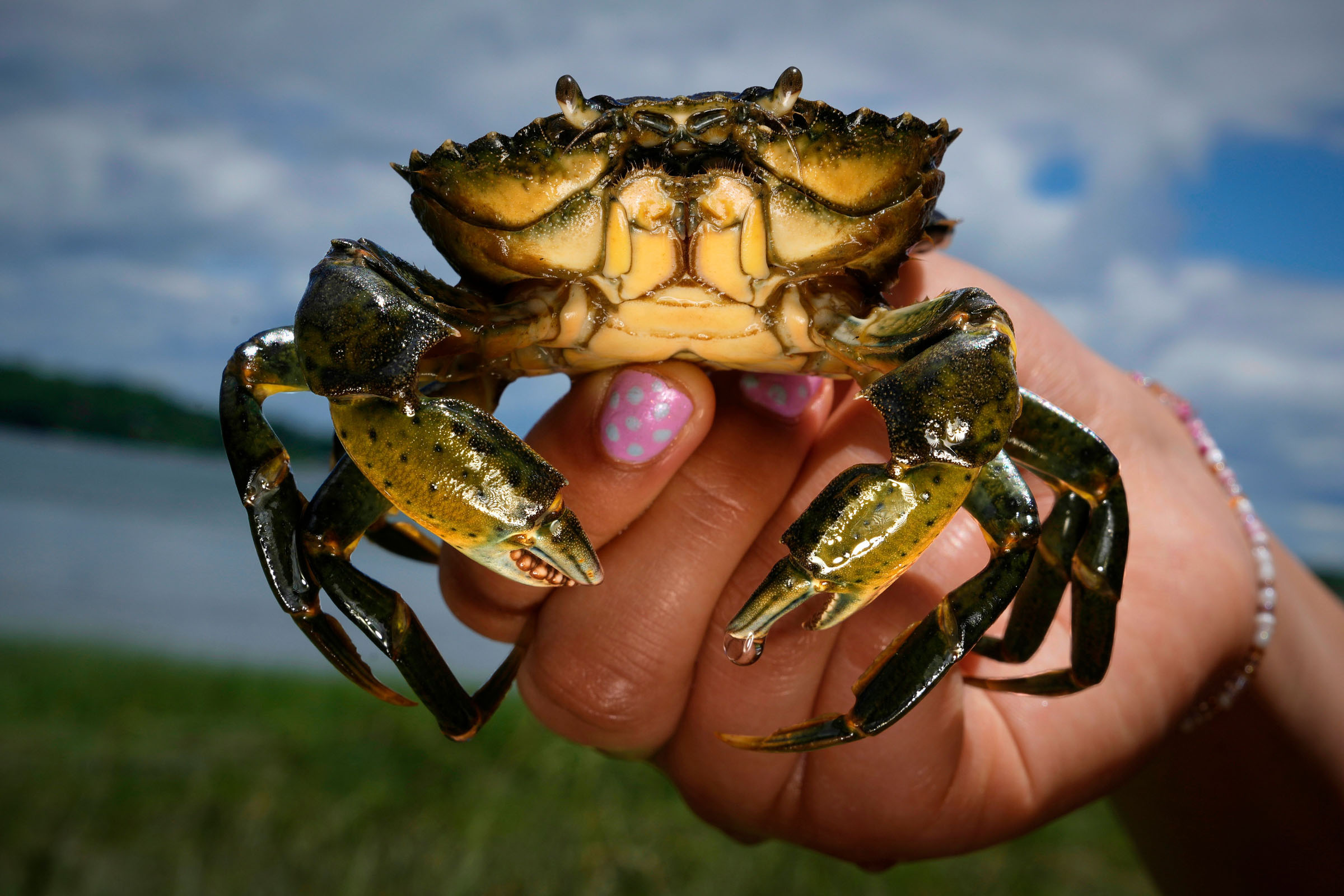
青蟹通常被视为世界上最恶劣的入侵物种之一,已成功入侵除南极洲以外的每个大陆。该物种原产于西欧和非洲,天敌寥寥,捕食性强,食谱广泛,包括牡蛎、蛤蜊、贻贝、龙虾及其他蟹类。一只青蟹一天可吞食 40 多只幼年软壳蛤,同时破坏海草栖息地。单只青蟹每年可产卵多达 18.5 万粒,其幼虫阶段可随洋流漂流至相当远的距离,将种群从一个入侵区扩散至另一个。
Commonly considered one of the world’s worst invasive species, the green crab has successfully invaded every continent except Antarctica. The species, native to Western Europe and Africa, has few predators, aggressively hunts its prey, and can consume a wide variety of shellfish, including oysters, clams, mussels, lobsters, and other crabs. One crab can eat more than 40 juvenile soft-shell clams in a day, while also destroying seagrass habitats. And a single green crab can produce up to 185,000 eggs per year, while its larval life stage allows young crabs to drift considerable distances in ocean currents, spreading from one invaded area to another.
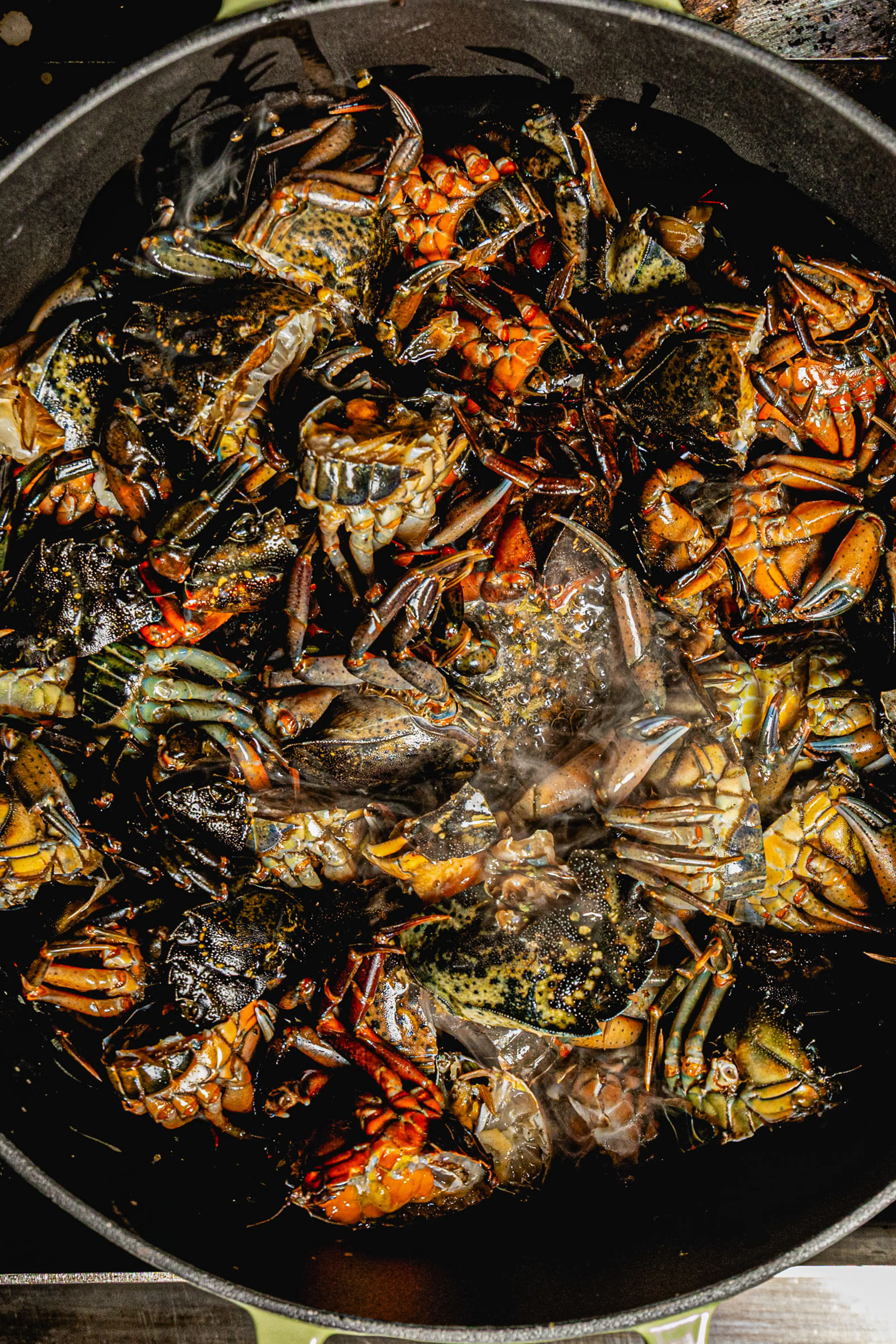
Standridge 并不把青蟹视为祸害,而是形容其风味极佳,熬出的高汤色泽诱人,可广泛应用于各式菜肴。他说:“我们使用青蟹,不是为了消灭它们,而是为了减轻生态系统的压力。” 然而,将青蟹端上餐桌的过程并非一帆风顺。
Rather than a nuisance, Standridge describes the green crab as tremendously flavorful, producing a beautiful stock that can be used across dishes. “We use them not to eliminate green crab, but to take some pressure off the ecosystem,” he says. Getting green crab onto the menu, however, wasn’t so straightforward.
2020 年 Standridge 首次尝试采购该物种时发现,康涅狄格州和许多州一样,将青蟹归类为鱼饵,技术上无法作为食用食品出售。直到 2021 年他才找到一家愿意协助的供应商,而 2025 年州法典中仅一行代码的修改,才允许青蟹及鱼饵名单上的其他物种被采捕并作为食品销售。Parks 表示,市场开始成型。新英格兰地区的供应商现在常规备有青蟹及其他海鲜,使厨师们更易获得这种食材。
When Standridge first tried to source the species in 2020, he discovered that Connecticut, like many states, classified green crab as bait and technically couldn’t be sold for human consumption. He finally found a supplier to help in 2021, and then in 2025, a change to a single line of state code allowed green crab and other species on the bait list to be harvested and sold as food. Parks says the market is beginning to take shape. Suppliers across New England now regularly carry green crab alongside other seafood, making it more accessible to chefs.
根据 GreenCrab.org(一个致力于为这种入侵物种创造市场机会并提高人们对其危害认识的非营利组织)的执行董事玛丽·帕克斯(Mary Parks)的说法,随着气候变化,绿蟹的全球扩散范围预计只会进一步扩大。“过去我们的冬季非常寒冷,这有助于控制绿蟹的数量,”帕克斯说,“但随着冬季气温逐渐升高,这种自然控制机制已经失效了。”
The green crab’s global spread is only expected to increase with climate change, says Mary Parks, executive director of GreenCrab.org, a nonprofit organization building culinary markets for the invasive species while raising awareness of its impact. “We used to have these really cold winters and those helped keep green crab populations in check,” says Parks.
在大陆的另一端,2020 年,人们在不列颠哥伦比亚省沿海的哈伊达瓜伊群岛(Haida Gwaii)首次发现了绿蟹的踪迹。为了减缓这种物种的扩散,哈伊达民族委员会(Council of the Haida Nation)启动了一项全面的捕捉和防治计划。在五年时间里,共有 36 支捕捞队捕获了近 200 万只绿蟹,其中仅从霍纳河(Honna River)和塔伦德尔河(Tarundl River)的河口地区就捕获了 130 多万只绿蟹。
“But with winters getting warmer and warmer, that population control got taken out of the picture.”On the other side of the continent, in 2020, the first green crabs were detected on Haida Gwaii, an archipelago off the coast of British Columbia. To slow the species’ establishment, the Council of the Haida Nation launched a full-scale trapping and mitigation program. Over five years, 36 crews removed nearly 2 million crabs, including more than 1.3 million from the Honna and Tarundl estuaries alone.
由于这种入侵物种的扩散范围过于广泛,控制工作变得极为困难。负责捕捞工作及海洋经济发展的埃利·格拉德斯通(Eli Gladstone)希望,如果能建立一个可行的绿蟹市场,或许有助于减少其数量。但他也提醒说,仅靠市场需求是不够的:还需要提高捕捞效率,并可能需要持续的公共投资来支持这些防治措施。
The scale of the invasion has made control difficult, and harvester and marine economic development coordinator Eli Gladstone hopes a viable market for the crabs could help reduce their numbers. But he cautions that commercial demand alone won’t be enough: trapping will also need to become more efficient, and some continued public investment may be necessary.
几十年来,美国各地的社区一直在努力应对外来物种所带来的生态和经济影响。
Communities across the U.S. have been grappling with the ecological and economic impacts of introduced species for decades.
20世纪50年代,蓝纹笛鲷(在夏威夷人们也用其塔希提语名称“ta'ape”来称呼它)被引入瓦胡岛,当时放流了约3000条鱼,以增加捕鱼机会并建立新的食物来源。但原产于南太平洋的ta'ape始终未能成为夏威夷海鲜市场中稳定的一部分。到20世纪80年代,这种数量过剩的鱼在很大程度上被视为“垃圾鱼”,促使该州水生资源部于1985年启动了一个市场开发项目,试图通过消费者教育和超市促销来创造需求。这一努力未能获得持久的动力:供应不稳定,而且项目结束后需求逐渐减少。
In the 1950s, bluestripe snapper, also known in Hawai’i by its Tahitian name, ta’ape, was introduced to O’ahu, when roughly 3,000 fish were released to bolster fishing opportunities and establish a new food source. But ta’ape, native to the South Pacific, never became a sustained part of Hawai’i’s seafood market. By the 1980s, the overabundant fish was largely considered a “trash fish,” prompting the state’s Department of Aquatic Resources to launch a market-development project in 1985 that used consumer education and supermarket promotions to try to build demand. The effort failed to gain lasting traction: supply was inconsistent, and demand tapered off after the project ended.
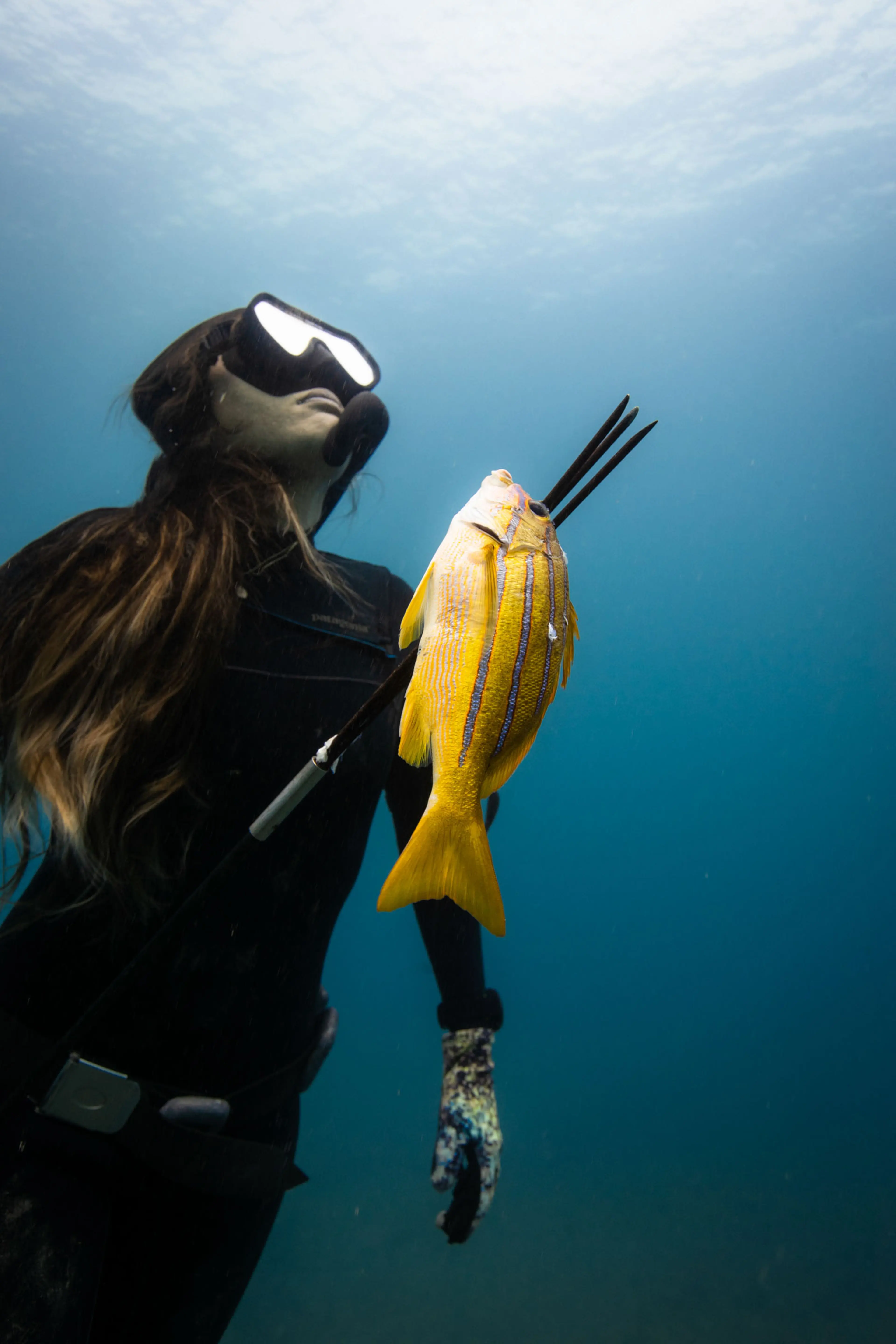
自由潜水员兼鱼叉捕鱼者基米·维尔纳亲眼目睹了ta'ape如何以惊人的程度占据珊瑚礁。她说,在其原生生态系统中,笛鲷鱼群可能只有寥寥数条,而夏威夷的ta'ape有着电蓝色的条纹和柠檬黄色的皮肤,能够铺满海床。“你能看到数量优势正在接管这些本属于本地鱼类的栖息地,”她说。
Freediver and spearfisher Kimi Werner has seen firsthand just how dramatically the ta’ape has come to dominate the reefs. Where schools of snappers in their native ecosystems might number just a handful, she says Hawai’i’s ta’ape, with its electric-blue stripes and lemon-yellow skin, can blanket the seafloor. “You can see the power of numbers taking over these habitats where native fish belong,” she says.
自2019年以来,保护国际夏威夷分会与包括非营利组织“主厨荟”在内的当地企业和机构合作,一直试图将这种丰富的资源转化为机遇:推广ta’ape作为食物来源,以减少其数量,同时支持当地渔民和粮食安全。保护国际夏威夷分会可持续海产品高级经理贾娜·杨表示,这一做法正开始在整个夏威夷旅游业引起共鸣。酒店现在向员工和客人供应这种鱼;仅希尔顿夏威夷村一家每月就采购约500磅。
Since 2019, Conservation International Hawai’i, in partnership with local businesses and organizations including the nonprofit Chef Hui, has been trying to turn that abundance into an opportunity: promoting ta’ape as a food source to reduce its numbers while supporting local fishers and food security. The approach is starting to resonate across Hawai’i’s tourism industry, says Jhana Young, sustainable seafood senior manager with Conservation International Hawai’i. Hotels now serve the fish to staff and guests; Hilton Hawaiian Village alone purchases about 500 lbs a month.
2025年,全州平均有27名商业渔民售出约4.2万磅ta’ape,比2018年增加了47%。2026年3月的一场“吃掉入侵者”锦标赛在一个周末内就从毛纳卢阿湾清除了超过1200磅的入侵礁鱼,其中近90%是ta’ape。杨说,上世纪80年代渔民出售ta’ape平均每磅只能拿到0.65美元(约合今天的2.63美元),而如今瓦胡岛一些渔民每磅能拿到高达6美元。
In 2025, an average of 27 commercial fishers sold approximately 42,000 lbs of ta’ape statewide, 47% more than in 2018. And a March 2026 “Eat the Invaders” tournament removed more than 1,200 lbs of invasive reef fish from Maunalua Bay in a single weekend, nearly 90% of it ta’ape. Where fishers once received an average of just $0.65 per lb. for ta’ape in the 1980s (about $2.63 today), says Young, today some O’ahu fishers receive as much as $6 per lb.
“当初,这种鱼只是人们捕捞后放回水中的‘废弃物’,或者被用作鱼饵,”Chef Hui的联合创始人阿曼达·科比·诺古奇(Amanda Corby Noguchi)说道。“如今,反而是许多机构、学校和酒店主动联系我们,希望参与我们的项目,而不是我们主动去找他们。”
“When we started, ta’ape was a fish people threw back or used for bait,” says Amanda Corby Noguchi, co-founder of Chef Hui. “Now we regularly get organizations, schools, and hotel properties reaching out to us wanting to be part of it, not the other way around.”
然而,为这种入侵物种创造市场的同时,也引发了另一个问题:这样做是否真的有助于实现保护生态环境的目标?还是说这只不过又成为了一种新的渔业形式?杨(Young)认为,这样做可以将现有的捕鱼压力引导到那些对生态系统有益的物种上。“渔民们总会继续捕鱼;通过为这种以前不存在的物种创造市场,我们可以帮助他们做出对自然长期平衡更有利的选择。”
But creating a market for an invasive species also raises the question of whether it can genuinely serve conservation goals—or simply become another fishery. Young argues that it can redirect existing fishing pressure toward a species whose removal benefits the ecosystem. “Fishers are always going to fish. By helping create markets for a species that didn’t exist before, it helps point fishers in the direction of a choice that is ultimately better for nature’s long-term balance.”
在距离这里4000多英里外的密西西比河下游流域,自20世纪70年代这种鱼从中国引入美国以来,其数量急剧增加。最初人们引入这些鱼是为了控制污水处理厂和水产养殖池塘中的藻类,同时也为了供人类食用。但在短短十年内,它们就逃逸出了人工饲养的环境,扩散到了密西西比河流域及其主要支流(包括伊利诺伊河和密苏里河),破坏了水生食物链,危害了本地鱼类种群,并干扰了商业和休闲渔业活动。
More than 4,000 miles away, in the lower Mississippi River basin, Asian carp populations have proliferated since the species was imported to the U.S. from China in the 1970s. They were brought in to control nuisance algae in wastewater-treatment plants and aquaculture ponds, as well as for human consumption. Within a decade, they had escaped confinement and spread into the Mississippi River basin and its major tributaries, including the Illinois and Missouri rivers, disrupting aquatic food webs, harming native fish communities, and interfering with commercial and recreational fishing.
根据美国鱼类及野生动物管理局(USFWS)的说法,这种入侵性的亚洲鲤鱼是美国面临的最紧迫、影响最广泛、也最复杂的环境问题之一。专家们现在担心这种鱼可能会进一步扩散到五大湖地区。
The invasive Asian carp is one of the most urgent, far-reaching, and complex environmental challenges facing the U.S., according to the U.S. Fish and Wildlife Service (USFWS). And experts now worry about their potential to reach the Great Lakes.
对于位于肯塔基州威克利夫的“两河渔业”创始人安吉·余(Angie Yu)来说,入侵性亚洲鲤鱼的潜在价值显而易见。余女士在中国长大,那里鲤鱼是主食——她表示,鲤鱼常见到“就像鸡肉一样”随处可得。2010年,当她首次读到关于亚洲鲤鱼问题的报道时,她看到了一个机会:这种在美国人眼中被视为“垃圾鱼”的物种,在亚洲却拥有成熟的市场。
For Angie Yu, founder of Two Rivers Fisheries in Wickliffe, Ky., the potential of invasive carp was obvious. Yu grew up in China, where carp is a dietary staple—so commonplace, she says, that it is eaten “just like chicken.”When she first read about the Asian carp problem in 2010, she saw an opportunity others in the U.S. had largely overlooked: a fish considered “trash” by many Americans but which had an established market in Asia.
她开始将这种鱼与亚洲市场对接,最终出口到12个国家。疫情前,公司近90%的产品销往海外。但随后航运中断、燃油成本上涨以及高额国际关税让出口变得愈发困难,促使余女士转向开拓国内市场。此后,她开发出一种“全鱼利用”模式,将鱼肉制成丸子、肉饼、饺子以及宠物食品,利用边角料、内脏和其他废料生产鱼粉和肥料,同时还找到了鱼皮和鱼骨的用途。
She began connecting the fish with Asian markets, eventually exporting to 12 countries. Before the pandemic, nearly 90% of the company’s products were destined for overseas markets. But then shipping disruptions, rising fuel costs, and steep international tariffs made exporting increasingly difficult, prompting Yu to turn her attention to building a domestic market. She has since developed a use-everything model for the fish, making meatballs, patties, dumplings, along with pet food, as well as fish meal and fertilizer from the trimmings, guts, and other waste, while finding uses for the skin and bones.
如今,她的鲤鱼产品在美国各地的亚洲超市均有销售,其加工厂日处理能力高达4万磅(约1.8万公斤)。“这种鱼不是垃圾,”她说,“它是宝藏。”
Her carp is now sold in Asian supermarkets across the U.S., and her processing plant can handle up to 40,000 lbs of carp a day. “The fish is not trash,” she says, “it’s a treasure.”
现在的问题是,对入侵性亚洲鲤鱼的商业需求能否增长到足以大幅减少其种群数量的程度。对于安大略理工大学教授、政府间生物多样性和生态系统服务科学政策平台(IPBES)入侵外来物种及其防治评估联合主席彼得·斯托特(Peter Stoett)而言,关键在于“衡量种群数量,而非市场规模”。商业渔业的增长、更多餐厅供应入侵物种,或捕捞量达到数千磅,可能表明市场在运作——但不一定意味着生态系统正在恢复。他说,入侵物种数量或生物量的减少,才是判断管理措施是否奏效的最明确指标。
The question now is whether commercial demand for invasive Asian carp can grow large enough to meaningfully reduce their populations. For Peter Stoett, a professor at Ontario Tech University and co-chair of the IPBES Assessment on Invasive Alien Species and Their Control, the key is to “measure the population, not the market.”A growing commercial fishery, more restaurants serving an invasive species, or thousands of pounds harvested may signal that a market is working—but not necessarily that the ecosystem is recovering. Reductions in an invasive species’ numbers or biomass, he says, are the clearest indicators of whether management is working.
但衡量这一点需要持续监测:“必须投入资金监测这些种群,否则我们将无法知道目标是否达成。”斯托特认为,如果利用市场机制来鼓励清除,商业活动存在的理由应当是该物种需要被减少、控制或根除——而不是为了建立该物种的可持续渔业。换句话说,保护目标必须放在首位,市场应作为工具而非本身成为目标。他说,随着种群数量下降,科学家、产业界、当地社区和政府之间需要持续对话,探讨激励措施是否应继续、调整,或最终终止。
But measuring that requires sustained monitoring: “Money must be spent monitoring these populations or we won’t know if targets are being met.”Stoett argues that if a market is used to encourage removal, the commercial activity should exist because the species needs to be reduced, contained, or eradicated—not because the goal is to establish a sustainable fishery for that species. In other words, the conservation objective has to come first, with the market serving as a tool rather than becoming the goal itself. As populations decline, he says, there needs to be ongoing dialogue among scientists, industry, local communities, and government about whether incentives should continue, change, or eventually end.
在肯塔基州,有一些证据表明清除工作正在产生效果。肯塔基州鱼类和野生动物资源部已将针对从肯塔基湖和巴克利湖捕获的入侵亚洲鲤的捕捞激励提高至每磅0.15美元,理由是管理工作正在减少这两个湖泊中的种群数量。余先生加工的大部分鲤鱼就来自这同两个湖泊。与此同时,据美国鱼类和野生动物管理局一位发言人称,每年从中西部水域清除的入侵亚洲鲤约达3000万磅。
In Kentucky, there is some evidence that removal efforts are having an effect. The Kentucky Department of Fish and Wildlife Resources has increased its fishing incentive to $0.15 per lb. for invasive carp harvested from Kentucky Lake and Barkley Lake, citing evidence that management efforts are reducing populations in both lakes. Most of the carp processed by Yu comes from those same two lakes. Meanwhile, according to a USFWS spokesperson, around 30 million lbs of invasive carp are removed from Midwestern waters each year.
收割并食用入侵物种的想法听起来像是一个优雅的解决方案:将生态问题变成晚餐,让食欲来完成工作。但罗伊警告,不要把消费视为控制入侵物种的灵丹妙药。收割带来的生态回报,很少与被移除的种群比例成正比。例如,移除一半种群,并不一定意味着其对生态系统的影响减半。
The idea of harvesting and eating invasive species can sound like an elegant solution: turn an ecological problem into dinner and let appetite do the work. But Roy cautions against treating consumption as a panacea for control. The ecological payoff from harvesting is rarely proportional to the share of a population removed. Taking half of a population, for example, does not necessarily mean halving its impact on the ecosystem.
这并不意味着围绕狮子鱼、绿蟹、塔阿佩鱼(ta’ape)和鲤鱼等物种形成的市场毫无意义。这些市场可以为人们提供食物和收入,促进社区发展;在某些情况下,还能将渔民的捕捞压力转移到那些具有入侵性或数量过多的物种身上,从而有助于保护生态系统。不过,罗伊(Roy)强调:这些积极影响必须与入侵物种所造成的生态破坏区分开来——“这里不存在简单的‘利弊平衡’”。
That does not make the markets emerging around lionfish, green crab, ta’ape, and carp meaningless. They can provide food and income, engage communities and, in some cases, redirect fishing pressure toward invasive or overabundant species whose removal can benefit ecosystems. But Roy stresses that these benefits must be considered separately from the ecological damage caused by an invasion: “There’s no simple sum here.”
从理论上讲,创造对这些物种的需求可能会促使人们继续让这些入侵物种大量存在;不过科泰(Côté)表示她并未发现任何证据表明这种情况确实发生过。斯托埃特(Stoett)指出:“虽然‘预防总是最好的办法’,但一旦水生或海洋入侵物种已经扎根,控制其扩散成为唯一现实的选择时,允许人们安全地食用这些物种或许可以成为另一种应对手段——其带来的经济效益可以与入侵物种对生态系统的负面影响进行权衡。”
Creating demand could theoretically give people an incentive to keep an invasive species abundant, although Côté says she is not aware of evidence that this has happened. And while “nothing beats prevention,” says Stoett, once an aquatic or marine invasion is established and containment is the only realistic option, a market for their safe consumption could provide another tool—one whose economic benefits can be weighed against the ecological impacts of the invasion.
归根结底,我们的目标不是通过食用这些物种来摆脱生态危机,而是要确保在食用这些‘生态问题物种’的同时,实际上能够帮助减轻生态问题的严重程度。
The goal, ultimately, is not to eat our way out of an ecological disaster. It is to make sure that, when we eat an ecological problem, we are actually helping to reduce it.
在不列颠哥伦比亚省萨利什海(Salish Sea)的加利亚诺岛(Galiano Island)上,厨师罗宾·科特(Robin Kort)的家门前是一片荒芜的海域——这片曾经长满海藻的海域如今已被海胆覆盖,仿佛铺上了一层尖锐的“地毯”。与狮子鱼或亚洲鲤鱼不同,红海胆和绿海胆原本就是该地区的本土物种。然而,当它们的数量变得过于庞大时,也会产生类似入侵物种的负面影响。
In front of foraging chef Robin Kort’s home on Galiano Island in British Columbia’s Salish Sea, is a sea urchin barren—an underwater desert where kelp once swayed but has since been devoured by the urchins that cover the seafloor like a spikey carpet. Unlike lionfish or Asian carp, red and green sea urchins are native to the region. But when their populations become too abundant, they can have invasive-like effects.
海胆是一种非常高效的“食草动物”。海洋生态学家安妮·所罗门(Anne Salomon)是西蒙弗雷泽大学(Simon Fraser University)应用海洋生态学与社会生态系统科学专业的教授,她指出:当食物充足时,海胆与海带可以共存。然而当食物变得稀缺时,海胆会形成所谓的“主动觅食群体”,它们会啃食那些为众多海洋生物提供食物、庇护所和栖息地的海藻。所罗门认为,通过有选择性的捕捞可以帮助恢复海带森林,但要做到这一点需要持续的努力。
Urchins are remarkably effective grazers. Marine ecologist Anne Salomon, a professor of applied marine ecology and social-ecological system science at Simon Fraser University, says urchins and kelp can coexist when food is plentiful. But when food becomes scarce, urchins form what she calls “active feeding fronts,” stripping away vegetation that provides food, shelter, and habitat for a wide range of marine life. Selective harvesting can help restore kelp forests, Salomon says, but doing so effectively requires sustained effort.
“我们这里有针对海胆的商业渔业;在温哥华,也有很多人喜欢吃海胆,”科特(Kort)说道。她将海胆称为“海洋中的帕尔马干酪”,形容其口感奶油浓郁、味道鲜美,既适合用于甜味菜肴,也适合用于咸味菜肴。去年,科特参与发起了一场名为“Eat the Invaders”的活动,邀请厨师们使用那些入侵性较强、数量过多的海洋生物来烹饪,以此激发人们对美味食物的兴趣。
“We have this commercial fishery around sea urchin, and we have, in Vancouver, a huge population that likes eating them,” says Kort, who calls uni “the parmesan of the sea,” describing it as cheesy, creamy, and versatile enough for both sweet and savory dishes. Last year, Kort helped launch an Eat the Invaders event, bringing chefs together to channel people’s appetite for delicious food by cooking with invasive and overabundant species.
她的努力之一就是鼓励人们更多地捕捞那些年龄较大、虽然不太受欢迎但破坏性更强的海胆。“人类的最大优势在于我们能够消耗大量的食物——只要我们愿意的话,”她说,“那么我们能否将这种‘超能力’用于造福人类呢?”
Part of her effort is to incentivize more harvesting of the older, less desirable but more destructive urchins. “Humans’ greatest power is the amount of stuff we can eat, basically, if we want to,” she says. “So can we use that superpower for good?”