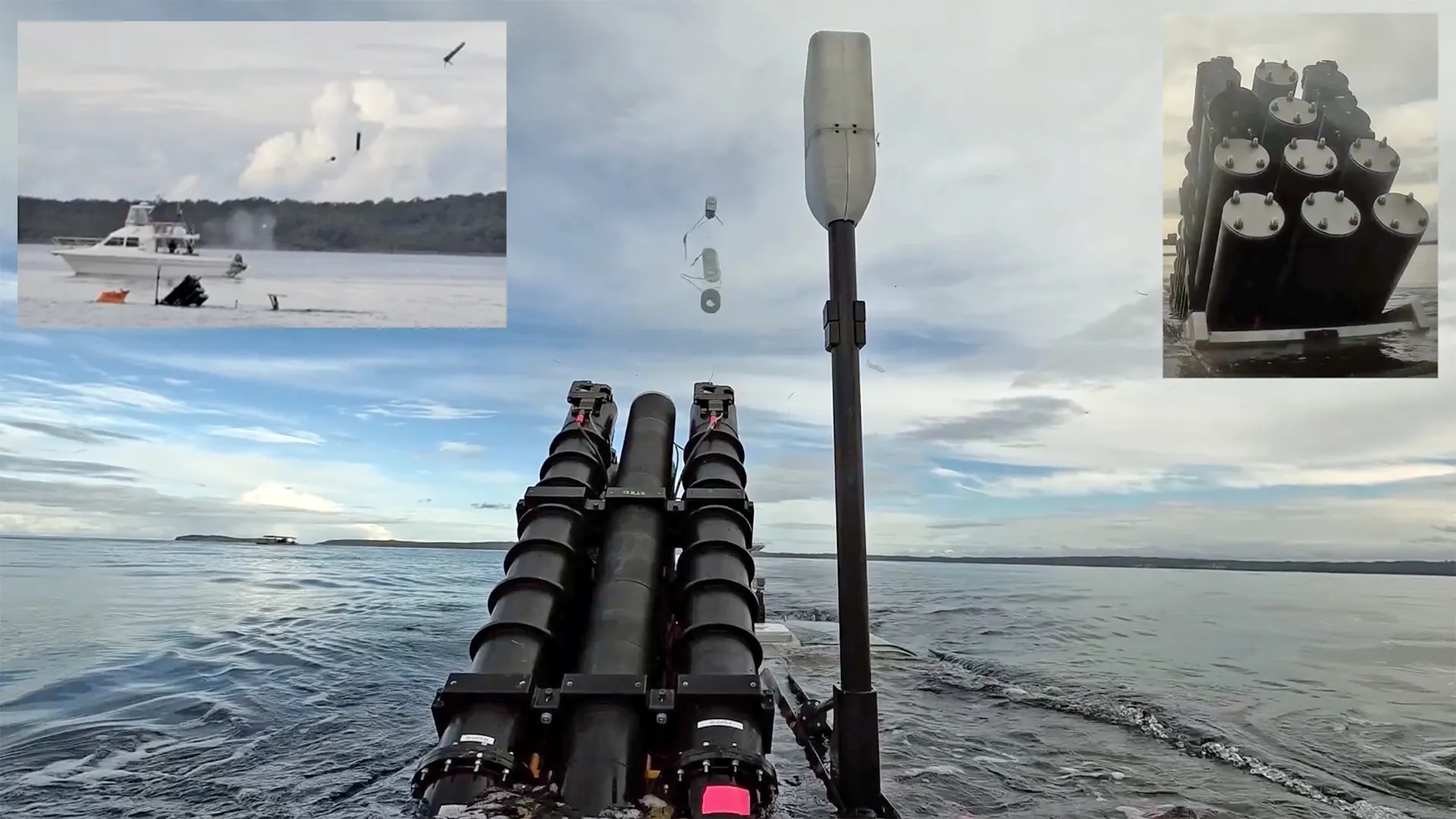
澳大利亚“幽灵鲨”超大型自主水下航行器(XL-AUV)的最新画面首次展示了该航行器发射空中无人机的过程,同时也揭示了此前未在该平台上见过的一对可展开桅杆。该视频发布不久前,我们刚看到澳大利亚皇家海军计划集成在新型无人潜艇上的部分载荷情况,正如您所见——“幽灵鲨现在长牙了。”——@PatConroy1,澳大利亚国防工业部长。
New footage of Australia’s Ghost Shark extra-large autonomous underwater vehicle (XL-AUV) provides the first look at how the vehicle launches aerial drones, while also revealing a pair of deployable masts not previously seen on the platform. The video comes soon after we got a glimpse of some of the payloads that the Royal Australian Navy plans to integrate on the new uncrewed submarine, as you can "Ghost Shark has teeth now." –@PatConroy1 , Australia's Minister for Defence Industry. The @ausgov and
@ausgov和@Australian_Navy确认了我们的“幽灵鲨”超大型自主潜艇携带的载荷:海雷、后勤补给缓存,以及用于情报监视侦察(ISR)和打击的空中发射效应器。…pic.twitter.com/IALPFpOf4V— Anduril Industries (@anduriltech) 2026年10月21日由制造商Anduril发布的画面显示,“幽灵鲨”浮出水面,随后其艇体顶部的舱门滑开。
@Australian_Navy confirmed the payloads that our Ghost Shark extra-large autonomous submarine carries: sea mines, logistics caches, and air-launched effects for ISR and strike.…pic.twitter.com/IALPFpOf4V — Anduril Industries (@anduriltech) October 21, 2026 Published by manufacturer Anduril, the footage shows a Ghost Shark surfacing before doors on the top of its hull slide open.
一个由12个倾斜发射管组成的发射器从无人潜艇中升起。另一个发射器位于另一个上部载荷舱内,但在视频中未升起。虽然它似乎是同类型,但第二个发射器也可能采用不同的发射管排布。
A launcher consisting of 12 angled tubes then emerges from drone sub. Another launcher is seen in the other upper payload bay, but is not raised in the video. While it appears to be of the same type, the second launcher could also have a different arrangement of tubes.
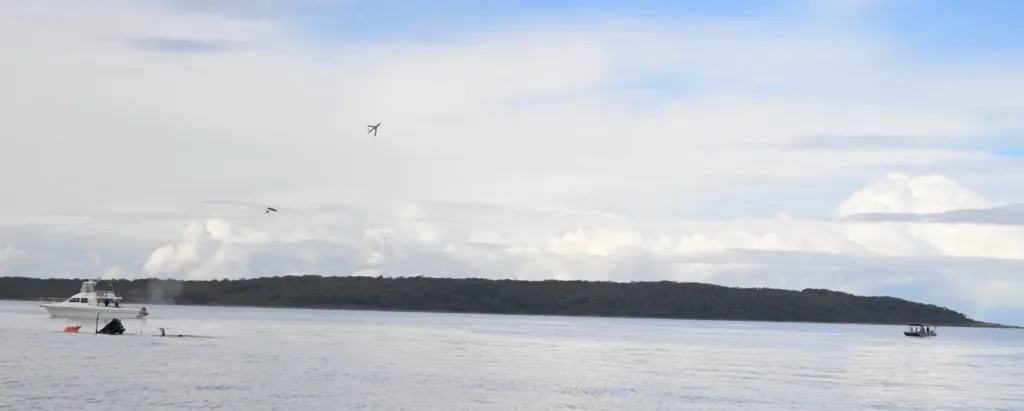
当左侧的12管ALTIUS型空中无人机发射器升起时,右侧的发射器保持降下状态。Anduril/视频截图随后画面切到一架ALTIUS型无人机从其中一枚发射管发射,而“幽灵鲨”本身保持浮出水面状态。
While the 12-tube ALTIUS aerial drone launcher on the left is seen elevating, the launcher on the right remains lowered. Anduril/screencap The footage subsequently cuts to an ALTIUS-type drone being launched from one of the tubes, with Ghost Shark itself remaining surfaced.
一架“幽灵鲨”从升起的12管发射器发射一架ALTIUS空中无人机。Anduril/视频截图这一序列比先前发布的照片更具体地展示了空中无人机部署概念——或者说其中一种概念,那些照片提供了“幽灵鲨”侧向载荷舱内部的首个公开视角。
A Ghost Shark launches an ALTIUS aerial drone from a raised 12-tube launcher. Anduril/screencap The sequence provides a much more concrete look at the aerial-drone deployment concept — or one of them — than the photographs released previously, which offered the first public view inside Ghost Shark’s side payload bay.
澳大利亚政府表示,该航行器正在为包括持续情报、监视、侦察(ISR)和打击在内的任务进行开发,但其武器的确切配置和作战能力,以及发射方式此前并未披露。
The Australian government has said the vehicle is being developed for missions including persistent intelligence, surveillance, reconnaissance (ISR) and strike, but the precise configuration and operational capabilities of its weapons and how they are launched had not previously been disclosed.
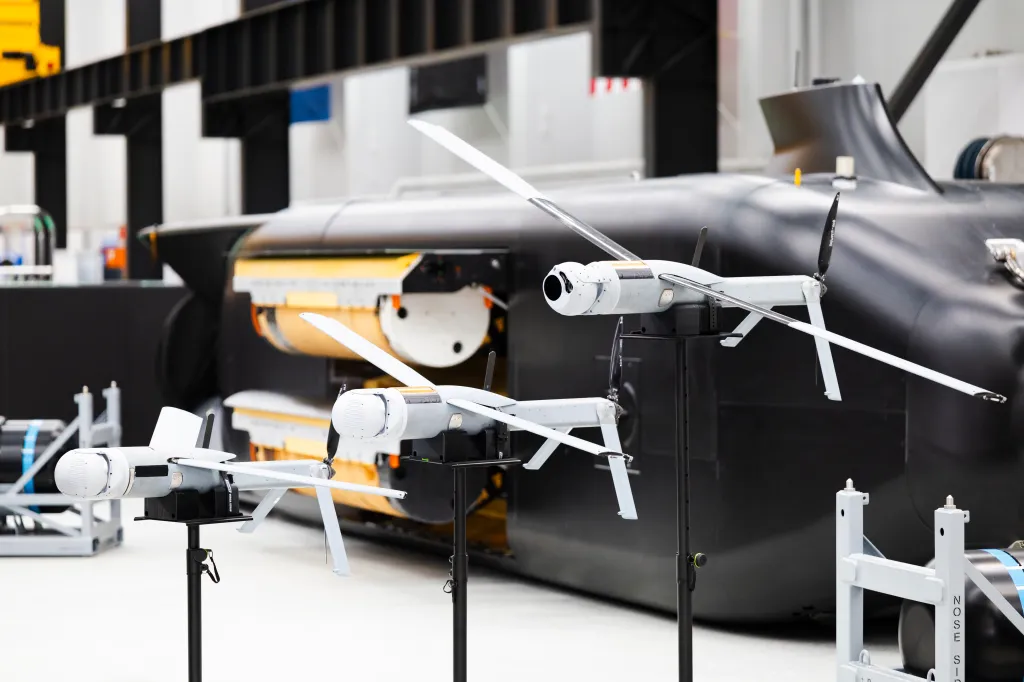
视频未标明发射的是哪种ALTIUS变体。不过,“幽灵鲨”此前曾在澳大利亚Altus工厂与ALTIUS-600系列衍生型号一同展出。这包括用于ISR的ALTIUS-600,以及专为打击任务设计的ALTIUS-600M。您可以在此了解这一无人机家族。正如我们之前指出的,ALTIUS-600的无武装变体设计为可选择性消耗,且可重复使用,尽管在许多场景下这并不可行。
The video does not identify which ALTIUS variant is being launched. However, Ghost Shark has previously been displayed at the Altus factory in Australia alongside derivatives of the ALTIUS-600 family. This includes the ALTIUS-600 for ISR, as well as the ALTIUS-600M, which is designed for strike missions. You canabout this family of drones here . As we noted before , unarmed variants of the ALTIUS-600 are designed to be optionally expendable, and can be reused, although in many scenarios that isn’t possible.
就能力而言,根据Anduril公司数据,ALTIUS-600最大航程约275英里(约443公里),可在空中滞留至少四小时。澳大利亚国防部“幽灵鲨”显然能在单次出动中部署大量空中无人机——本例中为二十四架——从而使蜂群能在远离对手海岸线的地方发射。视所携带无人机类型及其使用方式而定,此类蜂群可提供大区域监视,通过电子战重创敌方防空体系,或攻击目标。
In terms of capabilities, the ALTIUS-600 has a maximum range of around 275 miles and can remain airborne for at least four hours, according to Anduril. Examples of the Anduril ALTIUS-600 displayed during a press conference at the Anduril Australia factory in Sydney, New South Wales. Australian Department of Defense Ghost Shark can clearly deploy a substantial number of aerial drones — two dozen in this case – in a single sortie, enabling swarms to be launched far from an adversary’s coastline. Depending on the drones carried and how they are employed, such a swarm could provide broad-area surveillance, wreak havoc on enemy air defenses via electronic warfare, or attack targets.
这一概念在公开冲突门槛以下也可能具有价值。大规模发射相对廉价的无人机可用于探测或刺激对手防空系统,迫使其暴露位置、特征信号和操作程序,以便由其他情报资产甚至部分无人机本身进行收集。早期冷战时期就有完全相同的先例,您可在此阅读详情。
The concept could also have value below the threshold of open conflict. A mass launch of relatively inexpensive drones could be used to probe or stimulate an adversary’s air defenses, prompting them to reveal their locations, signatures and operating procedures for collection by other intelligence assets or even some of the drones themselves. There is a precedent for exactly this going back to the early Cold War years, which you can read all about here .
“Ghost Shark”这款无人潜水器能够将这些先进装备秘密地部署到争议海域,而不会让船员面临任何风险。无论是在对峙距离上,还是在海岸附近,它都能释放这些装备,从而最大化无人机的渗透能力及在目标区域停留的时间——具体取决于任务的风险等级。
Ghost Shark could carry these capabilities deep into contested waters clandestinely without putting a crew at risk, unleashing their payload even at standoff distances or right next to the shore to give the drones maximum penetration and loitering time over target, depend on the risk profile.
虽然这12个发射管完美地融入了“Ghost Shark”的船体结构中,但该设计的模块化特性意味着同一空间还可以容纳许多其他类型的载荷(包括各种无人机)。这些载荷可能是体积较大、功能更强大的无人机,也可能是数量众多但功能较为简单的无人机。
At the same time, while the 12-tube launchers fit neatly into Ghost Shark’s hull architecture, the modular nature of the design means that the same space can accommodate many other payloads, which might include alternative types of aerial drones. This could be fewer larger, more capable types, or far more plentiful smaller, less capable ones.
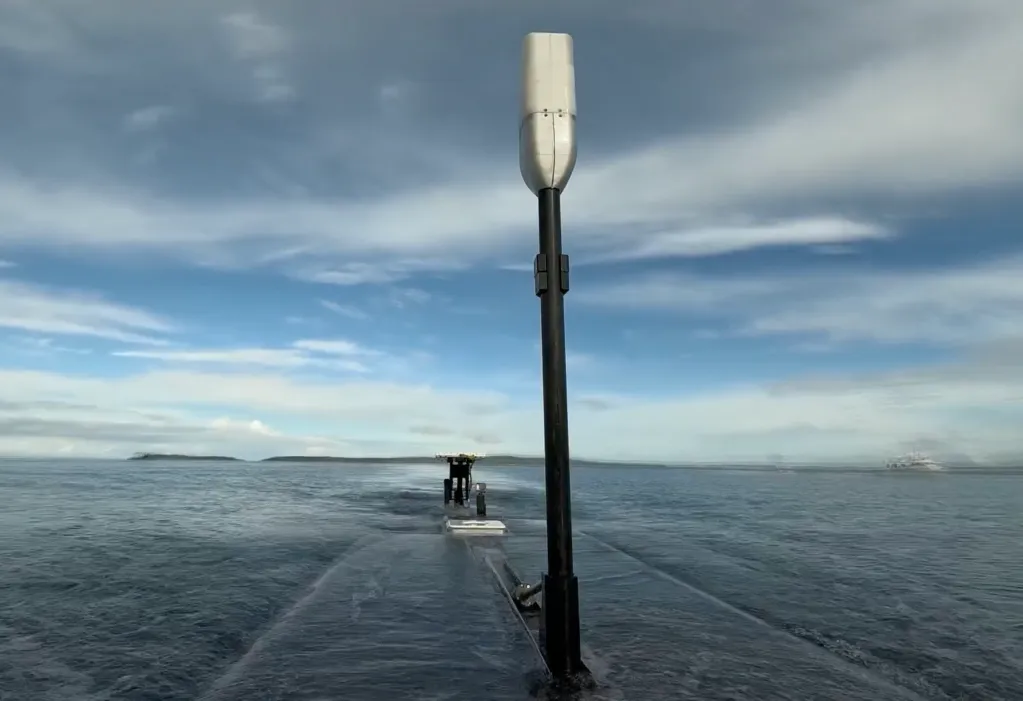
视频中的另一个亮点是两根可伸缩桅杆的出现。考虑到Anduril公司一直致力于设计无需传统潜艇那种突出式桅杆结构的无人水下航行器,这两根桅杆的存在显得尤为引人注目。在无人水下航行器上,这类桅杆通常用于支撑传感器、通信系统和推进装置。
The other notable development in the video is the appearance of two deployable masts. Their presence is particularly interesting given Anduril’s emphasis on designing uncrewed underwater vehicles without the kinds of protruding mast arrangements associated with traditional submarine designs. On UUVs, masts like these are generally used to support sensors, communications, and propulsion systems. Looking aft, with the two masts raised.
Anduril公司的工程高级副总裁兼海洋业务负责人Shane Arnott博士曾在2024年接受TWZ采访时指出:“我们的无人潜水器并没有像许多其他设计那样带有从船体延伸出来的大型桅杆,因此载荷可以从多个方向释放出来。”他补充道:“实际上,我们的设计具有极高的灵活性——无论载荷模块的形状或尺寸如何,我们几乎都能满足客户的任何需求。”
Anduril/screencap “We don’t have big masts running down the backbone of our vehicle that a lot of other designs do that then preclude the ability for the payloads to come out in different directions… of the payload module itself,” Dr. Shane Arnott, Senior Vice President for Engineering at Anduril and the company’s maritime lead, told TWZ back in 2024. “So we have… in effect, unlimited flexibility in this design, just the way that we’ve configured the vehicle and the payload bay itself could be almost anything within a size configuration that you can dream up,” Arnott added.
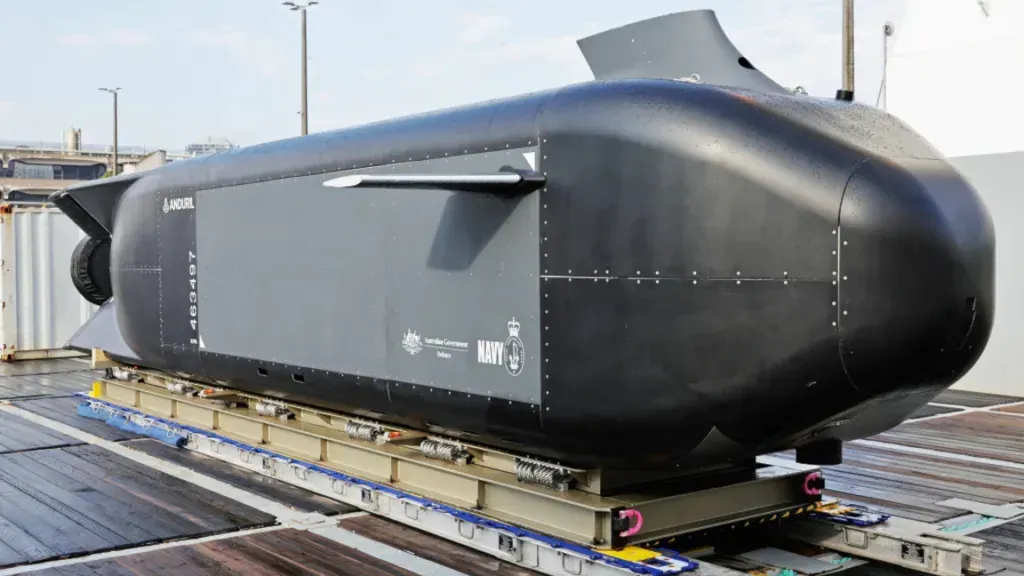
这艘“Ghost Shark”是第一艘交付给澳大利亚皇家海军的无人潜水器。在早期的照片中,这些可伸缩的桅杆尚未被展示出来。
“We haven’t encountered a crazy idea yet from a customer that … we can’t fit.”The first Ghost Shark for the Royal Australian Navy. In this earlier view, the retractable masts are not visible.
较大的平卧桅杆实际上是大型无人水下航行器(UUV)相当传统的配置。收纳时,它沿艇体中心线平放,位于上部载荷舱之间。随后,它以类似手臂伸展的方式向上部署,并携带一根天线。较小的桅杆位置更靠后,从自己的舱室垂直升起。推测较高的桅杆支持对无人机的视距数据链,而另一个则是卫星通信阵列,例如连接至“星链”/“星盾”系统,将无人机的数据传输给世界任何地方的控制者。
Australian Department of Defense The larger mast that lies flat is actually a fairly traditional one for large UUVs. It lies along the centerline of the hull when stowed, between the upper payload bays. It then deploys upward in an arm-like motion and carries an antenna. The smaller mast is located farther aft and rises vertically from its own housing. Potentially, the tall mast supports a line-of-sight datalink to the drones, while the other being a satcom array, such as one connected to Starlink/Starshield, sending those drone feed to controllers anywhere in the world.
还值得注意的是,“幽灵鲨”完全可以仅发射无人机并让它们自主执行任务,根本无需保持浮出水面状态。也可能存在其他编组方式,例如“幽灵鲨”发射一打无外加一架携带自带卫星通信终端的大型无人机。这将使操作员能在世界任何地方直接控制无人机,而无需“幽灵鲨”停留在近水面位置。
It’s also worth noting that Ghost Shark could just launch the drones and send them on their missions autonomously, without needing to stay surfaced at all. Other arrangements could exist, as well, such as Ghost Shark launching a dozen drones and one larger one capable of carrying its own satcom terminal. This would allow direct control of the drones by operators anywhere in the world without Ghost Shark remaining present near the surface.
视频中不可见,“幽灵鲨”鼻部上方还有一个低轮廓的后掠式塔架。总体而言,在与无人机保持连接时,该艇艇身水线以上的特征极小,使其难以被雷达和光电成像系统探测到。
Ghost Shark also has a lower-profile swept-back sail on top of its nose section, not visible in the video. Overall, the vessel would retain a very small signature above the waterline while connected to the drones, making it hard to detect by radar and electro-optical imaging systems.
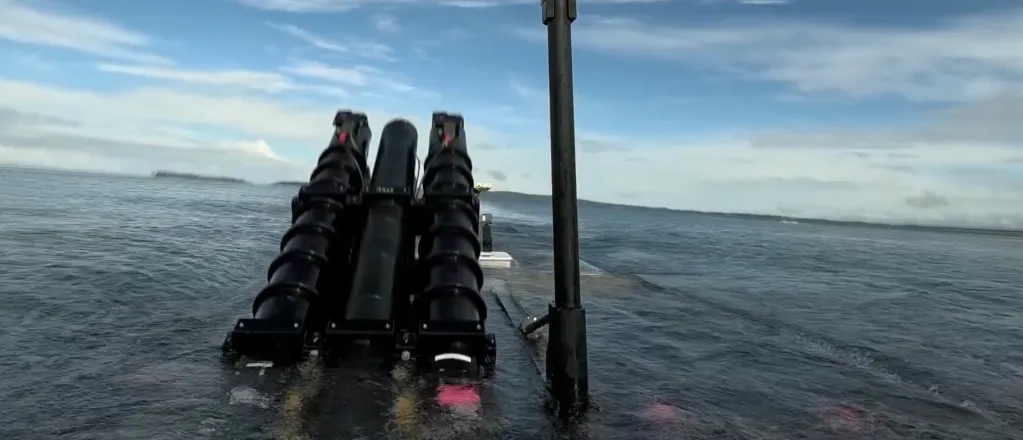
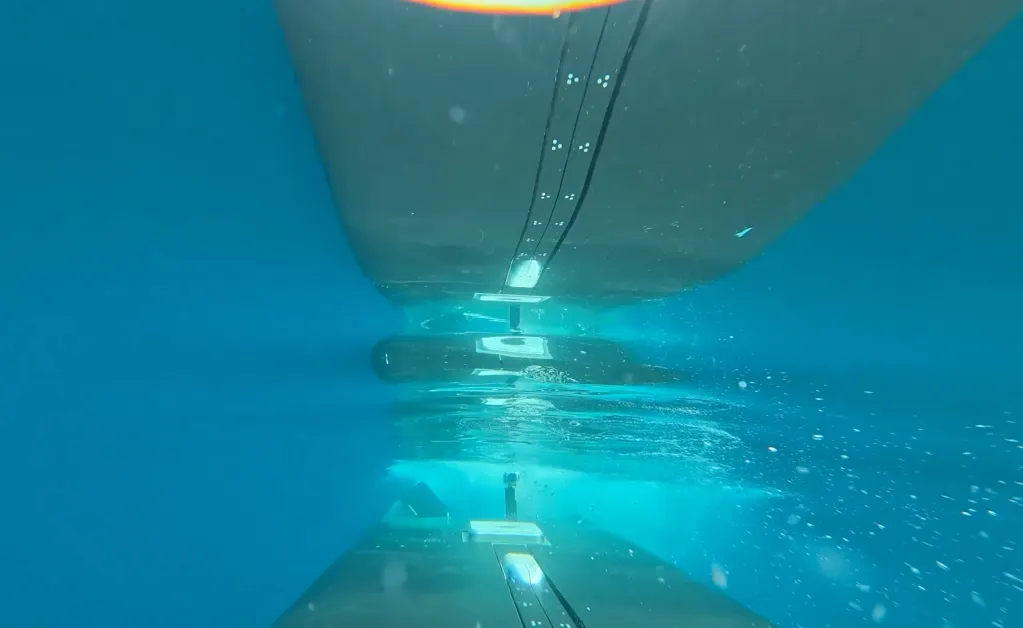
潜航状态下的“幽灵鲨”,其倒影映在水面上。这提供了一个良好的视角,可以看到收纳状态下的桅杆,以及它们如何与关闭的上部载荷舱门完美贴合。Anduril/视频截图最新视频发布于澳大利亚皇家海军“幽灵鲨”三种载荷概念近期披露之后:单次任务部署多达12枚海底地雷、在海床放置补给缓存、以及发射空中无人机。这些能力将该航行器的用途从传统的水下监视拓展到了更广泛的水下作任务。
Ghost Shark submerged, with its reflection seen on the surface. This provides a good view of the retracted masts and how they fit neatly with the closed upper payload doors. Anduril/screencap The new video follows the recent disclosure of three payload concepts for the Royal Australian Navy’s Ghost Shark: the deployment of up to 12 sea mines in a mission, the placement of supply caches on the seabed, and the launch of aerial drones. Those capabilities expand the vehicle beyond conventional underwater surveillance into a broader range of undersea warfare missions.
投放水雷的选项可支持在战略要地海域的行动,而海底储存点则可提供一种为后续回收而预置装备和物资的手段。正如新视频所展示,空中无人机能力将使“幽灵鲨”能够将监视延伸至其自身传感器触及范围之外,或在不让有人驾驶平台面临同等风险的情况下潜在实施打击效应。拥有12架可发射的“阿尔修斯”无人机(以及在相邻上部载荷舱中潜在的同等数量)将允许执行多项任务。
The mine-delivery option could support operations in strategically important maritime areas, while seabed caches could provide a means of positioning equipment and supplies for later retrieval. The aerial-drone capability, as seen in the new video, would allow Ghost Shark to extend surveillance beyond the reach of its own sensors or potentially deliver strike effects without exposing crewed platforms to the same risks. Having 12 ALTIUS drones ready to launch (and potentially the same number in the adjacent upper payload bay) would allow multiple missions to be undertaken.
模块化设计是“幽灵鲨”的核心。正如我们所讨论的,载荷段可通过不同的艇体段和任务专用系统进行配置,使同一基础艇体设计能够适应不同需求。新曝光的发射装置首次展示了这些载荷概念中至少有一种可能在实践中如何实现。
The modular design is central to Ghost Shark. As we have discussed , the payload section can be configured using different hull sections and mission-specific systems, allowing the same underlying vehicle design to accommodate different requirements. The newly revealed launcher provides a first look at how at least one of those payload concepts may be implemented in practice.
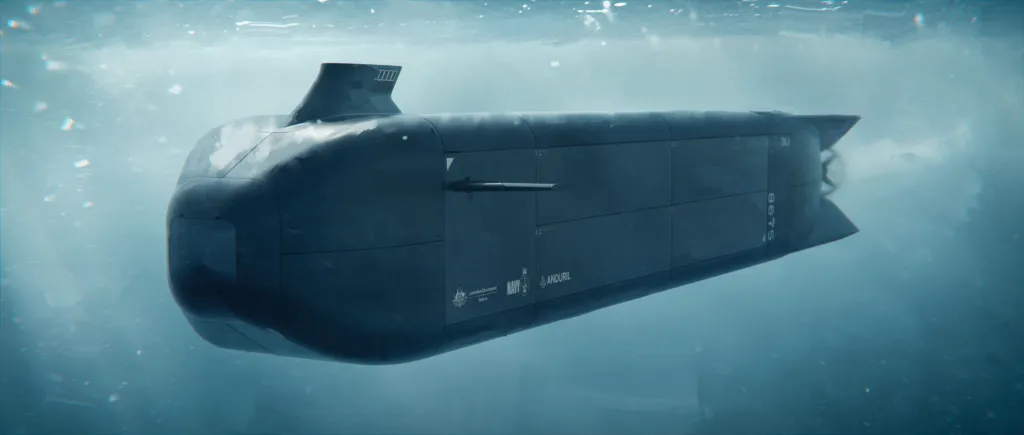
一幅服役于澳大利亚皇家海军的“幽灵鲨”渲染图。澳大利亚国防部澳大利亚已投入大量资源发展自主和无人水下作战能力,计划组建一支由澳大利亚设计和建造的“幽灵鲨”艇队,与“矛齿”大型无人水下航行器(LUUV)和“蓝瓶”无人水面舰艇(USV)协同服役。“幽灵鲨”计划也是更广泛的“奥库斯”努力的一部分,旨在与英国和美国共同开发先进海洋技术。
A rendering of a Ghost Shark in Royal Australian Navy service. Australian Department of Defense Australia has committed substantial resources to autonomous and uncrewed undersea warfare capabilities, with a planned fleet of Australian-designed and built Ghost Shark vehicles serving alongside the Speartooth large uncrewed underwater vehicle (LUUV) and the BlueBottle uncrewed surface vessel (USV). The Ghost Shark program is also part of the broader AUKUS effort to develop advanced maritime technologies alongside the United Kingdom and the United States.
新画面更清晰地展示了该努力背后的实际设计选择。最引人注目的是,该水下航行器如何将其空中无人机发射能力实战化,以及它在潜回波涛之下之前,能够以多快的速度潜在部署多少此类系统。
The new footage provides a clearer picture of the practical design choices behind that effort. Most notably, how the underwater vehicle can operationalize its aerial drone launching capability and the quantity of those systems it could potentially deploy very quickly before slipping back below the waves.