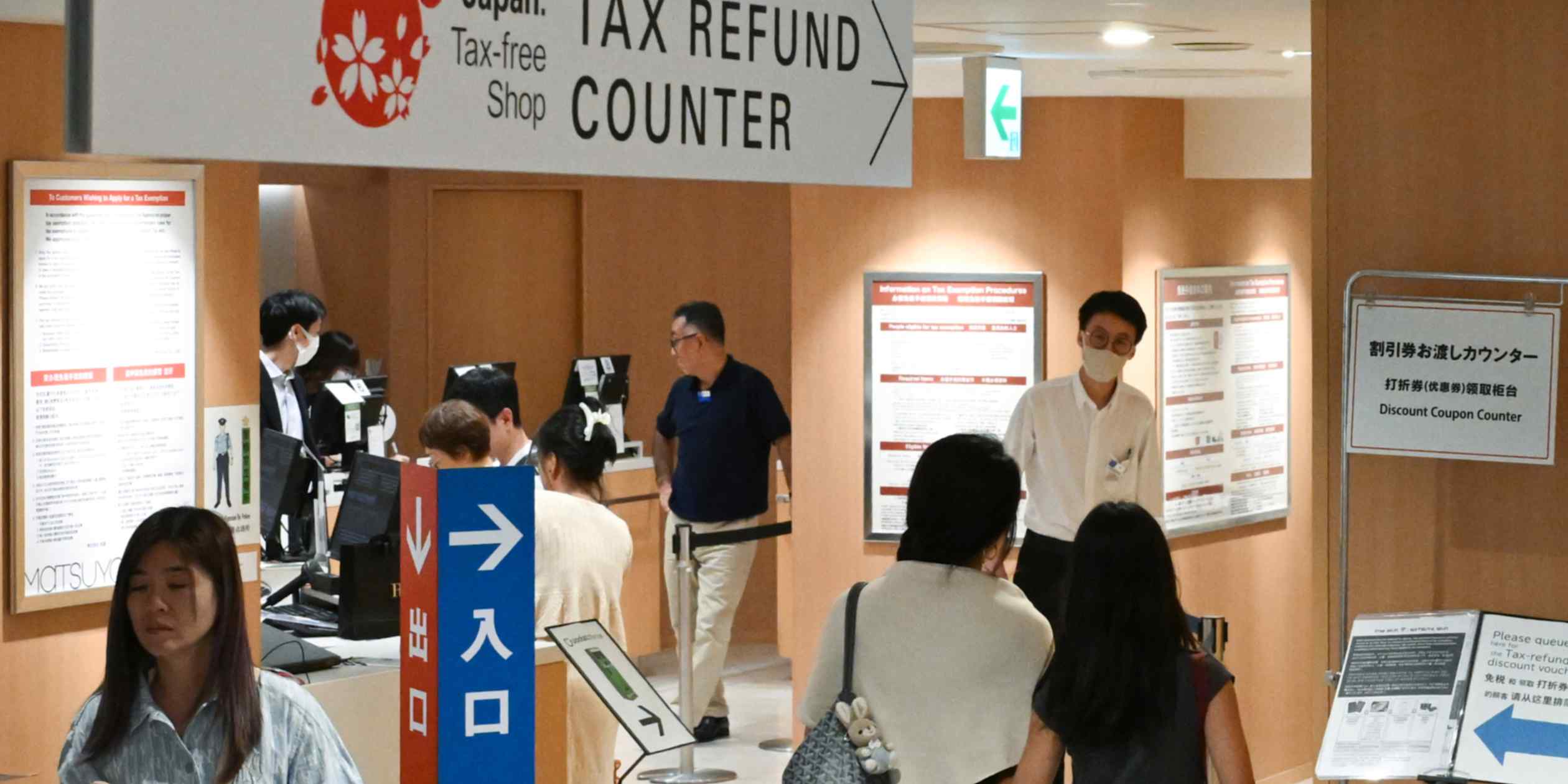
东京 —— 日本将于11月改革针对外国游客的免税购物规则,以打击国内转卖行为,但部分零售商担心新的退税流程可能会吓退大额消费者。
TOKYO -- Japan is set to overhaul its tax-free shopping rules for foreign visitors in November to combat domestic reselling, but some retailers worry the new refund process may deter big spenders.
根据新规则,购物者在购买时需要支付含税的全额价格,而不像现在那样在购买时获得免税。
Under the new rules, shoppers will need to pay the full price with tax at the time of purchase instead of receiving an exemption as they do now.
离境时,他们必须在港口或机场大厅的终端机出示护照,终端机将判断是否需要进行海关检查。
Upon departure, they will have to present a passport at a terminal in the port or airport lobby, which will determine whether a customs inspection is needed.
只有在确认所有符合条件的商品都将被带出国外后,消费税才会被退还。
Consumption tax will be refunded only after it has been confirmed that all eligible items are being taken out of the country.
与此同时,政府将取消每家店铺每日针对食品、医药品和化妆品等消耗品免税购买50万日元(约合3160美元)的上限。最低购买金额将维持在5000日元。
Alongside this change, the government is scrapping a daily cap of 500,000 yen ($3,160) per store on tax-free purchases of such consumable goods as food, pharmaceuticals and cosmetics. The minimum purchase amount will remain 5,000 yen.
“外国游客将能够在同一家店购买任意数量的商品,”日本免税店协会一位官员表示,“这将带来更高的客单价和更多的销售机会。”店员也不再需要将消耗品装入特制透明袋密封。百货公司运营商高岛屋社长村田善郎表示,这将意味着“销售现场的工作量减少”。
"Foreign visitors will be able to buy as much as they want at the same store," an official at the Japan Tax-free Shop Association said. "This will lead to higher spending per customer and more sales opportunities." Shop staff will also no longer need to seal consumable goods in a special clear bag. This will mean "less work on the sales floor," said Yoshio Murata, president of department store operator Takashimaya.
部分零售商预计,新的免税制度将冲击高端威士忌等昂贵商品的销售。
Some retailers expect the new tax-free system to cut into sales of such expensive items as high-end whisky.
另一家百货公司预计,在新制度下会有更多外国游客购买高端葡萄酒和威士忌,但担心额外的步骤可能构成“心理”障碍。
Another department store expects more foreign shoppers to buy high-end wines and whiskies under the new system but raised concern that the extra steps involved could pose a "psychological" barrier.
J. Front Retailing社长小野圭一表示,“复杂的流程可能对购物产生负面影响。”为外国游客营销提供支持的公司Novarca表示,转为退税模式可能会使百货公司的免税销售额下降约10%,因为转卖者会避而远之。
Keiichi Ono, president of J. Front Retailing, said that "the complicated process could have a negative effect on shopping." Novarca, a company that provides support for marketing to foreign tourists, says the shift to refunding taxes could drag down tax-free sales at department stores by around 10% as resellers steer clear.
“节省的消费税将减少用于在地下食品街购买便当或即食食品,”一家百货公司高管表示。
"There will be less use of money saved on consumption taxes to buy boxed meals or prepared foods in basement food halls," a department store executive said.
外国购物者约占二手奢侈品手表零售商Rasin销售额的30%。董事长滝口章宏表示,由于转向不那么便捷的制度,他预计截至2月的六个月内免税销售额将下降约18%。
Foreign shoppers account for around 30% of sales at Rasin, a secondhand seller of luxury watches. Chairman Akihiro Takiguchi said he expects tax-free sales to drop roughly 18% in the six months through February, owing to the transition to a less-convenient system.
据日本观光厅称,日本约有6.4万家免税商店,所有商店都需要适应这一规则变更。
Japan has around 64,000 tax-free shops, according to the Japan Tourism Agency, and all of them need to adapt to the rule change.
日本在购买时免税的制度可追溯至1952年,在主要经济体中几乎是独一无二的。
Japan's tax exemption at the point of purchase, which dates back to 1952, was nearly unique among major economies.
此次改革是由外国旅客滥用该制度所推动,他们购买免税商品后在日本境内转售。据日本海关称,几乎无法确认购买金额达1亿日元或以上的访客是否将所有商品带出了该国。
The overhaul was spurred by abuse of the system by foreign travelers who purchase items tax-free and resell them within Japan. Almost no visitors who make purchases worth 100 million yen or more could be confirmed to have taken all their items out of the country, according to Japan's customs bureau.
向德国、法国、台湾等地使用的退税方式转变的举措,已在2025财年敲定。
The move to tax refunds like those used in Germany, France, Taiwan and elsewhere was decided on in fiscal 2025.