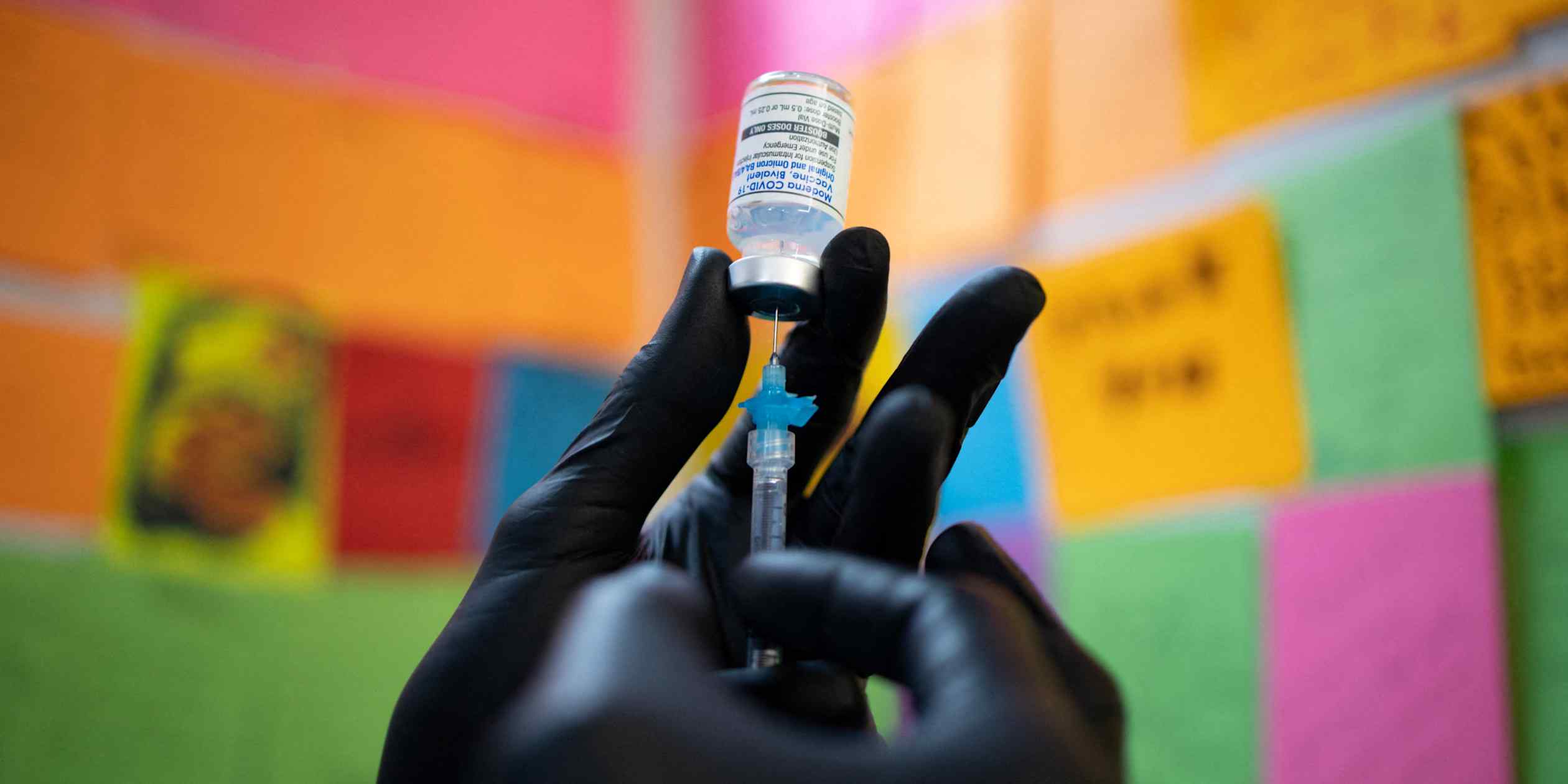
香港讯——美国生物技术公司莫德纳以研发新冠肺炎mRNA疫苗而闻名,首席执行官斯特凡·班塞尔在接受《日经亚洲》采访时表示,该公司正在扩大业务范围,并探索在中国的合作伙伴关系。
HONG KONG -- Moderna, the U.S. biotech company known for developing an mRNA vaccine against COVID-19, is exploring partnerships in China as it broadens its scope, CEO Stephane Bancel told Nikkei Asia in an interview.
“中国和大中华地区对莫德纳来说非常重要,”班塞尔表示,该公司最近报告了癌症治疗方面的重大突破。“有很多人需要医疗帮助,无论是通过疫苗预防疾病,还是接受治疗。”莫德纳在中国的雄心正值生物技术成为世界两大经济体之间科技竞争中最具争议的领域之一之际。
"China and greater China is really important for Moderna," said Bancel, whose company recently reported major breakthroughs in cancer therapy. "There's a lot of people that need medical help, either with the prevention of disease with vaccines or treatments." Moderna's China ambitions come as biotech has emerged as one of the most hotly contested areas in the technology rivalry between the world's two largest economies.
近年来,美国一直在努力减少对中国生物技术供应链的依赖。美国还在权衡对涉及中国生物技术企业的美国投资和许可交易实施潜在限制,尽管全球制药商仍在继续在中国寻找新的药物候选物。与此同时,北京正在加强对其认为战略重要的领域的控制,当局最近提议将五项生物技术列入出口管制清单。
The U.S. in recent years has moved to reduce its reliance on Chinese biotech supply chains. It is also weighing potential curbs on American investment and licensing deals involving Chinese biotech businesses, even as global drugmakers continue to scour China for new drug candidates. Beijing, meanwhile, is tightening its grip on what it considers a strategically important sector, with authorities recently proposing to add five biotech technologies to its export control list.
班塞尔表示,该公司在大中华地区有“若干正在进行的讨论”。他说,该公司最紧迫的重点是传染病,包括新冠肺炎、流感和呼吸道合胞病毒(RSV),并补充说,老龄化人口可能会增加预防和治疗的需求。“我们希望在那里发挥作用,并且很可能会通过合作伙伴关系来实现,”他说。
Bancel said the company has "a number of ongoing discussions in greater China." He said the company's most immediate focus is infectious diseases, including COVID-19, flu and respiratory syncytial virus (RSV), adding that aging populations are likely to increase demand for prevention and treatment. "We'd like to play a role there and will most probably do that through a partnership," he said.
莫德纳首席执行官斯特凡·班塞尔于2023年1月在瑞士达沃斯世界经济论坛(WEF)上发言。
Moderna CEO Stephane Bancel speaks at the World Economic Forum (WEF) in Davos, Switzerland, in January 2023.
他还看到了其他机会。8月,美国制药商默克与莫德纳公布了一项针对黑色素瘤(一种皮肤癌)的mRNA疗法与默克开发的名为Keytruda的疗法联合使用的晚期临床试验的积极初步数据。
He sees other opportunities as well. In August, U.S. drugmaker Merck and Moderna released positive initial data from a late-stage clinical trial of an mRNA-based therapy that targets melanoma, a type of skin cancer, in combination with a Merck-developed therapy called Keytruda.
这激发了人们对新一类个性化mRNA癌症疫苗的期待。班塞尔认为,这种方法可以减轻化疗等现有癌症治疗带来的毒性、副作用和痛苦。消息公布后,Moderna的股价飙升了近三倍。
This raised hope for a new class of personalized mRNA cancer vaccines. Bancel argued that such a method could reduce the toxicity, side effects and pain associated with existing cancer treatments such as chemotherapy. Moderna's shares soared nearly threefold after the announcement.
班塞尔表示,如果成功,默沙东将负责在包括大中华区在内的国际市场上推广该疗法。
If successful, Merck will lead commercialization of the therapy in international markets, including greater China, Bancel said.
他对治疗肺癌的前景也持乐观态度,肺癌是中国最常见的癌症类型,也是导致癌症相关死亡最多的原因。
He was also upbeat about prospects for treating lung cancer, the most common form of the disease in China and the cause of the most cancer-related deaths.
“我认为真正具有关键作用的是肺癌,”班塞尔说。他解释称,公司正在等待更多与其肺癌疗法相关的临床数据,但表示该疫苗可能成为改变游戏规则的产品,尤其是在早期阶段。
"The one that I think is going to be really instrumental is lung cancer," Bancel said. He explained that the company is waiting for more clinical data related to its lung cancer therapy, but said the vaccine could prove to be a game changer, especially in the early stages.
Moderna此前试图进入中国市场时遇到了知识产权方面的担忧。据报道,该公司拒绝向中国官方移交其关键mRNA疫苗的配方,作为在该国销售的前提条件。
Moderna's previous attempt to push into China ran into intellectual property worries. The company reportedly refused to hand over the recipe of its key mRNA vaccines to Chinese officials as a prerequisite for selling it in the country.
尽管如此,班塞尔于2023年与上海市委书记陈吉宁会面,并承诺在该中国金融中心增加投资。据当地媒体援引工商注册数据报道,次月,该公司在上海注册了一家子公司,显示出潜在的扩张意向。
Nevertheless, Bancel in 2023 met with the Communist Party secretary for Shanghai, Chen Jining, and vowed more investments in the Chinese financial hub. The following month, the company registered a subsidiary in Shanghai in a signal of potential expansion, according to a local media report citing corporate registration data.
截至目前,中国仍未批准任何外国新冠疫苗。中国生物技术公司也在开发自己的mRNA疫苗,包括一些针对癌症的疫苗。本月初,总部位于苏州的艾博生物与瑞士药企诺华达成了一项mRNA自身免疫疗法合作协议,获得了5.75亿美元的首付款。根据公司声明,该协议包含期权和里程碑付款,总价值最高可达78亿美元。
As of today, China still has not approved any foreign COVID vaccines. Chinese biotech companies are also developing their own mRNA vaccines, including some targeting cancer. Earlier this month, Suzhou-based Abogen Biosciences struck a deal with Swiss drugmaker Novartis for an mRNA-based autoimmune therapy, securing an upfront payment of $575 million. The deal, including options and milestone payments, could end up being worth $7.8 billion, according to a company statement.
班塞尔表示,中国在mRNA技术方面的“激进投资”有利于患者,北京“明智地利用这一新兴科学平台来支持创新”。
Bancel said China's "aggressive investments in mRNA technology" are good for patients and Beijing is "smart in leveraging this emerging scientific platform to support innovation."
当被问及中美两国日益高涨的民族主义和保护主义时,班塞尔表示,他相信“科学一直是通过国际合作而进步的”,并强调“我们保持务实态度,并与无论身在何处的最佳机构合作”。尽管中国商务部和科技部上周将某些生物医药技术列入出口管制清单,但分析师指出,技术转让许可、外包研发或生产以及联合研发基本未受影响。根据杰富瑞集团周二发布的一份报告,“当局表示,目的是保护生物安全和公共卫生,同时仍允许合法的国际合作”。
When asked about rising nationalism and protectionism in both the U.S. and China, Bancel said he believes "science has always advanced through international collaboration," emphasizing that "we remain pragmatic and partner with the best organizations wherever they are." While China's Ministry of Commerce and Ministry of Science and Technology last week added certain biopharmaceutical technologies to the export control list, analysts said that out-licensing, outsourced R&D or manufacturing, and joint R&D were broadly spared. "Authorities said the aim is to protect biosecurity and public health while still allowing legitimate international cooperation," according to a Jefferies report released Tuesday.
行业参与者在美国面临另一种逆风。卫生与公众服务部今年取消了5亿美元的mRNA疫苗资金,卫生部长小罗伯特·肯尼迪作为一名疫苗怀疑论者,曾表示该技术对呼吸道疾病“风险大于收益”。这一决定将影响由辉瑞和莫德纳等公司主导的22个项目,这些项目针对禽流感和其他病毒的疫苗研发。
Industry players face a different kind of headwind in the U.S. The Department of Health and Human Services has canceled $500 million in funding for mRNA vaccines this year, as Health Secretary Robert F. Kennedy Jr., a vaccine skeptic, has said the technology poses "more risks than benefits" for respiratory diseases. The decision will impact 22 projects led by companies including Pfizer and Moderna for vaccines targeting bird flu and other viruses.
尽管如此,班塞尔认为,生物技术正日益类似于人工智能,美国和中国正成为两个超级大国,拥有“横跨研究、人才、资本和商业化的足够规模”,能够产出突破性创新。
Nevertheless, Bancel argued that biotech is increasingly resembling AI, with the U.S. and China emerging as two superpowers with "sufficient scale across research, talent, capital and commercialization" to produce breakthrough innovations.
他说:“我们认为,我们可以与中国企业、中国医院和中国学术界做很多事情,为患者带来新药。科学没有国界。”
"We think there's a lot of things we can do with Chinese companies, Chinese hospitals and Chinese academics to bring new medicines for patients," he said. "Science has no frontiers."