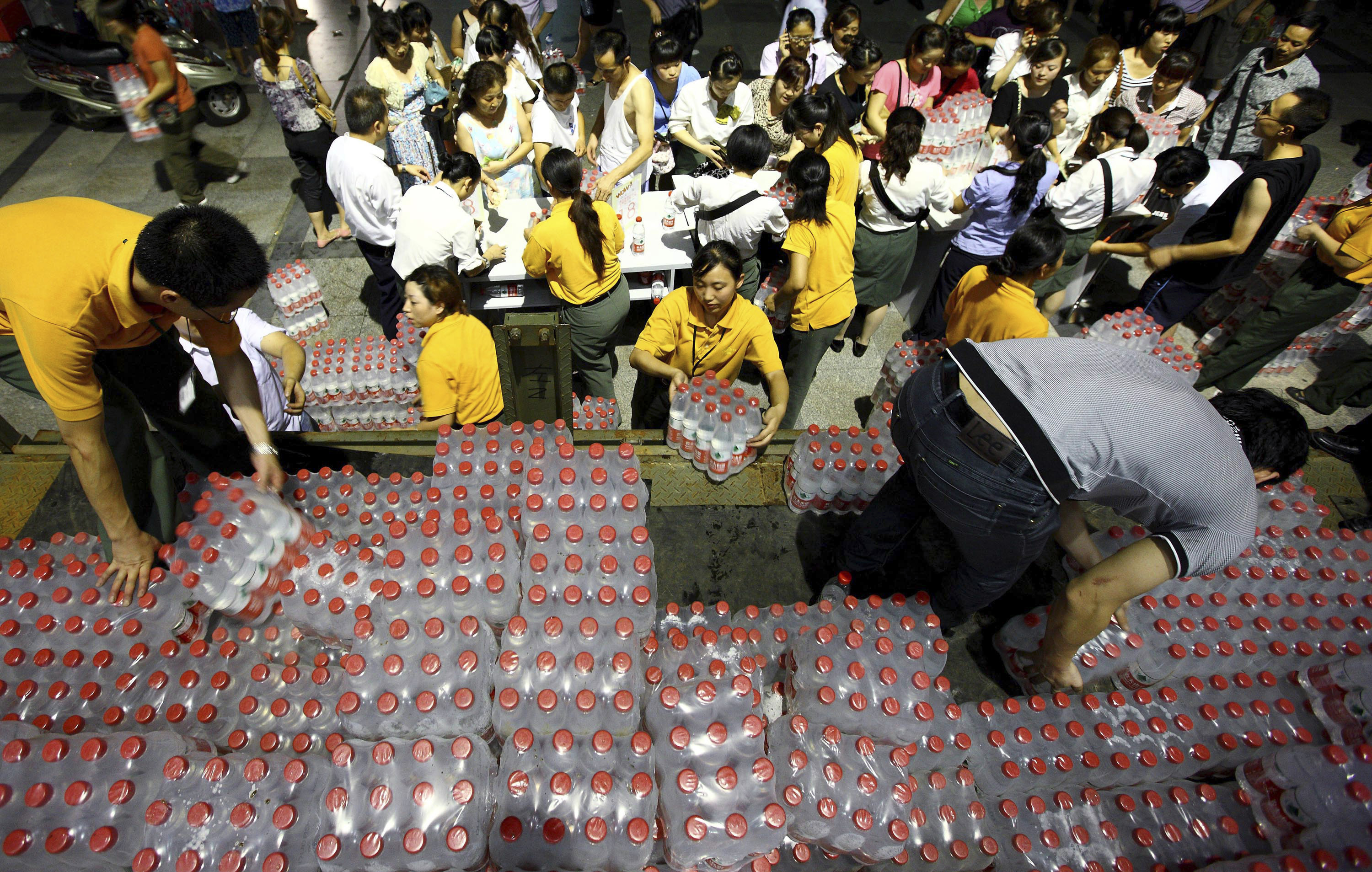
中国正成为亚洲、中东和非洲缺水国家的主要水技术供应商,业内专家表示,随着国内天然水源萎缩,北京正大力投资人造淡水。
China is emerging as a major supplier of water technology to parched countries across Asia, the Middle East and Africa, as shrinking natural supplies at home push Beijing to invest heavily in manufactured freshwater, industry experts say.
中国企业正向埃及、沙特阿拉伯和阿联酋出售海水淡化膜、过滤设备和工程服务,往往通过“一带一路”倡议,将中国资金和基建项目与发展中市场连接起来。
Chinese firms are selling desalination membranes, filtration equipment and engineering services to Egypt, Saudi Arabia and the UAE, often through the Belt and Road Initiative, which connects Chinese capital and infrastructure projects to developing markets.
即便是长期以来的海水淡化先行者——海湾国家,也开始转向中国制造商以大规模生产设备。
Even Gulf states, long desalination pioneers, are turning to Chinese manufacturers to produce equipment at scale.
据联合国商品贸易统计数据库(UN Comtrade)数据,2025年中国出口水过滤和净化机械超过20亿美元,较2020年的16亿美元增长25%。
China exported more than $2 billion of water filtering and purifying machinery in 2025, up 25% from $1.6 billion in 2020, according to UN Comtrade.
沃顿科技表示,去年其向“一带一路”国家出货超过3万片海水淡化膜,足以提供日产30多万吨的产能。今年1月,中国电建称正在坦桑尼亚建设一项供水工程,将服务超过45万人。
Vontron Technology said it shipped more than 30,000 seawater desalination membranes to Belt and Road countries last year, enough for more than 300,000 tons of daily capacity. In January, PowerChina said it was building a water supply project in Tanzania to serve more than 450,000 people.
在国内,北京已将水安全列为战略重点。香港智库中国水风险(CWR)称,自2015年以来,中国水利支出增速快于军费。目前每年超过1.2万亿元人民币(约1700亿美元),CWR称这与中国中央军事预算相当。
At home, Beijing has made water security a strategic priority. Spending on water conservancy has grown faster than military spending since 2015, according to China Water Risk (CWR), a Hong Kong-based think tank. It now exceeds 1.2 trillion yuan ($170 billion) a year, which CWR says rivals China's central military budget.
这一推动源于国内风险。8月,尼泊尔与西藏边境附近发生冰川坍塌,显示天然水源正变得多么不稳定。
The push is rooted in domestic risk. In August, a glacier collapse near the border between Nepal and Tibet showed how volatile natural water sources are becoming.
西藏的“水塔”为南亚、东南亚和东亚近20亿人的源头河流供水,气候变化正在侵蚀它们。同时,中国北方严重过度开采导致地下水枯竭,使主要农区面临系统性亏缺。
Tibet's "water towers" feed headwaters for nearly 2 billion people across South, Southeast and East Asia, and climate change is eroding them. Meanwhile, severe over-extraction in northern China has depleted groundwater and left key farming regions with systemic deficits.
CWR表示:“随着冰川融化达峰、河流径流下降,到2050年,为亚洲二分之一人口供水的10大河流系统可能出现‘达峰水’现象。”
"We could see peak water by 2050 across 10 major river systems that provide water to one in two Asians as glacier melt peaks and river flows decline," CWR said.
“‘水资源峰值’是指自然水资源的流量达到最大值后的临界点,此后水量便会持续下降。”
Peak water is the tipping point where flows from natural water sources reach a maximum and thereafter enter continual decline.
“这将使包括中国在内的16个国家的国内生产总值(GDP)面临风险,”CWR组织表示。
"This will put almost half the GDP of 16 countries at risk, including China,” CWR said.
香港城市大学能源与环境学院院长本杰明·霍顿(Benjamin Horton)指出,中国若能在水资源技术领域实现大规模的技术创新,将有助于降低其他水资源短缺国家的成本。他认为北京有望成为亚洲在水资源安全解决方案方面的领先提供者。
Benjamin Horton, dean of the School of Energy and Environment at City University of Hong Kong, said China's ability to develop water technology at scale could cut costs for other water-stressed countries. He said Beijing could become Asia's leading provider of practical water security solutions.
“借助‘一带一路’倡议,对水电、海水淡化、洪水预警、灌溉系统、污水处理以及具有气候适应性的基础设施的需求将持续增长。”
"Through the Belt and Road Initiative, there is likely to be continued demand for hydropower, desalination, flood forecasting, irrigation, wastewater treatment, and climate-resilient infrastructure," he said.
今年7月,中国根据其五年发展规划发布了新法规,将水资源视为国家安全与经济自主性的关键支柱,而不仅仅是环境问题。
In July, China rolled out new regulations under its Five-Year Plan that treat water as a pillar of national security and economic self-reliance, not just an environmental issue.
中国约80%的淡水供应来自地表水;而再生水、淡化海水及收集的雨水仅占淡水总量的3%至4%。中国政府承诺加大水资源调配力度——例如“南水北调”工程将数十亿立方米的水从长江输送到干旱的北方地区——但这一工程受到能源成本上升以及长江流域水资源日益减少的制约。沙特开发商Acwa公司的中国负责人萨利赫·阿尔·哈布蒂(Saleh Al Khabti)表示,某些地区的用水成本正在上升,水质也在恶化。
Surface water supplies about 80% of China's freshwater, while recycled water, desalinated seawater and harvested rainwater provide just 3% to 4%. Authorities have pledged to raise that The South-North Water Transfer Project moves billions of cubic meters from the Yangtze to the dry north, but it is constrained by energy costs and shrinking surpluses in the warming Yangtze basin. Saleh Al Khabti, China president of Saudi developer Acwa, said costs are rising and quality is deteriorating in some areas.
根据自然资源部的数据,截至2025年底,中国共有167个海水淡化项目在运行,总日处理能力达到3,076,805吨(比2024年增加了221,283吨)。官方媒体称平均每立方米的淡化成本为4至8元人民币。行业报告预计,该市场规模将从2024年的18.4亿美元增长到2033年的46.6亿美元,年复合增长率约为11%。
China operated 167 seawater desalination projects at the end of 2025, with total capacity of 3,076,805 tons a day, up 221,283 tons from 2024, according to the Ministry of Natural Resources. State media put the average production cost at 4 to 8 yuan per cubic meter. Industry reports expect the market to grow from $1.84 billion in 2024 to $4.66 billion in 2033, or about 11% a year.
仍存在障碍,包括多城市输送网络所需的投资规模和中央规划,公众态度也构成挑战。卡布蒂表示,许多中国人仍视饮用海水淡化水为禁忌,尽管地方政府热衷于建设产能。
Hurdles remain, including the scale of investment and the central planning needed for multi-city conveyance grids, while public attitudes also pose a challenge. Khabti said many Chinese still view drinking desalinated water as taboo, though local governments are keen to build capacity.
卡布蒂表示,Acwa采购的可再生能源设备中,超过90%来自中国制造商,该公司约70%的全球水处理设备来自中国供应商。
Khabti said more than 90% of the renewable equipment Acwa procures comes from Chinese manufacturers, and the company buys about 70% of its global water equipment from Chinese suppliers.
Acwa承诺到2030年在中国投资最高300亿美元,与包括电力中国和中国能源建设集团在内的公司合作。该公司计划在未来三年内,每年在可再生能源、绿氢和海水淡化领域至少花费150亿美元采购中国设备。卡布蒂预计,中国膜制造商将迅速赶上。“我们与合作伙伴花了15年才达到今天的水平,”他说。
Acwa has pledged to invest up to $30 billion in China by 2030, working with firms including PowerChina and China Energy Engineering Corporation. It plans to spend at least $15 billion a year on Chinese equipment over the next three years across renewables, green hydrogen and desalination. Khabti expects Chinese membrane makers to catch up fast. "It took us 15 years to reach where we are today with our partners," he said.
他认为,中国原始设备制造商可能在两到三年内达到那个水平,并预计海水淡化将跟随风能和太阳能,成为“一个重大的出口领域”。
He thinks Chinese original equipment manufacturers could match that level in two to three years, and he expects desalination to follow wind and solar as "a big area of exports."
“我们对中国非常看好,”他说。“一旦到那里,中国将成为领导者。”
"We're very bullish about China," he said. "Once it's there, China will be the leader."