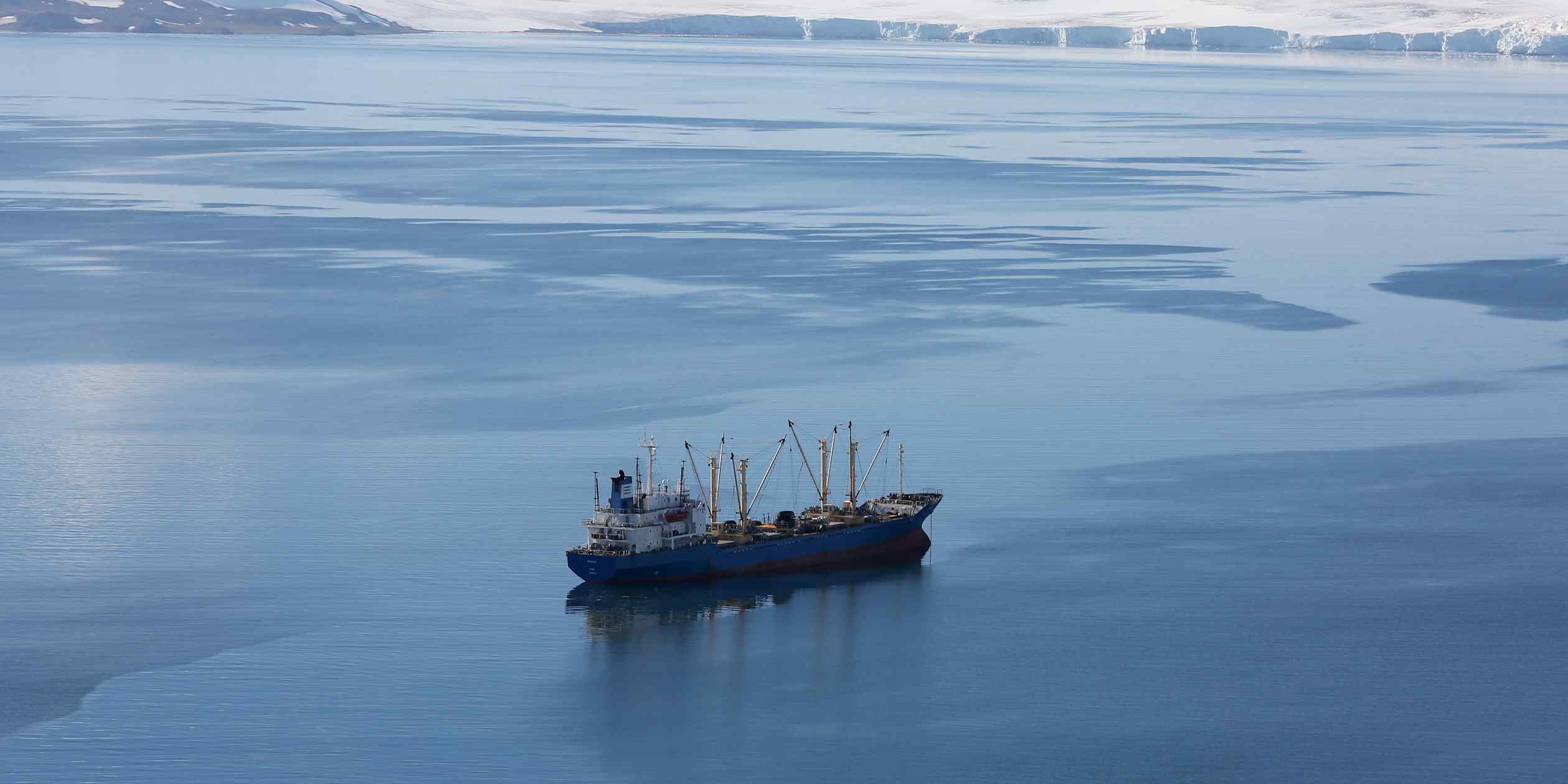
堪培拉——本周,二十多个国家的代表齐聚澳大利亚城市霍巴特,商讨管理世界底部海洋资源的规则。
CANBERRA -- Representatives of more than two dozen nations have gathered this week in the Australian city of Hobart to decide on rules governing ocean resources at the bottom of the world.
在南极海洋生物资源保护委员会(CCAMLR)年度会议上,持有不同愿景的国家将讨论磷虾捕捞和海洋保护问题,这些水域资源丰富。近十年来,CCAMLR一直陷入僵局,中国和俄罗斯抵制设立新海洋保护区的努力。
At the annual meeting of the Commission for the Conservation of Antarctic Marine Living Resources (CCAMLR), states with competing visions are to discuss krill fishing and marine protection in the resource-rich waters. For almost a decade, the CCAMLR has been deadlocked, with China and Russia resisting efforts to establish new marine protected areas.
使僵局更加复杂的是相关问题:如何规范商业南极磷虾捕捞。挪威和中国等大国推动将允许捕捞量扩大至当前限额之外。
Complicating the impasse is the related issue of how to regulate commercial Antarctic krill fishing as heavyweights Norway and China push to expand their permissible hauls beyond current limits.
这场争议凸显了二战后建立的基于共识的国际规则制定机构长期存在的紧张局势。一个日益紧迫的问题是,在生态压力不断增大、推动更大胆监管举措呼声高涨之际,如何容纳更加自信的北京。
The dispute illustrates long-running tensions surrounding consensus-based international rule-making bodies established in the post-World War II period. One question of growing urgency is how to accommodate a more assertive Beijing at a time when ecological stresses are growing, spurring calls for bolder regulatory moves.
专家西蒙·希尔表示,海洋中被捕捞的磷虾数量正在“快速”增长,而气候变化正在改变南极脆弱的生态系统,海水温度上升和冰层融化,给各国达成协议带来压力。
The amount of krill being hauled out of the ocean is rising "rapidly" while climate change is transforming Antarctica's fragile ecosystems as sea temperatures rise and ice melts, piling pressure on countries to reach an agreement, says expert Simeon Hill.
南极磷虾是一种小型虾状甲壳类动物,会成群结队地移动,是该地区食物网的基础部分,支持企鹅、鲸鱼和鱿鱼等物种。它们也越来越多地被捕捞用于水产养殖饲料、宠物食品和人类保健品。
Antarctic krill, tiny shrimp-like crustaceans that move together in massive schools, are a foundational part of the region's food web, supporting species like penguins, whales, and squid. They're also increasingly caught for feed for aquaculture, used in pet food and human supplements.
“目前的捕捞量几乎是十年前的三倍,”希尔说。他是英国南极调查局的生态学家,也是本周会议的英国代表团成员。
"The current catch is almost three times what it was a decade ago," said Hill, an ecologist with the British Antarctic Survey and member of the U.K. delegation at this week's meeting.
希尔表示:“我们讨论的可能仍是这样一种情况:在气候稳定的条件下,捕捞对磷虾资源本身的影响不太可能造成危害,但问题在于我们并没有一个稳定的气候。”
"We're probably still talking about a situation where the impacts of fishing on the krill stock itself are not likely to be harmful in a stable climate, but the problem is we don't have a stable climate," Hill said.
作为最大的磷虾捕捞国,挪威去年提议从固定捕捞限额转向“动态”方式,即在将捕捞活动分散到可由南极海洋生物资源保护委员会(CCAMLR)监测和管理的较小区域的同时,提高捕捞限额。然而,其他方面对该组织资金的局限性提出了担忧。
Norway, the largest krill fishing nation, last year proposed moving from a fixed catch limit to a "dynamic" approach that would increase catch limits while spreading fishing across smaller zones that could be monitored and managed by CCAMLR. However, others have raised concerns about the limits of the organization's funding.
中国则辩称,捕捞活动的集中并非问题所在,同时反对设立保护区。
China, however, argued that concentration of fishing activities was not a concern, while also opposing the establishment of protected areas.
塔斯马尼亚大学教授、澳大利亚南极局前局长托尼·普雷斯表示,今年中国有望首次提出自己的海洋保护区方案。
This year, China, for the first time, is likely to put forward its own proposal for a marine protected area, says Tony Press, a professor at the University of Tasmania and former director of Australia's Antarctic Division.
普雷斯说,该方案虽然不太可能“打破僵局”,但展示了中国利用其在南极及周边水域日益扩大的足迹,按“中国模式”塑造国际治理机制的努力。
The proposal, although unlikely to "break the impasse," illustrates China's efforts to use its growing footprint in the Antarctic and surrounding waters to shape international governance mechanisms "in the Chinese image," Press said.
他说:“这是一种谈判策略,”并补充说,朝这一目标进行的磋商可能需要几年时间。
"It's a negotiating ploy," he said, adding that discussions toward such an end would likely take a few years.
霍巴特的讨论凸显了南极条约体系表面之下的张力。这一建立在1959年《南极条约》基础上的系列协定,冻结了对这块无人居住的南方大陆的领土主张,并促进科学研究和国际合作。
The discussions in Hobart highlight tensions beneath the surface of the Antarctic Treaty System. The set of agreements, built on the 1959 Antarctic Treaty, freeze territorial claims on the uninhabited southern continent and promote science and international cooperation.
南极海洋生物资源保护委员会由条约成员国于20世纪80年代设立,旨在管理渔业和保护海洋生态系统。它管辖南极汇聚线以南的所有水域。作为南极事务的后来者,中国于1983年加入该条约,自1985年建立首个常年考察站以来,其在该地区的足迹不断扩大。目前中国运营着五个考察站,并于2025年宣布建设第六个考察站的计划。
Established in the 1980s by treaty members, CCAMLR was created to manage fisheries and conserve marine ecosystems. It governs all waters south of the Antarctic Convergence. While a latecomer to the Antarctic, having joined the treaty in 1983, China's footprint on the region has grown since it established its first permanent station there in 1985. It now operates five stations and in 2025 announced plans for a sixth.
在南极洲,“科学就是货币,”塔斯马尼亚大学南极和海洋法律与治理问题专家杰弗里·麦吉说。按此衡量,权力格局可能正在发生变化,尤其是美国最近削减极地研究经费,可能为中国填补这一空白提供更多空间。
In Antarctica, "science is currency," says Jeffrey McGee, an expert on law and governance issues relating to Antarctica and oceans at the University of Tasmania. By that measure, power dynamics are potentially shifting, particularly with recent U.S. cuts in funding for polar research potentially opening up more space that China could fill.
媒体认为,北京和莫斯科反对这些提案的原因有重叠但又各不相同。他说,俄罗斯在国际场合表现出越来越“反复无常和好战”的行为,尽管该国在商业捕捞方面的存在感已减弱,但仍反对限制其在国际水域捕鱼的权利。与此同时,中国似乎决心避免出现限制资源获取的国际先例。
Press sees overlapping but distinct reasons behind Beijing and Moscow's opposition to the proposals. Russia, he says, exhibits increasingly "erratic and belligerent" behavior in international fora and, though the country has a diminished presence in commercial fishing, opposes limits to its rights to fish in international waters. China, meanwhile, appears determined to avoid international precedents that limit access to resources.
“中国持有这样的观点:它需要全球获取海洋资源来养活其人口,”他说。
"China has this view that it has the need to have global access to marine resources to feed its population," he said.
中国在磷虾产业中不断扩大的份额,是其对南大洋资源渴望的一个例子。中国是世界上最大的水产养殖生产国,中国旗帜的磷虾捕捞船数量已增至六艘。根据联合国数据,挪威是世界上最大的养殖三文鱼生产国和第二大水产动物产品出口国,拥有四艘旗帜船只,但捕捞量最大,2025年季节的捕捞量超过50%。
China's growing slice of the krill industry is one example of its hunger for Southern Ocean resources. China is the world's largest aquaculture producer and the number of China-flagged krill fishing vessels has increased to six. Norway, the world's largest producer of farmed salmon and second-largest exporter of aquatic animal products, according to United Nations figures, has four flagged vessels, but takes the largest catch, with more than 50% in the 2025 season.
两国都一直在推动扩大捕捞配额。连续第二年,南极磷虾渔业在年度捕捞限额62万公吨达到后提前结束。这一阈值是1990年达成的预防性配额,旨在防止过度捕捞。
Both countries have been pushing to expand catch allocations. For the second consecutive year, the Antarctic krill fishery closed early after the annual limit of 620,000 metric tons was reached. The threshold is a precautionary quota agreed to in 1990 and designed to prevent overfishing.
希尔表示,如果捕捞分散开来,目前的限额不足以保护磷虾种群及以甲壳类动物为食的捕食者。然而,大部分捕捞仍集中在南极半岛,因为海水变暖将磷虾进一步向南推,使其进一步集中。
Hill said the current limit would be insufficient to protect krill stocks and the predators that feed on the crustaceans if fishing was spread out. However, much of the fishing is still centered on the Antarctic Peninsula, as warming waters have pushed krill further southwards, concentrating them further.
“确实,我们确实需要改变目前的捕捞模式,因为捕捞过度集中已经存在了,”希尔说。
"Really, we do need to change current fishing patterns because there is too much catch concentration already," Hill said.
普雷斯表示赞同,称分散渔场至关重要。“从长远来看,甚至从中期来看,这既是增加磷虾捕捞量,又能确保南极生态可持续性的唯一途径,”他说,并补充道,他认为还有取得进展的空间。
Press agreed, saying dispersing the fisheries is vital. "That is the only way in the very, very long term and the medium term to both increase krill catches and ensure ecological sustainability in Antarctica," he said, adding that he thinks there's room for progress.
“可能正是[中国希望增加其磷虾捕捞量的意愿]会打破……关于海洋保护区的僵局,”他说。
"It might just be that [China's desire to increase its krill catch] might break the impasse ... on marine protected areas," he said.