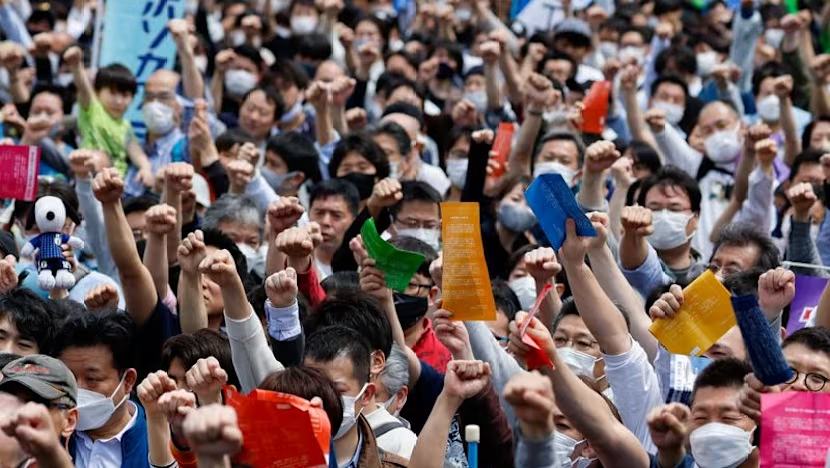
东京10月22日电:日本最大工会组织“连合”(Rengo)周四公布了针对明年年度劳资谈判的更具雄心的薪资谈判政策,设定了以加薪6%为中心的居中目标,同时维持5%或以上的最低基准。
TOKYO, Oct 22 : Japan's largest labour union group Rengo unveiled a more ambitious wage bargaining policy for next year's annual labour negotiations on Thursday, setting a target centred at a pay hike of 6 per cent while maintaining a minimum benchmark of 5 per cent or more.
此举标志着该组织政策较往年的转变——往年连合要求加薪至少5%。在日本工人在持续的劳动力短缺背景下,过去三年获得了平均超过5%的薪资涨幅之后,该组织正力求巩固薪资增长的势头。
The move marks a shift from previous years, when Rengo called for wage increases of at least 5 per cent, as it seeks to reinforce wage-growth momentum after Japanese workers secured average pay gains above 5 per cent for the past three years amid persistent labour shortages.
这个代表约700万名工人的伞形组织所设定的薪资目标为其成员工会提供指导,这也标志着一个备受瞩目的谈判季的开始,而这将有助于塑造市场对日本央行利率路径的预期。N新设定的6%居中目标(其中包括4%的基本工资增幅)旨在传达这样一个信息:5%应当被视为底线而非目标,连合表示。
The umbrella group, which represents about 7 million workers, sets wage targets that serve as guidance for its member unions, marking the start of a closely watched bargaining season that will help shape expectations for the Bank of Japan's interest-rate path. The new 6 per cent midpoint target, which includes a 4 per cent base pay increase, is meant to send a message that 5 per cent should be viewed as a floor rather than a target, Rengo said.
然而,这一目标并不一定预示着实际薪资要求的急剧增加,因为连合的成员工会在2026年的薪资谈判中就曾寻求过5.94%的平均加薪幅度,最终达到的平均增幅为5.01%。
The target does not necessarily signal a dramatic increase in actual wage demands, however, as Rengo member unions sought average pay hikes of 5.94 per cent in the 2026 wage round, which resulted in an average increase of 5.01 per cent.
通胀超调的风险 尽管连合提出了更具进取心的目标,但经济学家预计,2027年的实际薪资达成情况将大体保持在与今年约5%相当的水平。
RISKS OF INFLATION OVERSHOOT Despite the more assertive target from Rengo, economists expect actual wage settlements in 2027 to remain broadly similar to this year's level of around 5 per cent.
美国银行证券日本公司(Bank of America Securities Japan)高级日本经济学家工藤孝泰表示:“长期的劳动力短缺、稳健的企业利润以及劳动在国民收入中所占份额的下降,将使与2026年水平大致相当的薪资增长成为合情合理之事。”
"Chronic labour shortages, sturdy corporate profits and a declining labour share of income will justify wage gains broadly comparable to 2026 levels," said Takayasu Kudo, senior Japan economist at Bank of America Securities Japan.
此前,强劲的薪资增长曾作为一种将通胀推高至日本央行2%目标的手段而受到欢迎;然而,鉴于日本央行已将工作重心转向将潜在通胀稳定锚定在这一水平附近,更强劲的薪资增长可能会带来不同的影响。
While robust pay growth was previously welcomed as a means of lifting inflation towards the central bank's 2 per cent target, stronger wage gains may carry different implications now that the BOJ has shifted its focus to keeping underlying inflation anchored around that level.
瑞穗研究机构(Mizuho Research Institute)首席日本经济学家服部直树表示,5%左右的加薪幅度对日本央行和工人来说可能是一个“最佳平衡点”。
Wage hikes of around 5 per cent may represent a "sweet spot" for the BOJ as well as workers, said Naoki Hattori, chief Japan economist at Mizuho Research Institute.
他说:“超过这个幅度的加薪可能会迫使企业将劳动力成本进一步转嫁给价格,并带来通胀将推高至日本央行2%目标之上的工资-价格螺旋上升风险。”N日本的工资在长达数十年的时间里一直处于停滞状态,直到2022年原材料成本的上升推高了通胀,并给企业施加了以更高薪酬补偿员工的压力。N近年来强劲的薪资增长帮助实际工资回到了正增长区间,但在按购买力平价调整后的薪资对比中,日本在发达经济体中仍然排名靠后。
"Pay hikes larger than that could force companies to pass on labour costs to prices further and risk a wage-price spiral that pushes inflation above the BOJ's 2 per cent target," he said. Japanese wages were stagnant for decades until 2022, when rising raw material costs pushed up inflation and piled pressure on firms to compensate employees with higher pay. Strong wage growth in recent years has helped lift real wages back into positive territory, but Japan still ranks near the bottom among advanced economies in purchasing power parity-adjusted wage comparisons.
为了提升日本在全球排名中的工资水平,连合还首次设定了中期目标,即力争到2030年将工资在现有水平的基础上提高15%。
Seeking to raise Japan's wage levels in international rankings, Rengo also set a medium-term target for the first time, aiming to increase wages by 15 per cent from current levels by 2030.
连合将于12月正式批准其2027年薪资政策,此后各工会将制定各自的诉求。年度劳资谈判通常在3月份达到高潮,届时各大企业将对工会的要求作出回应。
Rengo will formally approve its 2027 wage policy in December, after which individual unions will draw up their demands. Annual wage negotiations typically culminate in March, when major firms respond to union requests.