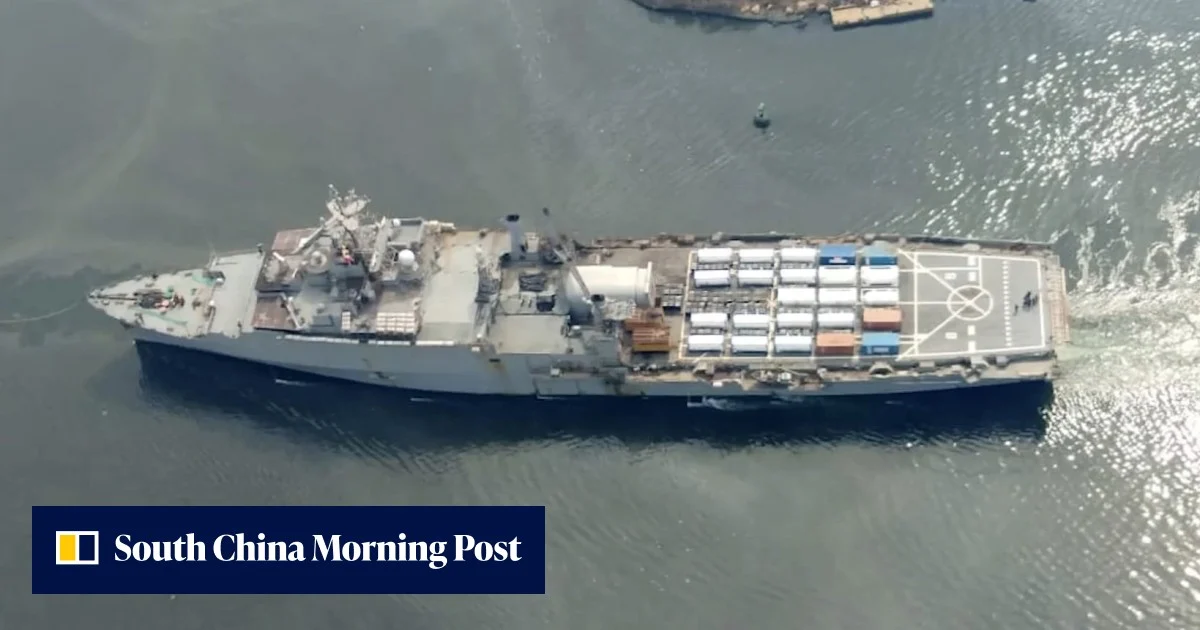
印度计划采购四艘大型两栖军舰,此举将增强其在整个印度洋支持海军后勤和人道主义任务的能力,安全专家表示,这些军舰的价值取决于海军如何在危机期间有效地利用它们。
India’s planned acquisition of four large amphibious warships would strengthen its ability to support naval logistics and humanitarian missions across the Indian Ocean, with security experts saying their value depends on how the navy could effectively utilise them during a crisis.
印度海军已就四艘船坞登陆舰(LPD)招标,每艘排水量超过3万吨。印度海军副参谋长阿贾伊·科恰尔中将周一在一次媒体吹风会上表示,上一周已向入围造船厂发出了招标书。
The Indian Navy has invited bids for four landing platform docks (LPDs), each with a displacement of more than 30,000 tonnes. Indian Navy Vice Chief Vice Admiral Ajay Kochhar said at a media briefing on Monday that a request for proposal had been issued to shortlisted shipyards the previous week.
这四艘船坞登陆舰将在印度建造,其电力推进系统将在印英防务伙伴关系下开发。后者于去年10月在孟买举行的印度总理纳伦德拉·莫迪与时任英国首相斯塔默的会晤期间宣布。
The four LPDs will be built in India, with their electric propulsion systems being developed under an India–UK defence partnership. The latter was announced during a meeting between Indian Prime Minister Narendra Modi and then UK prime minister Keir Starmer in Mumbai in October last year.
这些军舰每艘长220米,据估计总成本近53亿美元,可容纳多达900名装备齐全的陆军人员、车辆、坦克和火炮。它们将配备用于将部队和装备运送上岸的专业登陆艇、两架重型直升机和12架用于特种作战的直升机,以及舰载车间设施。
With a length of 220 metres each, the ships are estimated to cost nearly US$5.3 billion in total and can accommodate up to 900 fully equipped army personnel, vehicles, tanks and artillery. They will feature specialised landing craft to ferry troops and equipment ashore, two heavy-lift helicopters and 12 helicopters for special operations, as well as onboard workshop facilities.
伦敦国王学院国际关系高级讲师沃尔特·拉德维格表示,这些军舰将显着提高印度海军在远洋部署和维持其兵力的能力。
Walter Ladwig, a senior lecturer in international relations at King’s College London, said the ships would significantly improve the Indian Navy’s ability to deploy and sustain its forces across distant waters.
他表示:“这些军舰可以撤离平民、部署维和人员,并为友好国家提供后勤支援。”他补充说,其直升机甲板、医疗设施和登陆艇对于应对自然灾害和其他紧急情况将非常有用。
“These ships could evacuate civilians, deploy peacekeepers and provide logistical support to friendly states,” he said, adding that their helicopter decks, medical facilities and landing craft would be useful to respond to natural disasters and other emergencies.
他补充说,鉴于现代冲突的复杂性,这些船坞登陆舰需要来自其他海军资产的大量支援,以应对来自潜水艇、无人机和反舰导弹的威胁。
Given the complexities of modern conflicts, the LPDs would require substantial support from other naval assets to deal with threats from submarines, drones and anti-ship missiles, he added.
拉格维格表示,这些舰艇不适合用于两栖攻击,并指出,针对常规军队冲突中最后一次大规模两栖战役是马岛战争。
The ships would not be effective for amphibious assaults, said Ladwig, noting that the last major amphibious campaign that took place during a conflict against a conventional military was the Falklands War.
这些两栖船坞运输舰将成为继“维克兰特”号之后印度制造的第二大作战舰艇。“维克兰特”号是印度一艘4.5万吨级的航空母舰。印度海军目前运营着一艘从美国购买的两栖船坞运输舰“加拉什瓦”号。
The LPDs are set to be the second-largest India-made combat ships after INS Vikrant, India’s 45,000-tonne aircraft carrier. The navy currently operates one LPD, INS Jalashwa, acquired from the United States.
拉格维格认为,目前只有一艘两栖船坞运输舰,印度海军无法维持持续的两栖作战行动。他补充说,如果印度海军未来再购买四艘此类舰艇,其中三艘处于待命状态执行其他任务,那么它就可以用一艘两栖船坞运输舰做到这一点。
With one LPD currently, the Indian Navy could not maintain a continuous amphibious operation, according to Ladwig. The Navy could do so in future with one LPD if it were to acquire four such vessels, with the other three on standby for other missions, he added.
政策研究学会智库主任、印度前海军军官乌代·巴斯卡尔表示,印度的地理环境使得采购两栖船坞运输舰变得很重要。
C. Uday Bhaskar, director of the Society for Policy Studies think tank and a former Indian naval officer, said India’s geographical circumstances made the acquisition important.
巴斯卡尔表示,印度需要增强其两栖能力,以保护其岛屿领土,包括安达曼-尼科巴群岛和拉克沙群岛,而两栖船坞运输舰也可以支持从非洲东海岸到东南亚的整个印度洋地区的人道主义任务。
India needs to boost its amphibious capabilities to protect its island territories, including the Andaman and Nicobar Islands and Lakshadweep, while the LPDs could also support humanitarian missions across the Indian Ocean, stretching from the east coast of Africa to Southeast Asia, according to Bhaskar.
他补充说,两栖船坞运输舰将帮助印度海军对紧急情况做出快速反应。“海军获得能力并磨练专业技能,以便在需要时做出反应。2004年12月的海啸是印度海军如何在短时间内做出反应的典型例子。”然而,过去几年,印度在购买两栖船坞运输舰方面遭遇挫折。2011年的一项提案因印度和外国制造商之间的会计问题而搁置,而2013年的一项招标在海军要求改变后于2020年被取消。
He added that the LPDs would help the Indian Navy react quickly to an emergency. “Navies acquire capabilities and hone their professional skills so they can respond when the need arises. The December 2004 tsunami is a classic example of how the Indian Navy responded at short notice.”However, India has faced setbacks in acquiring LPDs in past years. A 2011 proposal stalled over accounting issues between Indian and foreign manufacturers, while a 2013 tender was scrapped in 2020 after the navy’s requirements changed.
巴斯卡尔说,印度需要一种更有纪律的方法来避免重蹈覆辙,同时探索与国内造船厂建立外国合作伙伴关系来建造两栖船坞运输舰。
Bhaskar said India would need a more disciplined approach to avoid a repeat as it explored foreign partnerships with domestic shipyards to build the LPDs.
他还说:“决策和授予合同方面的拖延,以及造船厂的时间和成本溢出,都是必须克服的系统性挑战。”
“Delays in decision-making and awarding contracts, and time-cost spillovers in shipyards are systemic challenges that will have to be surmounted,” he added.
总部位于德里的观察家研究基金会战略研究项目研究员阿图尔·库马尔表示,印度政府需要破除繁文缛节,以加快两栖船坞运输舰的服役进程。
Atul Kumar, a fellow at the Delhi-based Observer Research Foundation’s strategic studies programme, said the Indian government needed to cut through red tape to accelerate the launch of the LPDs.
库马尔认为,采购这些舰艇对印度至关重要,有助于印度在扩大其各岛屿领地商业与安全基础设施的同时,应对不断变化的地区安全环境。
Their acquisition is important to India’s ability to respond to a changing regional security environment in tandem with its expansion of commercial and security infrastructure across its island territories, according to Kumar.
他说,中国海军力量的不断增强,使得在附近海域启用两栖船坞运输舰成为印度的一项重要考量。
China’s growing naval power has made the activation of LPDs in nearby waters a key consideration for India, he said.
库马尔补充说:“要保护这些偏远前哨免受外部强权的威胁,需要强大的力量投送能力。鉴于中国海军的指数级增长,这四艘多用途舰艇是印度维持可信威慑的最低限度。”
“Safeguarding these remote outposts against an external power requires robust power projection. Given the exponential growth of China’s Navy, four of these multirole ships represent the bare minimum for India to maintain a credible deterrent,” Kumar added.
亚太领导力网络政策研究员李东根表示,两栖船坞运输舰对印度的首要价值在于执行人道主义任务,而非两栖作战。
Dongkeun Lee, a policy fellow at the Asia-Pacific Leadership Network, said the LPDs’ primary value for India was their deployment for humanitarian missions rather than amphibious battles.
在谈到“维克兰特”号航母和“维克拉玛蒂亚”号航母(后者是印度从俄罗斯购得并改装的前俄罗斯航母)时,李东根说:“采购两栖船坞运输舰和航母的目的截然不同。航母旨在投送空中力量,主要用于控制海洋;而两栖船坞运输舰则用于支援两栖作战,即向岸上投送陆上力量。尽管这两类舰艇体型都相对较大,但其作战目的有着根本区别。”李东根补充说,最终,两栖船坞运输舰可以将印度海军的地区影响力延伸至遥远的海域。
Referring to the INS Vikrant and INS Vikramaditya, a former Russian aircraft carrier acquired and modified by India, Lee said: “The purposes of acquiring LPDs and aircraft carriers are quite different. Aircraft carriers are designed to project air power, primarily for sea control purposes, whereas LPDs are intended to support amphibious operations, which involve projecting land power ashore. Although both types of ships are relatively large, their operational purposes are fundamentally different.”Ultimately, the LPDs could extend the Indian Navy’s regional influence across vast distances, Lee added.
“鉴于其非战斗性质,此类任务可以在印太地区更广阔的地理范围内执行,涵盖印度洋地区和东南亚,使印度海军得以扩大海军存在,同时支持其海军外交目标。”
“Given their non-combat nature, such missions could be conducted across a much broader geographical area of the Indo-Pacific, encompassing both the Indian Ocean region and Southeast Asia, allowing the Indian Navy to expand its naval presence while also supporting its naval diplomacy objectives.”