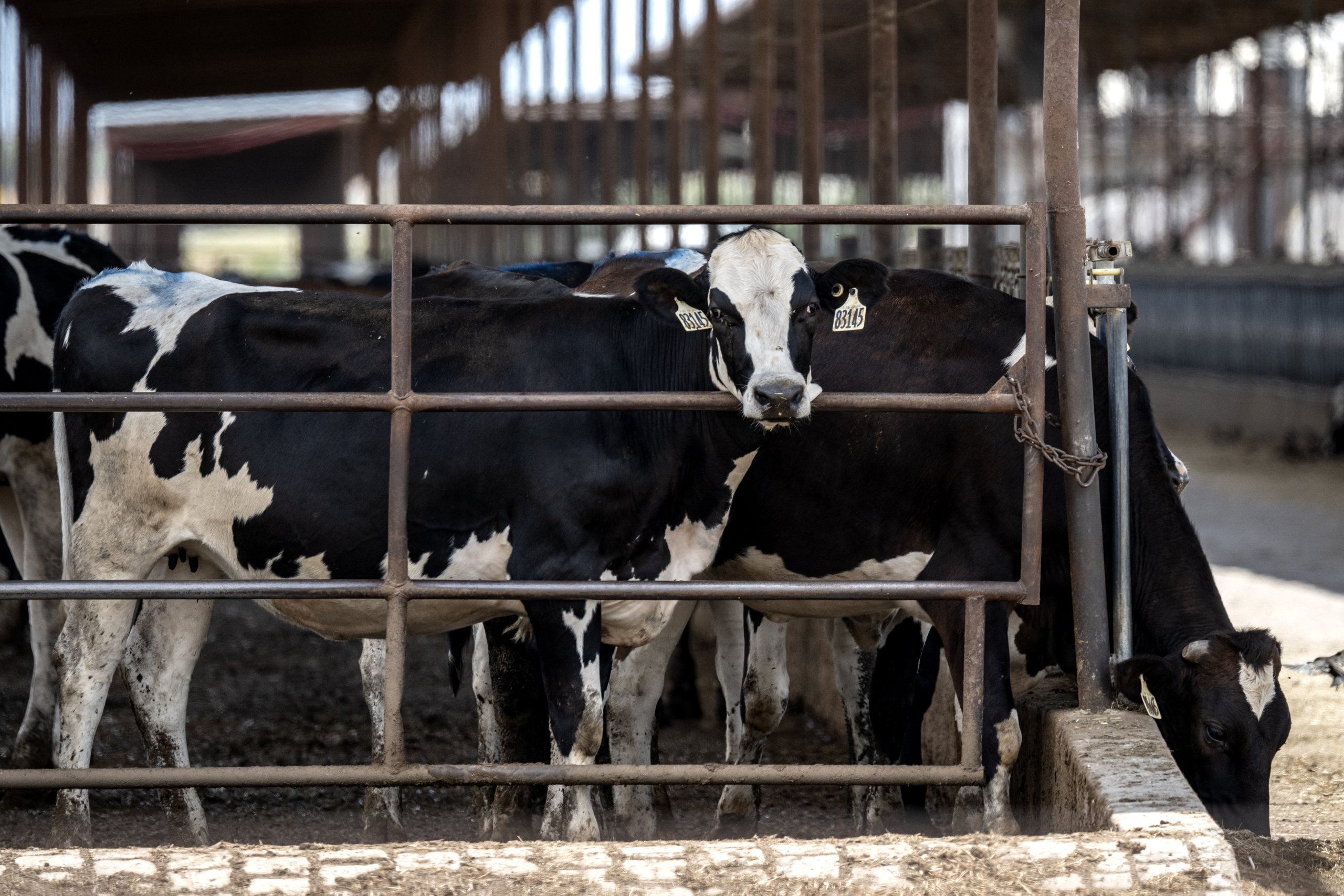
2026年9月11日,得克萨斯州都柏林的一个牧场里,牛群在吃饲料。罗纳尔多·谢米特/法新社为盖蒂图片社供图斯科特·伯克(Scott Birker)驾驶着一辆四轮全地形车在农场四处查看,他警告说他的牛群现在情绪很糟糕。“它们现在对我有点生脾气,”他说。
Cattle feed at a ranch in Dublin, Texas, on September 11, 2026. RONALDO SCHEMIDT/AFP for Getty Images Driving around his farm in a four-wheeler, Scott Birker warned that his cattle were in a bad mood. "They're a little grumpy with me right now," he said.
当被问及原因时,他平静地回答:“我们刚刚结束断奶。”伯克对自己的牛群应该很了解,因为自2001年以来,他一直在艾奥瓦州加里森(Garrison)镇外饲养肉牛。他的养殖场大约有150头“母牛”,出售育肥犊牛以及部分用于肉类的牛只。此外,伯克还是艾奥瓦州养牛人协会(Iowa Cattlemen’s Association)的东北地区副主席。
When asked why, he said matter-of-factly: "We just got done weaning." Birker should know his herd well, given that he's been raising beef cattle outside the Eastern Iowa town of Garrison since 2001. His operation has about 150 "mama cows" and sells feeder calves, as well as some cattle for meat. And Birker is also the northeast regional vice president for the Iowa Cattlemen's Association.
这一切都意味着,自8月份特朗普宣布其政府将提高低关税进口牛肉的配额——暂时对高达30万公吨的进口牛肉免征关税——以来,伯克在这样说时深有体会:那伤害了人们。
All of which is to say that since August, when Trump announced that his administration would raise the quota on beef imported under lower tariffs – temporarily suspending tariffs on up to 300,000 metric tons of imported beef – Birker knows it when he says: that hurt people.
“这种毫无征兆的变故,加上本来就已经非常动荡的市场和紧张的供应,让我们受到的伤害来得又快又猛,”伯克说。
"That surprise, with a very volatile market already, with a tight supply, hurts us really, really fast and really, really hard," Birker said.
并不是说在新进口政策出台之前养肉牛就很轻松。艾奥瓦州立大学候任畜牧经济学家扎克·拉夫(Zach Raff)表示,利润空间一直都很紧张。但同时也存在其他挑战——例如,美国西部大部分地区的干旱使得干草价格大幅上涨,并导致全国的肉牛存栏量缩减。
It's not that raising beef cattle was easy before that new import policy. Margins are always tight, says Zach Raff, incoming livestock economist at Iowa State University. But there have also been other challenges – for example, drought in much of the western U.S. made hay much more expensive and shrank the nation's beef herd.
“肉牛养殖规模正处于历史最低水平——处于75年来的最低点,”拉夫说。“因此,你把这一点与非常强劲的需求结合起来。这就是目前你在商店里看到的价格形成的原因。”目前碎牛肉的价格约为每磅6.80美元——特朗普政府对这一事实心知肚明。但该政府试图压低这些价格的尝试却在政治上适得其反,在经济上也可能产生反效果。
"The beef herd size is at an all time low – a 75-year-low," said Raff. "So you couple that with very strong demand. And that's going to make prices what you see at the store right now." Ground beef currently costs around $6.80 a pound – a fact of which the Trump administration is keenly aware. But the administration's attempts to bring those prices down have backfired politically and possibly economically..
特朗普政府的多项政策让牛肉生产者的日子更加艰难。去年,在两国贸易战期间,中国削减了对美国牛肉的采购。今年2月,特朗普签署行政命令,对部分阿根廷牛肉减征关税。
Multiple Trump administration policies have made life tougher for beef producers. Last year, amid the trade war between the two countries, China cut its US beef purchases In February, Trump signed an executive order to subject some Argentinian beef to fewer tariffs.
8月,他下令暂停对30万公吨牛肉进口征收关税——具体为精瘦牛肉修边料,目的是降低绞肉价格。该命令还规定,进口牛肉须以低于市场价25%的价格出售。
And in August, he to suspend tariffs on 300,000 metric tons of beef imports – specifically, lean beef trimmings, with the goal of lowering the price of ground beef. The order added that the imported beef was to be sold at 25% below market prices.
这有助于压低美国牛价,但据拉夫称,更大的挑战在于该政策带来的不确定性。
That helped push U.S. cattle prices lower, but the far bigger challenge, according to Raff, was the amount of uncertainty it introduced.
拉夫说:“如果我是生产者,我会想,看看正在发生什么——也许明年他们会进口更多。后年又会出台不同的政策。我会说:‘我现在的牛价处于历史高位,预计还会维持高位。所以我就把母牛送去屠宰加工吧。’在知道存在巨大不确定性的情况下,我不会决定补栏种牛。”这意味着牛肉进口可能产生额外的负面影响,让生产者不愿保留能扩大牛群规模的种牛,从长远看会降低牛肉价格。
"If I'm a producer, I think, well, look what's happening – perhaps next year they're going to import even more. The year after, there's going to be a different policy," said Raff. "And I'm going to say, 'Well, these prices for my cattle right now are at record highs and projected to be high. So I'm just going to send my heifers to be processed.' I'm not going to decide to replace the beef herd when I know that there's a lot of uncertainty."
大局来看 从经济学入门的角度看,特朗普决定进口更多牛肉以此压低消费者价格,在理论上讲得通。但可免征关税的30万公吨仅相当于美国牛肉总消费量的2%左右。这造成了两败俱伤的局面:该政策足以让牛肉生产者心生恐慌,却不足以惠及消费者。确实,9月绞肉平均每磅价格仅比8月低约13美分。
This means the beef imports can have an added downside, disincentivizing producers from keeping breeding stock around that could grow the beef herd, which would lower beef prices in the long run. Big picture From an economics 101 perspective, the Trump decision to import more beef does make sense as a way of bringing down consumer prices. But the 300,000 metric tons that could be exempted from tariffs is equivalent to around 2% of total US beef consumption That made for a lose-lose situation: the policy was enough to rattle beef producers, but not enough to help consumers.
所有这一切都笼罩在2026年国会中期选举的头上,尤其是在艾奥瓦州等农业州。正在竞选该州空缺参议员席位的艾奥瓦州共和党众议员阿什利·欣森在公开与特朗普政府在降低牛肉进口关税的决定上分道扬镳时,成为了新闻焦点。
Indeed, the average ground beef price per pound in September was only about 13 cents lower than it was in August. All of this looms over the 2026 midterm elections, especially in farm states such as Iowa. Iowa Republican Rep. Ashley Hinson, who's running for the state's open Senate seat, made news when she publicly broke with the Trump administration on its decision to lower tariffs on beef imports.
“我们需要关注负担能力,但我认为这不是实现这一目标的方式,”她在福克斯新闻上表示,“我认为我们需要专注于帮助我们的养牛户扩大牛群。”她的对手、民主党州议员乔什·图雷克则反过来强调,欣森曾支持过一些对广大农民造成伤害的特朗普政策。
"We need to focus on affordability, but I think this isn't the way to do that," she said on Fox News "I think we need to focus on helping our cattlemen grow their herd." Her opponent, Democratic state legislator Josh Turek, has in turn been stressing that Hinson has supported some Trump policies that have hurt farmers writ large.
他在接受美国国家公共电台采访时表示:“她曾五次支持所有这些关税。农民比任何其他群体都更依赖市场和自由贸易。”同样,在州长竞选中,民主党籍州审计长罗布·桑德严厉批评了特朗普的贸易政策,而共和党籍商人扎赫·拉恩则避免了此类批评。
"She's been in favor of all this five times in favor of the tariffs," he said in an interview with NPR. "Farmers rely on markets, on free trade, more than any other group." In the governor's race, similarly, Democratic state auditor Rob Sand has sharply criticized Trump's trade policies, while Republican businessman Zach Lahn has avoided that kind of criticism.
艾奥瓦州共和党战略师戴维·奥曼表示,在这两场竞选中,牛肉政策都可能成为决定性因素。
Iowa Republican strategist David Oman says that in either race, the beef policy could be a deciding factor.
他说:“依我看,这两场都将是差距在两到三个、四个百分点的竞选。因此,任何像这个对你不利的议题这样的单一因素都会造成伤害。”事实上,该政府从一开始就一直在为牛肉政策进行辩护。在牛肉行政令签署几天后在艾奥瓦州发表讲话时,农业部长布鲁克·罗林斯承认,8月份取消牛肉关税配额(TRQ)的行政令可能并不受欢迎。
"Both of them will be two- or three-, four-point races in my view," he said. "So any one element like this topic that cuts against you hurts." Indeed, the administration has been playing defense on the beef policy from the beginning. Speaking in Iowa just days after the beef executive order, Secretary of Agriculture Brooke Rollins acknowledged that the August order lifting the beef tariff rate quotas, or TRQs, might not be popular.
她在艾奥瓦州农业进展展会上表示:“我相信每个人回首这段时期时都会说,好吧,虽然不太喜欢为期三个月的关税配额取消期,但我们非常感激一位愿意倾听、愿意做出重大且大胆的决定、并愿意为我们的美国生产商全力以赴的总统。”
"I believe everyone will look back on this time and say, okay, didn't love the three month lift of the TRQ, but we're so grateful to a president that is willing to listen, willing to make big, bold decisions, and willing to put it all out there for our American producers," she said at the Iowa Farm Progress Show.
爱荷华州西南部克拉林达镇外的养牛场主塞思·沃特金斯表示,这些贸易决定不仅让他对特朗普感到不满,也让他对整个华盛顿感到不满。
How it plays Seth Watkins, who has his own cattle herd in southwestern Iowa, outside the town of Clarinda, says that these trade decisions make him upset not only with Trump, but with all of Washington.
“总统所做的让我很沮丧,但我认为我对国会更失望,国会本应行使我们在高中公民课上学到的制衡权力,”他说。
"As much as what the president does frustrates me, I think I'm more frustrated with Congress, who should be exercising the checks and balances we learned about in high school civics," he said.
他是民主党人,将在本次选举中投民主党的票,尽管他说不怪其他支持特朗普的农民。
He's a Democrat and going to vote blue in this election, though he says he doesn't blame other farmers who have supported Trump.
“他们确实被告知关税会让市场变得更好,”他说。“他们被告知我们将进入一个新的黄金时代。我刚给皮卡加了6.30美元一加仑的柴油。”这不仅仅关乎爱荷华州。今年竞争最激烈的几个州——得克萨斯州、内布拉斯加州、蒙大拿州和堪萨斯州——也是主要产牛州,意味着有大量选民在投票时会权衡这些特定的贸易政策。
"They honestly were told that tariffs were going to make markets better," he said. "They were told that we were going to enter this new golden era. I just filled up my pickup with $6.30 diesel fuel." This is not just about Iowa. Several states with some of the tightest races this year – Texas, Nebraska, Montana, and Kansas – are also major beef-producing states, meaning lots of people weighing these particular trade policies as they vote.
回到农场,伯克也知道自己将如何投票:“我会投共和党的票。”伯克强调这纯属个人决定,爱荷华州养牛协会是一个无党派团体。但就他个人而言,他通常投共和党的票,而且能亲自与辛森交谈也坚定了他的选择。至于特朗普,伯克认可他作为总统的表现。
Back on his farm, Birker knows how he'll vote, too: "I'll vote Republican." Birker stresses that this is purely a personal decision, and that the Iowa Cattlemen are a non partisan group. But for his part, he generally votes Republican, and getting to talk personally to Hinson also reinforced his choice. As for Trump, Birker approves of how he's doing as president.
“我认可,我认可,”他说。“我只觉得这是一杆长推杆。他是个商人,我认为我们得坚持跟着他干。”特朗普本周将前往苏城,作为中期选举前冲刺的一部分,届时他将有机会说服更多爱荷华人。
"I do, I do," he said. "I just think it's a long putt. He's a businessman, and I think we've got to stick it out with him." Trump will have the opportunity to convince more Iowans when he travels to Sioux City this week as part of his pre-midterm push. trump White House Iowa