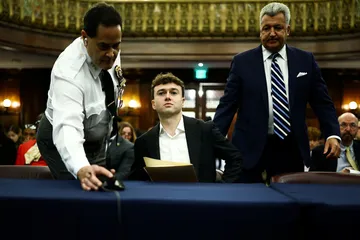
在新的关于伊丽莎白·霍姆斯的伪纪录片中,有这样一个场景:Theranos公司的举报人泰勒·舒尔茨表示,这个场景几乎让他从椅子上跳起来,冲着屏幕大喊大叫。
There’s a scene in the new Elizabeth Holmes pseudo-documentary that Theranos whistleblower Tyler Shultz says almost made him jump out of his chair and yell at the screen.
在片中,霍姆斯向电影导演内森·菲尔德展示了该公司用于血液检测的设备。这本应是硅谷最臭名昭著的丑闻的核心技术。然而,舒尔茨在《STAT》杂志中写道,实际情况并非如此。
In it, Holmes lays out the parts of the company’s blood testing device for filmmaker Nathan Fielder to examine. It’s supposed to be the technology at the core of one of Silicon Valley’s most infamous scandals. Except it’s not, Shultz writes in STAT.
舒尔茨指出,霍姆斯向菲尔德展示的其实是一个不完整且从未被实际使用的设备版本,而非那个被他协助揭露的、真正具有危害性的设备。菲尔德似乎没有意识到这两者之间的区别,但舒尔茨却看得很清楚。
Shultz says Holmes shows Fielder an incomplete and never-used version of the machine, not the less impressive device he helped expose. Fielder doesn’t seem to know the difference, but Shultz does.
这种“外部人士所见与内部人士所知之间的巨大差距”,也是另一部正在影院上映的电影的核心主题——这部电影虚构了弗朗西斯·豪根如何揭露Facebook公司的丑闻,指控该公司明知自己的产品会造成严重危害。
That crucial gap, between what outsiders see and what insiders know, is also at the center of another movie in theaters right now, — a fictionalized account of how Frances Haugen blew the whistle on Facebook, alleging that the company knew the harms its products caused.
这两部电影都关注的是那些早已被曝光的违法行为。但结合起来看,它们的信息在当下显得尤为紧迫:随着人工智能时代的到来,我们越来越依赖技术人员的揭露行为,才能看到那些企业不愿让我们看到的真相。
Both movies look at offenses that have already been uncovered. But taken together, their message feels especially urgent right now, as the AI era makes us more reliant on tech workers’ unsanctioned disclosures to reveal what their employers would rather we not see.
如今,关于人工智能的一些最严厉的警告都来自那些在科技前沿实验室工作的员工。例如,前Anthropic公司研究员雅各布·考克森的辞职声明引发了全球对人工智能安全问题的讨论。豪根本人最近在接受NPR采访时说:“我们正进入一个新时代:我们与可能带来极其负面后果(比如超级智能技术)之间的最后一道防线,就在于公司内部员工是否愿意说实话。”
Some of the most critical warnings today about AI are coming from employees working inside the frontier labs, such as former Anthropic researcher Jacob Coxon, whose viral resignation post jumpstarted a global conversation about AI safety. “We are entering an era where the last line of defense between us and potentially very, very, very negative outcomes from things like super intelligence is whether or not internal employees speak the truth,” the real-life Haugen recently told NPR.
就在科技行业举报愈发必要的同时,它也变得更加复杂——且更不透明。豪根和舒尔茨举报的是他们公司内部已经发生的事情,且两人都掌握着确凿证据。然而,像考克森这样的 AI 举报者,往往是在警告尚未发生、但他们预判未来可能发生的毁灭性危害。
At the same moment that whistleblowing in tech is growing in necessity, it’s also becoming more complicated — and opaque. Haugen and Shultz blew the whistle on something that had already happened inside their companies, and they both had tangible evidence. AI whistleblowers like Coxon, however, are often warning about apocalyptic harms that haven’t happened yet — but they think maybe could down the line.
影片开篇的一句台词精准概括了这一困境。豪根(由麦凯·麦迪森饰演)询问《华尔街日报》记者杰夫·霍维茨(由杰里米·艾伦·怀特饰演)为何未根据她提供的线索发表文章。他告诉她:“你给我的不是一个新闻选题,而是一个故事。我要内部文件。我要证据。” AI 举报似乎让这笔交易变得复杂。我们被要求去相信关于假设性危险的说法,而这些说法可能没有任何文件或确凿证据作为支撑。
A line early on in neatly encapsulates the dilemma. Haugen (played by Mikey Madison) asks why Wall Street Journal journalist Jeff Horwitz (played by Jeremy Allen White) hasn’t published an article based on a tip she’d given him. He tells her, “You didn't give me a story. You told me a story. I want the internal documents. I want proof.”AI whistleblowing seems to complicate that deal. We’re being asked to believe stories about hypothetical dangers for which there may not be any documents or concrete evidence.
这赋予了 AI 举报者非同寻常的权力,让他们能够塑造政策辩论和公众舆论,而这项技术是我们其他人难以理解的。
That puts an extraordinary amount of power into the hands of AI whistleblowers to shape the policy debate and the public conversation about a technology the rest of us are poorly equipped to understand.
“未来的指控在现实中很难以任何真实方式得到证实,”得克萨斯农工大学法学院教授汉娜·布洛赫-韦巴告诉我。“这有可能助长对公开披露的操纵,我们对此应保持警惕。”
“Future claims are hard to corroborate in any real way,” Texas A&M University School of Law professor Hannah Bloch-Wehba told me. “It runs the risk of enabling manipulation around public disclosures that we should be alert to.”
布洛赫-韦巴曾称举报既是渗透科技行业的“激进信息不对称”的“症状”,也是其“矫正手段”。普遍存在的保密协议、商业秘密主张,以及监管机构往往缺乏监管意愿或不了解其监管的产品,这些因素导致公众不得不依赖内部人士来了解科技公司关起门来在做什么。正如豪根在国会听证会开场证词中所说,电影记录了这一幕:“几乎没有任何 Facebook 公司外部的人知道内部发生了什么。”
Bloch-Wehba has called whistleblowing both “a symptom of and a corrective to” the “radical information asymmetries” that permeate the tech industry. Pervasive non-disclosure agreements, claims of trade secrecy and regulators that often lack the will or understanding of the products they oversee have left the public reliant on insiders to know what’s happening behind tech companies’ closed doors. As Haugen said in her opening testimony before Congress, a scene captured in the movie, “Almost no one outside of Facebook knows what is happening inside.”
行业的保密性意味着有更多隐秘信息可能泄露,但科技从业者或许尤其倾向于这么做。他们技术精湛,长期以来备受追捧,并已多次表明,他们希望对自己的劳动成果如何被使用拥有发言权。他们的披露揭露了科技界一些最大、最重要公司的内幕,这些原本可能永远不会为人所知。仅看看布洛赫-韦巴在其研究中列举的部分案例:剑桥分析公司收割了 Facebook 用户数据。
The industry’s secrecy means there’s more hidden information to leak, but tech workers may be especially primed to do it. They’re highly skilled, have historically been in high demand and have repeatedly demonstrated that they want a say in how their labor is being used. Their disclosures have revealed things about some of the biggest and most important companies in the tech world that we might have otherwise never known. Just consider a sampling Bloch-Wehba has catalogued in her work: Cambridge Analytica harvested Facebook user data.
谷歌计划为中国市场构建一个经过审查的搜索引擎。AT&T 公司配合美国国家安全局实施无证窃听计划。美国情报机构直接从互联网公司的服务器提取数据。Instagram 对青少女心理健康危害极大。Facebook 在内容审核决策上实行双重标准,偏袒名流和权势人物。Twitter 的数据安全一塌糊涂。Uber 逃避纳税。
Google planned to build a censored search engine for the Chinese market. AT&T cooperated with the National Security Agency’s warrantless wiretapping program. U.S. intelligence services extracted data directly from the servers of internet companies. Instagram was terrible for teen girls’ mental health. Facebook applied double standards to content moderation decisions that favored the famous and powerful. Twitter’s data security was garbage. Uber dodged its taxes.
吹哨行为本身始终伴随着一种信息不对称。正如霍洛维茨在片中提醒豪根的那样,被贴上吹哨人标签的人往往再也无法被录用。(电影中省略了豪根的说法:她之所以有自己的财力支撑,是因为她“在正确的时间买了加密货币”。还记得舒尔茨是通过他的祖父、前国务卿乔治·舒尔茨认识霍尔姆斯的,老舒尔茨曾在 Theranos 董事会任职。)
Whistleblowing has always been embedded with its own kind of information asymmetry. Often those who are labeled a whistleblower can never get hired again, as Horowitz reminds Haugen in . (Left out of the movie is Haugen’s assertion that she had her own financial resources because she bought “crypto at the right time.” And remember that Shultz was introduced to Holmes by his grandfather, George Shultz, a former secretary of state who served on the Theranos board.)
但这一举动的风险性意味着,我们只能听到那些在形象上和实际上都负担得起站出来代价的人的声音。而我们不得不依赖他们的判断,来决定哪些危害最为重要、理应公之于众。
But the riskiness of the endeavor means we only hear from the people who can afford to come forward, figuratively and literally. And we are dependent on their judgment to decide which dangers are most important and should come to light.
我们有多种途径可以帮助纠正举报机制中的失衡,而人工智能正在加剧这种失衡。第一种途径,正如我之前所主张的,是让人工智能工程师实现职业化,就像医生、律师和会计师那样。一个类似希波克拉底誓言的“不伤害”誓言,将有助于在技术发布前就将责任文化植入其中,而不是事后再强行加装防护措施。另一种途径是加强对举报人的保护,这将有助于减轻举报人站出来所承担的个人代价。
There are a number of ways we could help correct the imbalances in whistleblowing that AI is only exacerbating. The first, as I have argued before, is for AI engineers to professionalize, just as doctors, lawyers and accountants have. An AI version of a Hippocratic oath to do no harm would help bake a culture of responsibility into the technology before it’s released, rather than bolting on safeguards after the fact. Another is to strengthen protections for whistleblowers, which would help mitigate the personal costs of coming forward.
如果公司不希望员工公开举报,他们可以做的不仅仅是对那些试图先在内部敲响警钟的员工付诸口头服务。
And if companies don’t want employees going public, they could do more than pay lip service to workers who try to sound the alarm internally first.
正确的答案很可能是我们需要上述所有措施的某种组合。豪根可能说得没错,这一时刻呼唤新一代科技举报人挺身而出,扮演英雄的角色。但一个如果没有他们就无法正常运转的行业,本身就在发出一种警示信号。
The correct answer is probably that we need some combination of all of the above. Haugen may be right that this moment calls for another generation of tech whistleblowers to take on the role of hero. But an industry that can’t properly function without them is sending its own kind of warning signal.