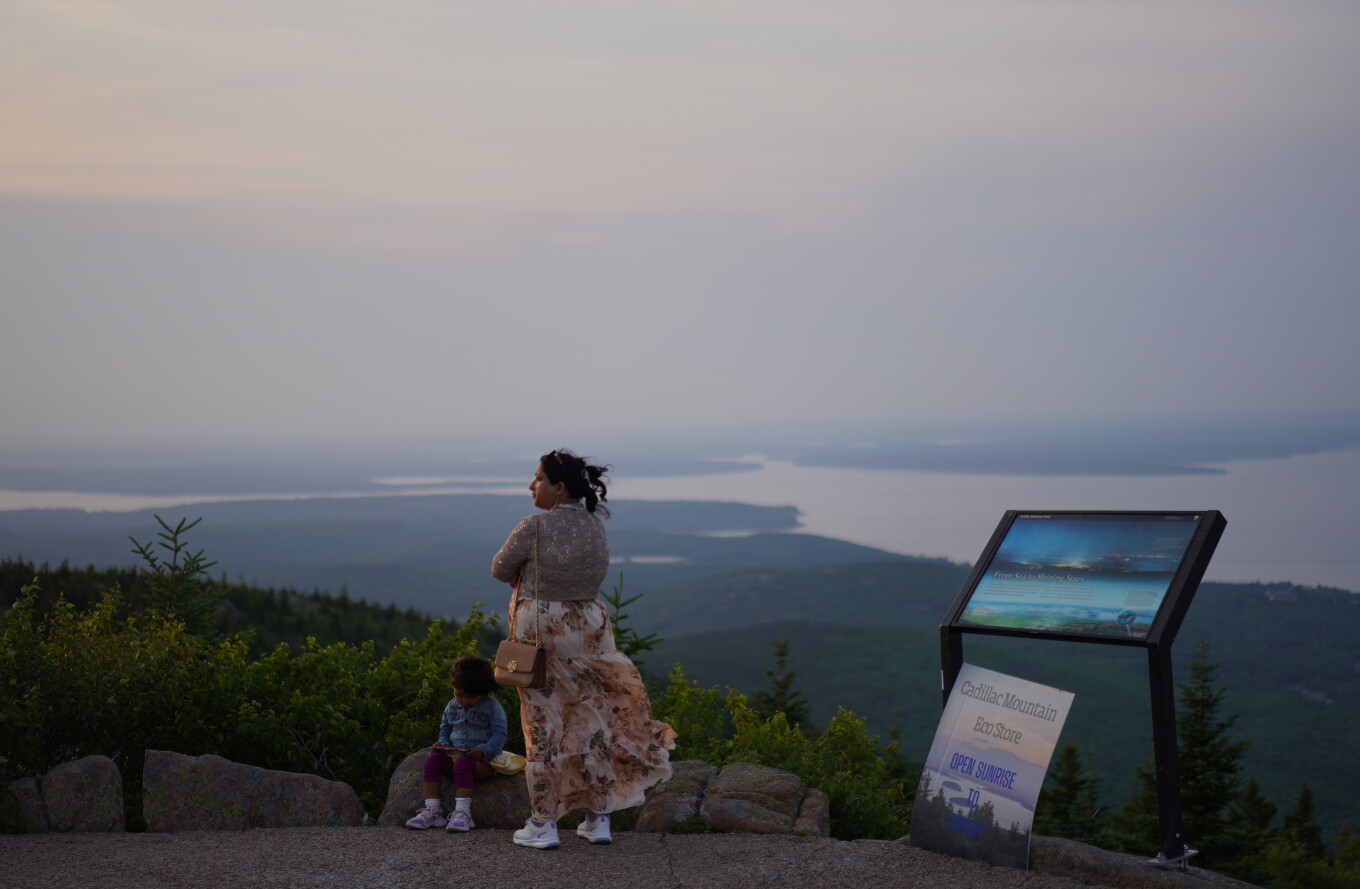
杰西·沃达斯基 缅因州巴港 —— 在黎明柔和的光线中,一名来自俄亥俄州的游客正在阿卡迪亚国家公园凯迪拉克山山顶的解说牌前驻足,阅读关于岩浆如何形成脚下这片土地的介绍。
JESSIE WARDARSKI BAR HARBOR, Maine — In the soft light of dawn, an Ohio tourist studied the interpretive sign at the summit of Cadillac Mountain in Acadia National Park, reading about how magma formed the ground under her feet.
然而,她和每年造访阿卡迪亚的400多万游客,如今已无法在山顶看到另一块解说牌:一块阐述这座山对该地区瓦巴纳基人神圣意义的标志牌。牌文写道:“如今,来自四面八方的游客都在这座山上寻找意义。”
There is one sign she and the other 4 million-plus tourists who visit Acadia annually can no longer see at the summit: a marker explaining the mountain’s sacred significance to the Wabanaki people in the region. “Today, visitors from everywhere find meaning on the mountain,” it said.
据国家公园保护协会称,这块牌子是特朗普政府为剥离国家公园中被认为“贬低美国历史”的材料而发起的一场行动中,从阿卡迪亚撤下的30块标志牌之一。
It was among 30 markers removed from Acadia under a Trump administration campaign to strip national parks of materials deemed disparaging to American history, according to the National Parks Conservation Association.
但当公园工作人员奉内政部长道格·伯古姆之命拆除山顶标志牌时,也瓦解了阿卡迪亚国家公园与瓦巴纳基人历经数十年建立起来的部分信任。瓦巴纳基联盟,又称“黎明之地的人”,在北部海岸生活了超过1万年,是包括国家公园大部分土地在内的这片区域最早的已知守护者。这里曾是他们贸易、狩猎、捕鱼和采摘香茅草的聚会场所。
But when park staff took down the summit sign at the orders of Interior Secretary Doug Burgum, they also unraveled some of the trust that took decades to build between Acadia National Park and the Wabanaki people. The Wabanaki Confederacy, also known as “the people of the dawnland,” has inhabited the northern seaboard for over 10,000 years and was the first known stewards of land that includes much of the national park. It was a gathering place to trade, hunt, fish and pick sweetgrass.
阿卡迪亚撤下的部分标志牌,是经过多年与阿卡迪亚之友、斯库迪克研究所和本土植物信托等组织合作开发的——并征求了瓦巴纳基民族公民的意见。他们称缅因州的这座山为“Wapuwoc”,意为“首光白山”。每年10月至次年3月,这里是美国本土最早迎来日出的地方。
Some of the signs removed from Acadia were developed over years of partnerships with organizations including Friends of Acadia, the Schoodic Institute and the Native Plant Trust — with consultation from citizens of the Wabanaki Nations. They know the mountain in Maine as Wapuwoc — “white mountain of the first light.”From October to March, it’s the first place to see the sunrise in the continental United States.
“让我们的语言进入这些公园并发挥教育作用……抹除这些成果或让其倒退,对我们走过的路程有着重大影响,”瓦巴纳基联盟执行主任莫利安·布莱恩特说。布莱恩特表示,被移除的标牌反映了“美好的一面”。
“Getting to a place where our language is in these parks and it is educational … erasing that or setting that back has big implications for how far we’ve come,” said Maulian Bryant, the Wabanaki Alliance’s executive director.
“这些标牌并没有说96%的瓦巴纳基人死于天花,或者曾经有26个部落而现在只剩下四个,”她说。“如果我们真的想深入了解真实的历史,那是完全另一码事。”
Bryant says the removed signs reflected “the good stuff.”
卡迪拉克山山顶被移除的其他标牌涉及气候变化问题,告知游客“阿卡迪亚的未来将更温暖、更潮湿”以及“在过去一个世纪里,年平均降水量增加了六英寸”。在拜登政府任内,前国家公园管理局局长查克·萨姆斯和前内政部长德布·哈兰德——这两位是首位担任这些职位的美洲原住民——致力于在国家公园中反映所有美国人的经历。在2025年2月卸任前,萨姆斯眼睁睁看着自己部分工作成果被现任政府推翻。
“These signs don’t say 96% of Wabanaki people died from smallpox, or there were 26 nations and now there’s four,” she said. “If we really want to get into the real history, that’s a whole other slice of cake.”
萨姆斯说:“这种‘试图将历史改写为单一叙事’的做法……也违背了我们的民主。也违背了我们是一个多元国家的理念。”
Other signs removed from Cadillac’s summit addressed issues of climate change, informing visitors that “Acadia’s future will be warmer and wetter” and that “In the last century, average annual precipitation has increased by six inches.”During their tenure under the Biden administration, former National Park Service director Chuck Sams and former Interior Secretary Deb Haaland — the first Native Americans to hold these positions — aimed to reflect the experiences of all Americans throughout the national parks. Before leaving his post in February 2025, Sams saw parts of his work unraveled by the current administration.
如今,一个由环保、历史和科学组织组成的联盟正在法庭上抗争,要求将阿卡迪亚的标牌和其他数百件展品恢复原状。根据伯古姆2025年的行动,全国各地的国家公园和纪念碑中,涉及奴隶制、气候变化和美洲原住民大屠杀等主题的标牌、书籍、影片和展览被标记并移除。
This “attempt to rewrite history into a single narrative … is also counter to our democracy. And counter to the idea that we are a plural nation,” said Sams.
“其中一些已被放回,但随后又有一些被再次移除,”美国进步中心的安杰洛·维拉戈麦斯说。他是该进步政策智库团队的一员,该团队分析了今年早些时候泄露的一个数据库,发现三分之一的国家公园标记了展示历史或科学内容的展品。其中,黑人和原住民历史最受针对。
Now, a coalition of conservation, history and science organizations are fighting in court to get the Acadia signs and hundreds of other items put back. Under Burgum’s 2025 campaign, signs, books, films and exhibits covering topics such as slavery, climate change and the massacre of Native Americans were flagged and removed from national parks and monuments nationwide.
所有被标记材料的部分内容此后已由一个委员会审查并编入目录,该委员会由国家公园管理局副局长乔伊·比斯利牵头。然而,比斯利在6月的一份宣誓书中写道,该电子表格“不太可能记录每一次移除、修改或替换”。内政部未回应美联社关于标牌和展品移除现状,以及非营利组织联盟于2月向联邦政府提起的正在进行的诉讼的提问。
“Some of it’s been put back, and then some of it has been removed again,” said the Center for American Progress’ Angelo Villagomez. He was part of the progressive policy group’s team that examined a database leaked earlier this year and found that a third of national parks had flagged exhibits featuring history or science. Of those, Black and Indigenous history were most targeted.
“公园是美国的讲述者,”国家公园保护协会的托德·马丁说,该协会是该诉讼的原告之一。“它们有责任保存和诠释美国历史,无论好坏丑陋。”明尼苏达大学政府出版物图书管理员珍妮·麦克伯尼共同创立了“拯救我们的标牌”项目,她认为,现在比以往任何时候都更重要,公园游客要记录下被修改的标牌。
Portions of all flagged material have since been reviewed and cataloged by a committee led by Joy Beasley, a National Park Service associate director. However, in a June affidavit, she writes that the spreadsheet is “unlikely to capture every removal, revision, or replacement.”The Interior Department did not respond to The Associated Press’ questions about the current status of sign and exhibit removal or the ongoing lawsuit filed by the nonprofit coalition in February against the federal government.
“人们会去公园,以为能在那里学到历史,但实际上他们将学到的是一段不完整的历史,”麦克伯尼说。
The parks “are America’s storytellers,” said Todd Martin of the National Parks Conservation Association, a plaintiff in the lawsuit. “It’s their duty to preserve and interpret American history, the good, the bad, and the ugly.”Jenny McBurney, a government publications librarian at the University of Minnesota who co-founded the project Save Our Signs, feels it’s more important than ever for park visitors to document revised signs.
尽管面临裁员、土地缩减威胁、私有化传言,甚至部分公园面临拆除,原住民群体和公园合作伙伴依然坚持了下来。
“People are going to go to the parks and think that they will get to learn history there when in fact they will be learning an incomplete history,” said McBurney.
在缅因州,瓦巴纳基联盟成员——由马利西特、米克马克、帕萨马科迪、佩诺布斯科特和阿贝纳基主要部族组成——延续了帮助他们在定居者到来后保持主权并与祖传土地保持联系的文化传统和精神实践。这包括与游客分享他们的文化。
Despite the job cuts , threats of land reduction , talks of privatization and even demolition within some parks, Indigenous groups and park partners have persevered.
佩诺布斯科特族公民珍妮弗·内普顿对试图从阿卡迪亚和他们的祖传家园中抹去其民族的做法感到情绪复杂。
In Maine, members of the Wabanaki Confederacy — comprised of the Maliseet, Mi’kmaq, Passamaquoddy, Penobscot and Abenaki principal nations — carry on the cultural traditions and spiritual practices that helped them maintain sovereignty and connection to their ancestral land after settlers arrived. That includes sharing their culture with tourists.
“在国家纪念碑和国家公园里,很难弄到好的标识牌,”Neptune说。“当(移除)发生时,这真是个沉重打击,不仅对原住民如此,对黑人,对那些故事不被分享的人也是如此。”过去十年里,她看到国家公园管理局发生了真正的变化,在将瓦巴纳基人的声音带到谈判桌前、创建原住民设计的空间方面发挥了关键作用。
Penobscot Nation citizen Jennifer Neptune had mixed emotions about the attempted erasure of her people from Acadia and their ancestral homeland.
与阿卡迪亚公园合作,私人拥有的阿比博物馆(该博物馆主要由瓦巴纳基人监督)举办一个项目,通过音乐、艺术和文化将原住民的声音带入公园。
“It’s hard to get good signage in national monuments, in national parks,” said Neptune. “It’s a real gut punch when it (removal) happens, not just for Indigenous people, but for Black people , for the people whose stories don’t get shared.”Over the past decade, she’s seen real change from the National Park Service, playing an integral part in bringing Wabanaki voices to the table to create Indigenous-designed spaces.
尼克·贝尔和瓦巴纳基鼓圈的成员每年作为这项合作的一部分,在卡迪拉克山表演。“这就像把那些仪式带回到原始遗址,”他说。
In partnership with Acadia, the privately owned Abbe Museum, which is largely overseen by Wabanaki people, hosts a program that brings Native voices into the park through music, arts and culture.
七月,帕萨马科迪族编篮匠莉迪亚·索科托马在西尔德蒙特自然中心外展示了传统的瓦巴纳基编篮技艺,使用捣打的白蜡树皮和香草。她说,白蜡树和香草都是瓦巴纳基创世故事的一部分。
Nick Bear and members of a Wabanaki drum circle perform on Cadillac Mountain annually as part of this collaboration. “That’s just like bringing those ceremonies right back to the original sites,” he said.
“编一个篮子对我来说价值千回忆,”索科托马说,她的祖母是一位著名的编篮匠。“我一直被告知,它承载着你的一部分精神。”对瓦巴纳基人来说,长期以来很难获得香草,因为他们被从沿海土地推向保留地。自1916年公园建立以来,香草在阿卡迪亚几乎绝迹。但过去十年里,公园工作人员和瓦巴纳基成员一直在合作改变这一状况。
In July, Passamaquoddy basket maker Lydia Soctomah demonstrated traditional Wabanaki basketry using pounded ash bark and sweetgrass outside the Sieur de Monts Nature Center. Both the ash tree and sweetgrass are part of the Wabanaki creation story, she said.
2017年,科学家苏珊·格林劳(霍尔顿马利塞特印第安人部落公民)与美国林业局、阿卡迪亚公园的斯科迪克研究所以及14名传统采集者合作,开展了一项由瓦巴纳基人主导的香草研究,希望能让部落获得进入权。
“Making a basket is worth 1,000 memories for me,” said Soctomah, whose grandmother was a well-known basket maker. “I was always told it holds a part of your spirit.”Access to sweetgrass has long been difficult for Wabanaki people as they were pushed from coastal lands onto reservations. In Acadia, it’s been nearly nonexistent since the park’s creation in 1916. But over the past decade, park staff and Wabanaki members have collaborated to change that.
“这真的很有影响力,因为我们从未有过这种共同管理关系,”格林劳说,并补充说,这些随着时间的推移建立起来的关系一直未变。
In 2017, scientist Suzanne Greenlaw, a citizen of the Houlton Band of Maliseet Indians, partnered with the U.S. Forest Service, Acadia’s Schoodic Institute and 14 traditional gatherers to conduct a Wabanaki-led sweetgrass study in hopes of allowing tribal access.
萨姆斯表示,到拜登政府结束时,与部落的共同管理或共管协议已超过400份,其中仅国家公园管理局就有159份,阿卡迪亚国家公园的项目也在其中。
“It was really impactful because we had never had those kinds of co-stewardship relationships,” said Greenlaw, adding that those relationships, built over time, have not changed.
他说,这些项目使部落能够履行保护、保存和增强自然资源的义务,也使联邦政府能够履行允许部落进入狩猎、捕鱼以及采集食物和药材的义务。
By the end of the Biden administration, there were over 400 co-stewardship or co-management agreements with tribes, 159 within the National Park Service alone, says Sams. Programs in Acadia were among them.
萨姆斯谨慎地希望,在下一届政府下,国家公园管理局会有一段重建期。
These programs, he says, allow tribes to fulfill their obligation to protect, preserve and enhance natural resources, and the federal government to fulfill its obligation to allow tribal access for hunting, fishing, and gathering foods and medicines.
“每个政府都有起伏,”他说。“没有人比美国印第安部落更深刻地体会到这一点。”
Sams cautiously hopes there will be a rebuilding period for the park service under the next administration.
美联社宗教新闻报道通过美联社与《对话美国》的合作获得支持,资金由利利基金会提供。本内容由美联社全权负责。
“There are always ebbs and flows with every administration,” he said. “Nobody has seen that more than American Indian tribes.”Associated Press religion coverage receives support through the AP’s collaboration with The Conversation US, with funding from Lilly Endowment Inc. The AP is solely responsible for this content.