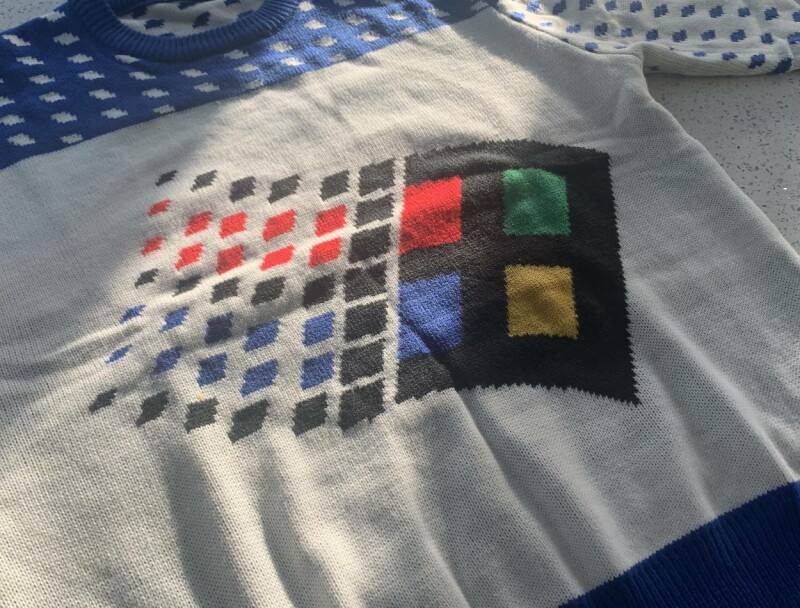
新加坡研究人员研发出一种电子织物,他们声称这种织物可被织入衣物,从而创造一种新型图形用户界面(GUI),适合那些觉得从口袋里掏设备太费劲的人。本周发表在同行评审科学期刊《自然》上的这项研究称,这一进展可能在某个时候引领一个“服装作为无处不在的多模态人机界面的未来”。论文展示了有人用一件羊毛衫的袖子与计算设备进行交互(请不要开关于Windows丑陋毛衣的玩笑,这是严肃的研究)。
Researchers in Singapore have developed an electronic fabric they claim can be woven into garments to create a new form of graphical user interface (GUI), for people who find retrieving a device from their pocket too much effort. The development could lead - at some point - to a "future in which clothing functions as a pervasive, multimodal human–computer interface," according to the study published in peer-reviewed science journal Nature this week. The paper shows someone interacting with computing devices using the sleeve of a wool sweater (no jokes about the Windows ugly sweater please, this is serious).
由新加坡国立大学研究工程师符恒领导的研究人员声称,这是一次巨大的飞跃。论文称:“这种以纤维为中心的方法将可穿戴电子设备从柔性面板转向真正的纺织原生架构,为能够像其所依附的衣物一样自然地可视化、感知、通信和计算的织物奠定了基础。”研究人员声称开发出一种可规模化生产的工艺,用于制造毫米粗的纤维。
The researchers, led by Singapore National University research engineer Fu Heng, claim this is a big leap forward. “This fiber-centric approach shifts wearable electronics from flexible panels toward truly textile-native architectures, laying the groundwork for fabrics that visualize, sense, communicate and compute as naturally as the garments they inhabit,” the paper says. The researchers claim to have developed a scalable process to make millimeter-thick fibers.
他们用激光剥去细铜线上特定位置的绝缘层,将发光芯片附着在裸露部分,从而与芯片形成电气连接。使用这一工艺,数以千计的芯片被以极高的精度连接到导线上。随后,这些纤维被送入一根透明塑料管中,并通过在管子的第二纵向通道中加入两条可压缩的导电聚合物带,使其具备压敏特性。论文称,他们用这种方法可以制造出10米长的纤维,而且这些纤维足够细且柔韧,可以织入或附着在织物上。研究人员还能够添加“外设”,如麦克风、扬声器、温度传感器和光传感器。
Using lasers to strip the insulation from specific spots on the thin copper wires, they attached light-emitting chips to the exposed sections, creating electrical connections to the chips. Thousands of chips were connected to the wires with extreme precision using this process. The fibers were then fed into a transparent plastic tube, and made pressure-sensitive by adding two strips of a compressible, conductive polymer into a second longitudinal channel in the tube. The paper says they could make fibers 10 meters long using this method, and that they are thin and flexible enough to be woven into or attached to fabrics. The researchers were also able to add "peripherals" such as a microphone, a speaker, a temperature sensor and a light sensor.
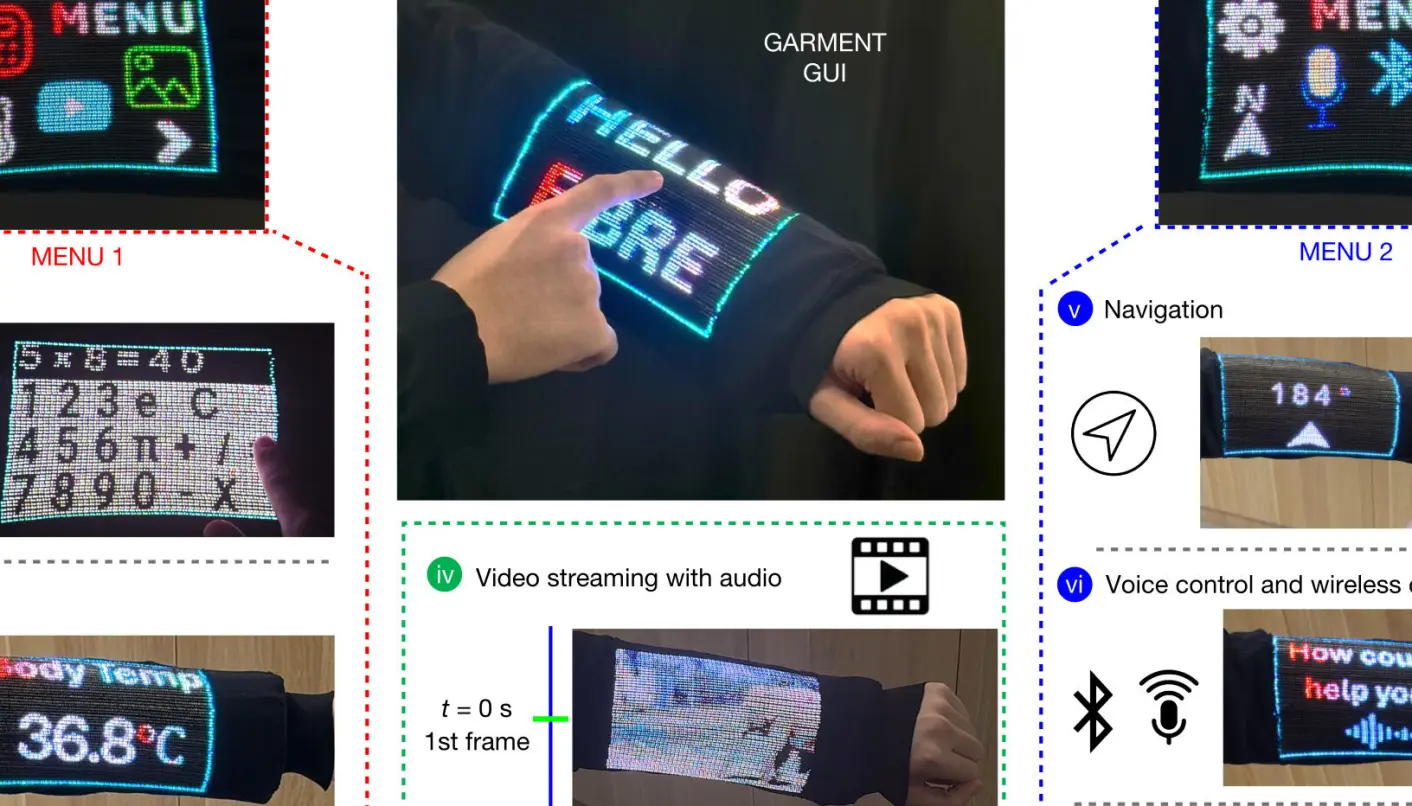
研究人员认为,他们可以将音视频播放、无线数据交换、计算和动态图形等交互界面内置到毛衣的袖子里。据悉,这种织物能经受50次轻柔机洗和1000次弯曲循环,而不会失去其功能。在一篇附随的文章中,纽约州立大学石溪分校机械工程系助理教授姚珊珊表示,主要的进展在于直接将功能构建到纤维中,然后将这些纤维组装成织物。
The researchers reckon they could build into the sleeve of a sweater an interactive interface with audio-video playback, wireless data exchange, computing, and dynamic graphics. The fabric can survive 50 gentle machine washes and 1,000 bending cycles without losing its functionality, we're told. In an accompanying article, Shanshan Yao, assistant professor at the Department of Mechanical Engineering, Stony Brook University, said the main advance lay in building functionality directly into fiber, which were then assembled into a fabric.
她说:“如果这些纤维被证明与标准的工业编织、针织和刺绣工艺兼容,那么这些发现将为生产几乎任何形状或尺寸的多功能电子纺织品铺平道路。”“这项工作也是朝着用完全集成的可穿戴界面取代刚性显示器迈出的一大步,使日常计算从平面屏幕转向舒适贴合人体的织物。到目前为止,所展示的图形用户界面的交互功能相对简单,与早期几代智能手机和平板电脑的功能相当。”
“If the fibers prove to be compatible with standard industrial weaving, knitting and embroidery processes, the findings would pave the way to producing multifunctional electronic textiles in almost any shape or size,” she said. "The work is also a big step towards replacing rigid displays with fully integrated wearable interfaces, moving everyday computing away from flat screens to fabrics that comfortably conform to the human body. The interactive features of the GUI that have been demonstrated so far are relatively simple, comparable to those of early-generation smartphones and tablets," she said.
但她指出,目前的原型依赖于通过电缆连接到纤维的独立微控制器电路,以及外部电池组来供电。她补充说:“未来的研究应侧重于更无缝地集成控制电子设备以提高可穿戴性,并集成柔性能量收集线,这些线可以从人体热量或运动中产生能量。”
However, the current prototype relies on separate microcontroller circuits connected to the fibers through cables, and external battery packs to supply power, she pointed out. "Future research should focus on integrating the control electronics more seamlessly to improve wearability, and on integrating flexible, energy-harvesting threads that can generate power from body heat or movement," she added. ®