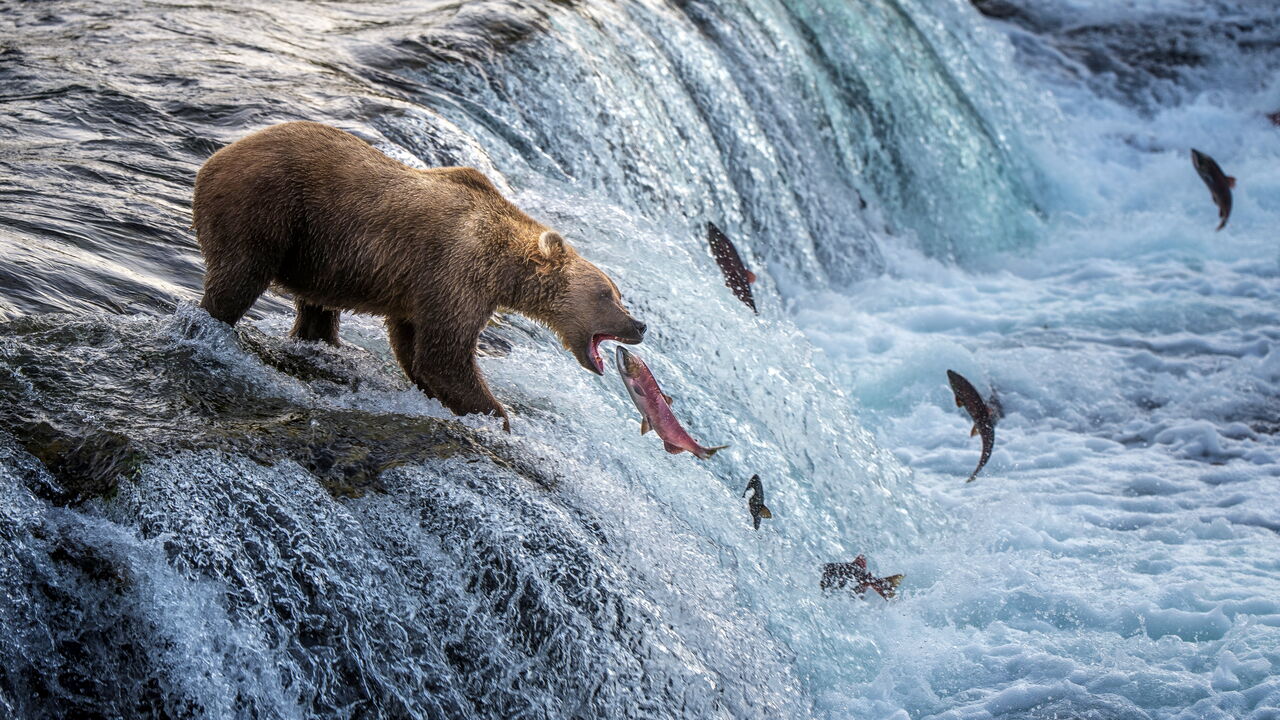
对阿拉斯加来说,十月是热闹非凡的月份。广袤大地色彩斑斓,白昼变得珍贵,壮硕的熊赶在入冬前抓紧增肥。这个月也是阿拉斯加人领钱的日子。每年十月,州政府会发放石油收入投资所得的分红。金额每年不同,但今年十月,每位在该州住满一个完整日历年度的居民将收到1200美元。
OCTOBER IS EVENTFUL in Alaska. Its vast landscapes erupt in a riot of colour, daylight becomes precious and beefy bears rush to fatten themselves before winter. It is also the month Alaskans get a payday. Each October the state government disburses dividends from the investment earnings of its oil revenues. The amount varies, but this October each resident who has lived in the state at least one full calendar year will receive $1,200.
半个世纪以来,阿拉斯加一直在进行一项实验:如何将丰富石油资源带来的收入用于公共福祉。如今,当美国立法者纠结于是否以及如何分享人工智能可能创造的财富时,该州的经验有了新的现实意义。提议将AI公司的股份注入公共基金,并用收益支付分红或资助公共服务的方案,与阿拉斯加的做法如出一辙。但阿拉斯加的永久基金及其分红既提供了范本,也是一则警示故事。
For half a century Alaska has run an experiment in how to use revenues from its abundant oil resources for the public good. Now, as American lawmakers grapple with whether and how to share the wealth that artificial intelligence might create, the state’s experience has new relevance. Proposals to put stakes in AI companies into a public fund, and use the proceeds to pay dividends or finance public services, echo Alaska’s approach. But Alaska’s Permanent Fund and its dividend offer both a model and a cautionary tale.
该州的好运可追溯至1968年,当时在阿拉斯加北坡普拉德霍湾钻探的石油工人打出了石油。不到十年后,阿拉斯加人投票决定设立永久基金,作为每年部分矿产特许权使用费的投资载体。共和党州长迈克·邓利维表示,这一构想“是为了确保石油开采等有限资源能够转化为阿拉斯加人民无穷无尽的收入”。1980年,州议会成立了一家独立的州营公司来管理永久基金的投资。两年后,阿拉斯加开始发放分红。如今该基金价值900亿美元,相当于每位阿拉斯加人约12.2万美元。
The state’s good fortune dates back to 1968, when roughnecks drilling at Prudhoe Bay, on Alaska’s North Slope, struck oil. Less than a decade later Alaskans voted to create the Permanent Fund, an investment vehicle for a portion of annual mineral royalties. The idea, says Mike Dunleavy, the Republican governor, “was to ensure that finite resources such as oil mining could be converted into infinite revenue for the people of Alaska”. In 1980 the legislature created an independent state-run corporation to manage the Permanent Fund’s investments. Two years later Alaska began paying the dividend. Today the fund is worth $90bn, or roughly $122,000 per Alaskan.
其余的矿产特许权使用费以及石油生产税被用于资助公共服务。长期以来,这些财富似乎取之不尽。1969年的一次租约拍卖所得就超过该州年度预算的五倍。1980年,阿拉斯加州议员废除了该州的个人所得税。此后他们一直避免对居民征收其他广泛的税种。这使得阿拉斯加在美国的石油州中独树一帜。其他州,如得克萨斯州和新墨西哥州,继续征收销售税或所得税来资助其支出。
The remaining mineral royalties, along with oil production taxes, are used to finance public services. For a long time the riches seemed inexhaustible. A single lease sale in 1969 raised more than five times the state’s annual budget. In 1980 Alaskan lawmakers repealed the state’s personal income tax. They have since shunned other broad-based levies on residents. This makes Alaska unique among American petro-states. Others, such as Texas and New Mexico, continue to collect sales or income taxes to finance their spending.
阿拉斯加对石油的完全依赖使其受制于油价的波动。2018年,在经历了几个歉收之年后,议员们决定首次动用永久基金的收益来为州政府提供部分资金。如今,每年从该基金提取的资金约占该州预算的三分之二。议员们必须就如何在分红和公共服务之间分配石油收入进行讨价还价。阿拉斯加安克雷奇大学的经济学家布雷特·沃森表示,阿拉斯加的预算编制已变得“零和”。
Alaska’s utter dependence on the black stuff has left it hostage to fluctuations in the oil price. In 2018, after several lean years, lawmakers decided to use Permanent Fund earnings to help bankroll the state government for the first time. Now annual draws from the fund account for roughly two-thirds of the state’s budget. Lawmakers must haggle over how to divide the oil money between dividends and public services. Brett Watson, an economist at the University of Alaska Anchorage, says Alaska’s budgeting has become “zero sum”.
邓利维于2018年当选,此前他承诺恢复一项长期存在的公式,将分红与基金的投资收益挂钩,这将使阿拉斯加人每年获得超过3000美元的款项。但两年前,在预算危机中,议员们已停止遵循该公式。上任后,邓利维不得不面对现实;他任期内平均分红约为1500美元。“每一位当选的议员都说,‘我向你们承诺3000美元的分红’,一旦他们来到朱诺,看看那份预算,他们就会意识到你做不到,”州参议院议长、共和党人加里·史蒂文斯解释道。
Mr Dunleavy was elected in 2018 after promising to restore a long-standing formula linking dividends to the fund’s investment earnings, which would have given Alaskans annual payments of more than $3,000. But lawmakers had stopped following the formula two years earlier, amid a budget crisis. In office, Mr Dunleavy has had to face up to the maths; the average dividend during his tenure has been roughly $1,500. “Every legislator who gets elected saying, ‘I promise you a $3,000 dividend’, once they get down to Juneau, and they look at that budget, they realise you cannot do that,” explains Gary Stevens, the Republican state Senate president.
在邓利维的领导下,立法者还削减了公共服务支出,既是为了平衡预算,也是为了保留资金发放分红。因失去州政府拨款,各市和自治市镇只能靠极其紧张的预算维持运转。阿拉斯加市政联盟(一个非营利组织)的尼尔斯·安德里森说:“许多地方政府……钱一用完就关门。”立法者长期以来希望分红能帮助留住居民;现在有些人担心,服务恶化反而会把居民赶走。自2013年以来,该州的净迁移率每年均为负值。
Under Mr Dunleavy, lawmakers have also cut spending on services, both to balance the books and to preserve money for dividends. Deprived of state dollars, cities and boroughs are operating on shoestring budgets. “Many local governments…just close when they run out of money,” says Nils Andreassen of the Alaska Municipal League, a non-profit. Lawmakers have long hoped the dividend would help keep residents; some now worry that worsening services will drive them away. The state’s net migration has been negative in each year since 2013.
与伊朗的冲突提供了一剂权宜之计:油价上涨支撑起了州预算。共和党州长候选人伯纳德特·威尔逊呼吁发放更大额的分红支票;她的对手、前民主党州议员乔纳森·克赖斯-汤金斯则主张财政改革。
The war with Iran offers a band-aid: higher oil prices are propping up the state budget. Bernadette Wilson, a Republican candidate for governor, is calling for bigger dividend cheques; her opponent, Jonathan Kreiss-Tomkins, a former Democratic state legislator, favours fiscal reform.
谈到AI财富分配,辩论才刚刚开始。佛蒙特州参议员伯尼·桑德斯希望大型AI公司上交50%的股份给主权财富基金,该基金将每年向美国人发放至少1000美元,并最终用于支持医疗保健和其他服务。OpenAI和Anthropic的负责人倾向于捐赠更适度的5%股份给公共基金。OpenAI还支持提高资本利得税和企业所得税。
When it comes to AI wealth, the debate is only beginning. Bernie Sanders, a senator from Vermont, wants big AI firms to hand over 50% of their shares to a sovereign wealth fund, which would pay Americans at least $1,000 a year and eventually support health care and other services. The bosses of OpenAI and Anthropic favour donating a more modest 5% stake to a public fund. OpenAI also backs higher taxes on capital gains and corporate income.
人工智能基金最初不会面临与阿拉斯加永久基金相同的财政压力:毕竟,美国仍在征收联邦所得税。但阿拉斯加的困境表明,过度依赖单一收入来源的危险,以及分红如何轻易沦为政治足球。唐纳德·特朗普已在抛出与人工智能无关的“特朗普分红”,承诺如果共和党赢得中期选举,他最近恳请选民:“只要投我们党候选人的票,你们每人就能拿到5000美元。”
An AI fund would not initially face the same fiscal pressures as Alaska’s Permanent Fund: America, after all, still collects federal income taxes. But Alaska’s predicament shows the dangers of relying too heavily on a single source of revenue, and how easily dividends can become a political football. Donald Trump is already dangling a “Trump dividend”, unrelated to AI, if Republicans win the midterms. Just vote for the party’s candidates, he implored recently, “and you will each have $5,000”.