当这本备受推崇的科学期刊变得过于政治化时,其企业所有者介入了管理。如今,它的未来充满了不确定性。
When the beloved science publication got too political, its corporate owners stepped in. Now its future is uncertain.
2026年3月,在曼哈顿下城一座普通办公楼的第46层,大约二十多名《科学美国人》(Scientific American)的编辑人员通过线下和线上的方式聚集在一起,公开讨论他们对政治新闻的报道方式。
In March of 2026, in a nondescript, 46th-floor office overlooking lower Manhattan, about two dozen members of Scientific American’s editorial staff had gathered in person and online to talk openly about their approach to political coverage.
主编大卫·埃瓦尔特(David Ewalt)希望所有编辑都能明白一点:该杂志绝不会向特朗普政府低头屈服。事实上,根据《国家杂志》(The Nation)获得的会议录音,他要求在场编辑们“如果我曾要求你们不要报道某些政治新闻,请举手”。有两名编辑举起了手。
David Ewalt, the editor in chief, wanted them all to understand something: The magazine was not “kowtowing” to the Trump administration. In fact, according to a recording of the meeting obtained by The Nation, he asked staff present to “raise your hand if you’ve ever heard me say not to cover a political story.”Two people raised their hands.
在过去一年多的时间里,编辑们一直流传着这样的传闻:高层编辑会拒绝那些他们认为过于政治化或具有争议性的文章;这些文章常常引发《科学美国人》企业所有者的愤怒电话;甚至有一次,企业所有者直接要求编辑们修改那些批评特朗普政府的文章内容。
For well over a year, rumors had been circulating among the staff about top-level editors’ rejecting pitches they saw as too political, controversial articles triggering angry phone calls from Scientific American’s corporate owner, and even, on at least one occasion, ownership forcing editors to blunt language critical of the Trump administration.
此外,该杂志的观点专栏(opinion section)也遭遇了麻烦。在新政府上台后的最初几个月里,该专栏每月会发表约15篇批评特朗普政府行为的文章。然而在2025年5月,该专栏发表了一篇极具争议性的文章——《科学告诉我们美国正走向独裁》(“Science Tells Us the U.S. Is Heading toward a Dictatorship”)。后来,一位编辑将管理层的这一决定称为“前所未有的”举措:他们要求该专栏暂停发表新文章,直到新的主编上任为止。
Then there was what happened to the opinion department. In the first months of the new administration, it had been publishing about 15 pieces a month, many of which criticized Trump’s attacks on scientific research. But after the department published a particularly provocative column in May 2025—“Science Tells Us the U.S. Is Heading toward a Dictatorship”—management, in what one staffer would later call an “unprecedented” move, had told the department to “pause” publishing new articles until the new editor in chief started.
观点版的停摆让一些人的担忧甚于其他人——即便并非所有人都认同,想要强调突发新闻确实有正当的新闻理由。但到2026年3月,也就是埃瓦尔特上任九个月后,观点版似乎已永久消失——其他部门也感受到了政治压力。这一点,再加上一轮裁员、新闻编辑室的重组,以及围绕杂志未来的隐晦威胁,让员工们感到沮丧,并四处寻求答案。如今,这位新任主编终于来到全体编辑员工面前,“既倾听也发言”,正如一名员工所说,他们开始提问。
The opinion department’s hiatus had worried some people more than others—there were legitimate journalistic reasons to want to emphasize breaking news, even if not everyone agreed with them. But by March 2026, nine months into Ewalt’s tenure, the opinion section seemed to be gone for good—and other departments were feeling political pressure, too. That, along with a round of layoffs, a restructuring of the newsroom, and veiled threats about the future of the magazine, had left the staff frustrated and looking for answers. Now that the new editor in chief was finally coming to the full editorial staff “to listen as well as to speak,” as one staffer put it, they began asking questions.
有人问他那个传言:编辑们是否真的被要求不得在标题中出现“特朗普”一词?
What about that rumor, someone asked him: Had editors really been told to not put the word “Trump” in headlines?
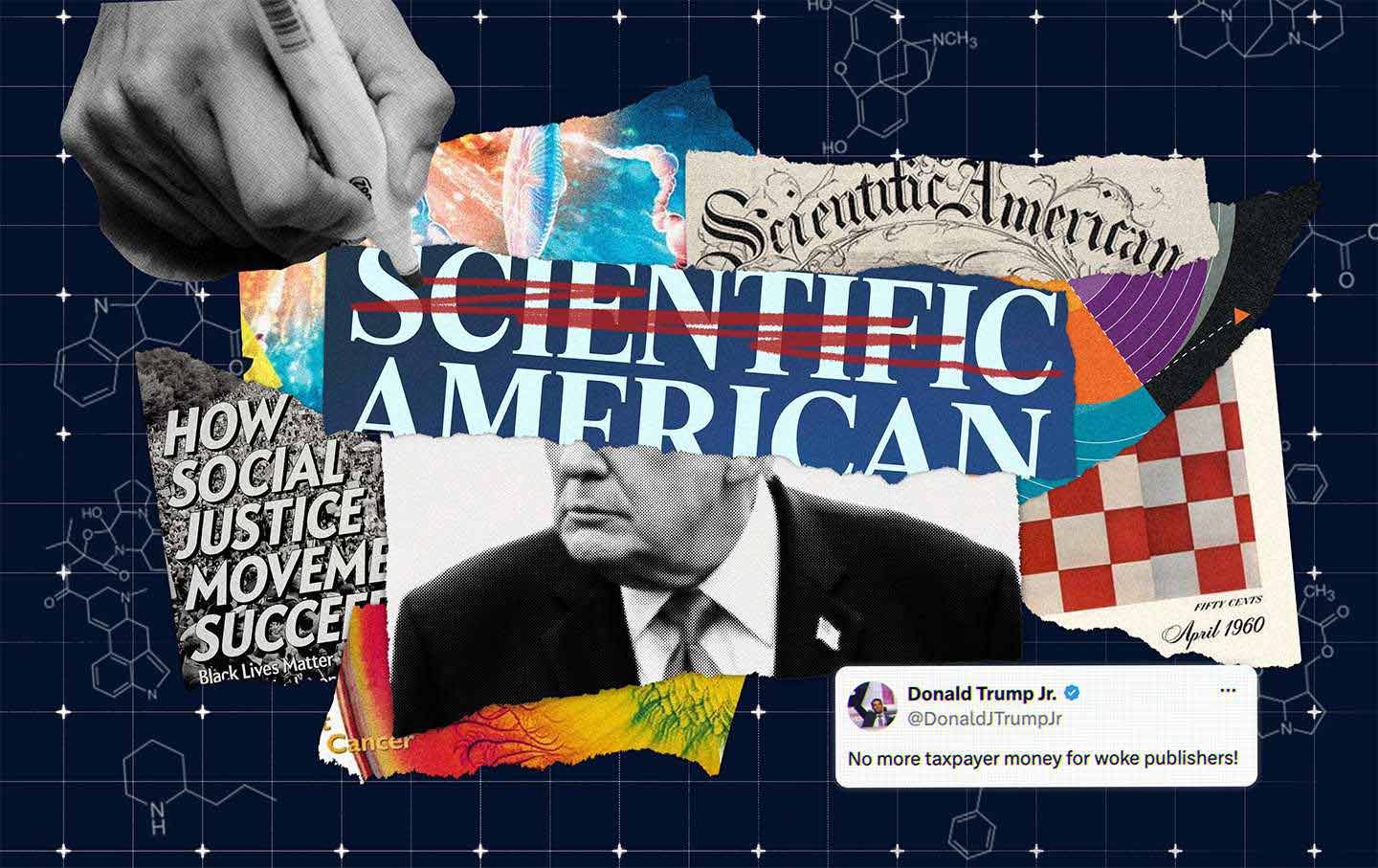
埃瓦尔特说,这是真的。去年,布莱巴特新闻网的一篇文章批评了《科学美国人》的德国所有者施普林格·自然,指责其攻击那些“对新冠疫苗持怀疑态度”的人并散布“性别疯狂”。“不再给觉醒出版商纳税人一分钱!”小唐纳德·特朗普在转发这篇文章时宣称。2025年6月,Axios报道称,所有联邦机构对施普林格·自然出版物的订阅均已被取消。
That was true, Ewalt said. Last year, a Breitbart article had criticized Springer Nature, Scientific American’s German owner, for attacking those “skeptical of the coronavirus vaccine” and spreading “gender insanity.”“No more taxpayer money for woke publishers!” declared Donald Trump Jr., retweeting the article. In June 2025, Axios reported that all federal subscriptions to Springer Nature publications had been canceled.
尽管特朗普政府官员后来撤销了大部分削减,但这些削减仍震动了科学界:若无法获取施普林格·自然旗下数千种期刊(包括享有盛誉的《自然》系列出版物),从美国国立卫生研究院到美国国家航空航天局的联邦机构研究人员将难以跟上科学发展的步伐。与此同时,该公司自身则面临高达2500万美元联邦合同损失的风险。
Although Trump officials later walked back the bulk of the cuts, they had shocked the scientific community: Without access to Springer Nature’s thousands of journals, including the prestigious Nature publications, researchers at federal agencies—from the NIH to NASA—would struggle to stay abreast of scientific developments. The company itself, meanwhile, risked losing as much as $25 million in federal contracts.
所以,如果埃瓦尔特去年夏天要求人们不要让特朗普登上头条,那是因为公司高层一直来访问网站。根据录音,他说:“如果他们看到‘特朗普’这个词,他们会吓得屁滚尿流。”他说,人们根本不知道施普林格·自然有多么“胆小、软弱和怯懦”。“他们太他妈害怕特朗普政府了。”观点版编辑早已被调任其他职位,但如今,将近一年后,埃瓦尔特告诉员工,即使是新闻报道,有时也过于有倾向性。
So if Ewalt had asked people to keep Trump out of the headlines last summer, it was because corporate higher-ups were visiting the site all the time. “And if they saw the word ‘Trump,’” he said, according to the recording, “they were wetting their fucking lederhosen.”People had no idea how “lily-livered and weak-kneed and cowardly” Springer Nature was, he said. “They are so fucking afraid of the Trump administration.”The opinion editors had long since been reassigned to other roles, but now, almost a year later, Ewalt was telling his staff that even news stories sometimes had too much of a slant to them.
“我从来没有在这里告诉任何人‘不要去追特朗普政府’,”他告诉他们。“我是说我不想听到你的观点。”他只是不认为这是他们“最强的武器”。埃瓦尔特相信,如果每个人都坚持客观、有力的报道,他们就能避免与施普林格·自然产生麻烦。
“I am not ever telling anybody here ‘Don’t go after the Trump administration,’” he told them. “I’m saying I don’t want to hear your opinion.”He just didn’t think it was their “strongest weapon.”If everyone stuck to objective, hard-hitting reporting, Ewalt believed that they would be able to stay out of trouble with Springer Nature.
现在允许在标题中提及特朗普。“但让我们现实地看待我们所处的世界,”他告诉员工。埃瓦尔特警告说,去年八月,施普林格·自然本可以轻易认定,该杂志“400万美元的亏损”不值得冒险失去公司从联邦资助的科学期刊订阅中赚取的数百万美元。他说,他一直“试图阻止施普林格·自然惊慌失措并关掉我们”。
Mentioning Trump in headlines was now allowed. “But let’s be realistic about the world we live in,” he told his staff. Last August, Ewalt warned, Springer Nature could have easily decided that the magazine’s “$4 million in losses” wasn’t worth risking millions more that the company earned from federally funded subscriptions to its scientific journals. He had been “trying to keep Springer Nature from freaking out and shutting us down,” he said.
会议接近尾声时,埃瓦尔特似乎颇为乐观。“这很有用,”他说,“我们以后会多这样做。”
As the meeting came to an end, Ewalt seemed optimistic. “This is useful,” he said. “We’ll do this more.”
但员工们仍感到不确定。人们真的能相信他们的主编会像他承诺的那样,坚定支持他们的报道吗?还是说,如果读者发来太多愤怒的邮件,或者施普林格·自然的亿万富翁首席执行官打来电话,他就会撤下文章?一名员工说,这些担忧“在那次会议上根本没有得到平息”。相反,它把日积月累的流言蜚语和暗示变成了远比此前具体得多的东西——并且“让所有人都紧张不安”,另一名员工说。
But staffers still felt uncertain. Could people really trust their editor in chief to stand by their reporting, like he promised? Or would he retract articles if readers sent too many angry emails, or if Springer Nature’s billionaire CEO called? Those concerns, one staffer said, weren’t “quelled in that meeting at all.”Rather, it had transformed accumulated gossip and implication into something far more concrete—and “set everybody’s teeth on edge,” said another staffer, who, like a number of sources for this story, chose to speak anonymously because they feared retaliation from current or prospective employers.
与本文的许多消息源一样,这名员工选择匿名,因为担心遭到现任或未来雇主的报复。“他是在试图对我们坦诚,”这名员工说。但这也“把所有人都吓坏了”。第二次会议再也没有举行。
“He was trying to be honest with us,” the staffer said. But, also, it “alarmed the shit out of everybody.”Another meeting never took place.
今年4月, 《科学美国人》的员工迈出了与东部美国编剧工会组建工会的第一步正式程序,理由包括编辑独立性等多项担忧。6月23日——也就是国家劳资关系委员会计划统计工会投票结果的三天前——施普林格·自然宣布将把该杂志出售给一家名为LabX的鲜为人知的公司。
In April, the staff of Scientific American took the first formal step to form a union with the Writers Guild of America East, citing a number of concerns, including editorial independence. And on June 23—three days before the National Labor Relations Board was scheduled to count the unionization votes—Springer Nature announced that it was selling the magazine to a little-known company called LabX.
《科学美国人》是美国历史最悠久的杂志,也是科学类出版物中最广为人知、最受喜爱的杂志之一。与同等水准的其他出版物一样,它也有编辑独立的传统。20世纪80年代,在其共同所有者之间经历了一场动荡的分裂后,它被德国出版帝国霍尔茨布林克收购,该公司目前同时控制着施普林格·自然和“五大”出版商之一的麦克米伦。1998年《名利场》的一篇特写称该公司是陷入困境的出版商眼中的“首选鲨鱼”:它承诺允许它们继续自己的工作,尽量少加干涉。
Scientific American is the oldest magazine in the United States and, among science publications, one of the most familiar and beloved. Like other publications of its caliber, it also has a tradition of editorial independence. In the 1980s, after a tumultuous split between its co-owners, it was absorbed by the German publishing empire Holtzbrinck, which currently controls both Springer Nature and the Big Five publisher Macmillan. A 1998 Vanity Fair feature called the company the “shark of choice” for struggling publishers: It promised to allow them to continue their work with minimal interference.
然而近年来,施普林格·自然“放手不管”的名声开始动摇。今年夏季和秋季对十多名《科学美国人》现任及前任员工的采访描绘出这样一幅图景:尤其是在过去两年里,这家杂志在来自其企业所有者的有时令人难以承受的压力面前,难以维护其编辑独立性——这一图景得到了《国家》杂志获得的录音和文件的印证。
In recent years, however, Springer Nature’s hands-off reputation has begun to falter. Interviews conducted this summer and fall with a over a dozen current and former Scientific American employees depict a magazine that, especially over the past two years, has struggled to protect its editorial independence in the face of sometimes overwhelming pressure from its corporate ownership—a picture corroborated by audio recordings and documents obtained by The Nation.
早在2017年,施普林格·自然就曾登上头条,当时它承认应中国政府的要求,在中国大陆审查了数百篇学术文章。但对大多数员工来说,更直接干预的第一个迹象出现在2021年,当时一篇关于加沙医疗状况的评论文章在遭到右翼反弹后被从《科学美国人》网站上撤下。
Back in 2017, Springer Nature had made headlines when it admitted that it had censored hundreds of academic articles in mainland China at the behest of the Chinese government. But for most staffers, the first sign of a more hands-on approach came in 2021, when an opinion article about the medical situation in Gaza was pulled from Scientific American’s site after right-wing backlash.
当时,文章作者没有得到任何解释。但熟悉情况的《科学美国人》现任和前任员工告诉《国家》杂志,原因很简单:以对以色列怀有热情而闻名的斯特凡·冯·霍尔茨布林克本人致电时任主编劳拉·赫尔穆特,下令将其撤下。
At the time, the article’s authors received no explanation. But current and former Scientific American staffers familiar with the situation told The Nation that the reason was simple: Stefan von Holtzbrinck himself—known for his enthusiasm for Israel—had called then–editor in chief Laura Helmuth and ordered that it be taken down.
这并非赫尔穆特与施普林格·自然之间的最后一次冲突。赫尔穆特于2020年加入该杂志,她曾推动杂志报道更多政治内容,认为科学无法与其社会背景割裂开来。在她的领导下,《科学美国人》首次发布了总统候选人背书。2024年,赫尔穆特在选举之夜于社交媒体上称特朗普的支持者为“偏执狂”和“法西斯分子”后,该杂志再次成为右翼反弹的目标。这一次,面对施普林格·自然的压力,她辞职了。
It wouldn’t be the last conflict between Helmuth and Springer Nature. Helmuth, who joined the magazine in 2020, had pushed it to cover more politics, arguing that science cannot be disentangled from its social context. Scientific American had issued presidential endorsements for the first time under her leadership. In 2024, after Helmuth called Trump supporters “bigots” and “fascists” on social media on election night, the magazine again became the target of right-wing backlash. This time, facing pressure from Springer Nature, she resigned.
多年来,该杂志一直在财务上苦苦挣扎,而随着施普林格·自然多次尝试上市却屡屡失败,实现盈利的压力只增不减;2024年,它终于成功上市。赫尔穆斯的离职之后,“感觉就像钟摆又摆了回来,回到了‘让我们专注于科学’的状态,”当时担任该杂志高级多媒体编辑的凯尔索·哈珀说。“让我们不要卷入太多混乱的政治事务。”
The magazine had been struggling financially for years, but the pressure to be profitable only increased as Springer Nature repeatedly tried and failed to go public; in 2024, it finally succeeded. After Helmuth’s departure, “it felt like a pendulum swing back to ‘let’s stick to the science,’” said Kelso Harper, who was then the magazine’s senior multimedia editor. “Let’s not get involved in too much messy political stuff.”
然而,在特朗普第二个任期的头几个月里,混乱的政治几乎无法避免。特朗普给整个科学界带来了一场又一场灾难——数千笔拨款被暂停或取消,数万名工作人员被解雇或被迫辞职,数十亿美元的资金被削减或冻结。《科学美国人》的观点部门批评了共和党对从跨性别医疗保健和麻疹疫苗到氟化物和国家气象局等方方面面的攻击。
In the first months of Trump’s second administration, though, messy politics was almost unavoidable. Trump brought disaster after disaster for science writ large—thousands of grants suspended or canceled, tens of thousands of workers fired or pressured to resign, billions of dollars of funding slashed or frozen. Scientific American’s opinion department critiqued Republican attacks on everything from trans health care and measles vaccines to fluoride and the National Weather Service.
随后,在2025年4月,随着政府对科学领域DEI(多元、公平与包容)的战争持续加速,精神病学家兼人类学家埃里克·莱因哈特在X上发布了一封信,这封信由特朗普任命的华盛顿特区联邦检察官埃德·马丁最初寄给了总部位于伊利诺伊州的医学期刊《CHEST》。这封日期为4月14日的信问道:《CHEST》是否在保护公众免受错误信息的影响?
Then, in April 2025, as the administration’s war on DEI in science continued to accelerate, psychiatrist and anthropologist Eric Reinhart posted a letter to X that the Trump-appointed US attorney for Washington, DC, Ed Martin, had originally sent to the Illinois-based medical journal CHEST. The letter, dated April 14, asked: Was CHEST protecting the public from misinformation?
它是否披露了观点何时受到资助者的影响?它是否发表持不同观点的文章?“我注意到,越来越多的期刊,如《CHEST》杂志,承认自己在各种科学辩论中是党派参与者,”信中写道。“公众有某些期望,而你们有某些责任。”《CHEST》在其领域之外并不知名,但这封信成为了全国头条新闻,被视为政府前所未有地破坏右翼所称“觉醒”科学的努力的一个例子。
Was it disclosing when viewpoints were influenced by funders? Did it publish articles from competing viewpoints? “It has been brought to my attention that more and more journals like CHEST Journal are conceding that they are partisans in various scientific debates,” the letter read. “The public has certain expectations, and you have certain responsibilities.”CHEST is not well-known outside its field, but the letter made national headlines as an example of the administration’s unprecedented efforts to undermine what the right called “woke” science.
莱因哈特向《科学美国人》高级编辑丹·维尔加诺提交了一篇评论文章,认为这封信代表了“对科学的威权威胁”。随着这篇报道即将发表,有消息传出,类似的信件也寄给了其他期刊,包括著名的《新英格兰医学杂志》和《JAMA》。莱因哈特的评论文章迅速通过了初审、“高层”编辑和文字编辑;根据《国家》杂志获得的电子邮件和文件,法律审查人员只做了一处微小的修改。
Reinhart submitted an op-ed to Scientific American senior editor Dan Vergano arguing that the letter represented “an authoritarian threat to science.”As the story moved toward publication, news broke of similar letters to other journals, including the prestigious New England Journal of Medicine and JAMA. Reinhart’s op-ed quickly progressed through an initial edit, a “top” edit, and a copy edit; according to e-mails and documents obtained by The Nation, a legal reviewer made only one, minor change.
但当稿件经过又一轮编辑、这次由代理主编珍娜·布赖纳处理之后返回时,“法西斯”一词已经消失,连同对加沙种族灭绝的提及也一并删去。莱因哈特在其中论证法西斯分子受益于“自利、自动服从和道德怯懦”的那一段被整段删除。他在文档的批注中抗议道:“在这些问题上回避公开和直接,只会让情况变得更糟。”稿件随后被送交施普林格·自然美国法务主管审阅。他留下一条批注,未作任何解释地宣称这些删改是“必要的”。“明白了,”布赖纳回复道。
But when the draft returned from another round of edits, this time from acting editor in chief Jeanna Bryner, the word “fascist” had disappeared, along with a reference to the genocide in Gaza. A paragraph in which Reinhart argued that fascists benefit from “self-interest, automatic obedience, and ethical cowardice” had been cut entirely. In a comment in the document, he protested: “Shying away from publicness and directness on these issues will only make them worse.”The draft next went to Springer Nature’s US head of legal for review. He left a comment declaring, with no explanation, that the cuts were “necessary.”“Got it,” Bryner responded.
一批近期公布的文件显示,施普林格·自然有充分理由担心遭到报复:2025年4月14日,埃德·马丁曾向《科学美国人》发送了一封威胁信,内容与《CHEST》收到的几乎完全相同。他还向同样归施普林格·自然所有的《自然·医学》以及至少另外10家出版物发送了类似的信件。(马丁目前正因向乔治城大学发送另一封威胁信而面临哥伦比亚特区律师协会的纪律处分程序。)
A tranche of recently released documents show that Springer Nature had good reason to fear retaliation: On April 14, 2025, Ed Martin had sent Scientific American a threatening letter nearly identical to that received by CHEST. He sent similar letters to Nature Medicine—also owned by Springer Nature—along with at least 10 other publications. (Martin is currently facing disciplinary proceedings from the DC bar for sending a different threatening letter to Georgetown University.)
当时,《科学美国人》总裁金·刘私下回复了马丁,坚称其内容“完全受第一修正案保护”。然而在幕后,施普林格·自然的领导层不顾刘的反对,坚持要对莱因哈特的这篇评论文章做出重大修改。
At the time, Scientific American president Kim Lau responded to Martin privately, asserting that its content was “fully protected by the First Amendment.”Behind the scenes, however, Springer Nature leadership was insisting on substantial changes to Reinhart’s op-ed, against Lau’s objections.
根据《The Nation》获得的录音资料,刘(Lau)在2025年5月与珍娜·布赖纳(Jeanna Bryner)以及两位观点版块的编辑进行的会议上表示,正是这些反对意见才使得这篇文章最终得以发表。她称,事情没有进一步升级的唯一原因是莱因哈特(Reinhart)最终同意了对文章内容的修改。然而,当这篇文章于5月1日正式发表时,却几乎没有引起任何关注——她认为这很可能是因为他们已经对文章内容进行了大量删减和修改。
Those objections were why they were “ultimately allowed to print it” at all, Lau told Jeanna Bryner and the two opinion editors in a May 2025 meeting, according to audio obtained by The Nation. The only reason things didn’t “blow up in a bigger way,” she said, was that Reinhart eventually agreed to the changes. But when the piece was eventually published, on May 1, it received little attention—probably, she said in the meeting, because they had “watered it down so much.”
两周后,当丹·维尔加诺(Dan Vergano)发表了题为《科学告诉我们美国正走向独裁》的专栏文章时,这成了压垮骆驼脊梁的最后一根稻草。不久之后,刘便将布赖纳、维尔加诺以及观点版块的主编梅格哈·萨蒂亚纳拉亚纳(Megha Satyanarayana)召集到了2025年5月的会议上。
And when Dan Vergano published his column “Science Tells Us the U.S. Is Heading toward a Dictatorship” two weeks later, it was the final straw. Shortly after, Lau called Bryner, Vergano, and the chief opinion editor, Megha Satyanarayana, into the May 2025 meeting.
“这件事根本无法粉饰,”刘对他们说。“施普林格·自然集团(Springer Nature)认为《科学美国人》对特朗普的批评威胁到了他们的核心业务——即他们科学期刊的订阅销售业务,而联邦政府是他们的重要客户。”
“There’s no way to sugarcoat this,” Lau told them. Springer Nature felt that Scientific American’s criticism of Trump was threatening their broader business—selling subscriptions to their scientific journals. The federal government was a major client.
“我反复强调过我们的编辑团队一直保持着独立性,但这次的行为显然已经越过了这条底线,”刘指出,“施普林格·自然集团非常清楚这一点。不过,考虑到我们的业务状况以及这些行为对整个集团造成的威胁,他们根本不在乎。”她表示,该部门的各项工作将被暂时搁置,直到新的主编大卫·埃瓦尔特(David Ewalt)上任为止。
“I have reiterated repeatedly that we have a history of editorial independence, and that these things are crossing that line,” said Lau, referring to Springer Nature’s repeated editorial interference. “It’s very clear that they understand that. But given where our business is, and the threats to the larger business, they don’t care.”The department’s work, she said, was being placed on “pause” until the new editor in chief, David Ewalt, arrived.
刘对所有人承受的压力直言不讳。“我们每天都在让公司不安,”她说。德国比纽约早六个小时,她和布赖纳一醒来就会接到德国董事会清晨打来的电话。“如果我认为我辞职会有助于解决问题,我早就这么做了,”刘说。“他们对美国正在发生的事情感到恐惧。”尽管刘让编辑们有理由希望尤沃尔特或许能设法挽救观点部门——“我认为他看到了它的价值,”她说——但至少在一个方面,他最终会与施普林格·自然的 executives 立场一致:是时候大幅减少观点内容的产出了。在面试期间,尤沃尔特向他们阐述了他对这本杂志的新愿景:少一些评论,多一些事实。
Lau was explicit about the pressure they were all under. “We’re upsetting the company on a daily basis,” she said. Germany was six hours ahead of New York, and she and Bryner would wake up to early-morning calls from the German board. “If I thought me quitting would help the situation, I would have done it,” Lau said. “They are terrified about the things that are happening in the US.”Although Lau gave the editors reason to hope that Ewalt might manage to resurrect the opinion department—“I think he sees value in it,” she said—he would turn out to be on the same page as the Springer Nature executives in at least one regard: It was time to reduce opinion output significantly. During his interviews, Ewalt had pitched them his new vision of the magazine: less editorializing, more facts.
然而,在2025年5月,观点编辑们——和杂志其他部门一样——对新老板仍然知之甚少。刘向他们保证,大家可以和尤沃尔特一起商量,看看他想如何处理这个问题。“我们只需要明确,我们所争取的东西是值得的。而且我跟你们说实话,”她说,“我不认为这是我愿意为之拼上一切的事情。”
In May 2025, though, the opinion editors—like the rest of the magazine—still didn’t know much about their new boss. Lau assured them they could all talk things over with Ewalt and see how he wanted to approach the issue. “We just need to be clear that what we’re fighting for is worth it. And I’ll be honest with you,” she said, “I don’t think this is the thing I want to die on the hill for.”
“我们现在正在为《科学美国人》的整体未来而战,”她说。“我们的未来没有任何事情是理所当然的。我们正在亏损大量资金,而我们未必有一条明确的路径来弥合这一缺口。”在接下来的一年半里,该杂志约84名员工中至少有53人将被裁员、辞职或退休。
“We are in a fight right now for the future of SciAm in general,” she said. “There is nothing that’s a given in our future. We are losing a lot of money, and we do not necessarily have a clear path to closing that gap.”Over the course of the next year and a half, at least 53 of the approximately 84 people employed at the magazine would either be laid off, resign, or retire.
埃瓦尔特于6月2日接手该杂志,肩负着提升流量和订阅量的任务。但变化不止于此。赫尔穆斯的离职引发了人们对员工政治表达的新关注,而埃瓦尔特的到来则将客观性重新确立为新闻业的北极星。过去不会引起任何异议的事情开始变得有争议:例如,员工被劝阻不要只关注左倾的社交媒体账号,以避免显得有偏见。
Ewalt took over the magazine on June 2 with a mandate to increase traffic and subscriptions. But there were other changes, too. Helmuth’s departure had triggered a new attention to employees’ political expression, and Ewalt’s arrival reinstated objectivity as the journalistic North Star. Things that had produced no objections in the past became contentious: People were discouraged from following only left-leaning social-media accounts, for example, to avoid the appearance of bias.
尽管他最初承诺重组不会包括裁员,但2025年10月有10名员工失去了工作,取而代之的是一批新岗位的招聘,包括三名突发新闻记者。12月,金·刘威胁说,如果收入不见起色,将进一步变革——员工们猜测是更多裁员,或者也许是出售。
Although he initially promised that his restructuring efforts would not include layoffs, in October 2025 10 employees lost their jobs, replaced by a slate of hires to new positions, including three breaking news reporters. In December, Kim Lau threatened further changes if revenue didn’t start picking up—more layoffs, workers guessed, or maybe a sale.
尽管10月的裁员激发了当时刚刚萌芽的工会运动,员工们还有其他的担忧。被重新分配去报道华盛顿的维尔加诺记得,他希望工会能成为他在杂志目睹的“明显而具有腐蚀性的企业干预和影响”的制衡力量。美国东部作家协会组织者安迪·格林伯格说,这种对编辑独立性的强调,是这场运动与他参与过的其他运动不同之处之一。
Though October’s layoffs galvanized the then-incipient union campaign, staffers had additional concerns. Vergano, who had been reassigned to report on Washington, remembers hoping that the union could serve as a counterweight to the “clear, corrosive corporate interference and influence” he’d witnessed at the magazine. That emphasis on editorial independence, said WGAE organizer Andy Greenberg, was one of the things that set the campaign apart from others he’d worked on.
“我们必须为自己着想,”一名员工意识到,“因为施普林格·自然不会。”在《科学美国人》于4月宣布成立新工会后,施普林格·自然聘请了利特勒·门德尔松——美国最大的“反工会”律所。一位有着称资深员工为“小姑娘”这种令人反感的习惯的顾问被请来主持反工会会议。尽管如此,到选举日那天,士气依然高涨。工会徽章随处可见。有人带来了线粒体形状的饼干。“我们知道这是十拿九稳的事,”维尔加诺说。
“We have to look out for us,” one staffer realized, “because Springer Nature is not.”After Scientific American announced its new union in April, Springer Nature hired Littler Mendelson, the largest “union avoidance” firm in the US. A consultant with the off-putting habit of calling senior employees “young lady” was brought in to run anti-union meetings. Still, by election day, spirits were high. Union pins were everywhere. Someone brought in mitochondria cookies. “We knew it was a slam dunk,” Vergano said.
但享受这一刻变得越来越难。韦尔加诺说,投票后的几周里,开始有传言说施普林格·自然的高管“基本上在丈量每个人的办公桌,准备把它卖掉”。“这毫不掩饰。”坏消息在6月23日传来:出售给LabX、降薪、大规模裁员。
But it was becoming difficult to enjoy the moment. In the weeks after the vote, rumors began to circulate that Springer Nature executives were “basically measuring everybody’s desk to sell it,” Vergano said. “It was not subtle.”The bad news hit on June 23: sale to LabX, salary cuts, mass layoffs.
“那种恐慌、那种眼泪、那种‘我不知道下次什么时候能见到你,也许永远再见了’的对话在新闻编辑室里不断发生——我是说,说它‘创伤性’都算轻描淡写,”图书与文化编辑布里安娜·凯恩说。即便是那些从新东家那里拿到工作邀请的人,也被要求清空办公桌,并被告知他们的笔记本电脑将在午夜前被关停。
“The amount of panic, the amount of tears, the amount of ‘I don’t know the next time that I will see you, goodbye forever maybe’ conversations that were happening in the newsroom—I mean, traumatic puts it lightly,” said books and culture editor Brianne Kane. Even those who had received job offers from the new owners were told to clear their desks and that their laptops would be shut off by midnight.
接下来的一周,几十名员工、自由撰稿人和支持者聚集在纽约广场1号的办公室。尽管上周发生了那些事,纠察线上的气氛却轻松愉快。一支规模不大但充满活力的铜管乐队伴随着“纽约是工会之城”的口号声,标语上则满是双关语(“我不余弦这些裁员”)。
The next week, a few dozen workers, freelancers, and allies gathered at the 1 New York Plaza office. Despite the previous week’s events, the mood on the picket line was jaunty. A small but energetic brass band accompanied chants of “New York is a union town,” and the signage was heavy on puns (“I Do Not Cosine These Layoffs”).
在幕后,施普林格·自然仍在竭力使这次选举无效,包括试图撤回选举申请,理由是它已经裁掉了杂志的所有人。“这是一个企业母公司重组并出售其子公司的案例,其目的明显是想挫败一次选举,”美国东部作家协会在一份法律文件中写道。“委员会不应奖励这种行为。”当美国国家劳资关系委员会清点选票时,结果是31票对1票,赞成成立工会。
Behind the scenes, Springer Nature was still doing its best to nullify the election, including by trying to withdraw the petition for an election by pointing out that it had laid off everyone at the magazine. “This was a case where a corporate parent restructured and sold its subsidiary in a transparent attempt to defeat an election,” the WGAE wrote in a legal filing. “The Board should not reward such conduct.”When the NLRB counted the votes, the tally was 31 to 1 to unionize.
出售交易刚结束,员工们便忙于了解《科学美国人》新东家的更多情况。此前,LabX最知名的出版物是《发现》,这本杂志曾是牙医诊所的常备读物,却在2000年代被私募股权买家掏空;据多名员工称,这次所有权过渡显得仓促、混乱且缺乏组织。一名员工联系了LabX旗下另一份出版物的前雇员,他们说,听到的那些说法——包括涉及编辑独立性的内容——正是他们拒绝录用通知的部分原因。
In the immediate aftermath of the sale, staffers were left scrambling to learn more about Scientific American’s new owner. Previously, LabX’s best-known publication had been Discover, a onetime dentist’s office stalwart that was hollowed out by private equity buyers in the aughts; according to multiple staffers, the ownership transition seemed rushed, chaotic, and disorganized. When one worker reached out to a former employee of one of LabX’s other publications, the stories they heard—including ones related to editorial independence—were part of why they turned down their job offer, they said. (LabX did not respond to multiple requests for comment.)
(LabX未回应多次置评请求。)与施普林格·自然之间的NLRB案件仍未了结,但工会也已申请重新举行选举。LabX没有聘请外部反工会顾问,但已召开三次会议,要求给予更多时间证明工会并不必要。一名员工说,“这很可笑”,因为公司作为新东家的第一个动作就是裁掉“许多非常有才华、非常成功的员工”。这次的谈判单位规模小得多——从35人减至不到20人,还有几个职位仍有争议——但员工组织工会的决心一如既往。本周统计的结果是12票对1票。
The NLRB case with Springer Nature remains open, but the union also filed for a new election. LabX hasn’t hired any outside union-busters, but it has held three meetings asking for more time to prove that a union isn’t needed. “It’s comical,” said one staffer, given that the company’s first action as the new owner was to lay off “many very talented, very successful staff members.”The bargaining unit is much smaller this time around—from 35 to less than 20, with a few positions still in dispute—but workers remain as committed to organizing as ever. The result, counted this week, was 12 to one.
2025年5月,在该部门的工作被暂停后不久,丹·韦尔加诺向职业记者协会的道德委员会寻求建议,他被告知要先走官方渠道:公开此事可能会付出高昂的个人代价。此外,韦尔加诺说,作为一名记者,“你不想成为新闻的一部分”。“这真的让人反胃。”
When Dan Vergano reached out to the Society of Professional Journalists’s ethics committee for advice in May 2025—shortly after the department’s work was put on pause—he was told to start by working through official channels: Going public could come at a high personal cost. Besides, as a journalist, “you don’t want to be part of the story,” Vergano said. “It’s literally stomach-churning.”