韩国光州——十年前,郑智成(Jeong Ji-seong,音译)将精力和科技商业敏锐度倾注于在心爱的家乡创办一家传感器初创企业,这座城市位于韩国西南端,距首尔300公里。
GWANGJU, South Korea -- Ten years ago, Jeong Ji-seong plowed his energy and tech business savvy into founding a sensor startup in his beloved home city near the southwestern tip of South Korea, 300 kilometers from Seoul.
以光州郊区一家工厂为基地,郑的公司SOS Lab蓬勃发展。今年营收预计将跃升至172亿韩元(约合1300万美元),较2021年的12.2亿韩元大幅增长,目前雇佣约150名员工。
From its base in a factory on the outskirts of Gwangju, Jeong's firm, SOS Lab, has flourished. Revenue this year is expected to jump to 17.2 billion won ($13 million) last year, sharply up from 1.22 billion won in 2021, and it currently employs around 150 people.
郑智成在办公椅上转身,勾勒出对光明未来的愿景,信心满满地解释他正在研发的新型汽车传感器,可为驾驶员提供360度视野。
Sketching out his vision of a bright future, a bullish Jeong spins in his office chair to explain the new automotive sensors he's working on that can give drivers 360-degree views.
但这位40岁的郑智成在韩国企业界独树一帜。他选择让SOS Lab留在家乡,而非迁往灯火辉煌的首尔,或首尔以南的主要科技枢纽——三星电子和SK海力士在那里运营大型生产基地。
But Jeong, 40, is unique among business leaders in South Korea. He chose to keep SOS Lab based in his hometown, instead of relocating to the brighter lights of Seoul and the main tech hubs to the south of the capital, where giants Samsung Electronics and SK Hynix operate major production sites.
光州在国内的印象是一个欠发达地区,以农业闻名——以及政治抗争传统,1980年那里抗议活动遭到血腥镇压,催生出延续至今的强烈进步倾向。
Gwangju's domestic profile is as an underdeveloped region best known for agriculture -- and a tradition of political defiance, epitomized by the deadly suppression of protests there in 1980, fomenting a fierce progressive sensibility that persists to this day.
作为光州本地人,SOS Lab首席执行官郑智成表示,他坚定地要让企业总部留在这座城市。
SOS Lab CEO Jeong Ji-seong, a Gwangju native, says he is determined that his business will remain headquartered in the city.
无论发生什么,郑智成坚持,SOS Lab总部将留在这座偏僻城市,这里人口刚刚超过140万。“我们的心在光州,”郑智成告诉《日经亚洲》。
Come what may, Jeong insists, SOS Lab will remain headquartered in this out-of-the-way city, home to just over 1.4 million people. "Our heart is in Gwangju," Jeong told Nikkei Asia.
如今,他寄望于韩国总统李在明6月公布的1600万亿韩元(约合1.2万亿美元)计划,能让多位科技企业家迁往光州,终结观察人士所称的中央政府数十年忽视,使他的家乡成为韩国下一个高科技枢纽。
Now he is hoping a 1,600 trillion won ($1.2 trillion) plan unveiled by South Korean President Lee Jae Myung in June will mean multiple tech entrepreneurs relocating to Gwangju, ending what observers describe as decades of neglect by the central government and making Jeong's home region the nation's next high-tech hub.
对于李在明而言,亚洲第四大经济体的未来成败,可能取决于他所谓的三大长期“超级工程”,这些工程涉及三星电子和SK海力士的投资。这三大工程的核心是光州附近大规模芯片集群建设计划。另外两项则是新建数据中心和“实体AI”制造,如机器人技术。
For Lee, the future success of Asia's fourth-largest economy could depend on what he calls three long-term "megaprojects," featuring investment from Samsung Electronics and SK Hynix. The anchor of the three projects is a plan for a massive chip hub near Gwangju. The others are new data centers and manufacturing of "physical AI," such as robotics.
另见:韩国面临“无就业增长”困境,芯片利润激增 经济学家表示,这些没有固定时间表的工程,也可能定义这位倾向左翼的李在明作为国家领导人的历史遗产。现年62岁的李在明,单一五年任期已近17个月,其支持率目前徘徊在37%左右。他在2025年6月总统大选中获得近50%的选票。
See also South Korea confronts 'growth without jobs' as chip profits surge These projects, for which there is no fixed time frame, could also define left-leaning Lee's legacy as his country's leader, economists say. Lee, 62, is nearly 17 months into his single five-year term, and his approval ratings now hover around 37%. He won nearly 50% of the vote in the June 2025 presidential election.
李在明曾谈到解决韩国经济失衡的“K型”结构的必要性。少数出口导向型高增长产业蓬勃发展,而该国主街经济和家庭却深受困扰,承受着工资停滞和房价上涨的重压。
Lee has talked of the need to address the imbalanced "K-shape" of his country's economy. A few high-flying, export-oriented industries are thriving, while the country's main streets and households suffer, weighed down by stagnant wages and rising housing prices.
总统旨在利用全球AI基础设施扩张带动的半导体需求激增所产生的收益,这已将韩国科技企业的盈利和估值推向令人眩晕的高度。对李在明而言,目标是投资扩充产能,为未来增长引擎奠定基础。
The president aims to leverage proceeds from the current boom in demand for semiconductors, fueled by the expansion of AI infrastructure around the world, that has propelled South Korean tech company earnings and valuations to dizzying heights this year. For Lee, the goal is to invest in beefing up production capacity and lay the foundations for future growth engines.
成均馆大学化学工程系副教授权锡俊(音)表示,这些超级工程是为“在制造各种AI相关硬件方面取得成功做前瞻性投资准备”。
The megaprojects amount to "a forward-looking investment" in preparing for success in manufacturing various forms of AI-related hardware, said Kwon Seok-joon, an associate professor of chemical engineering at Sungkyunkwan University.
权锡俊对《日经亚洲》表示:“如果需求持续超出预期,半导体供应将出现瓶颈,因此需要这种投资来解决问题。”
"If demand continues to exceed expectations, there will be chokepoints in semiconductor supplies, so to solve that, this kind of investment is necessary," Kwon told Nikkei Asia.
尽管如此,韩国在争夺科技业霸主地位的竞赛中面临激烈竞争,中国和美国都投入大量资源建设自己的科技生态系统。
Still, South Korea faces stiff competition in the race for supremacy in the tech business, with both China and the U.S. devoting abundant resources to establishing their own tech ecosystems.
高盛估计,仅今年全球在人工智能(AI)上的支出就可能超过1万亿美元,其中美国就占了5810亿美元。中国尚未公布政府与私营部门在AI领域的投资总额,但像阿里巴巴和腾讯这样的中国互联网巨头在今年早些时候表示,他们计划到2027年将AI投资总额增加到840亿美元,比2025年增长60%。
Goldman Sachs estimates global AI spending this year alone could top $1 trillion, with the U.S. alone accounting for $581 billion. China doesn't publish a unified figure for state and private investment in AI, but Chinese internet giants like Alibaba and Tencent earlier this year said they planned to boost AI investment to a combined $84 billion in 2027, up 60% from 2025.
李先生承认,在一个经济衰退、人口不断减少的城市中建立、运营并配备足够的人才来支持先进的人工智能设施,仍然面临诸多挑战。他选择在光州(Gwangju)实现自己的愿景,这一决定引发了保守派政治对手的质疑,他们指责这是出于偏袒——毕竟光州历来是韩国的左翼据点。
Lee has conceded that a long road remains to building, powering and staffing an advanced facility in a faded, shrinking city. The decision to anchor his vision in Gwangju raised eyebrows and spurred accusations by conservative political opponents of favoritism, as Gwangju is a traditional left-wing stronghold.
10月14日,在韩国光州,一名男子经过一座废弃的建筑;这座城市的经济衰退迹象随处可见。
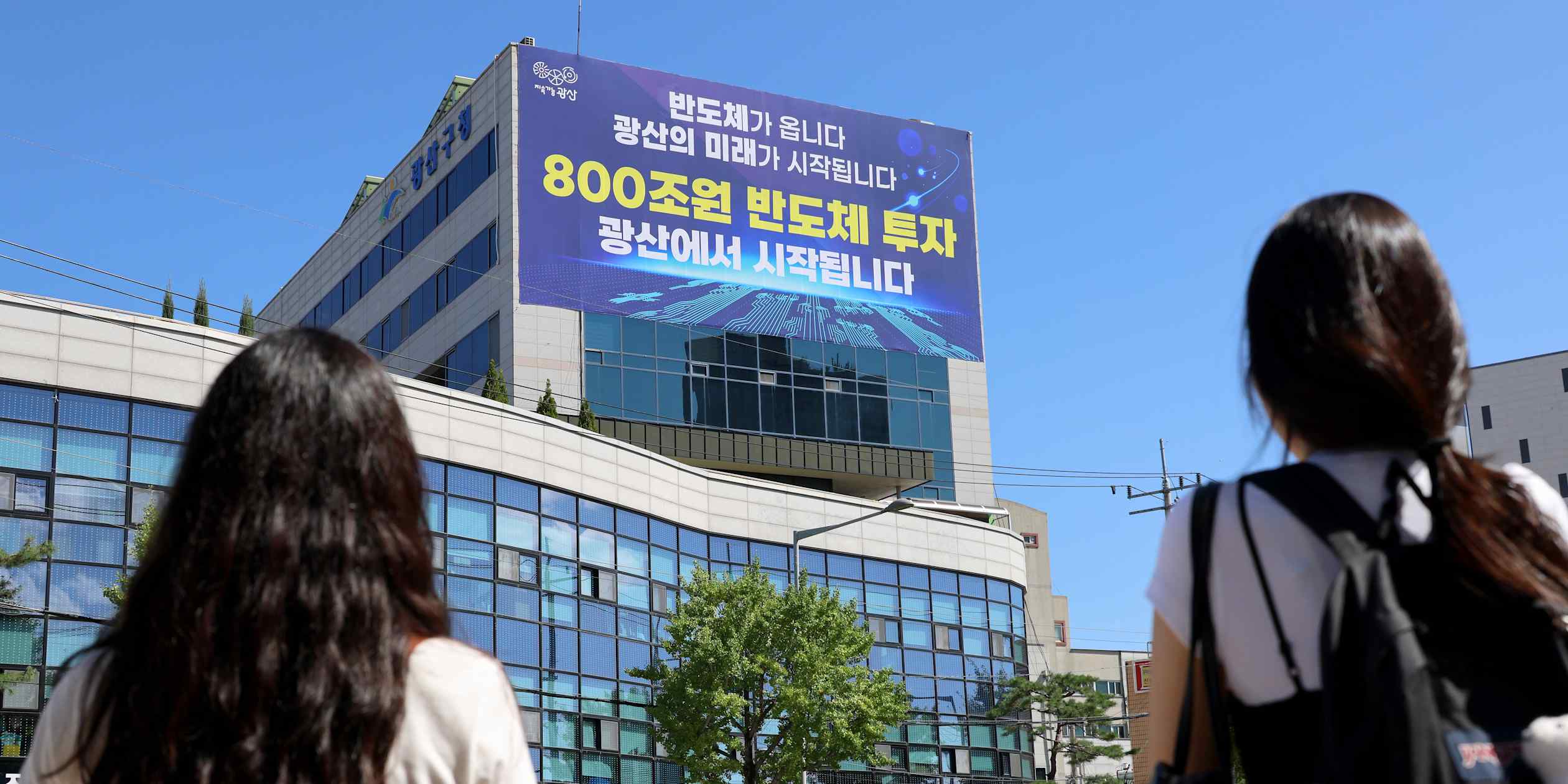
A man passes a disused building in the South Korean city of Gwangju, where signs of economic decline are impossible to miss, on Oct. 14.
在20世纪70年代和80年代韩国的经济繁荣时期,光州地区获得的经济支持远低于邻近的东南部地区。当时,统治韩国的军政府领导人(包括全斗焕和朴正熙)都来自东南部。韩国问题观察人士指出,这种资源分配的不均衡至今仍未改变:东南部的蔚山和釜山拥有丰富的工业资源,而光州却缺乏高薪就业机会。
Throughout South Korea's economic boom in the 1970s and 1980s, the Gwangju area received far less economic support than the neighboring southeast, which was the home region of both Chun Doo-hwan and Park Chung-hee, the right-wing military dictators who ruled throughout those decades. The uneven allocation of resources created a regional imbalance that remains today, Korea watchers say, with the southeastern cities of Ulsan and Busan rich in industry while Gwangju lacks sources of well-paying jobs. That history of resentment over the government in Seoul has fostered a sense of fierce mistrust of conservative leaders and the nation's business-minded elite.
这种对首尔政府的长期不满情绪,加剧了人们对保守派领导人及韩国商业精英的极度不信任。有观察人士担心,政府过度干预此类大型企业投资可能会导致资金分配不公。他们认为,更为谨慎的做法应该是让企业自主制定发展计划。
Observers have raised the possibility that having the government be closely involved in such large corporate investments could lead to less-than-optimal allocations of funds. A more prudent approach, they argue, would be to allow the companies room to chart their own courses. South Korean President Lee Jae Myung, center, and Samsung Electronics Chairman Lee Jae-yong, right, bow to each other as SK Group Chairman Chey Tae-won observes after a briefing announcing the government's three megaprojects, in Seoul on June 29.
韩国总统李在明(中)与三星电子会长李在镕(右)在首尔于6月29日举行的政府三大巨型项目简报会后,在SK集团会长崔泰源注视下相互鞠躬致意。
The wording of the government's megaproject announcement presented the investments by Samsung Electronics and SK Hynix as firm pledges.
政府巨型项目公告的措辞将三星电子和SK海力士的投资表述为坚定承诺。两家公司自身使用的表述则不那么具有承诺性,且未具体说明已同意投资的金额,引发了芯片制造商在巨型项目轮廓更加清晰之前不会敲定计划的猜测。
The firms themselves used less committal expressions and did not specify the amount they had agreed to invest, leading to speculation that the chipmakers were notg up until a clearer picture of the megaprojects has emerged. Samsung Electronics declined to comment on how the plan might proceed.
三星电子拒绝就该计划可能如何推进置评。SK海力士未回应置评请求。
SK Hynix did not respond to a request for comment. To ensure success, the Lee administration ought to clarify that it will play a supporting, rather than leading, role, according to Chung Un-chan, an economist and former prime minister.
据经济学家、前总理郑云灿表示,为确保成功,李在明政府应阐明将扮演支持而非主导角色。
A parcel delivery worker is pictured in Gwangju in November 2020.
2020年11月,一名包裹快递员在光州工作。居民称该城市长期被中央政府忽视。
Residents say the city has long been neglected by the central government. "Rather than interfering with the size or location of the companies' factories, it is desirable for the government to focus on providing new social overhead capital, such as power transmission networks, water supplies, data sharing and computing infrastructure," Chung told Nikkei Asia.
郑云灿对《日经亚洲》表示:“与其干预企业工厂的规模或选址,政府不如专注于提供新的社会间接资本,如输电网络、供水、数据共享和算力基础设施。”
The lingering lack of clarity has led to calls on the government for a more decisive explanation of how the ventures will come together.
持续缺乏清晰度引发了要求政府更明确解释这些项目将如何落地的呼声。
A coalition of civic groups released a statement on Oct. 12 complaining that, "Three months have passed but the government still has not released details about what advance assessment procedures they conducted and whether they adequately considered the risks of AI-related industries such as semiconductors."
一个市民团体联盟于10月12日发表声明抱怨称:“三个月过去了,政府仍未公布关于其进行了何种前期评估程序、以及是否充分考虑了半导体等AI相关产业风险的细节。”在美国和亚洲国家,数据中心建设已成为当地居民抗议的焦点,居民关注此类设施对环境、水资源和电力基础设施的影响。光州郊区将成为韩国三大新科技巨型项目的核心板块。
Data center development in the U.S. and countries in Asia has become a focus for protests by local residents about the impact of such facilities on the environment, water supplies and power infrastructure. The outskirts of Gwangju will be the centerpiece of one of South Korea's three new tech megaprojects. South Korea's Ministry of Trade, Industry and Resources said that Lee's megaprojects are not solely a bet on the highly cyclical chip industry.
韩国产业通商资源部表示,李(指韩国总统尹锡悦,下同)的巨型项目并非单纯押注高度周期性的芯片产业。“这些巨型项目并非一次性工程,而是一个通过民间投资持续发展和扩大国家战略产业的中长期项目,”该部一位官员称。
"The megaprojects are not a one-off undertaking, but a mid- to long-term project that continuously develops and expands the nation's strategic industries through private investment," an official at the ministry said. The decision to go all-in on semiconductors and other high-tech areas "makes strategic sense" at the moment, said Stefan Angrick, a senior economist and associate director with Moody's Analytics.
莫迪分析公司高级经济学家兼副总监斯特凡·安格里克表示,当下全力押注半导体及其他高科技领域“在战略上讲得通”。
"Identifying growth sectors right now is really hard because of this kind of K-shaped pattern," Angrick told Nikkei Asia.
安格里克对《日经亚洲》表示:“由于这种K型态势,目前要确定增长板块实属不易。”
"The only thing that's doing really well at the moment is AI ... but it's also true that the gains from those industries accrue to a very narrow segment of the economy, so [the megaprojects are] not going to make that K-shape go away," he added.
他补充道:“目前唯一表现真正强劲的是人工智能……但这些行业的收益仅惠及经济中极窄的一小部分,因此(巨型项目)无法消除这种K型分化。”如果有什么变化的话,一些人认为K型分化将变得更加明显。
If anything, some see the K-shape becoming more pronounced. A recent note by Morgan Stanley economist Kathleen Oh concluded, "[T]he state of the corporate sector and SMEs (small and medium-sized enterprises) appears to have worsened gradually."
摩根斯坦利经济学家凯瑟琳·吴近期在一份研报中总结称:“企业部门和中小企业的状况似乎在逐步恶化。”截至7月,中小企业逾期还款率触及十年高点,而大企业的相应比率涨幅相对温和。
The delinquency rate for SMEs hit its highest point in a decade as of July, with the corresponding rate for bigger corporations having shown a more modest increase. Oh recommended policymakers pay further heed to what she called "the lower K," referring to lower income households and wage-dependent earners.
吴建议决策者进一步重视她所谓的“下半个K”,即低收入家庭和依靠工资收入者。“考虑到财政资源充裕,弱势群体的脆弱性需要进一步监测并给予针对性支持,尤其是从财政方面,”吴写道。
"[T]he vulnerabilities of the weak segments need further monitoring and targeted support especially from the fiscal side given ample resources," according to Oh. Along with fostering general prosperity in the country, Lee hopes to bring resources and attention to a long-neglected part of the country.
除了促进国家整体繁荣,李在明还希望为这个长期被忽视的地区带来资源和关注。光州人口多年来持续萎缩,年轻人纷纷前往首尔圈寻求更好的就业机会。环绕光州的全罗南道有16个市郡被列为消灭风险地区,是全国九个道中最多的。光州一处废弃地块的混凝土墙上喷绘着“光州没有结束”的涂鸦。
Gwangju's population has been shrinking for years as young people relocate to the Seoul area seeking better job opportunities. South Jeolla, the province that surrounds the city, has 16 municipalities that have been designated as being at risk of depopulation, the most of any of the country's nine provinces. A concrete wall in an abandoned lot in Gwangju is graffitied with text that reads, "Gwangju is not over." Signs of economic decline are impossible to miss in Gwangju.
光州的经济衰退迹象显而易见。即便在市中心商业核心区,许多店铺也空置关门,主干道旁的地块同样闲置荒废。在一处废弃地块,垃圾堆后的混凝土墙上喷绘着“光州没有结束”的涂鸦,透露出这座城市某种围城心态。光州最广为人知的,是当代韩国历史上最悲惨事件之一的发生地。1980年,军事强人全斗焕调派军队血腥镇压该市抗议活动,造成162人死亡;非官方估计的死亡人数要高得多。
Even in the city's commercial core, many storefronts are vacant and lots on major thoroughfares sit empty. In a glimpse of the city's siege mindset, in one abandoned lot, behind piles of waste, a concrete wall is graffitied with text that reads, "Gwangju is not over." Gwangju is most widely known for being the site of one of the most tragic episodes in contemporary South Korean history. In 1980, military strongman Chun Doo-hwan dispatched troops to violently put down protests in the city, causing 162 deaths Unofficial estimates put the death toll much higher. The legacy of that incident is ubiquitous in Gwangju today.
那次事件的遗产如今在光州无处不在。纪念碑和纪念设施遍布全市,许多都标注着“5.18”字样,指代5月18日那场致命镇压的开始日期。
Memorials and commemorative facilities are scattered throughout the city, many featuring the numbers "5.18," referring to the May 18 start of the fatal clampdown. "When you go to Gwangju, it really feels like you're in a different country, compared to the cities of the southeast," said Sung Won Sohn, a business professor at Loyola-Marymount University who grew up in Gwangju.
“去光州时,真的感觉像到了另一个国家,与东南部城市截然不同,”在光州长大的洛约拉马利蒙特大学商学教授孙成元(Sung Won Sohn,音译)说。
A memorial to victims of a 1980 massacre in Gwangju.
一座纪念1980年光州大屠杀遇难者的纪念碑。该事件的遗产至今仍在城市上空挥之不去。
The legacy of the incident still looms large in the city. Sohn argues that the megaprojects stand to provide a needed boost to the small firms in and around Gwangju.
孙成元认为,这些大型项目有望为光州及周边的中小企业提供急需的助力。“主导那些大型项目的企业都需要与当地供应商合作,都会在当地餐馆用餐、游览当地公园,”孙成元说。
"The companies leading those big ventures will all need to work with local suppliers, they'll all eat in local restaurants, visit local parks," Sohn said. At SOS Lab, CEO Jeong insists Gwangju is no backwater.
在 SOS Lab,首席执行官 Jeong 坚称光州绝不是一个偏僻的地区。这座城市拥有多所备受推崇的科技大学,韩国两大汽车制造商——现代汽车(Hyundai)和起亚汽车(Kia)也在那里设有工厂。
The city is home to a few well-regarded technical universities, and South Korea's two main automakers, Hyundai and Kia, operate factories there. He maintains that the goal of his firm, and of South Korean firms generally, is to sell to the world.
他认为,他的公司以及韩国企业的目标都是将产品销往全球。至于公司在韩国的选址问题,其实没什么可纠结的;尤其是考虑到光州距离首尔仅两小时车程。
Where they set up shop in the country is nothing to agonize over, he said, especially since Gwangju is only about two hours from Seoul by train. "Only Koreans think Gwangju is far from Seoul; anyone who is from another country would consider it close," Jeong said.
Jeong 说:“只有韩国人才认为光州离首尔很远;来自其他国家的人反而会认为光州离首尔很近。你可以在光州吃早餐,在首尔吃午餐,然后又在光州吃晚餐。”
"You can have breakfast in Gwangju, lunch in Seoul, then dinner in Gwangju."