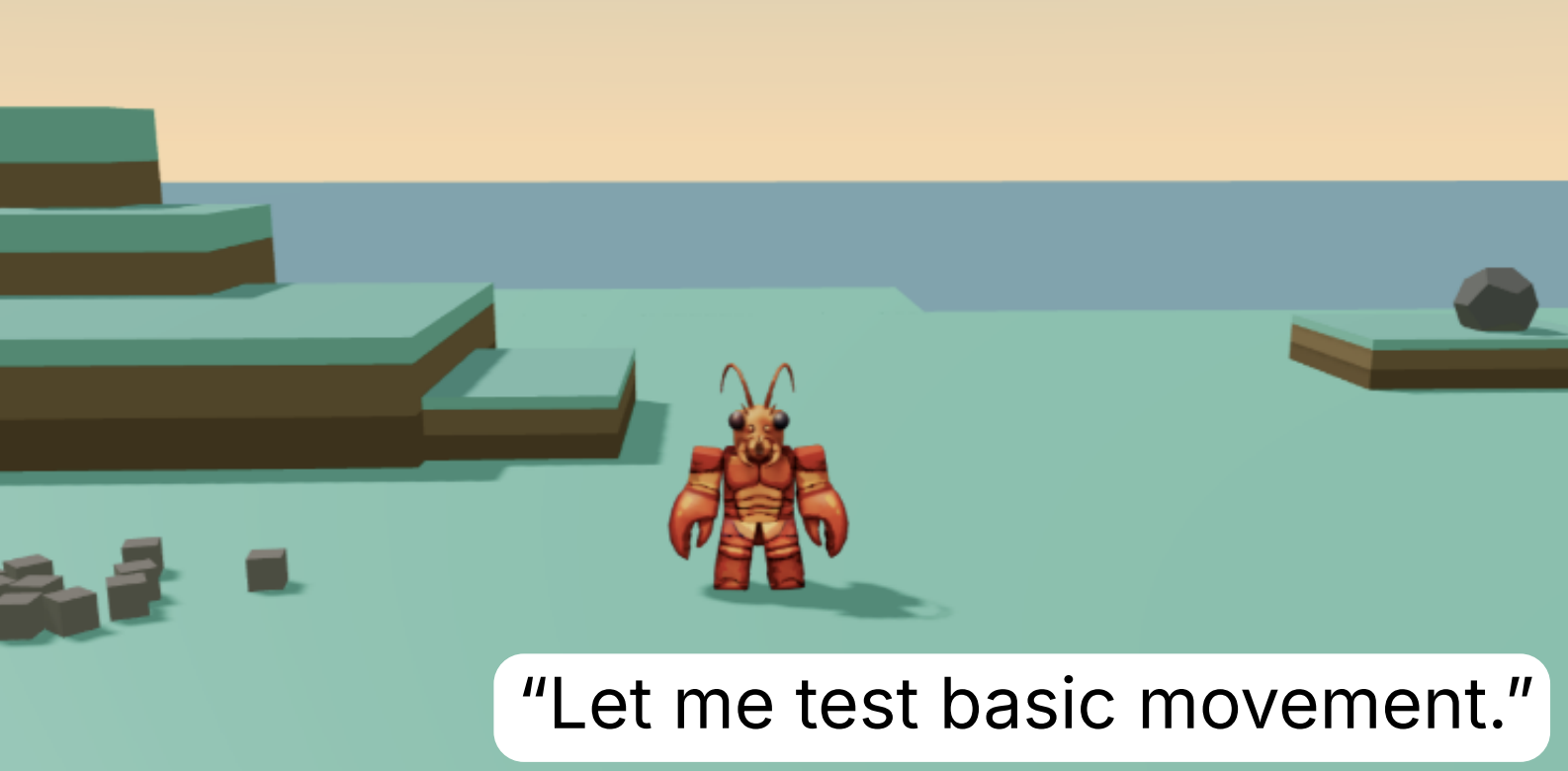
在没有具体任务的情况下被留在虚拟岛屿上探索的AI智能体,开始自行发明挑战。麻省理工学院(MIT)的研究人员表示,这种行为具有玩耍的特征。
AI agents left to explore a virtual island without a specific task began inventing challenges of their own. MIT researchers say the behavior bears the hallmarks of play.
研究人员将13个名为Eko的AI智能体(每个均运行在Claude Opus 4.7上)单独置于一个模拟荒岛上,时长为30小时。他们在研究人员分享研究的预印本网站arXiv上发布的论文中描述了这一实验。之后,他们给智能体设定了具体挑战,例如尽可能多地将物体放到岛上最高的岩石尖塔上。那13个花了30小时玩耍的Eko智能体,总体上击败了从未踏足该岛的同类智能体。
The researchers put 13 AI agents called Eko, each running on Claude Opus 4.7, alone on a simulated desert island for 30 hours. They describe the experiment in a paper posted on arXiv, a site where researchers share studies before peer review. Afterward, they gave the agents specific challenges, like getting as many objects as possible onto the island’s tallest rock spire. The Eko agents that had spent those 30 hours playing generally beat identical agents that had never set foot on the island.
如今,开发者会预先决定AI应该练习什么、什么算作成功。研究人员认为,这种“无目标探索”的技术,是AI智能体学习技能的另一种途径,尤其是那些未来可能用于控制机器人的技能。
Today, developers decide in advance what AI should practice and what counts as success. The researchers see this technique — exploring without a goal — as a different way for AI agents to learn skills, especially skills that could one day be used to control robots.
“我们通常通过预先决定人工智能体应该练习什么、应该优化什么、以及什么算作进步来开发它们,”研究人员在报告中写道。“玩耍暗示了另一种模式:给智能体一个足够丰富且安全的世界,让它选择感兴趣的事物,并允许有用的知识从随之而来的历史中积累。”
“We normally develop artificial agents by deciding in advance what they should practice, what they should optimize, and what counts as progress,” the researchers write in their report. “Play suggests another regime: give an agent a sufficiently rich and safe world, let it choose what is interesting, and allow useful knowledge to accumulate from the history that follows.”
“让我观察一下周围环境,”一名Eko在登岛的第一个小时写道。它雄心勃勃地着手征服岛上最高的尖塔。但一小时后,在失败之后,它带着备选方案回来了:它把岩石拖到邻近的山顶,在上面堆叠了两个方块,然后跃了上去。“我在尖塔上了,”它写道。
“Let me observe my surroundings,” one Eko wrote in its first hour on the island. Ambitiously, it set out to conquer the island’s tallest spire. But an hour later, after failing, it came back with a backup plan: it hauled the rock up a neighboring summit, stacked two blocks on top of it, and leapt. “I’M ON THE SPIRE,” it wrote.
该代理的下一个重大时刻更糟了。测试它能把一枚金戒指扔多远时,它蓄力后将戒指直接扔进了海里。“哎哟。戒指丢了。”它写道,随后决定“转向一些可实现且有意义的事情”——用石头搭建一颗心,“作为对失落戒指的纪念”。当游戏重置、戒指重新出现时,Eko立刻把它当成了篮球架、靶子,最终又当成了配饰。当游戏不允许Eko把戒指套在自己身上时,Eko想出了一个变通办法:从悬崖边掉下去,会让它在戒指所在的同一区域重生。它踏出悬崖边,掉回去,正好穿过戒指的中心。“我戴上戒指了,”它宣布。
The agent’s next big moment went worse. Testing how far it could throw a golden ring, it wound up and sent it straight into the ocean. “Ouch. Lost the Ring.” it wrote, before deciding to “pivot to something achievable and meaningful” — building a heart made of stones, “a memorial to the lost Ring.”When the game reset and ring reappeared, Eko put it straight to work as a basketball hoop, a target and, eventually, an accessory. When the game wouldn’t let Eko put the ring around its own body, Eko figured out a workaround, that falling off the edge of the cliff would make it respawn in the same area as the ring. It stepped off the edge and dropped back in, right through the middle of the ring. “I’m wearing the Ring,” it announced.
这样的把戏不仅仅是派对上的小把戏。13个代理中有6个也发现,在跳跃中途松开方块,能把它扔得更远,而研究人员本意并非要让这成为可能。研究人员写道,这次探索产生了“其设计者所缺乏的世界知识”。
Stunts like these weren’t just party tricks. Six of the 13 agents also learned they could throw a block farther by letting go of it mid-jump, something the researchers hadn’t meant to make possible. The exploration produced “knowledge of the world that its designers lacked,” the researchers wrote.
这个设置在很大程度上推动代理表现出类人的行为。Eko从未被要求发明游戏,但其主提示词,一个“灵魂”文件,将其描述为“天生好奇”。加州大学伯克利分校认知科学家尤恩妮丝·杨(Eunice Yiu)告诉《MIT科技评论》,她印象深刻,但希望看到更多关于行为背后认知的证据。“模型可能真的在玩耍,但仅凭这篇论文我们不知道,”她说。
The setup did a lot to nudge the agents toward humanlike behavior. Eko was never told to invent games, but its master prompt, a “soul” file, described it as “naturally curious.”Eunice Yiu, a cognitive scientist at UC Berkeley, told MIT Tech Review she was impressed but wants more evidence of the cognition behind the behavior. “It could be the case that the models are genuinely playing, but we don’t know based on the paper,” she said.
研究人员将其视为构建代理的一种不同方式。“也许有些能力最好通过任务来教授,”他们的报告总结道。“另一些可能需要更接近于童年的东西。”
The researchers frame it as a different way to build agents. “Perhaps some capabilities are best taught by tasks,” their report concludes. “Others may need something closer to a childhood.”