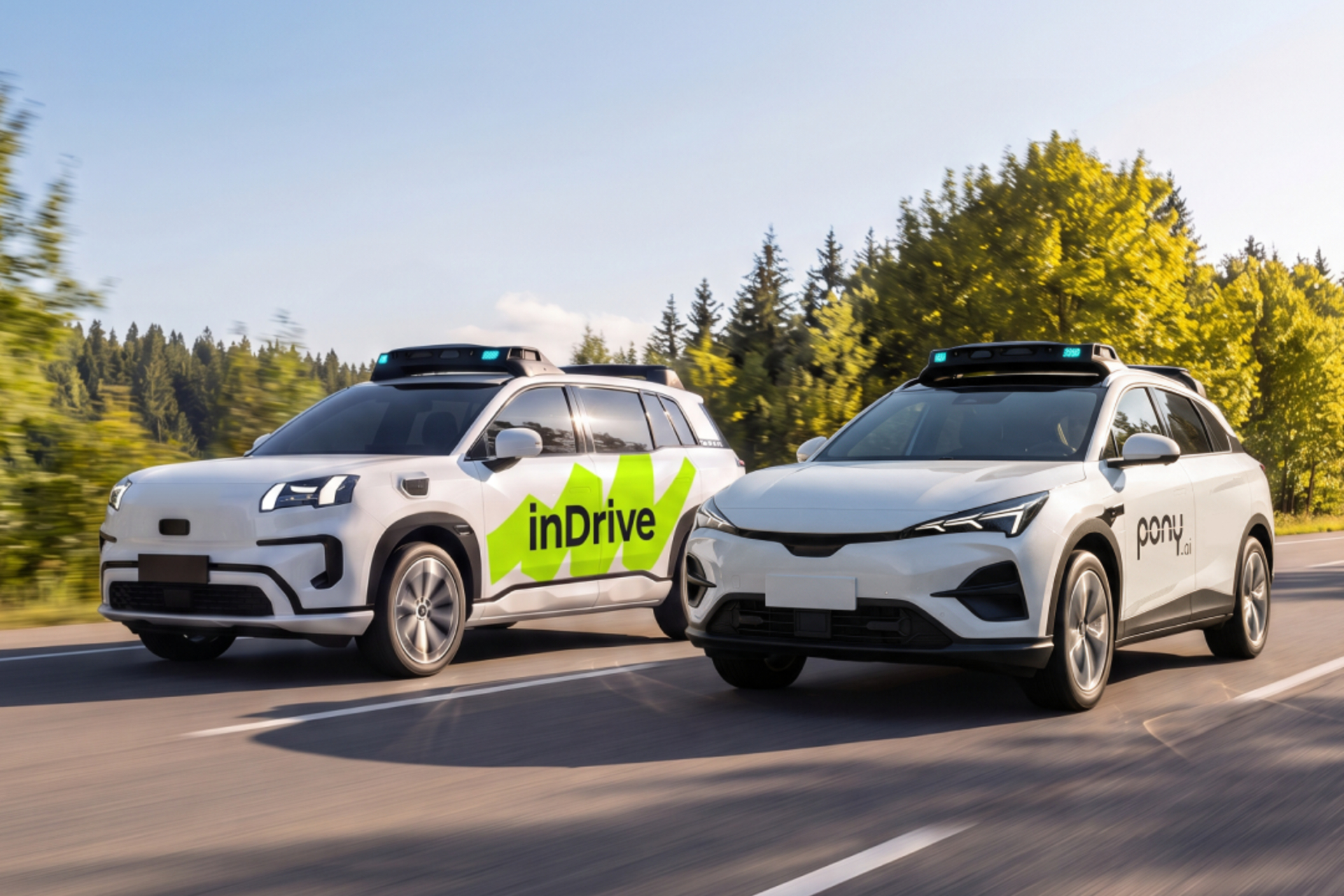
拼驾出行公司 inDrive,以允许乘客与司机自行议价而闻名,正与中国自动驾驶公司小马智行以及英伟达合作,计划于2027年开始在哈萨克斯坦测试无人驾驶出租车。
Ride-hailing company inDrive, known for letting passengers and drivers negotiate fares, is working with Chinese autonomous driving firm Pony.ai and Nvidia to begin testing robotaxis in Kazakhstan in 2027.
该公司周五表示,已签署谅解备忘录,探索将 Pony.ai 的无人驾驶出租车引入 inDrive 平台——这反映了自动驾驶技术在美国和中国之外日益增长的关注度。
The companies said Friday that they had signed a memorandum of understanding to explore bringing Pony.ai’s robotaxis to inDrive’s platform — a reflection of the growing interest in self-driving technology beyond the U.S. and China.
inDrive 技术总监 Yuri Misnik 在接受 TechCrunch 采访时表示,测试将在哈萨克斯坦首都阿斯塔纳于2027年上半年开始。初期测试将配备安全操作员,最终目标是实现完全无人驾驶的出行服务。
Testing will begin in Kazakhstan’s capital, Astana, in the first half of 2027, inDrive CTO Yuri Misnik told TechCrunch. The tests will initially involve a safety operator, with fully driverless rides as the eventual goal.
根据拟议方案,Pony.ai 将提供其 Gen-7 无人驾驶出租车,由 inDrive 通过其网约车应用在哈萨克斯坦运营;英伟达则提供 AI 技术,包括其 Hyperion 平台和 Halos 安全系统。
Under the proposed plan, Pony.ai would provide its Gen-7 robotaxis, which inDrive would offer through its ride-hailing app and operate in Kazakhstan. Nvidia, on the other hand, would supply the AI technology, including its Hyperion platform and Halos safety system.
此举发生在网约车公司纷纷进军无人驾驶出租车的背景下。本月早些时候,Uber 宣布计划在伦敦测试 Pony.ai 的无人驾驶出租车,该公司还与英国初创企业 Wayve 合作,提供有监督的自动驾驶出行服务。Uber 还在其他市场与多家无人驾驶出租车公司合作,包括中东地区。
The move comes as ride-hailing companies expand their push into robotaxis. Earlier this month, Uber announced plans to test Pony.ai’s robotaxis in London, where it has also started offering supervised autonomous rides with British startup Wayve, an investor-backed partner. Uber is also working with multiple robotaxi companies in other markets, including the Middle East.
inDrive 以经济实惠的出行服务为核心商业模式,正在探索一个 Uber 等竞争对手已经积极布局的市场,希望将类似的定位引入自动驾驶出行领域。
inDrive, which has built its business around affordable rides, is looking to bring a similar focus to autonomous ride-hailing as it explores a market where Uber and other rivals are already making moves.
“我们的设计理念是尽量减少成本投入,”米斯尼克(Misnik)表示。“我们与不同市场的合作伙伴合作,将他们的专业技能与我们的技术相结合,以提供更好的客户体验。”英伟达(Nvidia)称,其Hyperion平台可以通过为相关公司提供现成的传感器和计算技术基础,降低开发机器人出租车的成本——无需公司自行构建和整合所有系统。该公司还提供了Alpamayo模型及相关工具,用于生成模拟数据,并在不同驾驶场景下测试自动驾驶系统。
“Our approach is capital-light by design,” said Misnik. “We work with a range of partners in different markets, combining their expertise with ours to deliver a better customer experience.”Nvidia says its Hyperion platform could lower the cost of developing robotaxis by giving companies a ready-made foundation of sensors and computing technology, rather than requiring them to build and integrate everything themselves. The company also offers its Alpamayo model and tools to generate synthetic data and test autonomous driving systems across different driving scenarios.
“在那些打车服务价格相对较低、自动驾驶服务需要依靠成本优势来竞争的市场中,这些成本节约尤为重要,”英伟达汽车业务副总裁阿里·卡尼(Ali Kani)对TechCrunch说道。
“Those savings are particularly relevant in emerging markets, where ride-hailing is already relatively affordable and autonomous services need to compete on cost,” Ali Kani, Nvidia’s vice president of automotive, told TechCrunch.
这一宣布恰逢英伟达首席执行官黄仁勋(Jensen Huang)于周五首次访问哈萨克斯坦之际。
The announcement coincides with Nvidia CEO Jensen Huang’s first visit to Kazakhstan on Friday.
哈萨克斯坦的这一合作计划也将有助于Pony.ai进一步拓展其业务范围(使其业务不再局限于中国)。该公司计划到2026年底在全球20多个城市部署超过3,500辆机器人出租车,而目前其车队规模仅为1,975辆。
The Kazakhstan proposal would also add to Pony.ai’s ongoing push beyond China. The company aims to have more than 3,500 robotaxis operating in over 20 cities worldwide by the end of 2026, up from a fleet of 1,975 vehicles at the end of June.
上个月,哈萨克斯坦宣布计划在2027年推出自动驾驶出租车服务,初步试验将在阿斯塔纳(Astana)及其他两座城市进行。该国还制定了相关法规,允许自动驾驶车辆在特定公共道路上进行测试。
Last month, Kazakhstan announced plans to launch autonomous taxi services in 2027, with initial trials planned in Astana and two other cities. It has also introduced rules for autonomous vehicles to be tested on certain public roads.
阿斯塔纳严酷的冬季环境可能使其成为测试机器人出租车的理想场所。这座拥有约170万人口的城市会经历长达数月的冰雪天气,这对自动驾驶系统来说是一个巨大的挑战。
Astana’s harsh winters could make it a useful testing ground for robotaxis. The city, with a population of around 1.7 million, faces months of snow and ice, posing challenges for autonomous driving systems.
“在这里开展测试将为我们在严酷的冬季条件下评估自动驾驶技术提供重要机会,”inDrive的创始人兼首席执行官Arsen Tomsky表示。“如果在阿斯塔纳取得成功,我们将能够为将自动驾驶技术推广到其他面临类似挑战的地区提供宝贵的经验。”哈萨克斯坦并非inDrive探索机器人出租车服务的唯一市场。去年12月,该公司与沙特阿拉伯的AI Driver公司签署了合作协议,计划部署由中国自动驾驶公司WeRide开发的自动驾驶车辆,首站试点城市为利雅得。双方原定在2026年上半年启动试点项目,但目前尚不清楚测试是否已经开始。
“Launching here will provide an important opportunity to evaluate autonomous driving technology in challenging winter conditions,” inDrive founder and CEO Arsen Tomsky said. “Success in Astana could offer valuable insights for expanding autonomous mobility to other locations facing similar challenges.”Kazakhstan is not the only market where inDrive is exploring robotaxis. In December, the company signed a separate agreement with Saudi Arabia’s AI Driver to explore deploying autonomous vehicles powered by Chinese self-driving firm WeRide, starting with Riyadh. The companies had targeted a pilot in the first half of 2026, though it remains unclear whether testing has begun.
“我们还在考虑其他适合未来推广的市场,”Misnik补充道。“在我们看来,成功开展业务的关键在于拥有一个支持合作、有利于安全、可持续道路测试的监管环境。”inDrive目前已在47个国家的1200多个城市开展业务,并已将其业务范围扩展到送餐服务、城际交通以及金融服务领域。
“We are also looking at a number of other markets for future deployments,” said Misnik. “One of the main requisites for successful launch in our view is a favorable and collaborative regulatory environment to facilitate safe and sustainable testing on the roads.” inDrive operates in more than 1,200 cities across 47 countries. The company has also expanded beyond ride-hailing into delivery, intercity transportation, and financial services.