这名21岁的年轻人名叫阿里夫(Arif),他在今年夏天试图非法越境进入西班牙的休达(Ceuta)时不幸身亡。他来自摩洛哥的姆迪克(M’diq)镇,该镇距离休达不到30公里(19英里)。阿里夫被安葬在休达的西迪·恩巴雷克(Sidi Embarek)穆斯林公墓;在超过7万名非法移民试图越境后,约有90名遇难者的遗体被安葬在这里。
Said Arif, a 21-year-old who died in this summer’s mass crossing into the Spanish exclave of Ceuta, hailed from M’diq, a Moroccan town less than 30 kilometers (19 miles) away. He was buried in Ceuta’s Sidi Embarek Muslim cemetery, one of around 90 people laid to rest there after more than 70,000 people crossed the border.
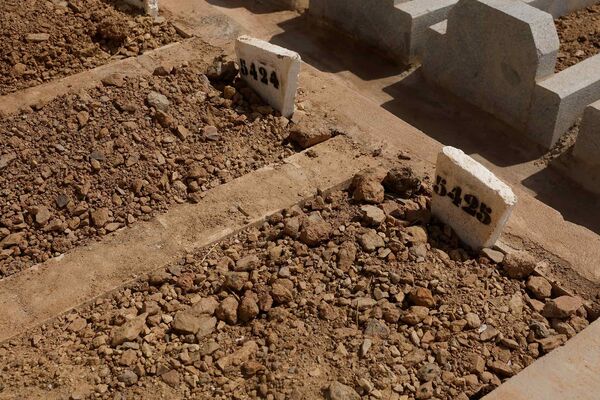
这座公墓俯瞰着地中海。许多移民在7月30日和31日那天溺亡在海中,他们的遗体被冲上岸后被包裹起来,并以面朝麦加的方向安葬。那些身份信息不明的遇难者被安葬在标有编号的墓碑旁。截至9月底,公墓管理人员表示只有9具遗体的身份得到了确认,其余81具遗体的身份仍未查明。
The cemetery overlooks the Mediterranean Sea, where they drowned on July 30 and 31. The dead were washed, shrouded and positioned on their right side, facing Mecca. Those without confirmed names were assigned numbered headstones. By late September the cemetery’s manager said only nine bodies had been identified. The other 81 graves still remain nameless.
这些数字并不意味着这些遇难者被遗弃了——每个人都被安葬在独立的墓穴中,每个编号都对应着相关的法医记录(包括DNA信息和指纹数据)。这些措施确保了这些遇难者的身份不会永远保持匿名状态;不过能否最终查明他们的真实姓名,还取决于后续的调查工作。而后续的调查进程在很大程度上仍受到边境政策的制约。
Those numbers aren’t a sign that the dead were discarded. Each person was given an individual grave, and each number links a grave to forensic records, including DNA and fingerprints. These steps ensure that the anonymity of a number need not be permanent, but whether they lead to a name depends on what comes next. And much of what comes next is still shaped by the border.
边境政策通常都是围绕“活着的人”来制定的:谁可以入境、谁必须离开、如何阻止非法越境行为等等。然而,每条主要的移民路线都存在着一个“死后”的维度(即移民死亡后的处理方式)。从英吉利海峡到撒哈拉沙漠,再到美墨边境,一个人死亡的地方、遗体被发现的地方以及其家属寻找遗体的地方,往往都隶属于不同的管辖机构。
Border policy is usually discussed in terms of the living: who may enter, who must leave, how irregular crossing can be deterred. Yet every major migration route also has a largely invisible posthumous dimension. From the English Channel to the Sahara to the US-Mexico frontier, the place where a person dies, the place where their body is found and the place where their family is searching often fall under different authorities.
有时候,没有任何一个具体的机构能够负责协调这些复杂的流程。来自休达以及其他全球移民事件的证据表明:即使是一些直接接壤的国家,也几乎没有建立起真正完善的系统来妥善处理这些遇难者的遗体,并帮助家属完成他们的丧亲之痛。
Sometimes no individual authority is clearly responsible for connecting the pieces. Evidence from Ceuta and from other tragedies on global migration routes shows that few nations, even those that directly share borders, have established truly integrated systems that respect the dead and allow families to find closure.
国际移民组织(IOM)失踪移民项目的数据显示,截至2026年4月,自2014年以来已记录超过8.2万名死者或失踪者,波及估计34万名家庭成员。然而,统计数字并不等于确认身份。一项针对2020年和2021年通往欧洲移民路线的研究发现,海上失踪者中仅约7%最终被寻获,且不足半数的打捞遗体得以确认身份。
The International Organization for Migration’s Missing Migrants Project has recorded more than 82,000 dead or missing people since 2014, as of April 2026, affecting an estimated 340,000 family members. Counting, though, is not naming. A study of migration routes to Europe in 2020 and 2021 found that only about 7% of people reported missing at sea were ever found, and that fewer than half of bodies recovered were identified.
换言之,许多人在旅途中首次失踪,随后在遗体被打捞却始终无法与家人团聚时再次“失踪”。“人们不应失踪两次”,欧洲委员会2024年的一份报告指出,遗体应被单独安葬在已登记、已标注的墓穴中,以便日后定位和辨识。
Many people, in other words, go missing first on the journey, then again later on, when their remains are recovered but never reconnected to a family. “People shall not go missing twice,” a 2024 Council of Europe report said, and should be buried individually in registered and mapped graves, to help with location and identification at a later date.
西迪·恩巴雷克墓地的编号墓穴表明,这一第一步已经落实。若止步于此,便是失败。
Sidi Embarek’s numbered graves show that this first step has taken place. The failure would be to stop there.
理想情况下,每当一名移民在试图跨越边境时死亡,应依次完成三个步骤:遗体被寻获、身份被确认、遗体被送返故乡。
Whenever a migrant dies trying to cross a border, three steps ideally follow: Their body is found, they are named, and then their body is brought home.
海上遇难后,遗体冲上岸的地点决定了由哪个国家负责验尸以及调查如何展开。塞乌塔渡海遇难者在边境两侧均被统计,但两边的数字对不上。到8月7日,塞乌塔法医鉴定所已认证完成82具遗体的尸检,但后来在西迪·恩巴雷克安葬的却有90人。该所所长将差异部分归因于不确定打捞上来的每具遗体是否都属于同一次渡海。跨国非营利组织“Caminando Fronteras”也在摩洛哥停尸房统计了死者人数,认为总遇难人数超过140人。
After a death at sea, where a body comes ashore determines which state examines it and how the investigation proceeds. The dead of the Ceuta crossing were counted on both sides of the frontier, yet the counts didn’t match. By Aug. 7, Ceuta’s forensic institute had certified 82 autopsies, but 90 people were later buried at Sidi Embarek. The institute’s director attributed the discrepancies partly to uncertainty over whether every body recovered belonged to the same crossing. Caminando Fronteras, a cross-border nonprofit group, also counted the dead in Moroccan morgues, putting the overall toll at more than 140.
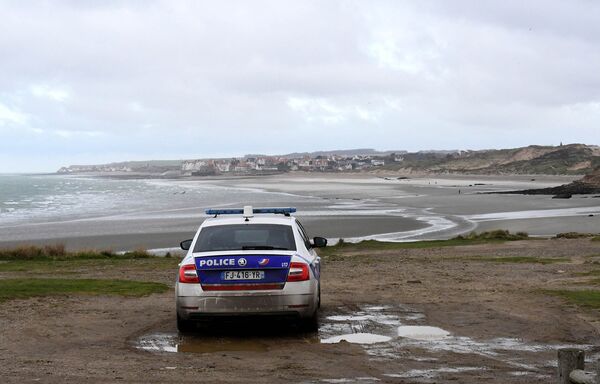
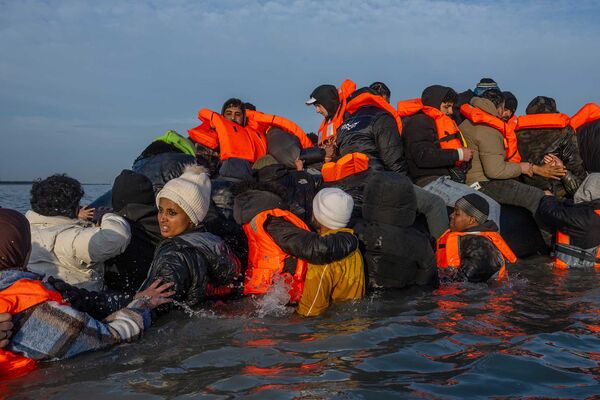
国界以其他方式将死者与生者分隔。2021年11月23日晚,一艘小船在英吉利海峡的英国水域沉没,船上乘客向英国方面呼救。但27具遗体后来在法国水域被法国当局发现。另有四人据信已死亡但遗体未被寻获。由于遗体被运往法国,英国政府称这“不允许”英国验尸官举行死因研讯。近两年后,英国设立了一个非法定调查。法国方面启动了刑事调查,但司法保密规则导致英国调查无法获取其证据,包括尸检报告。
Borders divide the dead from the living in other ways too. When a small boat sank in UK waters in the English Channel on the night of Nov. 23, 2021, its passengers called for help from the British. But 27 bodies were later found in French waters, by French authorities. Four more people were believed to have died without having been found. Because the bodies were recovered to France, the UK government said this “does not allow” for a British coroner’s inquest. Almost two years later, it set up a nonstatutory inquiry instead. France opened a criminal investigation, but rules on judicial secrecy meant the British inquiry couldn’t see its evidence, including postmortem examinations.
法医团队需要死者的DNA、指纹、衣物及其他数据;从生者那里,他们需要家属DNA、照片和病史。移民可能将他们隔开数千公里和多个司法管辖区。对于偷渡进入休达的摩洛哥人来说,距离虽短,但障碍真实存在。西班牙民卫队于8月4日开设了一个供亲属联络的办公室,首日便收到160封电子邮件。但大多数摩洛哥人进入休达需要签证,许多父母在邻近的夫尼德克等待了数天等消息;偷渡发生两周多后,一些家庭仍毫无音讯。有助于确认身份的信息可能在边境这一边,而能提供匹配信息的家属却在另一边。
Forensic teams need DNA, fingerprints, clothing and other data from the dead; from the living they need family DNA, photographs and medical histories. Migration can place thousands of kilometers and several jurisdictions between them. For Moroccans crossing into Ceuta, the distances are short but the barriers are real. Spain’s Guardia Civil opened an office for relatives on Aug. 4 and received 160 emails on its first day. But most Moroccans need a visa to actually enter Ceuta, and many parents waited for days in neighboring Fnideq for news; more than two weeks after the crossing, some families still had none. Information that could help identify a body may be on one side of the frontier, while the family able to supply the match is on the other.
记者马埃尔·加利松今年向法国议会调查委员会表示,根据他的研究,自1999年以来,法英边境已发生528起死亡事件,并指出在从国外亲属处获取参考DNA方面“不存在协调机制”。叙利亚难民穆斯塔法·巴克罗于2024年底在一次船难中失踪。他的家人无力承担邮寄DNA采样套件的60欧元(约合67美元)费用,导致鉴定工作中止。直到2026年1月他才被确认身份,安葬在加莱附近滨海布洛涅的一座公墓里。
Journalist Maël Galisson told a French parliamentary inquiry this year that according to his research, 528 deaths had occurred on the France-UK border since 1999, adding that there was “no coordination” for obtaining reference DNA from relatives abroad. Mustafa Bakro, a Syrian refugee, went missing in a shipwreck in late 2024. His family could not pay the €60 ($67) to mail a DNA kit, so the work stopped. He was identified only in January 2026 and lies in a cemetery in Boulogne-sur-Mer, near Calais.
当两半拼合在一起时,名字随之而来。2023年6月皮洛斯沉船事故发生后,希腊警方法医专家确认了82具打捞上来的遗体中的74具,因为数百个家庭提供了DNA样本,且已有系统可接收这些样本。而在其他地方,进展仍取决于个人努力。在意大利,直到2025年12月,在一位私人捐赠者的帮助下,2013年兰佩杜萨沉船事故的一名遇难者才被掘出以进行身份确认。
Where the two halves are brought together, names follow. After the Pylos shipwreck of June 2023, Greek police forensic specialists identified 74 of the 82 recovered bodies because hundreds of families provided DNA and a system existed to receive it. Elsewhere, progress still depends on individual efforts. In Italy it took until December 2025, and help from a private donor, for a victim of the 2013 Lampedusa shipwreck to be exhumed for identification.
2023年库特罗沉船事故造成至少94人死亡,一名3个月大的婴儿以代码“KR16 M0”被安葬。身份确认一度困难,但最终他被确认为穆罕默德·西纳·侯赛尼。直到今年2月,在两名记者的倡议下,他的墓地才立起了刻有他名字的墓碑。
After the Cutro sinking of 2023, in which at least 94 people died, a 3-month-old baby was buried under the code KR16 M0. Identification was problematic, but he was eventually named as Mohamed Sina Hoseyni. Only this February, on the initiative of two journalists, did his grave receive a headstone bearing his name.
多年来,大海将遗体冲刷到突尼斯沿海城镇扎尔济斯。其中许多人来自撒哈拉以南非洲、亚洲及其他地区,他们的家人远在天边。当地渔民沙姆塞丁·马尔祖格将无人认领的遗体安葬在一座无名移民公墓,2021年,艺术家拉希德·科赖希开设了“非洲花园”,为大海归还却无人能叫出名字的人提供一处体面的安息之所。
For years the sea carried bodies to the Tunisian coastal town of Zarzis. Many of them were people from sub-Saharan Africa, Asia and elsewhere, whose families were far away. A local fisherman, Chamseddine Marzoug, buried the unclaimed in a cemetery for nameless migrants, and in 2021 the artist Rachid Koraichi opened the Jardin d’Afrique, a dignified resting place for those the sea returned but no one could name.
2022年9月,一艘载有18名扎尔济斯本地人的船只失踪。随着遗体冲上岸,在进行任何DNA检测确认身份前,有四具遗体被安葬在“非洲花园”。家属抗议了数日,这四具遗体被掘出;DNA检测显示其中三人曾乘坐那艘失踪的船只。几周后,一些家属开始自行挖掘坟墓,突然意识到公墓里那些“无名移民”可能就是他们自己的儿子、女儿和邻居。
In September 2022 a boat carrying 18 people from Zarzis itself disappeared. As bodies washed ashore, four were buried in the Jardin d’Afrique before any DNA tests had established who they were. Families protested for days, and the four were exhumed; DNA tests showed that three of them had been aboard the missing boat. Weeks later, some families began digging up graves themselves, suddenly aware that the “unknown migrants” in the cemetery might be their own sons, daughters and neighbors.
每一个无名之人都以这种确切的方式属于某个人。在扎尔齐斯,法医面临的问题并无不同;只是寻找亲人的家属离得足够近,才将这一问题推到了公众视野中。正如法医病理学家克里斯蒂娜·卡塔内奥所言:“死者需要被确认身份。不是为了死者——他们已经失去了——而是为了生者。” 克兰斯顿调查委员会对 2021 年 11 月英吉利海峡沉船事件的调查证实,英国方面成功确认了 27 具打捞上来的遗体中 26 具的身份,这仍是同类单一事件中最严重的一起。
Everybody without a name belongs to someone in exactly this way. In Zarzis the forensic problem was no different; the searching families were simply close enough to force the question into public view. “The dead need to be identified,” as the forensic pathologist Cristina Cattaneo has put it. “Not for the dead — they are lost — but for the living.”The Cranston Inquiry into the November 2021 English Channel sinking confirmed that the UK was able to establish the identities of 26 of the 27 bodies recovered from what remains the worst single incident of its kind.
2021 年 12 月,库尔德斯坦地区政府安排将其中 16 具遗体送返故土。他们回家时,不再是欧洲边境灾难中无名的受害者,而是回归特定家庭的具体个体。
In December 2021 the Kurdistan Regional Government arranged the repatriation of 16 of them. They went home not as unidentified victims of a European border disaster, but as specific individuals returning to particular families.
在休达,那最后的送返尚未发生。即便是已确认身份的 9 人,也被安葬在当地;因文件和核实方面的分歧,送返工作未能进行。《自由资讯报》报道称,安葬者中唯一的女性萨尔玛的母亲,无法进入休达参加女儿的葬礼。
In Ceuta, that last crossing has yet to happen. Even the nine people who were identified were buried in the city; disagreement over documentation and verification meant that repatriation did not take place. InfoLibre reported that the mother of Salma, the only woman among those interred, could not enter Ceuta for her daughter’s funeral.
在这三个环节——打捞、身份确认、团聚——中,国界可能将本应互动的系统、本应沟通的数据库、本应往来的人员隔离开来。欧盟《移民与庇护公约》于 6 月开始生效,欧洲已为活人建立了复杂的系统。修订后的“欧洲指纹识别系统”自 6 岁起采集获救上岸者的生物特征数据。然而,欧洲尚无同等系统,用于将死者的指纹或 DNA 与寻找他们的家属进行比对。
Across these three moments — recovery, identification, reunification — borders can separate systems that need to interact, databases that need to communicate and people who need to travel. Europe has built sophisticated systems for the living under the EU’s Pact on Migration and Asylum, which began to apply in June. The recast Eurodac system collects biometric data from people disembarked after rescue at sea from the age of 6. There is no equivalent European system for matching the fingerprints or DNA of the dead with the families looking for them.
欧洲委员会第2569号决议规定了所需措施,包括在身份识别方面开展跨境合作、永久标记坟墓以及加快为家属签发签证。但是,正如2025年为欧地中海权利组织进行的一项研究所指出的,“没有任何具有约束力的国家或国际义务要求当局寻找失踪移民”。一些国家已经开始采取行动,但仍有很长的路要走。西班牙监察人已建议建立一个针对无名遗骸的国家法医数据库,而意大利今年提交的一项法案也将建立一个此类数据库。
Council of Europe Resolution 2569 sets out what is needed, including cross-border cooperation on identification, permanently marked graves and faster issuing of visas for families. But, as a 2025 study for EuroMed Rights noted, “there are no binding national or international obligations requiring authorities to search for missing migrants.”Some countries are beginning to act, though there remains some way to go. Spain’s Ombudsman has recommended a national forensic database for unidentified remains, and in Italy a bill tabled this year would create one.
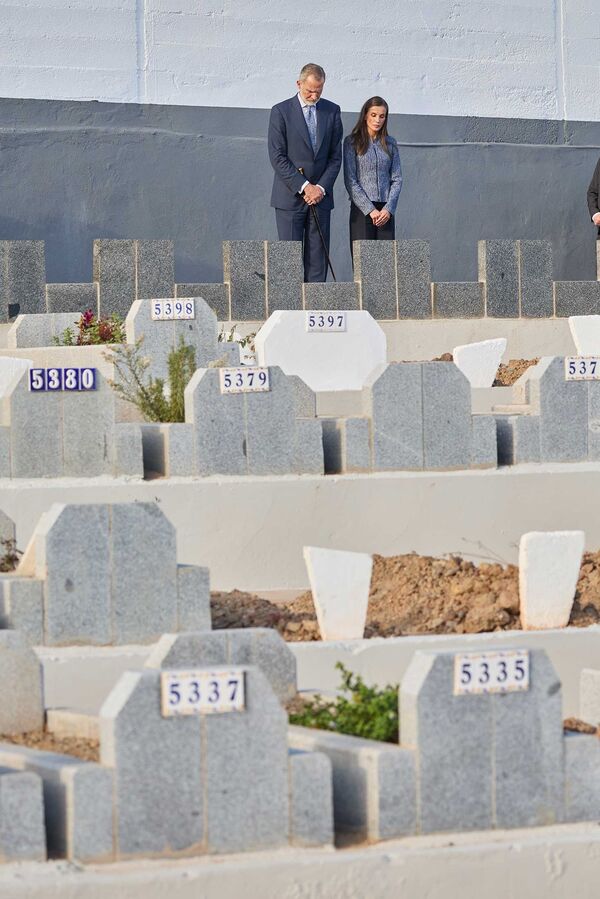
10月13日,西班牙国王费利佩六世和莱蒂齐亚王后访问了休达,并在西迪·恩巴雷克的编号墓前默哀。当晚,国王在讲话中向遇难者家属表示哀悼,“无论他们身在何处”。承认悲剧、缅怀死者是一个重要的开端。但西班牙和摩洛哥也可以采取一些实际措施:为摩洛哥的家属提供一个无需跨越边境即可联系的单一联络点;通过领事馆或人道主义组织采集DNA;加快签证办理,以便亲属可以探望坟墓或将遗体带回家;并保存记录,直到需要为止。这些措施都不需要任何一方政府在主权问题上让步。
On Oct. 13, Spain’s King Felipe VI and Queen Letizia visited Ceuta and observed a minute’s silence among the numbered graves at Sidi Embarek. In a speech that evening, the king sent his condolences to the victims’ families “wherever they may be.”Recognizing the tragedy and honoring the dead is an important start. But there are also practical steps for Spain and Morocco to take: providing a single point of contact that families in Morocco can reach without crossing the border; collecting DNA through consulates or humanitarian organizations; expediting visas so relatives can visit a grave or accompany a body home; and keeping records for as long as it takes. None of this would require either government to give ground on questions of sovereignty.
穆罕默德·萨义德·阿里夫是以自己的名字下葬的。与他一同安息的八十一人却没有名字。有些能够为他们找回名字的人,或许仅在几公里之外,在一条线的另一边,仍在等待消息。
Mohamed Said Arif was buried under his own name. Eighty-one of the people lying beside him were not. Some of those who could give them back their names may be only a few kilometers away, on the other side of a line, still waiting for news.