本文最初由《韩国时报》与《南华早报》合作发表。随着首尔加大对具身人工智能的投资,中国人形机器人制造商正加速进军韩国市场,从舞蹈表演和展厅展示迈向工厂试运行和商业部署。
This article was first published by The Korea Times in a partnership with the South China Morning Post. Chinese humanoid robot makers are accelerating efforts to gain a foothold in South Korea, moving beyond dance performances and showroom displays to factory trials and commercial deployments, as Seoul ramps up investment in physical artificial intelligence.
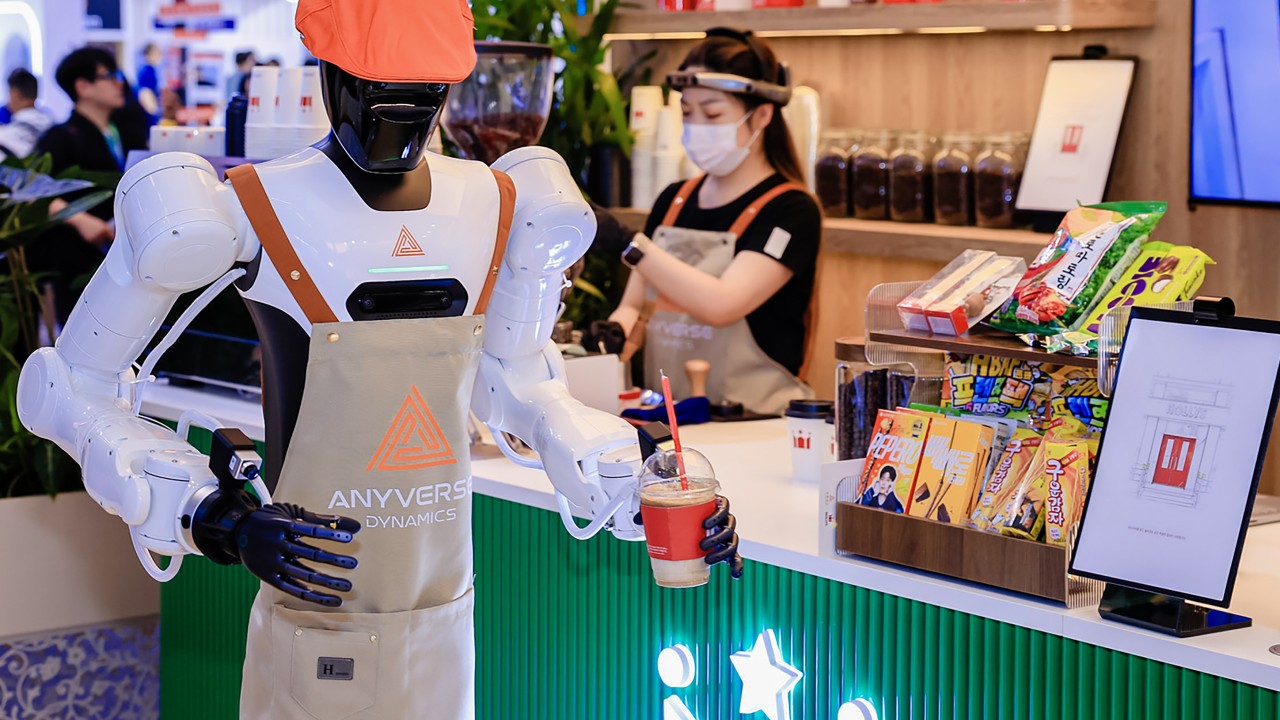
今年,越来越多的中国机器人公司——包括在香港上市的优必选科技、初创企业穹彻智能(Anyverse Dynamics)、总部位于上海的智元机器人(AgiBot)以及领先的机器人制造商宇树科技(Unitree Robotics)——纷纷在韩国崭露头角或宣布相关项目。
A growing number of Chinese robotics companies – including Hong Kong-listed UBTech Robotics, start-up Anyverse Dynamics, Shanghai-based AgiBot and leading robot maker Unitree Robotics – have flexed their muscles or announced projects in South Korea this year.
Counterpoint Research负责机器人领域的副总监伊森·齐(Ethan Qi)表示:“中国新一代机器人公司具有全球化基因,自然会放眼海外,而韩国是亚太地区最重要的市场之一。”他补充说,缺乏规模化量产的本土人形机器人为中国供应商创造了机遇。
“China’s new generation of robot companies has global DNA and naturally looks overseas, and South Korea is one of the most important markets in the Asia-Pacific region,” said Ethan Qi, an associate director covering robotics at Counterpoint Research. The lack of locally built humanoid robots available at scale had created an opening for Chinese suppliers, he added.
据优必选科技商业机器人业务海外负责人肖恩·秦(Sean Qin)透露,首尔机器人主题娱乐场所Galaxy Robot Park的代表在6月份于深圳观看该公司的逼真机型U1首秀后,同意购买该产品。
Representatives of Galaxy Robot Park, a robot-themed entertainment venue in Seoul, agreed to buy UBTech’s lifelike U1 model after seeing its debut in Shenzhen in June, according to Sean Qin, overseas head of the company’s commercial robots division.
秦先生表示,这款设计为女性外观、身高1.68米的机器人售价约为17万元人民币(折合2.5万美元),已于上月交付给该公园。他补充说,优必选早在2019年就进入了韩国市场,此后已向数十家企业和政府客户售出1万多台机器人。
The robot, designed with a female appearance and standing 1.68 metres tall, cost around 170,000 yuan (US$25,000) and was delivered to the park last month, Qin said. UBTech entered the South Korean market as early as 2019 and had since sold more than 10,000 robots to dozens of corporate and government customers, he added.
总部位于中国南方科技重镇深圳的优必选还在7月宣布,计划与当地合作伙伴德山JM机器人(Duksan JM Robotics)及零件制造商亚辰产业(Ajin Industrial)合作,在韩国汽车零部件生产线上试用人形机器人。秦先生表示,优必选的多款机型正在该国进行现场实地运行测试,但他没有提供细节。
In July, UBTech, headquartered in China’s southern tech hub of Shenzhen, also announced plans to trial humanoid robots on a South Korean automotive parts production line with local partner Duksan JM Robotics and parts maker Ajin Industrial. Several UBTech models were undergoing on-site operational tests in the country, Qin said, without providing details.
“作为制造业强国,韩国已经广泛使用机械臂、自主移动机器人和其他传统系统,”他说。“下一步是帮助工人在需要更大灵活性的任务中提高生产力。这使韩国成为优必选以及更广泛的人形机器人领域的一个关键市场。”曾与SK电信和现代汽车合作过的Anyverse Dynamics创始人兼首席执行官张宇峰(音)表示,韩国是“我们最重要的海外市场之一”。
“As a manufacturing powerhouse, South Korea already makes extensive use of robotic arms, autonomous mobile robots and other conventional systems,” he said. “The next step is to help workers become more productive in tasks that demand greater flexibility. That makes Korea a key market for UBTech and for humanoids more broadly.”Zhang Yufeng, founder and CEO of Anyverse Dynamics, who previously worked with SK Telecom and Hyundai Motor, said South Korea was “one of our most important overseas markets”.
这家总部位于北京的初创公司今年8月在北京举行的世界机器人大会上与韩国咖啡连锁品牌霍利斯(Hollys)合作,测试能够端茶送水、清理桌子和整理座位的机器人。张宇峰说,这些机器人目前正在北京的一家咖啡馆进行试运营。
The Beijing-based start-up teamed up with South Korean coffee chain Hollys at the World Robot Conference in Beijing in August to test robots that serve drinks, clear tables and reset seats. The robots were currently undergoing trial operations at a cafe in Beijing, Zhang said.
根据中国海关数据,2026年前九个月,按出口额计算,韩国是中国“智能仿生机器人”的第三大出口市场,仅次于美国和日本。对韩国的出口总额为1999万美元,占中国全球出口额2.0695亿美元的9.7%。今年引入这一海关类别后,中国向108个国家和地区出口了1万6559台机器人,该类别涵盖人形机器人和机器狗。
South Korea ranked as China’s third-largest export market by value for “intelligent bionic robots” in the first nine months of 2026, behind the United States and Japan, according to Chinese customs data. Exports to South Korea totalled US$19.99 million, or 9.7 per cent of the US$206.95 million China shipped globally. China exported 16,559 robots to 108 countries and regions under the customs category, introduced this year, which covers humanoids and robot dogs.
根据行业研究平台Labsdeep本月被《电子时报》(Electronic Times)引用的一份报告,中国十大畅销人形机器人制造商中有八家一直在通过产品认证、商标注册和销售渠道在韩国试水。
Eight of China’s 10 top-selling humanoid robot makers had been testing the waters in South Korea through product certification, trademark filings and sales channels, according to a report by industry research platform Labsdeep that was cited by Electronic Times this month.
“我们计划在第四季度开始在韩国咖啡馆和其他商业服务场所进行试运营,然后再扩展到制造业,”张宇峰说,并指出该公司一直在为该市场进行产品认证。
“We plan to begin trials in Korean cafes and other commercial service settings in the fourth quarter, before expanding into manufacturing,” Zhang said, noting that the company had been working on product certification for the market.
秦说,首尔严格的韩国认证(Korea Certification)要求促使优必选针对本地使用调整了通信模块和射频设置。
Seoul’s stringent Korea Certification requirements prompted UBTech to adapt its communications modules and radio frequency settings for local use, Qin said.
过去两年间,中国的机器人热潮催生了一批独角兽企业,在本土庞大供应链的支持下,其中一些企业已经开始规模化发货。它们努力寻找商业应用以证明围绕人形机器人的投资和炒作是合理的,与此同时,韩国也在全力推动在其产业基础中部署实体人工智能。
China’s robotics boom has spawned a wave of unicorn firms over the past two years, some of which have already begun shipping products at scale, backed by an extensive supply chain at home. Their push to find commercial applications to justify the investment and hype surrounding humanoid robots coincides with South Korea’s drive to deploy physical AI across its industrial base.
由于劳动年龄人口减少且潜在经济增长放缓,首尔正将该技术列为优先事项,以加强制造业。韩国政府已提议在2027年提供3.1万亿韩元(合23亿美元)的实体人工智能资金,超过今年水平的三倍。
Seoul is prioritising the technology to strengthen manufacturing as its working-age population shrinks and potential economic growth slows. The government has proposed 3.1 trillion won (US$2.3 billion) in physical AI funding for 2027, more than triple this year’s level.
产业通商资源部的制造业人工智能转型计划被称为M.AX,该计划支持采用人工智能以及涉及机器人(包括人形机器人)的工厂试验,目标是在2030年前建成500家人工智能工厂。该部今年已为人工智能转型预算了1.1万亿韩元。
The Ministry of Trade, Industry and Resources’ Manufacturing AI Transformation programme, dubbed M.AX, supports AI adoption and factory trials involving robots, including humanoids, with a target of 500 AI factories by 2030. The ministry has budgeted 1.1 trillion won for AI transformation this year.
产业部长官金正官8月表示,政府将支持由人工智能和机器人运营的工厂,帮助韩国在2030年前成为“全球制造业人工智能转型的领导者”。韩国的工业巨头也在迅速行动。
Industry Minister Kim Jung-kwan said in August that the government would support factories operated by AI and robots, helping South Korea become “a global leader in manufacturing AI transformation by 2030”. South Korea’s industrial heavyweights are also moving quickly.
LG电子正在首尔建设其数据工厂,以训练用于工业和家庭应用的机器人,同时在其自己的生产线上测试机器人。三星电子于7月成立了机器人业务体验部门,将目标瞄准制造业,然后再扩展到家庭和零售领域。据《中央日报》周二报道,一款旨在全天候在制造业和物流领域运行的双足机器人最早可能于2027年1月在拉斯维加斯举行的CES年度消费电子展上首次亮相。
LG Electronics is building its Data Factory in Seoul to train robots for industrial and household applications, while testing robots on its own production lines. Samsung Electronics established its Robotics eXperience division in July, targeting manufacturing before expanding into homes and retail. A bipedal robot designed to operate round the clock in manufacturing and logistics could debut at the CES annual consumer electronics trade show in Las Vegas in January 2027, JoongAng Ilbo reported on Tuesday.
现代汽车集团已开始在其位于美国佐治亚州的工厂园区训练波士顿动力的阿特拉斯人形机器人,为计划于2028年投入制造业做准备。斗山机器人推出了人工智能驱动的打磨和码垛系统,并在英伟达的支持下开发机器人控制软件。
Hyundai Motor Group has begun training Boston Dynamics’ Atlas humanoids at its factory campus in the US state of Georgia, ahead of a planned 2028 deployment in manufacturing. Doosan Robotics has unveiled AI-powered sanding and palletising systems and is developing robot-control software, with support from Nvidia.
韩国的初创企业生态系统也在吸引新的资金。根据本土初创企业和风险投资数据库平台The VC追踪的数据,人工智能和机器人技术占第三季度投资额的45%。在具身智能领域,资金正流向机器人制造商,以及开发机器人基础模型和供应训练数据的初创企业。
South Korea’s start-up ecosystem is also drawing fresh capital. AI and robotics accounted for 45 per cent of third-quarter investments tracked by The VC, a local start-up and venture capital investment database platform. Within physical AI, funding is flowing to robot makers as well as start-ups developing foundational models for robots and supplying training data.
Counterpoint的齐表示,该国在汽车制造、造船和半导体制造领域提供了广泛的潜在部署场所。但中国供应商很难获得进入市场的机会,因为他们需要愿意参与概念验证试验的本地客户。
The country offered a broad range of potential deployment sites in carmaking, shipbuilding and semiconductor manufacturing, Counterpoint’s Qi said. But gaining access was difficult for Chinese suppliers because they needed local customers willing to participate in proof-of-concept trials.
中国企业日益增长的影响力引发了政治争论。在10月6日的一次议会监察中,执政党共同民主党的议员李正宪将中国宇树科技和智元机器人的产品带到现场,就韩国在具身智能领域的竞争力向政府提出质询。
The growing presence of Chinese firms has stirred political debate. At a parliamentary audit on October 6, lawmaker Lee Jeong-heon of the ruling Democratic Party of Korea brought robots from China’s Unitree and AgiBot to challenge the government over South Korea’s competitiveness in physical AI.
主要反对党国民力量党的议员安哲秀质疑这些机器人是否经过了安全检查,并指责韩国国会为中国技术提供了舞台。
Lawmaker Ahn Cheol-soo of the main opposition People Power Party questioned whether the robots had undergone security checks and accused the National Assembly of providing a stage for Chinese technology.
兼任科学技术信息通信部长的副总理裴京勋敦促韩国加大具身智能的投资和开发力度,并指出中国正日益增加人形机器人的部署。
Deputy Prime Minister Bae Kyung-hoon, who is also the Science and Information and Communications Technology minister, urged South Korea to ramp up physical AI investment and development, pointing to China’s growing deployment of humanoids.
据新闻媒体《今日资金》报道,他在10月13日于首尔举行的具身智能技术周圆桌会议上表示:“中国也正在实地部署更多的人形机器人并收集数据。”
“China is also deploying more humanoid robots in the field and collecting data,” he said during a Physical AI Tech Week round table in Seoul on October 13, according to news outlet MoneyToday.
裴质疑韩国的计划是否足够大胆,并呼吁设定更高的目标,以免日后对未来投资不足感到后悔。他说,企业也需要承担更大的责任,因为政府无法支持每一项倡议。
Bae questioned whether Korea’s plans were bold enough and called for higher targets to avoid regretting insufficient investment in the future. Companies also needed to shoulder greater responsibility because the government could not support every initiative, he said.
韩国贸易投资振兴公社深圳办事处负责人朴永勋表示,他也看到了合作的空间。
Park Young-hoon, head of the Korea Trade-Investment Promotion Agency’s Shenzhen office, said he also saw room for cooperation.
他在10月接受当地媒体Newspim采访时表示:“企业在与中国科技公司竞争的同时,需要利用深圳当地的供应链和创新能力来开拓新的商业机会。”
“Companies need to explore new business opportunities using Shenzhen’s local supply chains and innovation capabilities while competing with Chinese technology companies,” he told local media outlet Newspim in October.
Anyverse Dynamics公司的张表示,他认为两国在产业优势上“高度互补”。他说,韩国将先进制造领域的全球领先地位与人工智能创新能力结合在一起,而中国则提供了完整的供应链、庞大的工程和人工智能人才储备,以及快速的产品迭代能力。
Anyverse Dynamics’ Zhang said he saw the two countries’ industrial strengths as “highly complementary”. South Korea combined global leadership in advanced manufacturing with a capacity for AI innovation, while China offered a comprehensive supply chain, a deep pool of engineering and AI talent, and rapid product iteration, he said.
对于优必选的秦(音译)而言,偏袒本土企业的政策并没有阻碍韩国客户考虑中国供应商。他表示:“我们打交通过的韩国客户对与中国机器人制造商合作持开放态度。”
For UBTech’s Qin, policies favouring domestic companies have not deterred Korean customers from considering Chinese suppliers. “The Korean customers we have dealt with are open to working with Chinese robot makers,” he said.