他们来抓丹尼尔·穆萨*的那个晚上,狗在狂吠。2023年5月23日晚上11点30分左右,穆萨透过俯瞰家中大门的窗户向外看去,家位于尼日利亚东北部阿达马瓦州。闯入者身穿全黑衣服,与黑夜融为一体。他们的脸没有遮挡。
The night they came for Daniel Musa*, the dogs were barking. At about 11:30 pm on May 23, 2023, Musa looked out of a window overlooking the gate of his home in Adamawa State, northeastern Nigeria. The intruders wore all black, like the night. Their faces were uncovered.
现年49岁的穆萨通常晚上把狗放在院子里。但翻墙而入的男子把狗赶回笼子并锁上,为通往房子的道路扫清了障碍。
Musa, 49, usually left his dogs loose in the compound at night. But the men who had climbed over the fence drove them back into their cage and locked it, clearing a path to the house.
接着他们撬断了一个小门的挂锁,朝主门走去。在那里,他们开始试图用挖掘机撬开大门。
Then they broke the padlock on a smaller gate and moved towards the main door. There, they began trying to force it open with a digger.
作为当地牧师的穆萨知道他们要闯进来。与其等他们撞开门,他自己打开了门;他不想惹麻烦。
Musa, a local pastor, knew they were coming in. Rather than wait for them to break down the door, he opened it himself; he didn’t want any trouble.
他已经让妻子和当时13岁的女儿待在卧室里。男子们进入他家,用枪指着他,命令他坐在地上。
He had already told his wife and his then 13-year-old daughter to stay in their bedroom. The men entered his home, pointed a gun at him, and ordered him to sit on the floor.
一人进了他的卧室拿走钱和手机。另一人走到冰箱前,自取面包、牛奶和水。
One went into his bedroom and took money and phones. Another walked to the fridge and helped himself to bread, milk, and water.
随后,在枪口威胁下,他们带着穆萨走出家门;他没有反抗。他担心如果不带走他,他们可能会带走妻子或女儿。
Then, at gunpoint, they led Musa out of his home; he did not struggle. He feared that if they did not take him, they might take his wife or daughter instead.
穆萨被蒙着眼睛,与绑架者在丛林中走了六小时,涉过浅溪,直到到达山区。在那里,他听到了邻居熟悉的声音,发现邻居也被绑架了。他被囚禁了三天。
For six hours, Musa walked blindfolded with his captors through bushland, crossing shallow streams until they reached the mountains. There, he heard the familiar voice of his neighbour and discovered he had also been abducted. He would remain in captivity for three days.
那时,亲属们正在就赎金进行谈判。绑架者要求1500万奈拉(当时约合11256美元)赎金以释放他。但在联系了穆萨的家人后,他们关闭了手机。家人只能在绑架者选择联系时才能取得联系,无法协商降低赎金。
By then, negotiations with his relatives over ransom were under way. The kidnappers demanded 15 million naira (about $11,256 at the time) for his release. But after contacting Musa's family members, they switched off their phones. The family could only reach them when the kidnappers chose to make contact, leaving them unable to negotiate a lower ransom.
穆萨(化名,为保护其身份)表示,他在被囚禁期间始终被蒙着眼睛。他唯一的饮用水来自一条河流,即便如此,绑架者也只允许他每次喝几口,且由他们决定何时给水。
Musa, whose name has been changed to protect his identity, says he remained blindfolded throughout his captivity. His only drinking water came from a river, and even then, his captors allowed him just a few sips at a time, whenever they chose.
绑架者警告这些仍被蒙眼的俘虏,如果他们察觉到警察或义务巡逻队员靠近,就会在试图逃跑前杀死人质。周五凌晨约4点,枪声响起。大约15分钟里,营地周围枪声不断。
The captives, still blindfolded, were warned by their abductors that if they detected police officers or vigilantes approaching, they would kill their hostages before attempting to escape. At about 4am on Friday, gunfire erupted. For roughly 15 minutes, shots rang out around the camp.
穆萨躺在两名其他俘虏中间的岩石地面上,催促他们不要动弹。他们能听到脚步声靠近,却无法分辨是绑架者还是前来营救的人。绑架者回来了?安全部队找到他们了?还是正如绑架者威胁的那样,他们即将被杀害?“我们很困惑,不知道是谁来了,所以我让其他人别动,”他说。
Musa lay on the rocky ground between two other captives, urging them not to move. They could hear voices approaching but had no way of knowing whether they belonged to their abductors or the people trying to rescue them. Were the kidnappers returning? Had the security forces found them? Or were they about to be killed, as their captors had threatened? “We were confused. We didn’t know who was coming, so I told the others not to move,” he said.
那些声音告诉他们别怕,并为他们取下了眼罩。几名男子站在他们面前;他记不清具体有多少人,大家都身穿橄榄绿制服。
The voices told them not to be afraid, as they removed their blindfolds. Several men stood before them; he can’t recall how many, all dressed in olive-green uniforms.
他们属于普拉库(Pulaku),这是一个以富拉尼族为主的义务巡逻组织,在尼日利亚东北部打击绑架和盗窃牲畜。穆萨听说过这个组织,但这是他首次与其成员接触。
They belonged to Pulaku, a predominantly Fulani vigilante organisation fighting kidnapping and cattle rustling in northeastern Nigeria. Musa had heard of the group, but this was his first encounter with its members.
绑架者已逃离,留下了食物、手机和其他物品。穆萨回忆,营救者还发现了一张疑似属于其中一名嫌疑人的国家身份证。
The kidnappers had fled, leaving behind food, phones and other belongings. Musa recalled that the rescuers also discovered what appeared to be a national identity card belonging to one of the suspects.
在营救者护送下,俘虏们下了山,随后警方将他们带往约拉——阿达马瓦州首府——的警察总部。在那里,穆萨与妻子和女儿团聚。他回忆再次见到她们时充满了喜悦。他将这次团聚归功于普拉库。
The captives then made their way down the mountain with their rescuers before the police took them to headquarters in Yola, the Adamawa State capital. There, Musa was reunited with his wife and daughter. He recalls being filled with joy when he saw them again. He credits Pulaku with making that reunion possible.
“他们救了我的命,”穆萨说。他的教会后来授予普拉库一项奖项,以表彰其在社区中的工作。
“They saved my life,” says Musa. His church would later present Pulaku with an award, recognising its work in the community.
但该组织在打击绑架方面日益重要的角色,也使其受到审视。虽然一些居民认为其成员救了人命,但其他人指控他们犯有严重侵权行为。一名男子称,他们将他关押了两个多月,并毒打他以至于他失去了知觉。
But the group’s growing role in fighting kidnapping has also brought the organisation under scrutiny. While some residents credit its members with saving lives, others accuse them of serious abuses. One man says they held him for more than two months and beat him so badly that he lost consciousness.
这两种说法揭示了武装社区自卫组织在该地区所处的尴尬境地,那里的正规安全部队一直难以遏制绑架和偷牛行为。
The two accounts reveal the uneasy place occupied by armed community vigilantes in a region where formal security forces have struggled to contain kidnapping and cattle rustling.
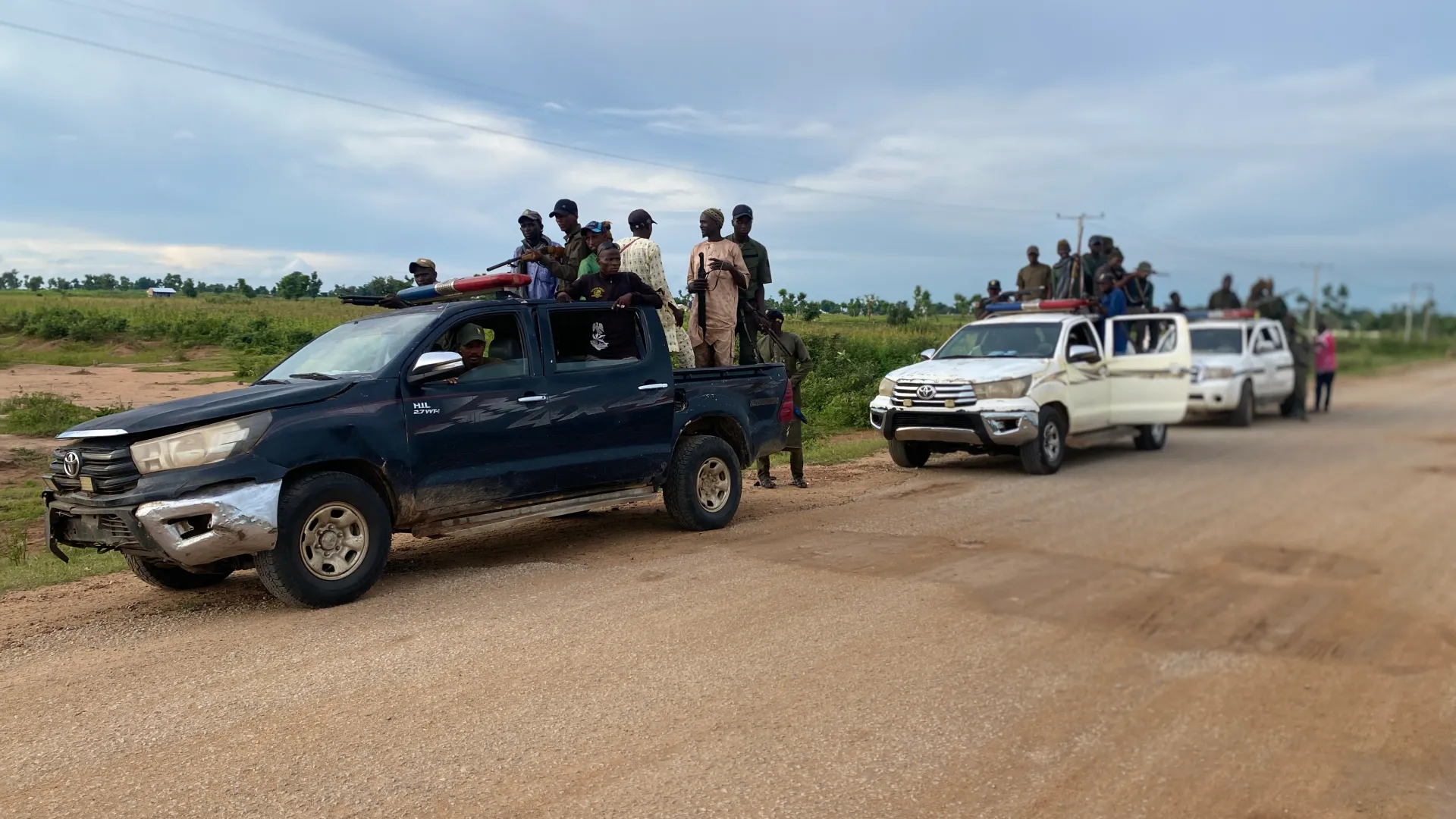
9月下旬的一个周二下午,三辆丰田海拉克斯皮卡驶出约拉,进入尼日利亚东北部的开阔稀树草原。
On a Tuesday afternoon in late September, three Toyota Hilux trucks make their way out of Yola and into the open savanna of northeastern Nigeria.
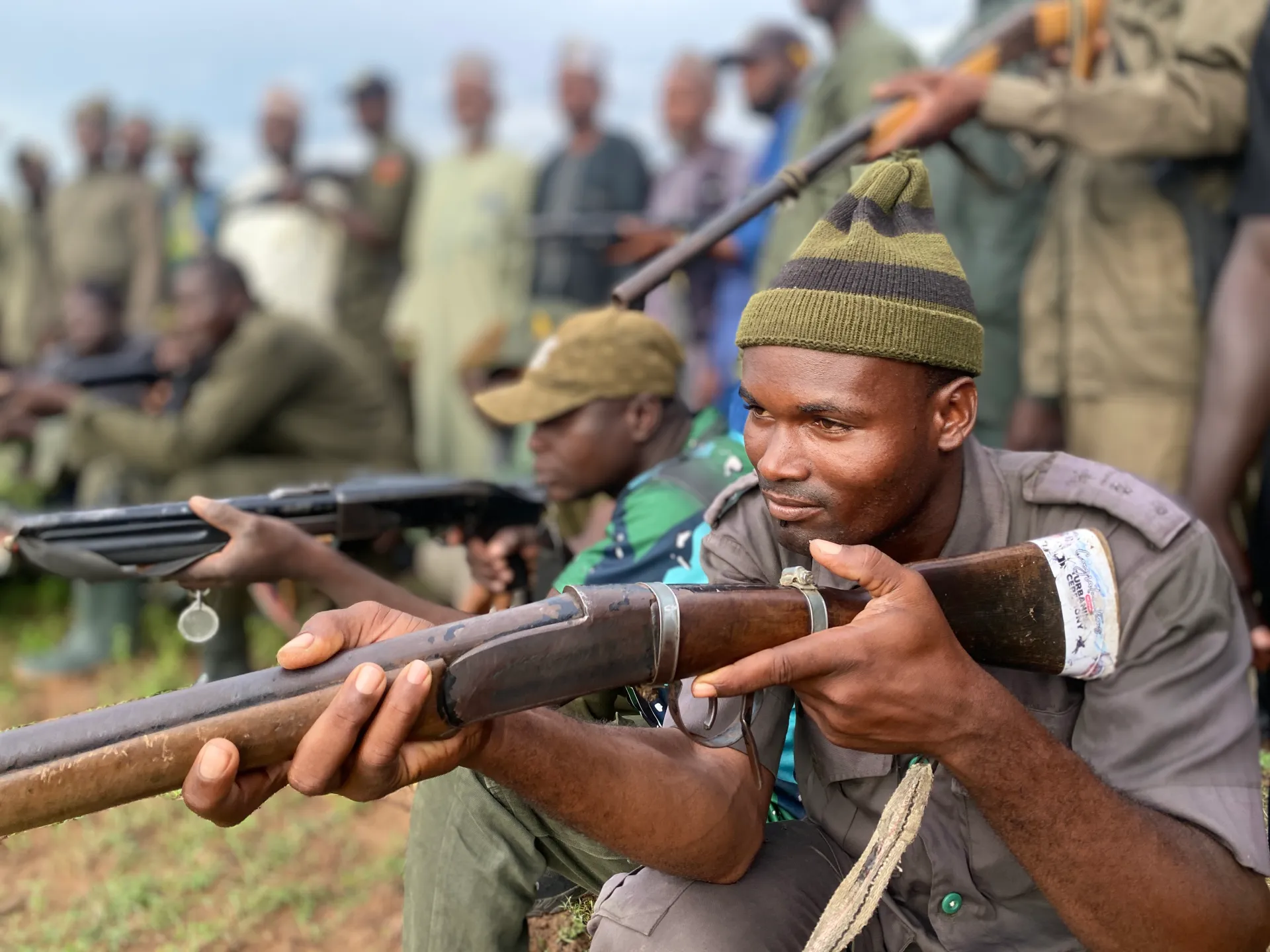
车上约有30名男子,身穿同款橄榄绿制服。有的穿作战靴,有的穿胶鞋。他们携带各式武器:土制枪支、砍刀,以及更常与放牧联系在一起的长木棍。
Inside, about 30 men wear the same olive-green uniforms. Some wear combat boots; others wear rubber shoes. They carry an assortment of weapons: Locally made firearms, machetes, and long wooden sticks more commonly associated with herding cattle.
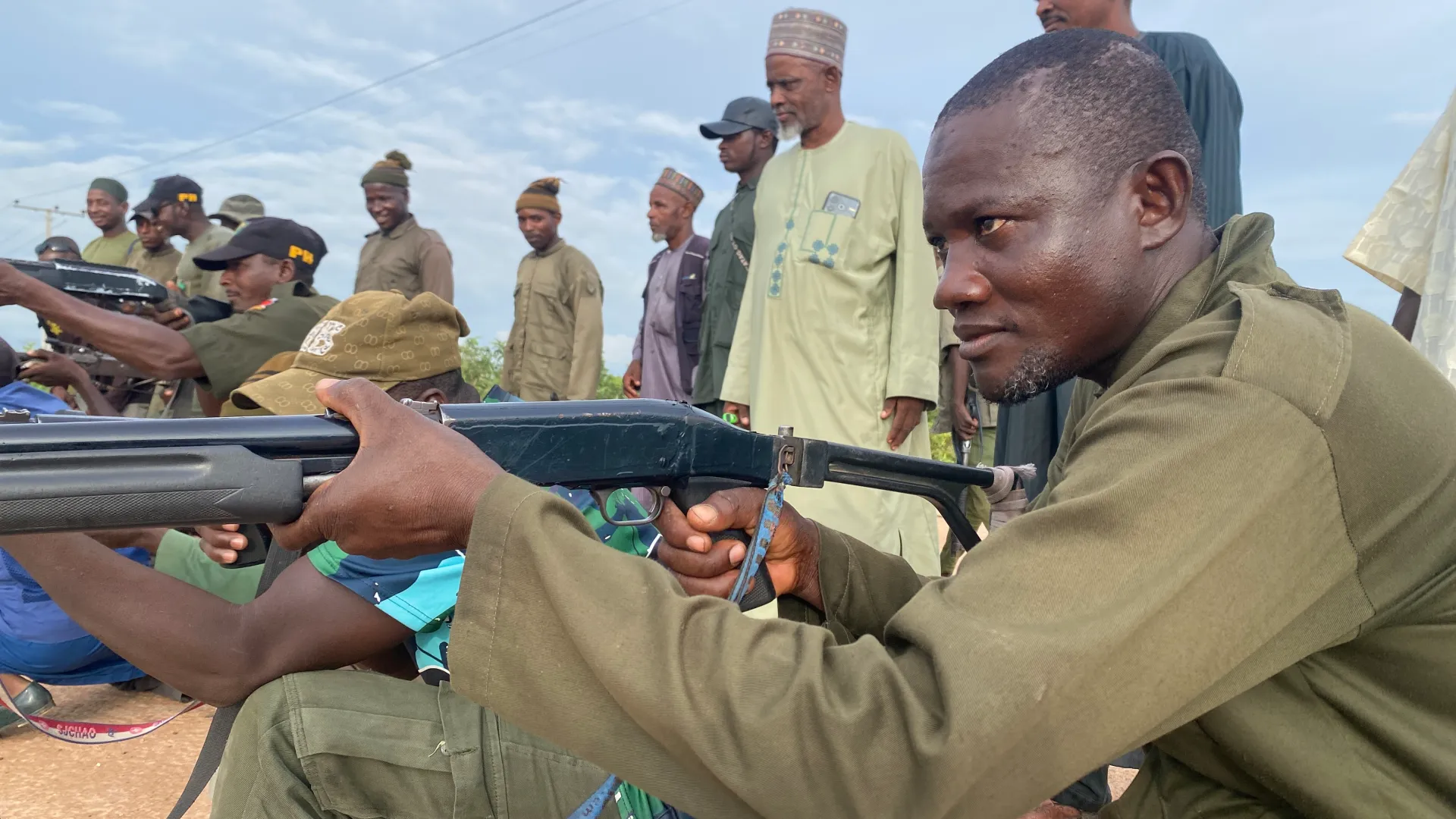
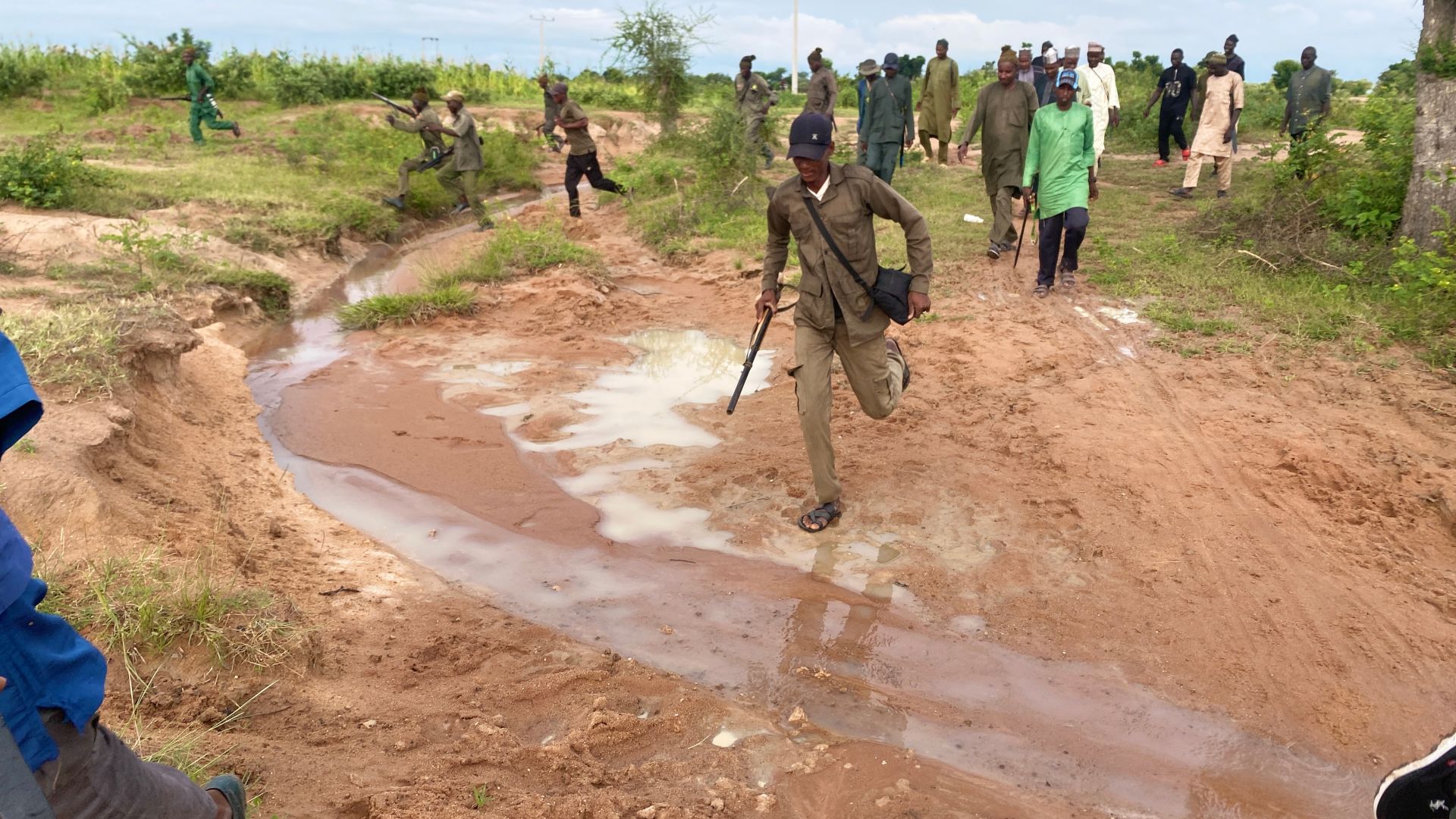
大约一个小时后,车队抵达一片零星树木和稀疏林地的区域。在这里,远离城市,男子们下车开始演练,在崎岖地形中移动并排练巡逻战术。几人蹲在红褐色的沙地上,将枪口指向开阔地,其他人则站着观望。
After about an hour, the convoy reaches an area of scattered trees and sparse woodland. Here, away from the city, the men exit the vehicles and begin drills, moving through the terrain and rehearsing patrol tactics. Several crouch on the reddish, sandy ground, aiming their firearms towards the open area, while others stand and watch.
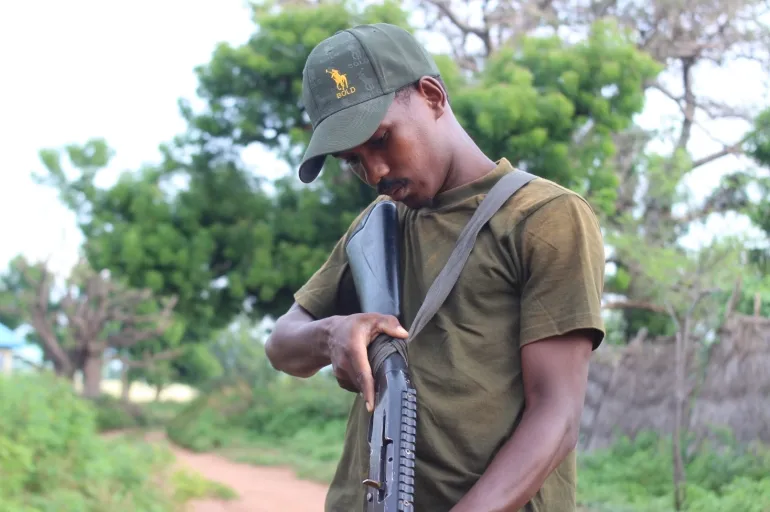
马哈茂德就在这些人中间,他只透露了名。他是一名前养牛人和农民,20多岁。他留着平头,嘴唇上有细细的胡须,戴着一顶压低的帽子。一支枪放在他的手中。
Among them is Mahmud, who only gave his first name. He is a former cattle herder and farmer in his late 20s. He has closely cropped hair, a faint moustache and a cap pulled over his head. A firearm rests in his hands.
马哈茂德是亚当瓦州马尔科希的本地人,是普拉库较新的招募成员。他尚未亲自与绑架犯交手,但对未来可能面临的危险谈得很自信。“我们随时准备战斗,”他说。
Mahmud is local to Malkohi, Adamawa State, and is one of Pulaku's newer recruits. He has yet to confront kidnappers himself, but speaks confidently about the dangers that may lie ahead. “We are ready to fight day in, day out,” he says.
对于马哈茂德这类人来说,绑架和偷牛的威胁并非抽象的安全问题。
For men such as Mahmud, the threat of kidnapping and cattle theft is not an abstract security problem.
分析人士指出,多年来,武装组织一直在亚当瓦州及邻近的塔拉巴州肆意侵害当地社区,绑架居民以勒索赎金,并盗窃牲畜。该地区的山脉和森林为绑匪提供了藏身之处,使得安全部队难以对他们实施有效打击。
Across Adamawa and neighbouring Taraba State, analysts say armed groups have preyed on communities for years, abducting residents for ransom and stealing livestock. The mountains and forests that stretch across parts of the region offer places for kidnappers to hide and make it difficult for security forces to reach them.
暴力事件的严重程度从尼日利亚研究及市场情报机构 SBM Intelligence 的统计数据中可见一斑:2025 年 7 月至 2026 年 6 月期间,亚当瓦州发生了 21 起绑架事件,共涉及 77 名受害者;塔拉巴州发生了 4 起绑架事件,共涉及 14 名受害者。
The scale of the violence is reflected in figures compiled by SBM Intelligence, a Nigerian research and market intelligence firm. Between July 2025 and June 2026, it recorded 21 kidnapping incidents in Adamawa, involving 77 abducted people, and four incidents in Taraba, involving 14 people.
牲畜盗窃问题同样十分严重。2024 年发表在《乔斯大学政治科学杂志》上的一项研究估计,1999 年至 2022 年间塔拉巴州共有 134,182 头牛被盗;同期,亚当瓦州也有超过 113,000 头被盗的牲畜被找回。
Cattle theft has also taken a heavy toll. A 2024 study published in the University of Jos Journal of Political Science estimated that 134,182 cattle were stolen in Taraba between 1999 and 2022. Over the same period, researchers reported that more than 113,000 stolen cattle were recovered in Adamawa.
对于以畜牧业为生的富拉尼族牧民来说,牲畜盗窃意味着他们将失去巨大的经济损失。按照每头牛约 70 万奈拉(约合 525 美元)的价格计算,50 头牛的总价值约为 3,500 万奈拉(约合 26,254 美元)——这对一个以牲畜为生的家庭来说是一笔巨大的经济损失。
For Fulani pastoralists, whose livelihoods have long been tied to livestock, cattle theft can mean losing far more than animals. At an estimated 700,000 naira ($525) per animal, a herd of 50 cattle could be worth about 35 million naira ($26,254) - a substantial investment for a family whose livelihood depends on its animals.
然而,富拉尼族社区还面临着另一个困境:在尼日利亚的部分媒体中,他们的族群身份常常被与绑架、盗抢行为以及牧民与农民之间的暴力冲突联系在一起。2021 年发表在《非洲新闻研究》(African Journalism Studies)上的一项研究分析了来自三家尼日利亚报纸的 598 篇报道,发现这些报道有时会将“牧民”和“富拉尼族牧民”这两个概念混为一谈,并使用“富拉尼恐怖分子”或“凶残的富拉尼族牧民”之类的负面标签来描述他们。
But Fulani communities face another struggle: The association of their ethnic identity with kidnapping, banditry and farmer-herder violence in parts of Nigeria's media. A 2021 study published in African Journalism Studies, which examined 598 articles from three Nigerian newspapers, found that reports sometimes used the terms "herdsmen" and "Fulani herdsmen" interchangeably, while employing labels such as "Fulani terrorists" and "killer Fulani herdsmen".
对于亚当瓦州的富拉尼族社区领袖阿尔哈吉·贝洛·阿尔多(Alhaji Bello Ardo)来说,这种负面报道加剧了那些与犯罪无关的富拉尼族民众所面临的歧视与误解。
For Alhaji Bello Ardo, a Fulani community leader in Adamawa State, such portrayals contribute to the suspicion faced by people who have no involvement in crime.
“看到整个族群被刻板印象化,令人痛心。每个族群都有涉及犯罪的个体,但在我们的案例中,人们在未经证实的情况下就提出指控,”他说。
"It's painful to see an entire ethnic group being stereotyped. Every ethnic group has individuals involved in crime, but in our case, people make accusations without confirmation," he says.
“如果人们遭抢劫,他们就说是富拉尼人所为,却不知道肇事者是谁。”阿尔多指出,富拉尼牧民本身也是牛只被盗和暴力行为的受害者。“我们也不安全。我们的牛被偷,我们也被杀害,”他说。
"If people are robbed, they say it's Fulani without knowing who the perpetrators are." Ardo points out that Fulani pastoralists are themselves victims of cattle theft and violence. "We are also not safe. Our cattle are being stolen, and we are also being killed," he said.
“人们不明白,并非所有富拉尼人都是恐怖分子。”据其领导人称,普拉库在十多年前开始成形,当时富拉尼社区成员组织起来,以应对牛只被盗和绑架。
"People don't understand that not all Fulani are terrorists." According to its leaders, Pulaku began taking shape more than a decade ago, as Fulani community members organised to confront cattle theft and kidnapping.
马哈茂德是一名前牧牛人,最近加入了普拉库 [Abdulaziz Ibrahim/Al Jazeera] 总部设在约拉南地方政府辖区的马尔科希,该组织由已故的阿哈吉·阿布杜·巴利、现任指挥官穆萨·乌斯曼·马尔科希以及其他富拉尼社区领袖创立,作为对绑架和盗牛行为的自发性回应。其名称唤起了一个长期塑造富拉尼身份认同的文化理想。
Mahmud is a former cattle herder who recently joined Pulaku [Abdulaziz Ibrahim/Al Jazeera] Based in Malkohi, Yola South Local Government Area, the organisation was founded by the late Alhaji Abdu Bali; Musa Usman Malkohi, the group's current commander; and other Fulani community leaders as a voluntary response to kidnapping and cattle rustling. Its name invokes a cultural ideal that has long shaped Fulani identity.
普拉库(Pulaaku,该概念的通用写法)包含尊严、耐心、自制、谦逊、勇气和尊重他人等价值观。
Pulaaku, as the concept is commonly written, encompasses values including dignity, patience, self-control, modesty, courage and respect for others.
阿布巴卡尔·阿巴·塔希尔教授是一位大众传播学者,拥有卡卡基·丰比纳的传统头衔,是阿达马瓦酋长国的发言人,该酋长国是尼日利亚东北部的一个传统富拉尼机构。
Professor Abubakar Abba Tahir, a mass communication scholar who holds the traditional title of Kakaki Fombina, is a spokesperson for the Adamawa Emirate, a traditional Fulani institution in northeastern Nigeria.
他解释说,普拉库不是一成不变的准则,而是一种活的传统,由不同富拉尼社区的经历塑造而成。
He explains that pulaaku is not a fixed code but a living tradition, shaped by the experiences of different Fulani communities.
“普拉库是一个活的文化概念,其诠释一直受到社区传统、社会环境、历史经验和个人理解的影响,”他告诉半岛电视台。
Pulaaku is a living cultural concept whose interpretation has always been influenced by community traditions, social circumstances, historical experiences, and individual understanding," he tells Al Jazeera.
塔希尔解释说,这一概念可以激发集体责任感和社区保护,但也强调克制和尊重生命。
The concept can inspire collective responsibility and community protection, Tahir explains, but it also places importance on restraint and respect for human life.
文化理想“Pulaaku”与采用其名称(但拼写为单个“a”)的义警组织“Pulaku”之间存在区别。
And there is a distinction between the cultural ideal, and Pulaku, the vigilante organisation that has adopted its name, spelling it with a single "a".
塔希尔表示:“仅仅在组织名称中使用‘pulaaku’一词,本身并不能确立其活动完全反映了更广泛的文化理想。”
"The mere use of pulaaku in an organisation's name does not, by itself, establish that its activities fully reflect the broader cultural ideal," Tahir says.
他认为,一个组织是否坚守这些价值观,取决于其行为、问责机制以及对人权的尊重。
Whether an organisation upholds those values, he argues, depends on its conduct, accountability and respect for human rights.
Pulaku的领导层称,该组织目前拥有500多名成员,在阿达马瓦州部分地区及邻近的塔拉巴州开展活动。尽管成员以富拉尼人为主,但也包括维雷族和查姆巴族等其他族群成员。
Pulaku's leadership says the organisation now has more than 500 members operating across parts of Adamawa and neighbouring Taraba State. Although predominantly Fulani, its ranks also include members of other ethnic groups, including Verre and Chamba.
与警察或军队不同,Pulaku不属于尼日利亚正式安全部门体系。
Unlike the police or military, Pulaku is not part of Nigeria's formal security establishment.
“大集团指挥官”穆萨·乌斯曼·马尔科希表示:“该组织不在政府工资单上。”这位留着短灰胡须和小胡子的老者拒绝透露年龄。
"The group is not on the government payroll," says its grand commander, Musa Usman Malkohi, an older man with a short grey beard and moustache. He refuses to share his age.
他称成员自筹资源,并获得社区和地方政府的额外支持。地方政府主席提供了用于运营成本的财政援助,而阿达马瓦州政府则向该组织提供了车辆支持。
He says members contribute their own resources, with additional support from communities and local authorities. Local government chairmen have provided financial assistance towards running costs, while the Adamawa State government has supported the group with vehicles.
一辆卡车车身侧面用黑漆写着:“感谢阿哈马杜·乌马鲁·芬蒂里州长。”这指的是阿达马瓦州州长,他向Pulaku捐赠了这辆车——这是该志愿者组织获得州政府支持的明显迹象,尽管它不属于尼日利亚的正式安全部队。成员资格为自愿加入,组织领导层决定允许哪些成员携带枪支。
On the side of one of the trucks, a message painted in black reads: "Thank you Governor Ahmadu Umaru Fintiri." It refers to the governor of Adamawa State, who donated the vehicle to Pulaku - a visible sign of the support the volunteer group receives from the state government, despite not being part of Nigeria's formal security forces. Membership is voluntary, and the organisation's leadership decides which members are permitted to carry firearms.
对警方而言,Pulaku最大的资产之一是其成员对地形的熟悉。许多人来自熟悉森林和山脉的社区,绑架犯在这些地方建立藏身处。
For the police, one of Pulaku's greatest assets is its members' knowledge of the terrain. Many come from communities familiar with the forests and mountains where kidnappers establish hideouts.
但这个志愿组织如何发展成为一支数百人的力量,其故事始于一名男子,他自己的家庭曾遭遇该组织成立之初旨在对抗的暴力。
But the story of how this volunteer organisation grew into a force of hundreds begins with a man whose own family was touched by the violence the organisation was formed to confront.
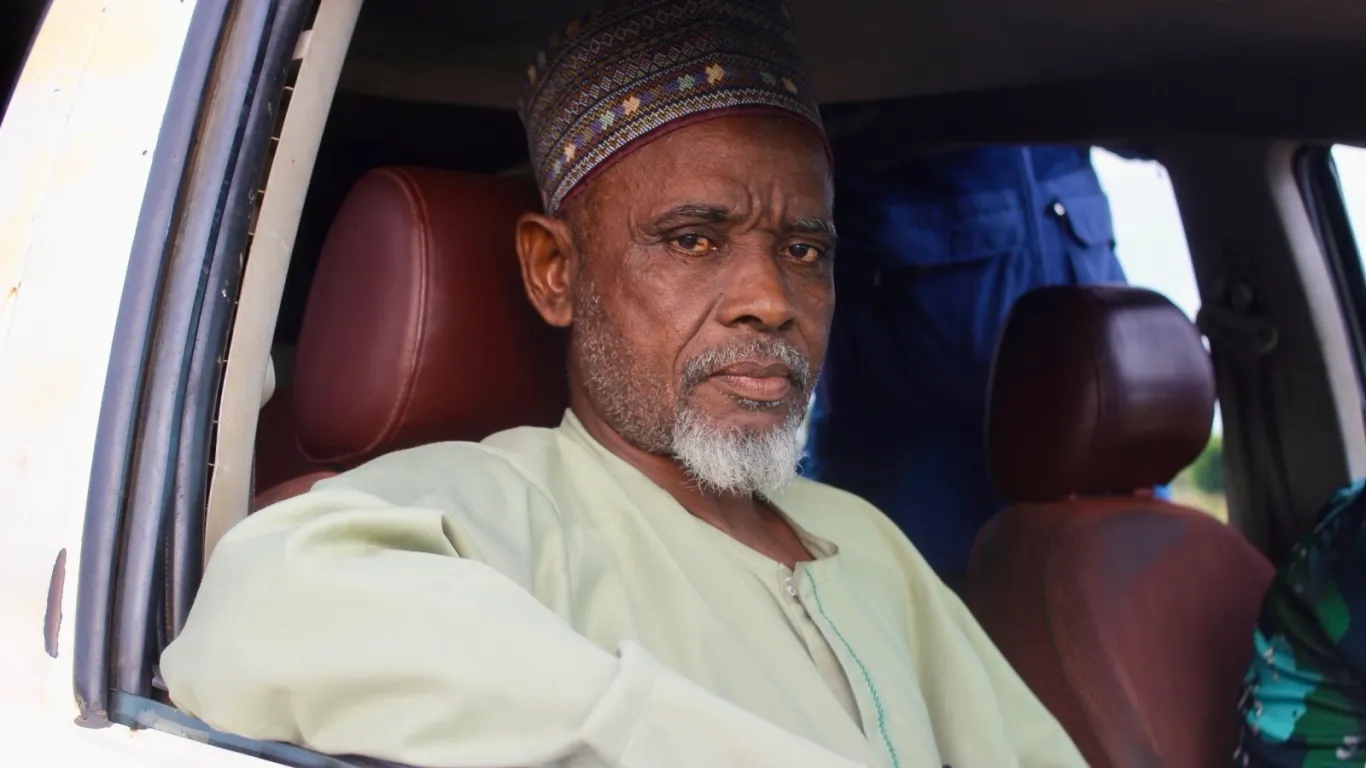
穆萨·乌斯曼·马尔科希戴着一顶传统的花纹扎纳·布卡尔帽,身穿长袍。与在他面前训练的男子不同,他未携带武器。
Musa Usman Malkohi wears a traditional patterned Zanna Bukar cap and a kaftan. Unlike the men training in front of him, he carries no weapon.
作为一名农民和养牛人,乌斯曼主要说富拉尼语——富拉尼人的语言,以及带有明显富拉尼口音的豪萨语。
A farmer and cattle breeder, Usman speaks predominantly Fulfulde, the language of the Fulani people, as well as Hausa with a noticeable Fulani accent.
他站在武装男子身后,注视着演练的展开。他解释说,他参与打击绑架不仅关乎社区安全,更是私人恩怨。2018年,枪手袭击了乌斯曼的家,绑架了他24岁的儿子。
From his position behind the armed men, he watches the exercise unfold. He explains his involvement in the fight against kidnapping is not just a matter of community security; it’s personal. In 2018, gunmen attacked Usman's home and abducted his 24-year-old son.
乌斯曼认为他本人才是预定目标,他将此次袭击描述为他在打击他所谓的“坏人”过程中面临的挑战之一。
Usman believes he was the intended target, describing the attack as one of the challenges he faced while fighting what he calls "bad people".
那时,他已经领导普拉库组织。他多年来一直在对抗的暴力已波及自家门口。大约七天里,乌斯曼致力于争取儿子的自由。
By then, he was already leading Pulaku. The violence he had spent years confronting had reached his own home. For about seven days, Usman worked to secure his son's freedom.
他说,他自己的警卫队成员最终在未支付赎金的情况下救出了这名年轻人。
He says members of his own vigilante team eventually rescued the young man without a ransom being paid.
该组织的联合创始人阿哈吉·阿布杜·巴利于2019年10月在约拉拉卡雷的住所遭疑似绑架者袭击时身亡。当地新闻报道称,袭击造成四人死亡、一人受伤。那时,普拉库正寻求与州政府建立更紧密的关系。
The group's cofounder, Alhaji Abdu Bali, was killed in October 2019 when suspected kidnappers attacked his residence in Lakare, Yola. Local news reports said four people were killed and another injured in the attack. By then, Pulaku was seeking a closer relationship with the state.
继阿马杜·乌马鲁·芬蒂里于2019年当选阿达马瓦州州长后,该组织向政府提出希望与安全部门更正式地合作。乌斯曼说:“政府随后将警方和军方引入与该组织的讨论中。”这一安排使普拉库获得了与依法负责公共安全的机构合作的机会。
Following Ahmadu Umaru Fintiri's election as governor of Adamawa in 2019, the organisation approached the government about working more formally with security agencies. "The government subsequently brought the police and military into discussions with the group," Usman said. The arrangement offered Pulaku access to cooperation with the institutions legally responsible for public security.
对当局而言,这意味着获得了熟悉绑架者藏身偏远地区的男子的协助。然而,这种合作也划出了一条难以界定的界限。
For the authorities, it meant gaining assistance from men who knew the remote areas where kidnappers could hide. Yet that cooperation also created a difficult boundary.
普拉库是一个志愿者组织,而非警察部队。其成员应当抓捕嫌疑罪犯,并将其移交警方进行调查和可能的起诉。他们无权自行羁押嫌疑人、进行审讯或实施惩罚。
Pulaku was a volunteer organisation, not a police force. Its members were expected to apprehend suspected criminals and hand them over to the police for investigation and possible prosecution. They were not authorised to hold suspects in their own custody, conduct interrogations or impose punishment.
但有指控称普拉库成员自行拘留人员,这引发了关于他们是否遵守这些限制——以及由谁负责监督执行这些限制——的质疑。
But allegations that Pulaku members detained people themselves raised questions about whether they were observing those limits - and who was responsible for enforcing them.
“普拉库处于前线,因为他们比我们更熟悉地形、山区和森林地区,”亚当瓦州警察司令部发言人苏莱曼·亚哈亚·恩古罗杰解释道。
"Pulaku are taking a front line because they know the terrain, the mountainous and the forest areas better than we do," explains Suleiman Yahya Nguroje, spokesperson for the Adamawa State Police Command.
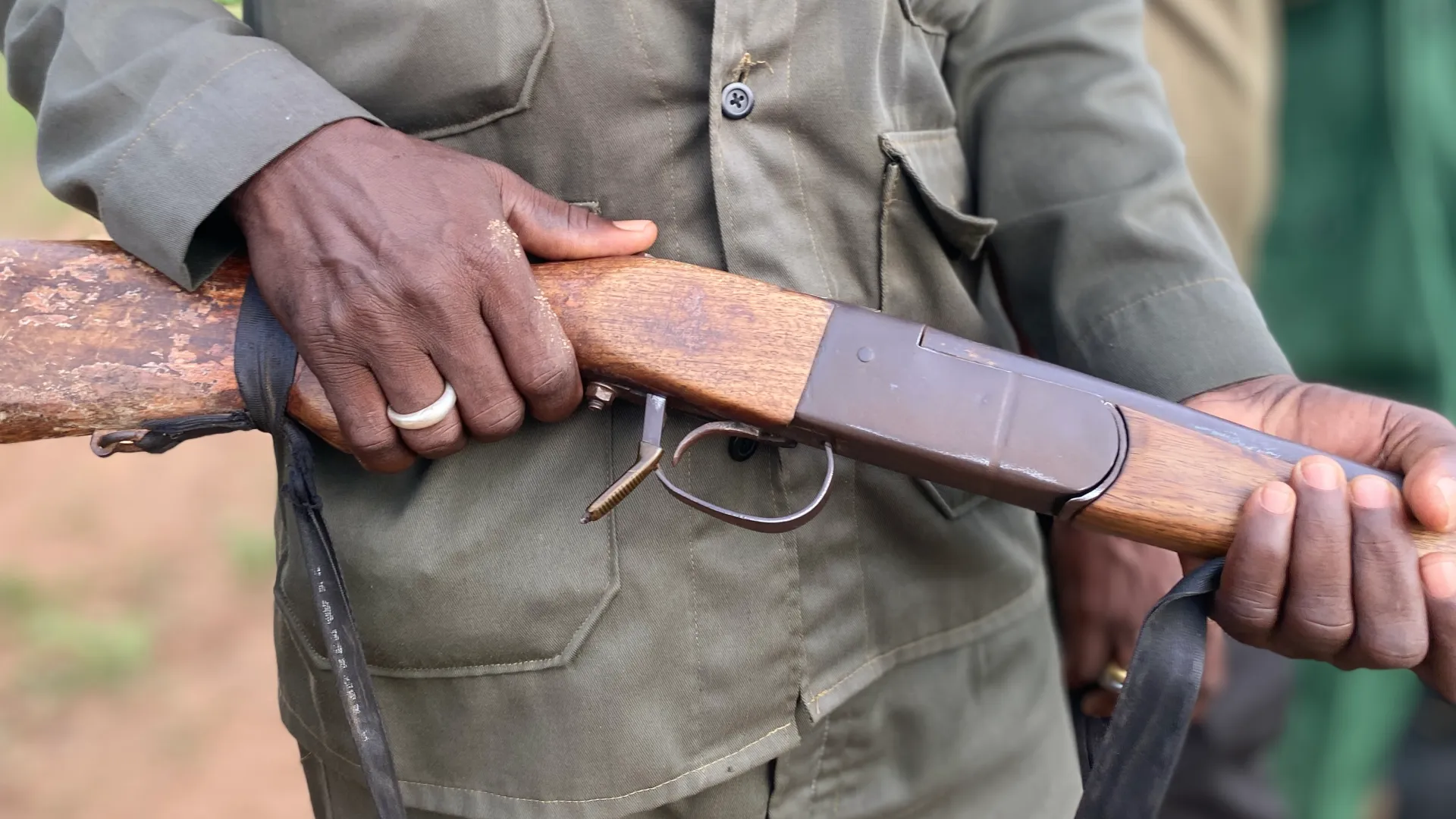
据恩古罗杰称,这些义务警提供情报,协助安全部队在艰难地形中行动,并参与针对疑似绑架网络的联合行动。
According to Nguroje, the vigilantes provide intelligence, help security forces navigate difficult terrain and participate in joint operations targeting suspected kidnapping networks.
恩古罗杰表示,联合行动捣毁了四个疑似犯罪窝点,包括巴加莱山周边以及富福雷的科约利和亚迪姆地区。他说,有多名嫌疑人被捕,案件正在法院审理中。
Nguroje says joint operations disrupted four suspected criminal hideouts, including sites around the Bagale Mountains and the Kojoli and Yadim areas of Fufore. Several suspects were arrested, he said, with cases proceeding through the courts.
据TVC新闻报道,2024年2月,猎人和义务警参与了一次行动,在邻近的塔拉巴州解救了40名人质。警方也将普拉库在津和约罗周边的营救行动中的作用归因于该组织。
In February 2024, hunters and vigilantes participated in an operation that freed 40 hostages in neighbouring Taraba State, according to a report by TVC News. Police also attributed a role to Pulaku in the rescue operation around Zing and Yorro.
警方证实,普拉库参与了2023年5月解救丹尼尔·穆萨的行动。对恩古罗杰而言,这种合作是对常规警务局限性的务实回应。
The police confirmed Pulaku's involvement in the operation that freed Daniel Musa in May 2023. For Nguroje, the cooperation is a practical response to the limitations of conventional policing.
“如果没有合作,没有姐妹安全部门、关键利益相关者和公众的协作,我们根本无法有效履行职责,”他说。但与警方合作,并不等同于成为警察。
"There's no way we can effectively perform our responsibilities without cooperation, without collaborations from sister security agencies, critical stakeholders and members of the public," he said. But working with the police is not the same as being the police.
尼日利亚约拉的法律从业者哈基姆·阿布巴卡尔·阿巴表示,没有具体的联邦或州法律明确确立普拉库为拥有独立警务权力的安全部队。“并没有明确的法律认可他们的职能,”他对半岛电视台表示。
Hakeem Abubakar Abba, a Nigerian legal practitioner in Yola, said no specific federal or state law expressly establishes Pulaku as a security force with independent policing powers. "There is no express law that is sanctioning their functions," he told Al Jazeera.
尽管该组织与警方的合作可能属于更广泛的社区警务安排范畴,但阿巴称,其成员除了公民普遍享有的权力外,并无特别的法定逮捕权。
Although the organisation's cooperation with police could fall within broader community-policing arrangements, Abba said its members have no special statutory powers of arrest beyond those available to citizens.
他们可以在法律允许的情况下逮捕嫌疑人,但不能进行刑事调查、认定罪行或实施惩罚。他还质疑规范该组织活动的保障措施。
They may apprehend suspects in circumstances permitted by law, but cannot conduct criminal investigations, determine guilt or impose punishment. He also questioned the safeguards governing the organisation's activities.
阿巴称,他不知情有任何正式书面协议规定普拉库与尼日利亚警察部队的关系。他指控成员有时在不移交当局的情况下自行处理涉嫌犯罪者。
Abba said he was unaware of any formal written agreement setting out Pulaku's relationship with the Nigeria Police Force. He alleged that members sometimes deal with suspected offenders without referring them to the authorities.
“有时他们自行了结案件,我认为这不在法律许可的范围内,”他说。
"At times, they settle matters at their own end, which I believe is not within the ambit of the law," he said.
他还表示,据报道有多名成员因涉嫌侵犯人权(包括酷刑和不人道待遇)面临法庭诉讼,但他未提供案件细节或判决书,无法让这些指控得到独立核实。
He also said several members had reportedly faced court proceedings over alleged human rights violations, including torture and inhumane treatment, although he did not provide case details or judgements that would allow those claims to be independently verified.
警方称,普拉库成员应将嫌疑人移交警官,以进行正式调查和可能的起诉。
The police say Pulaku members are expected to hand suspects over to officers for formal investigation and possible prosecution.
对于丹尼尔·穆萨这类人来说,警方与武装志愿者的合作可能意味着继续被囚禁与获释回家的区别。
For people such as Daniel Musa, cooperation between the police and armed volunteers can mean the difference between remaining in captivity and returning home.
然而,对于哈鲁纳·哈姆扎而言,问题在于当志愿者本身被指控充当绑架者时会发生什么。但这件事还有另一面。
For Haruna Hamza, however, the question is what happens when the volunteers themselves are accused of acting as captors. But there’s another side to this.
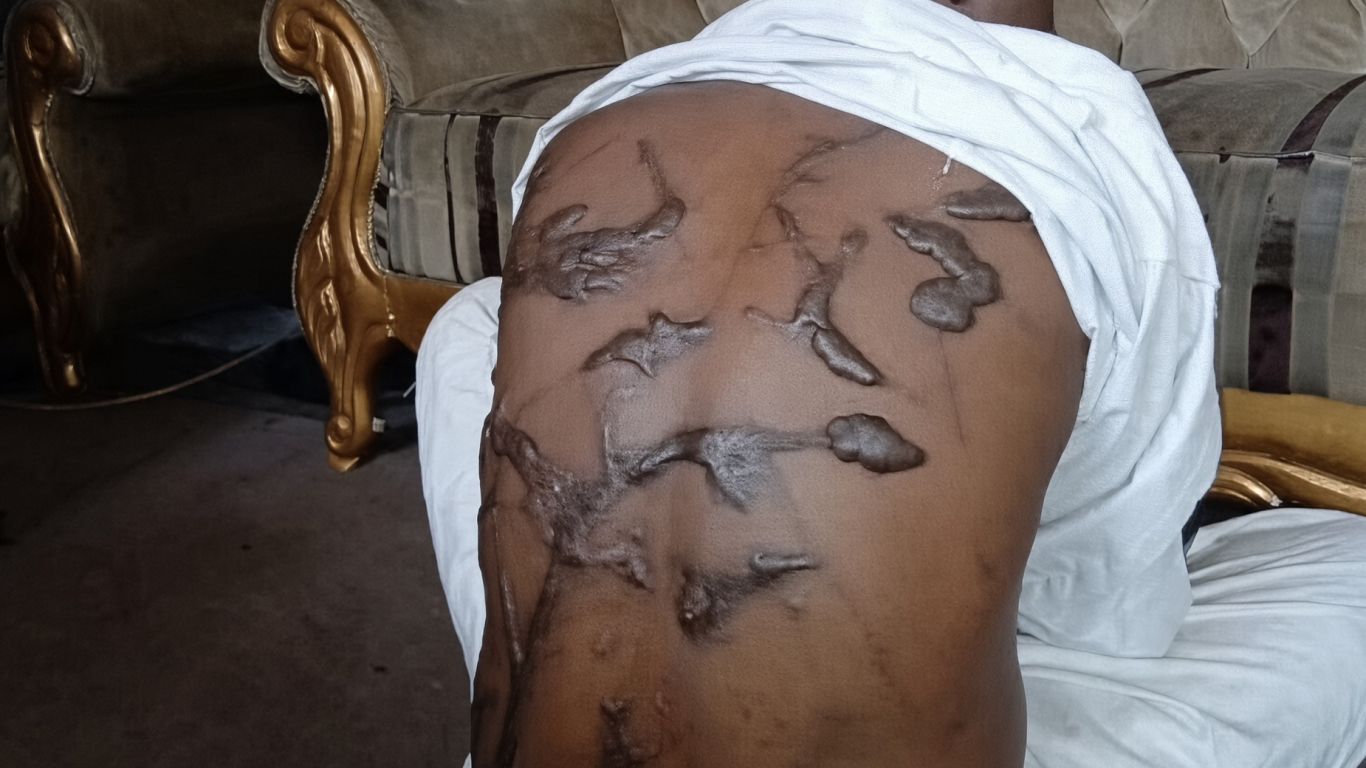
在阿达马瓦州一家人权组织的办公室里,哈鲁纳·哈姆扎小心翼翼地掀起长袍,转过身去,露出了他的后背。
Sitting in the office of a human rights organisation in Adamawa, Haruna Hamza carefully raises his kaftan and turns around to expose his back.
增生的疤痕形成了深色、肿胀的斑块,看起来像干枯的水蛭,那是皮肤愈合不均留下的痕迹。他把长袍拉下来遮住,开始讲述自己的遭遇;声音变得低沉。现年五十多岁的哈姆扎说,这些是普拉库成员殴打留下的伤痕。
Raised scars form darkened, swollen patches that look like dried leeches, where the skin healed unevenly. Pulling his kaftan back down, he begins describing what happened to him; his voice drops. Hamza, a man in his late fifties, said they were the marks of a beating by Pulaku members.
他说,2025年3月,这个义警组织的成员逮捕了他和他的大儿子,没有告诉他们任何被指控的罪名。
In March 2025, he says, members of the vigilante organisation arrested him and his eldest son, without telling either of them what they were accused of doing.
“我问他们我的罪行是什么,但没人告诉我。直到今天,我仍然不知道我的罪行是什么,”他说。
"I asked them what my offence was, but no one told me. Up to today, I still don't know my offence," he said.
据哈姆扎称,他和儿子被带到了普拉库在马尔科希的基地。他说儿子也被关押,但没有遭受身体虐待。
According to Hamza, he and his son were taken to Pulaku's base in Malkohi. He says his son was also detained but was not physically assaulted.
然而,哈姆扎指控说,他的双手被绳子捆绑。几名男子吊起他的双臂将他悬空,其他人则用罗望子树枝做成的藤条抽打他。他说殴打一直持续到他失去知觉。
Hamza, however, alleges that his hands were tied with rope. Several men physically suspended him by his arms while others beat him with canes made from tamarind tree branches. He said the beating continued until he lost consciousness.
“我被打得陷入昏迷。我晕过去了,甚至不知道手上的绳子什么时候松开的,”他说。
"I was beaten into a coma. I fainted, and I don't even know when the rope on my hands came loose," he said.
哈姆扎所说的昏迷是指他失去知觉的描述;半岛电视台尚未确定他是否曾被医学诊断为处于昏迷状态。他无法辨认出据称袭击他的任何一个具体男子。但他将这次袭击归咎于普拉库成员。
Hamza's description of a coma refers to his account of losing consciousness; Al Jazeera has not established that he was medically diagnosed as being in a coma. He could not identify any of the individual men he says attacked him. But he attributes the assault to Pulaku members.
他指控说,他在该组织基地被关押了两个月零一周,期间未被移交警方羁押。他说背部的伤口严重感染。“你看到的我背上的疤痕烂了。蛆虫从里面爬出来,”他说。
He alleged that he remained detained at the group's base for two months and one week, without being transferred to police custody. He said injuries on his back became severely infected. "The scars you see on my back decayed. Maggots were coming out of them," he said.
哈姆扎还指控一记耳光导致他的一只耳朵受损,流血大约持续了一周。
Hamza also alleged that a slap damaged one of his ears, causing it to bleed for about a week.
当他讲述这段经历时,声音变得柔和而压抑。有时,他听起来又显得激动。
As he recounts the experience, his voice softens and becomes more subdued. At other moments, he sounds agitated.
获释几个月后,他终于能仰卧入睡而不感到疼痛,但身上的伤痕依然清晰可见。
Months after his release, he can finally sleep on his back without pain, but the marks on his body are still visible.
他说,自己至今仍不得不忍受那次所谓袭击所留下的身体伤害。他还表示,自己对获得正义的期望已经破灭,现在尽量避免谈论那段经历。他说,自己绝不愿意任何人遭遇自己所经历的事情。
He said he has continued to live with the physical consequences of the alleged assault. He also said his hopes of obtaining justice had diminished, and that he now tries to avoid discussing the experience. He would not wish what happened to him on anyone, he said. But the organisation he accused of detaining and torturing him disputed his account.
然而,他指控自己被关押和遭受折磨的那个组织却对他的说法提出了质疑。该组织的指挥官对哈姆扎背上的伤痕给出了完全不同的解释:“他背上的伤痕是用记号笔划出来的。我们绝不会虐待任何人,”指挥官说道。
Its commander had a very different explanation for the marks on Hamza's back. Musa Usman Malkohi rejects Hamza’s account that Pulaku members had tortured him. "The scars on his back were drawn with a marker. We don't abuse humans," he said. The commander had been shown photographs of the marks on Hamza's body.
指挥官看过哈姆扎身上伤痕的照片,坚称那些伤痕并非真实存在的伤害,而是人为划上去的。
He maintained that the injuries were not genuine, suggesting that closer examination of the wounds would reveal they had been drawn onto the skin.
他还指责哈姆扎诽谤了该组织,并表示:“我们原本打算对他采取法律行动,但最终大家决定干脆忘掉这件事。”
He also accused Hamza of defaming the organisation. "We were planning to take legal action against him, but we collectively decided to just forget about him," he said.
乌斯曼并未否认普拉库(Pulaku)组织的成员确实关押过哈姆扎,但他没有说明哈姆扎具体被怀疑犯了什么罪,也没有提供任何能证明他与犯罪活动有关的证据。
Usman did not deny that Pulaku members had detained Hamza. He said the organisation dealt with suspects whom he believed could pose a threat to its members, but did not specify what Hamza was suspected of or provide evidence linking him to criminal activity.
乌斯曼也没有说明普拉库组织是否记录了被关押人员的信息,也没有确认哈姆扎是否被移交给警方。哈姆扎坚称,在被关押期间自己从未被移交警方。
He did not clarify whether Pulaku kept records of people detained at its base, nor did he confirm that Hamza had been handed over to police. Hamza maintains that he was never transferred into police custody during his detention.
亚达马瓦州警方表示,他们没有收到哈姆扎或其家人关于被关押和遭受虐待的正式投诉。不过警方表示正在调查这些指控,但没有提供更多细节。
The Adamawa State Police Command said it had not received a formal complaint from Hamza or his family about the alleged detention and torture. However, police said they were investigating the allegations but did not provide further details.
恩古罗杰(Nguroje)称,警方曾为治安维持人员和猎人组织过培训课程,内容涉及敲诈勒索、不合理的要求以及侵犯人权等问题。
Nguroje said officers had organised workshops and training sessions for vigilantes and hunters, covering issues including extortion, unnecessary demands and human rights violations.
“我们教导他们关于侵犯人权的行为。我们教导他们关于勒索和无理要求,”他说。
"We taught them about violations of human rights. We taught them about extortion and unnecessary demands," he said.
该指挥部未提供针对普拉库此前投诉的数据,也未提供涉及其成员的刑事或纪律程序的细节。对哈姆扎而言,那些无人愿回答的悬而未决的问题更为迫切。
The command did not provide figures on previous complaints against Pulaku or details of criminal or disciplinary proceedings involving its members. For Hamza, the unresolved questions that no one is willing to answer are more immediate.
他为何被拘留?他是在谁的授权下被关押的?谁将查明他所说的在该自卫组织基地度过的两个多月里到底发生了什么?
Why was he detained? Under whose authority was he held? And who will establish what happened during the more than two months he says he spent at the vigilante group's base?
围绕普拉库的紧张局势反映了尼日利亚一个广泛存在的两难困境:面对绑架、土匪行径和其他暴力,社区越来越多地求助于武装志愿者团体以寻求保护。
The tension surrounding Pulaku reflects a much wider dilemma in Nigeria, where communities facing kidnapping, banditry and other violence have increasingly turned to armed volunteer groups for protection.
尼日利亚安保情报公司“信标安全与情报有限公司”董事总经理卡比尔·阿达穆认为,自卫团体的增长是公共安全更深层次失效的后果。
Kabir Adamu, managing director of Beacon Security and Intelligence Limited, a Nigeria-based security and intelligence firm, sees the growth of vigilantism as a consequence of deeper failures in public security.
他说:“尼日利亚出现大量自卫团体的原因,是因为公共安全失效。而这种失效导致了自助、自卫行为,以及不同环境的安全化。”尼日利亚的安全危机在十多年间不断加深,由重叠的冲突驱动。在东北部,博科圣地的武装叛乱自2009年以来摧毁了社区。在其他地方,因土地和水资源的争端、盗窃牲畜以及武装犯罪团伙的蔓延,导致了杀戮和绑架。
"The reason why we have a lot of vigilante groups is because of the failure of public security in Nigeria," he said. "And that failure has led to self-help, vigilantism and the securitisation of different environments." Nigeria's security crisis has deepened over more than a decade, driven by overlapping conflicts. In the northeast, Boko Haram's armed rebellion has devastated communities since 2009. Elsewhere, disputes over land and water, cattle rustling and the spread of armed criminal gangs have led to killings and kidnappings.
气候压力和资源竞争加剧了其中一些紧张局势。与此同时,力量过度分散的警方和军队难以保卫广袤的农村地区,使社区暴露在反复袭击之下。
Climate pressures and competition for resources have intensified a number of these tensions. Meanwhile, overstretched police and military forces have struggled to secure vast rural areas, leaving communities exposed to repeated attacks.
在尼日利亚东北部,平民联合特遣队与安全部队并肩作战,对抗“博科圣地”及其他武装团体。在西南部,阿莫特昆安全网络成立以打击暴力活动;而在中部的贝努埃州,则设立了自己的社区志愿卫队。
In the northeast, the Civilian Joint Task Force has fought alongside security forces against Boko Haram and other armed groups. In the southwest, the Amotekun security network was established to combat violence, while Benue State, in central Nigeria, set up its own Community Volunteer Guards.
这些团体的权力及其与当局的关系各不相同,但都反映出对地方武装力量保护社区的依赖日益加深。但这种依赖也带来了自身的危险。
Their powers and relationships with authorities differ, but all reflect a growing reliance on local groups to protect communities. But that reliance has brought its own dangers.
在尼日利亚东南部,国际特赦组织记录了2022年7月,在伊莫州,由州政府支持的准军事组织“埃布贝·阿古”成员杀害14名年轻人的案件。该人权组织还记录了指控,称邻近的阿南布拉州的地方义务警卫在一个临时监狱里关押了约80人,并向其家属勒索赎金以换取释放。
In southeastern Nigeria, Amnesty International documented the killing of 14 young people by operatives of Ebube Agu, a state-backed paramilitary outfit, in Imo State in July 2022. The rights organisation also recorded allegations that local vigilantes in neighbouring Anambra State detained about 80 people in a makeshift prison and demanded money from their families for their release.
针对普拉库的指控仍有争议。但丹尼尔·穆萨获救与哈鲁纳·哈姆扎讲述的被拘留和虐待经历形成的对比,暴露了那些依赖武装志愿者提供保护、却缺乏手段追究其责任的社区所处的困境。
The allegations against Pulaku remain disputed. But the contrast between Daniel Musa's rescue and Haruna Hamza's account of detention and abuse exposes the difficult position of communities that depend on armed volunteers for protection while having limited means to hold them accountable.
阿达穆警告说,后果远不止个别指控。当武装团体与特定族群身份紧密挂钩时,它们会加深社区间的不信任,进一步削弱国家权威。
Adamu warns that the consequences extend beyond individual allegations. When armed groups become closely associated with particular ethnic identities, they can deepen mistrust between communities and further weaken the authority of the state.
他说:“风险在于,这会侵蚀国家权威,导致社会凝聚力下降,并加剧尼日利亚目前所处的脆弱局面。”丹尼尔·穆萨为化名,为保护其身份已更改姓名。
"The risks are that it erodes the authority of the state, it leads to depleted social cohesion, and it accentuates the fragility that Nigeria is in at the moment," he says. Daniel Musa is a pseudonym; his name has been changed to protect his identity.