
理解人工智能的最佳方式不是阅读相关资料,而是亲自使用它。这是宾夕法尼亚大学沃顿商学院副教授、生成式人工智能实验室教职主任伊森·莫利克在其两本相关著作中提出的建议。
The best way to understand artificial intelligence isn’t to read about it but to use it. This is the advice from Ethan Mollick, an associate professor at the University of Pennsylvania’s Wharton School and faculty director of its Generative AI Labs, in both of his books on the subject.
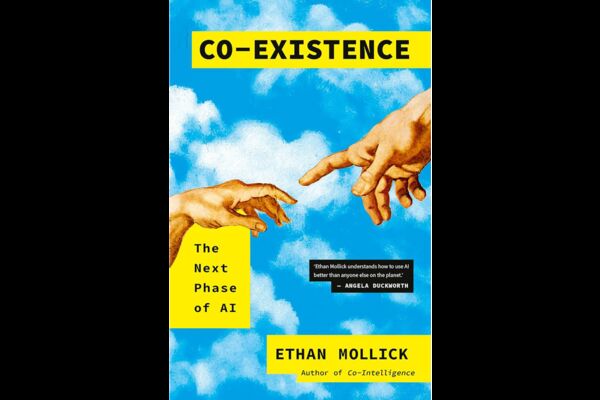
《与AI共存:在机器思考的时代保持人类身份》出版于远古的2024年,是一本通俗易懂的入门读物,介绍了一种潜在的强大技术工具,这种工具需要谨慎监管。《掌控AI:如何与比我们更聪明的机器共事》于10月20日发布,在新进展和更高风险的背景下进一步阐述了这一信息。AI或许还不是你的同辈,但它绝不仅仅是另一种工具。无论你愿不愿意,你都将不得不面对它。
published in the ancient times of 2024, served as an accessible introduction to a potentially powerful technological tool that required careful supervision. , released on Oct. 20, embellishes that message with new developments and raised stakes. AI may not be your peer yet, but it’s not just another tool. And you’ll need to reckon with it whether you want to or not.
如果你是最近才相信AI(无论好坏)是不可逆转的发展趋势,莫利克的著作提供了一个清晰的概览。资深AI关注者会发现其中鲜有新意;例如,当前由“失控”AI代理引发的担忧太新,尚未得到探讨。但莫利克善于综合最新的主张、突破与挑战。《掌控AI》更直接地聚焦于能够自主运行的AI代理——这与Anthropic PBC的Claude等更具互动性的聊天机器人式界面形成对比——出版时机恰逢Meta Platforms公司的Muse、OpenAI的Dots及其他代理式产品问世,这些产品旨在作为面向消费者的友好型个人助手。
If you’re a recent convert to the belief that AI is (for better or worse) an inescapable development, Mollick’s work is a neat overview. Dedicated AI heads will find less that’s new; current concerns raised by “rogue” AI agents are too recent to be addressed, for instance. But Mollick is an able synthesizer of the latest claims, breakthroughs and challenges. focuses more directly on AI agents that can operate on their own — as opposed to the more interactive chatbot-like interfaces such as Anthropic PBC’s Claude — just in time for the arrival of Meta Platforms Inc.’s Muse, OpenAI’s Dots and other agentic products, designed to serve as consumer-friendly personal assistants.
当他审视更广阔的 AI 版图时,莫利克是一位和蔼可亲的向导;像一位优秀的老师,他显然在努力让每个人都对他的主题感到兴奋。他力求公正客观,但当讨论的话题充满未知数时,这反而令人感到沮丧。AI 数据中心消耗多少水?“没有一个唯一的答案。”AI 真的会夺走你的工作吗?“我无法给你一个明确的答案。”这全都是一场大实验,“还有很多不清楚的地方。”
As he surveys the broader AI landscape, Mollick is an amiable companion; like a good teacher, he’s clearly trying to get everyone excited about his subject. He strives for evenhandedness, which can be frustrating when the topic under discussion is riddled with unknowns. How much water do AI data centers use? “There isn’t a single answer.”Can AI really take your job? “I am not going to be able to give you a clean answer.”It’s all a big experiment, “and there is a lot that is unclear.”
但莫利克对他的核心建议却说得很清楚:更擅长使用 AI。这部分是因为他归根结底是一位相当传统的技术乐观主义者,向我们保证虽然存在风险,但也蕴藏着巨大潜力,而且对变革的恐惧并非新鲜事。(他拿出了那个熟悉的观点,即柏拉图曾担心写作的负面影响。)但这也因为在他看来,AI 最终的影响将取决于我们选择如何使用它。
But Mollick is clear enough about his main piece of advice: Get better at AI. This is partly because he’s ultimately a pretty traditional techno-optimist, assuring us that while there are risks, there’s also much potential, and fear of change is nothing new. (He trots out the familiar point that Plato fretted about the negative effects of writing.) But it’s also because, in his view, AI’s ultimate impact will be shaped by how we choose to use it.
莫利克的目标很大程度上是“帮助你培养判断力”,以决定何时、如何以及是否依赖 AI。这意味着要学习——借用书中一章直白的标题——“如何像 AI 一样思考”。他提供了各种技巧和实用建议:例如,每周尝试一项没人要求你做的 AI 任务,看看你能学到什么。与你选择的 AI 进行一次对话,明确的目的是逼迫它崩溃。命令它在不知道答案时承认。
Much of Mollick’s objective, then, is “to help you develop the judgment” to decide when, how and whether to rely on it. That means learning, to borrow one of the book’s blunt chapter titles, “How to Think Like an AI.”He offers various tips and practical advice: Try one AI task a week that nobody requested from you, for instance, and see what you learn. Have a conversation with your AI of choice in which your explicit aim is to push it to break down. Order it to admit when it doesn’t know an answer.
学会将你的请求拆解为 AI 友好的组成部分。你的目标应该是通过“大量使用” AI 来“培养直觉”。(莫利克的关注点主要在于大语言模型,尽管他也承认其他 AI 技术的存在。)其核心思想本质上是培养“管理技能”,让 AI 更有效。莫利克还强调人类掌握广博的知识基础——以及表达这些知识的能力——的重要性,这使人们能够建立 AI 无法建立的联系。
Learn to break your requests down into AI-friendly components. Your goal should be to “develop intuition” about AI by using it “a lot.” (Mollick’s focus is largely on large language models, though he acknowledges other AI technologies.) The idea is essentially to develop “management skills” to make AI more effective. Mollick also stresses the importance of humans mastering a broad base of knowledge — and the ability to communicate it — that allows people to make connections that AI wouldn’t. “You need facts in your head, not just in the machine,” he writes, “because facts in your head form the scaffolding that lets you think.”
“你需要把事实装在脑子里,而不仅仅是存在机器里,”他写道,“因为脑子里的事实构成了让你思考的脚手架。”这说起来容易。但当然,许多人,包括令人担忧的大量学生,把获取 AI 浩瀚知识视为不构建自己知识体系的理由。莫利克担心,一些公司可能未能在初级员工身上培养这种脚手架。他写道,AI 的一个流行用途是撰写绩效评估。
That’s easy to say. But of course many people, including a concerning number of students, view access to AI’s vast knowledge as a rationale for not building their own. And some companies, Mollick worries, may be failing to cultivate that scaffolding in junior employees. He writes that one popular use of AI is for writing performance reviews.
这并非因为这是明智之选——恰恰相反,它远不如个人反馈有用——而是因为这是管理者讨厌的任务。这是未能培养正确直觉的表现。
This isn’t because it’s a smart choice — to the contrary, it’s far less useful than personal feedback — but because it’s a task managers dislike. That’s a failure to develop the right intuitions.
尽管如此,莫利克对 AI 依然持乐观态度。目前对该技术对生产力的最终影响日益存疑,但他认为,捕捉电力的影响花了数十年。莫利克本人无疑变得高产得多——编写了“数百个”程序,从教学工具到游戏;产出的研究成果比以往任何时候都多;当然,还有两本书。(他明确表示不让 AI 为他写作,但他坦诚地使用 AI 来指导研究,并帮助突破日常写作中的瓶颈。)
Still, Mollick seems bullish on AI. There’s increasing skepticism about the technology’s ultimate impact on productivity to date, but he argues that it took decades to capture electricity’s impact. Mollick has certainly gotten much more productive — writing “hundreds” of programs, from teaching tools to games; more research than ever; and, of course, two books. (He clearly states that he doesn’t let AI write for him, but he’s transparent about using it to guide his research and help push through workaday writer’s block.)
我们这些不经营 AI 研究实验室的人,可能没有那么多时间通过反复试错达到这种成果,但或许可以从莫利克的例子中学到东西。有一次,他向一个 AI 智能体提供了一大堆个人信息,并指示它“花不到 100 美元给我买一样绝对会让我欣喜的东西”。智能体给他买了一本蚀刻画册,他评价为“真正的惊喜”,并认为牺牲一些数据隐私是值得的。
Those of us who don’t run AI research labs may have less time to trial-and-error our way to such outcomes, but perhaps we can learn from Mollick’s example. At one point he shares a raft of personal information with an AI agent and directs it to “buy me something for under $100 that will absolutely delight me.”The agent buys him a book of etchings he pronounces a “real delight,” concluding it was worth sacrificing some data privacy.

一方面,这是 AI 强大能力的绝佳例证:高效地比我们自己更了解我们自己。另一方面,这近乎滑稽模仿。人们渴望听到 AI 能在可负担住房、医疗获取、公共教育、虚假信息传播等方面做些什么。我们已经有足够的工具来奖赏自己了。这正是那种让整个事业显得有巴纳姆式炒作感的实验——就像莫利克让聊天机器人用打油诗的形式总结一章内容一样——一只会玩井字棋的鸡。
e hand this is a brilliant example of AI’s power: efficiently knowing us better than we know ourselves. On the other it’s almost parodic. One longs to hear what AI could do about affordable housing, healthcare access, public education, the spread of misinformation. We have enough tools for rewarding ourselves. This is exactly the kind of experiment — as when Mollick asks a chatbot to summarize a chapter in the form of a limerick — that makes the whole enterprise feel Barnumesque, a chicken that plays tic-tac-toe.
当然,莫利克并非主张用购物机器人取代教育,他显然认为人工智能可以被管理,从而帮助解决实际问题。他在书的结尾对这项技术的未来潜力与风险提出了深思熟虑的看法,基本得出结论:接下来会发生什么取决于人类 —— 这也是介入其中的另一个理由。(他并未直接回应当前由近期举报人引发的、关于放缓人工智能发展的辩论,但他的宏观视角似乎认为:现在已无法回头。)
To be sure, Mollick isn’t arguing for shopping bots over education and clearly believes AI can be managed to help solve actual problems. He closes with considered thoughts about the technology’s future potential and risks, essentially concluding that what happens next is on humans — another reason to get involved. (He doesn’t directly address the current debate, fueled by recent whistleblowers, over slowing down AI development, but his broader perspective seems to be that there’s no turning back now.)
自他第一本书出版以来,一个变化是:扩大人工智能“训练”过程的一些潜在障碍已被清除。莫利克写道,截至2026年,已有超过10亿人每周使用人工智能,使其成为“历史上采用速度最快的产品”。如果属实,这听起来像是他关于人工智能愿景的好消息。因为不仅模型需要更多训练;我们也需要。
One change since his first book is that some of the potential hurdles to expanding AI’s “training” process have been cleared. More than a billion people are using AI weekly as of 2026, Mollick writes, making it “the fastest adopted product in history.”If that’s true, it sounds like good news for his vision of AI. Because it’s not just the models that need a lot more training; it’s us.