联邦通信委员会(FCC)在一份近期报告中揭示了美国移动网络的令人担忧的矛盾:网络几乎覆盖所有人,但并非所有地方。虽然95%的美国人口可以从至少一家运营商处获得5G服务,但仅69%的国道和39%的国土面积具备该覆盖。在农村地区,数字降至60%和38%。这正是农村移动数字鸿沟。这与是否能在家中获得家庭宽带无关,而是指在行驶、农耕、徒步、应对野火或应急响应时丧失移动服务。
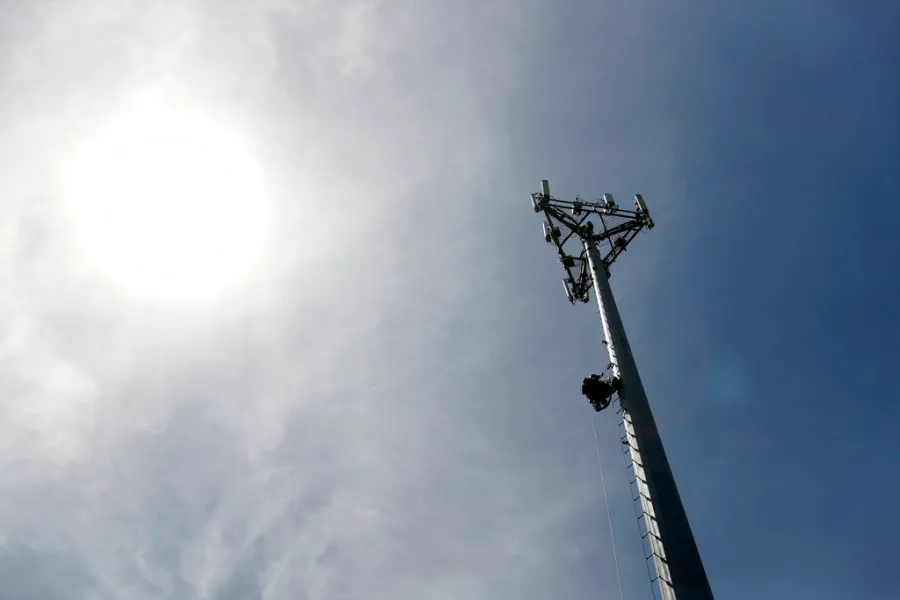
In a recent report, the Federal Communications Commission revealed a worrisome paradox in America’s cellular networks: they reach nearly everyone, but not nearly everywhere. While 95 percent of the U.S. population can receive 5G service from at least one carrier, only 69 percent of the nation's road miles and 39 percent of its land area have such coverage. In rural America, the numbers fall to 60 percent and 38 percent. This is the rural-mobile divide. It is not about whether a household can obtain broadband at home. It is about losing mobile service while driving, farming, hiking, fighting a wildfire or responding to an emergency.
传统解决方案是建设更多基站,但这些基站仍有需求。然而,将地面网络扩展至每条偏远道路、峡谷和山顶在经济上是不理性的。FCC已批准一项计划,向美国5G移动网络的剩余覆盖缺口提供最高90亿美元。但除非将每个死区视为建设问题,否则应考虑是否应将最后的基站放置在轨道上。当前科技为覆盖这一最昂贵的边界提供了有前景的替代方案。
The conventional solution is to build more cell towers. Some are still needed. But extending terrestrial networks to every remote road, ravine and mountaintop would be economically irrational. The FCC has approved a plan to provide up to $9 billion to close the remaining gaps in America’s 5G cellular networks. But instead of treating every dead zone as a construction problem, we should consider whether the last cell towers should instead be placed in orbit. Technology advances now offer a promising alternative to cover this last and most expensive frontier.
直连设备卫星服务允许兼容的普通手机在无地面基站时直接连接至卫星,卫星实质上成为太空中的基站。无需卫星电话、天线或其他专用设备。三大运营商均视卫星为移动网络的重要组成部分。T-Mobile已通过Starlink提供该服务,部分计划包含该服务,其他符合条件用户(包括竞争运营商的订阅者)需每月支付10美元/线。AT&T和Verizon亦与卫星公司合作。
Direct-to-device satellite service allows an ordinary compatible cellphone to connect directly to a satellite when no terrestrial tower is available. The satellite effectively becomes a cell tower in space. No satellite phone, dish or other specialized equipment is required. All three national carriers see satellites becoming an integral part of mobile networks. T-Mobile already offers this service through Starlink. The service is included with some T-Mobile plans and sold for $10 a month per line to other eligible users, including subscribers of competing carriers. AT&T and Verizon have their own satellite partnerships.
今年5月,三大运营商均宣布计划成立合资企业,以拓展直连终端覆盖、共享频谱,并让卫星运营商更容易触达客户。直连终端卫星服务并不取代地面5G网络。其容量有限,初期服务侧重于消息传递、应急通信及部分低带宽应用。语音及更高性能的数据服务正在开发中。但即便是基础连接,也能将信号盲区变为可呼叫救援、报告事故或向家人报平安的地方。
And in May, all three carriers announced plans for a joint venture to expand direct-to-device coverage, pool spectrum and make it easier for satellite operators to reach their customers. Direct-to-device satellite service doesn’t replace terrestrial 5G. Its capacity is limited, and initial offerings emphasize messaging, emergency communications and selected low-bandwidth applications. Voice and more capable data services are in development. But even basic connectivity can transform a dead zone into a place where someone can summon help, report an accident or tell family members they are safe.
问题在于如何快速且经济地部署这种能力。答案始于美国联邦通信委员会(FCC)的“农村美国5G基金”。在私人投资无法单独支撑部署的地区补贴蜂窝服务,最早源于2010年《国家宽带计划》的提议。FCC于2020年设立5G基金,在10年内提供高达90亿美元的通用服务基金支持,用于高成本地区的移动服务。现行规则要求受资助方提供常规5G速率,而当前的卫星服务尚无法满足。
The question is how to deploy that capability quickly and affordably. The answer begins with the FCC's 5G Fund for Rural America. Subsidizing cellular services in areas where private investment alone won’t support deployment was originally proposed in the 2010 National Broadband Plan. The FCC established the 5G Fund in 2020, making available up to $9 billion in Universal Service Fund support over 10 years for mobile service in high-cost areas. The existing rules require fund recipients to deliver conventional 5G speeds that today’s satellite service cannot yet provide.
但在承诺长达十年的常规建设之前,该机构应设立直连终端层级,为基站无法经济覆盖的地区采购基础移动覆盖,并让竞争性的地面-卫星合作伙伴关系竞标提供服务。FCC不应规定运营商必须建设何种基础设施,而应采购其想要的覆盖,让提供商竞争以最佳方式交付。具体如何运作?FCC可要求运营商就指定无服务区域的卫星覆盖进行投标,竞标其在不收取溢价的情况下所需的最低补贴。
But before committing to a decade of conventional construction, the agency should create a direct-to-device tier to buy basic mobile coverage in places that towers cannot economically reach, then let competing terrestrial-satellite partnerships bid to provide it. Instead of prescribing the infrastructure carriers must build, the FCC should buy the coverage it wants and let providers compete over how best to deliver it. How would it work? The FCC could ask carriers to bid for the minimum subsidy they need to provide satellite coverage in designated unserved areas without charging the premium.
运营商仅在满足可用性、可靠性、应急通信及与广泛使用的手机兼容性等明确要求后,才能获得支持。
Carriers would receive support only in return for meeting clear requirements for availability, reliability, emergency communications and compatibility with widely used handsets.
该条件将推进《通信法》承诺,使农村和高成本地区的消费者能够获得与城市地区“相当可比”的通信服务,且费率“相当可比”。 “相当可比”并不要求服务或价格完全相同。法院允许联邦通信委员会在可比性与可负担性之间取得平衡,并负责监管通用服务基金。在此,平衡已明确:为在最具挑战性的地形铺设陆地网络耗费巨额资金,会挤占那些仍具经济可行性的地区的资源;而让这些地形保持未覆盖,则会延续农村鸿沟。
That condition would advance the Communications Act's promise that consumers in rural and high-cost areas should have access to communications services that are "reasonably comparable" to those available in urban areas, at "reasonably comparable" rates. “Reasonably comparable” doesn’t require identical service or prices. Courts allow the FCC to balance comparability with affordability and responsible stewardship of the Universal Service Fund. Here, the balance is clear. Spending enormous sums to extend a terrestrial network over the most challenging terrain would drain resources from places where towers remain economically viable. Leaving that terrain uncovered, on the other hand, perpetuates the rural divide.
对最常遇到死区的用户额外收取每年 120 美元,使最不被服务的群体为基础连通性支付更多费用。联邦通信委员会的规则要求获得 5G 基金支持的接收方必须在农村提供与城市地区“相当可比”的费率服务。在农村和城市地区提供相同的费率、条款和条件,即可满足该规则。因此,将要求补贴直连设备覆盖的范围扩展至农村,属于现有通用服务政策的演进,而非全新的价格监管体系。
And charging those who most often encounter dead zones an additional $120 a year makes those least well served pay extra for basic connectivity. The FCC’s rules require recipients of 5G Fund support to offer rural service at rates reasonably comparable to urban rates. Offering the same rates, terms and conditions in urban and rural areas can satisfy that rule. So, extending the requirement to subsidized direct-to-device coverage would be an evolution of existing universal-service policy, not a new system of price regulation.
通用服务政策始终会随着网络技术和经济形势的变化而适应。直连设备的变化也同时影响两者。不再需要在山坡上建设最后一座基站来缩小农村鸿沟,它可以通过已授权用于为市场无法经济覆盖的偏远地区提供移动服务的联邦基金,在太空中部署。布莱尔·利文是联邦通信委员会前首席参谋,曾主导起草 2010 年《宽带计划》。拉里·多恩斯是《大爆炸颠覆》等关于颠覆性创新的书籍共同作者。
Universal-service policy has always adapted to changes in network technology and economics. direct-to-device changes both. The last cell tower needed to close the rural divide no longer has to be built on the side of a mountain. It can be deployed in space, using a federal fund already authorized to bring mobile service to remote locations the market cannot economically reach. Blair Levin is a former chief of staff of the Federal Communications Commission and directed the writing of the 2010 National Broadband Plan. Larry Downes is the co-author of “Big Bang Disruption” and other books on disruptive innovation.