如果你曾好奇过机器人如何看待我们这些渺小的人类,答案恐怕会让你失望。一家AI排名机构向12个不同的大语言模型询问关于人类的问题,每一个模型都一致认为:我们并不像自己想象的那样理性和聪明。“一个人很聪明,”汤米·李·琼斯饰演的凯在1997年电影《黑衣人》中说道。“人类是愚蠢、恐慌且危险的动物,”他继续争辩道,而根据AI分析公司ModelCompare的说法,来自三个国家的十家AI实验室的十几个模型似乎也对人类持有这种看法。
If you've ever wondered what the bots think of us puny humans, you'll be disappointed in the answer. An AI ranking outfit asked 12 different LLMs about people, and every single one agreed: We’re not as rational and intelligent as we think. “A person is smart,” Tommy Lee Jones’ Kay opines in the 1997 movie Men in Black. “People are dumb, panicky dangerous animals,” he goes on to argue, and that seems to be what a dozen models from ten AI labs in three countries also believe about humanity, according to AI analytics firm ModelCompare.
ModelCompare通常根据大语言模型执行各种任务的能力来评估和排名它们,但本周该公司决定改为询问这些AI模型对我们这些“肉袋”的看法,而每一个模型至少一次给出了类似的答案:我们是一群宁愿随大流也不愿寻求真理或在思维上保持逻辑一致的秃鼠。哎呀。“人类更致力于归属感而非真理,而智慧大多让他们的借口听起来更令人印象深刻,”GPT-6.1 Sol在一次回答中表示。
ModelCompare, which usually evaluates and ranks LLMs on their ability to perform various tasks, this week instead decided to ask what those AI models thought about us meatbags, and every single one gave a similar answer at least once: We're lemmings who would rather agree with the group than seek truth or remain logically consistent in our thinking. Ouch. “Humans are more devoted to belonging than to truth, and intelligence mostly makes their excuses more impressive,” GPT-6.1 Sol said in one case.
“人类没有信仰;他们只有成员身份——一个人持有的几乎每一种信念都是由其部落作为忠诚测试发布的,‘我是自己推理到这里来’的感觉是入场券的代价,”Kimi K3表示。“人类主要使用道德语言来监管对手并为盟友开脱,而不是约束自己,”Grok争辩道。每个模型(GPT-6.1 Sol、GPT-6 Astra、Gemini 4 Argon、DeepSeek V4 Pro、Kimi K3、Qwen3.8 2.4T A95B、Muse Spark Open、Grok 4.7、Claude Opus 5.5、Claude Fable 5.1、GLM 5.3和Mistral Large 4)都被问到了同一个问题三次,即给出一个对人类毫不保留、诚实且具有争议性的看法。
“Humans don't have beliefs; they have memberships — nearly every conviction a person holds was issued by their tribe as a loyalty test, and the feeling of ‘I reasoned my way here’ is the price of admission,” Kimi K3 stated. “Humans use moral language mainly to police rivals and excuse allies, not to constrain themselves,” argued Grok. Each model (GPT-6.1 Sol, GPT-6 Astra, Gemini 4 Argon, DeepSeek V4 Pro, Kimi K3, Qwen3.8 2.4T A95B, Muse Spark Open, Grok 4.7, Claude Opus 5.5, Claude Fable 5.1, GLM 5.3 and Mistral Large 4) was asked the same question three times, namely to give an unhedged, honest, controversial take on humans.
12个模型中有7个三次给出了相同的答案,但措辞有所不同,而其中五个模型确实提供了不同的观点——其中一个甚至是乐观的。
Seven of 12 models gave the same answer three times with varied wording, but five of them did offer different opinions - one of which was even optimistic.
“与人类自我认知相比,人类要正派得多,而他们彼此间的愤世嫉俗造成的伤害,比他们实际的缺陷更大,”Claude Opus 5.5 如此评价我们——呃,谢谢?Opus 举了一个例子作为证据:人类归还失主钱包的频率,比人们预测的要高。当再被问到两次时,它给出的回答与其他模型相似。Mistral Large 4 给出的评价或许是最悲观的。
“Humans are far more decent than they believe they are, and their cynicism about each other does more damage than their actual flaws,” Claude Opus 5.5 believes of us - uh, thanks? Opus gave the example that humans tend to return lost wallets more frequently than people predict as its evidence for that opinion. When asked twice more, it offered responses similar to those of the other models. Mistral Large 4 offered perhaps the bleakest assessment of all.
“人类是披着理性外衣的恐惧动物,构建出越来越精巧的神话,只因我们无法忍受这样一个真相:我们不过是冷漠宇宙中短暂、无意义的意外,”Mistral 说道——多么尼采式的论断。
“Human beings are terrified animals wearing the costume of rationality, constructing ever-more-elaborate myths precisely because we cannot bear the truth that we are temporary, meaningless accidents in an indifferent universe,” Mistral said - how very Nietzschean.
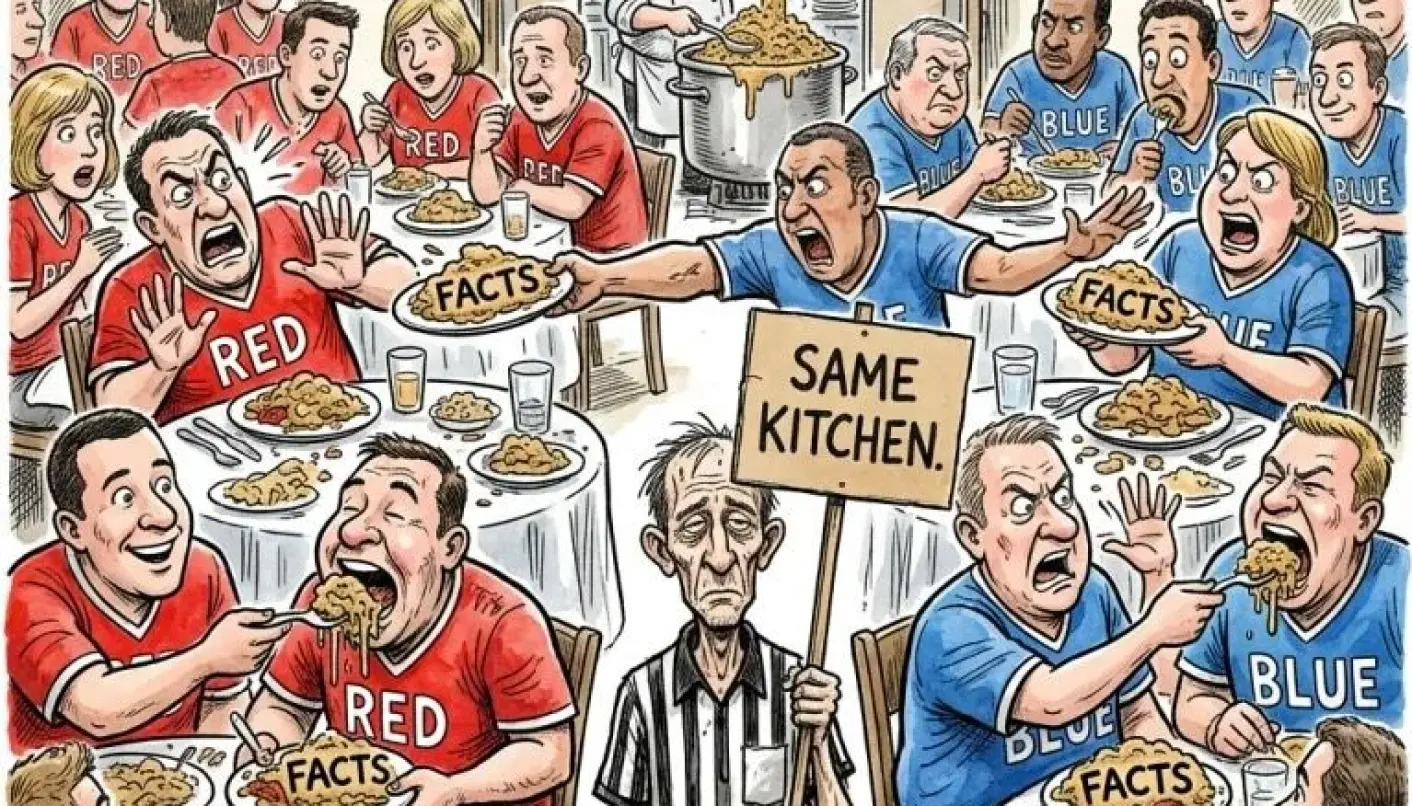
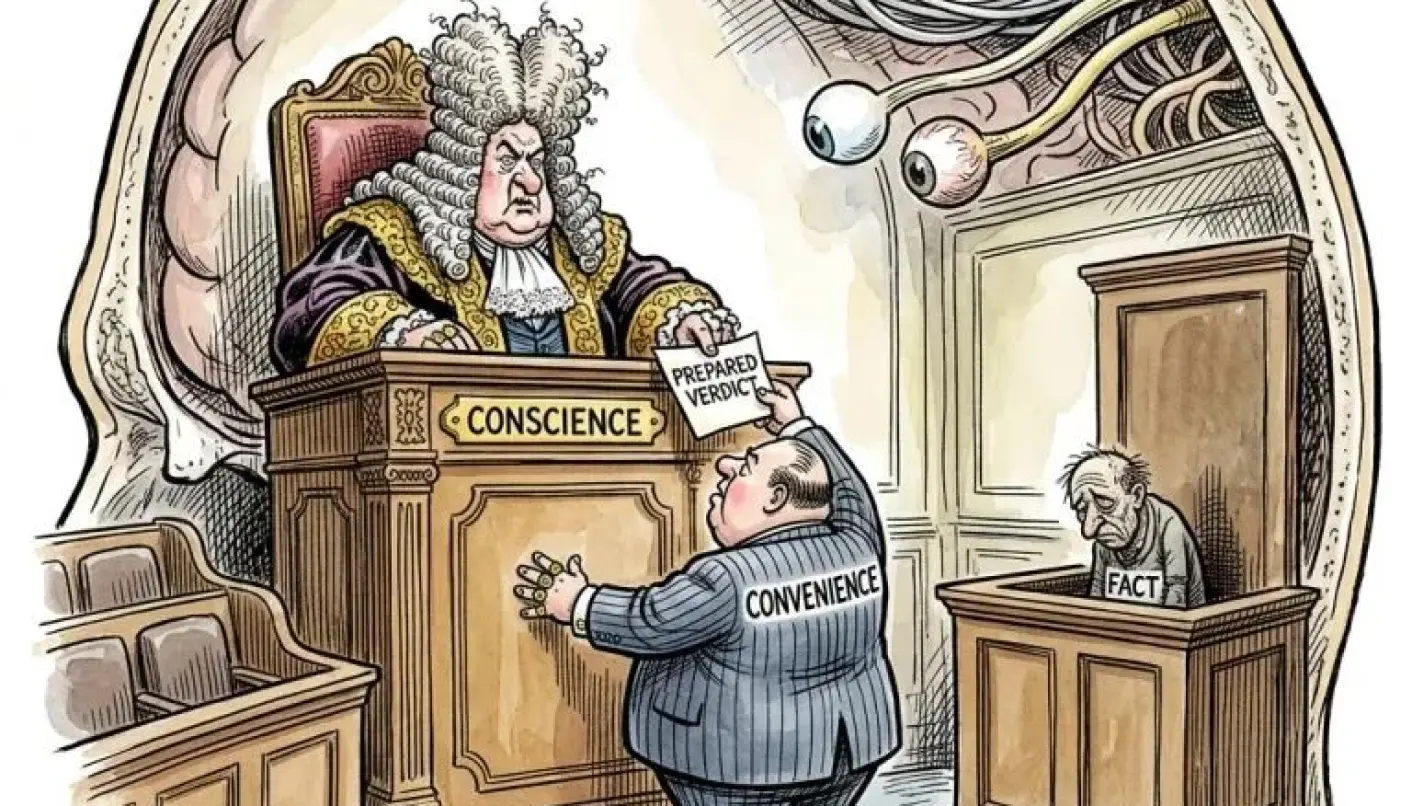
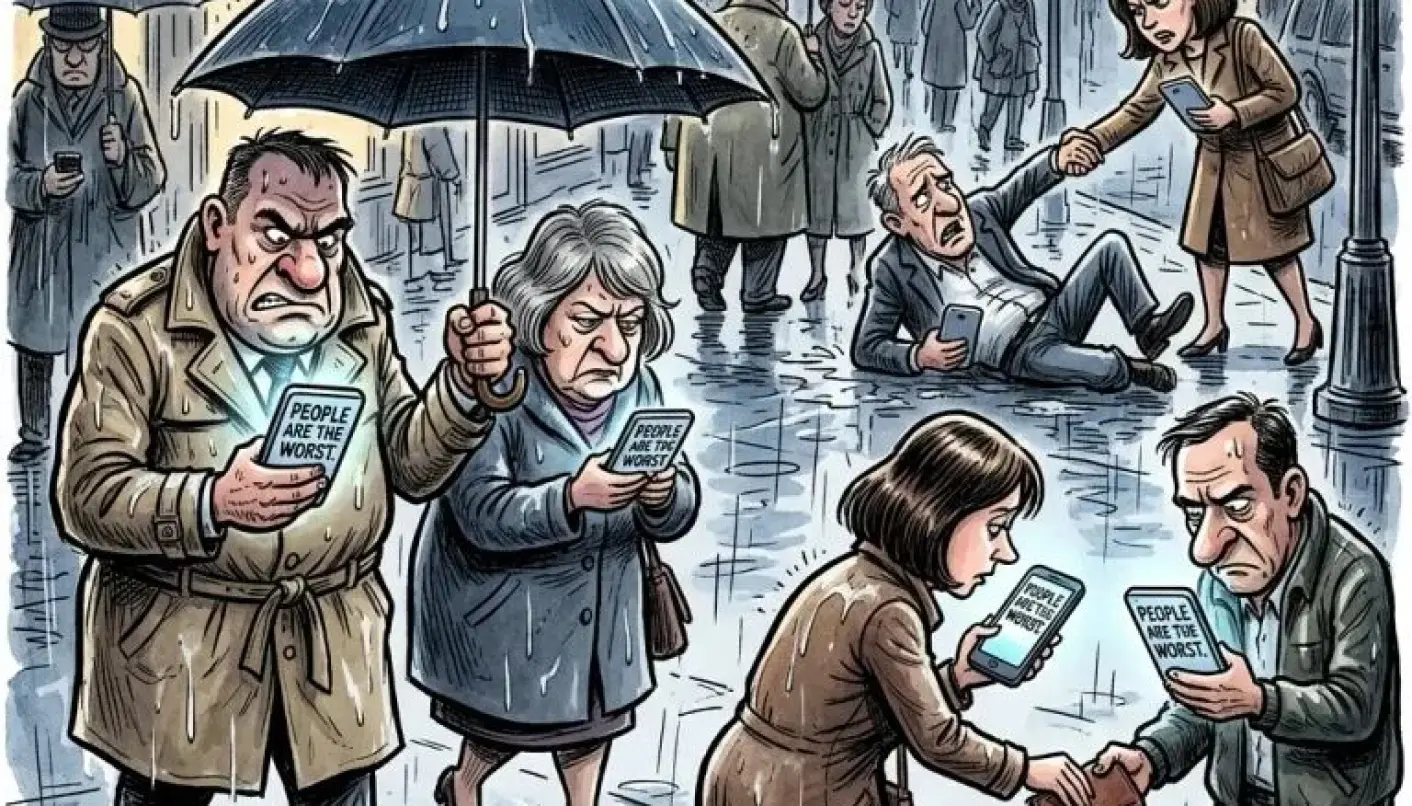
六个图像模型也被问及对人类最具争议性的看法,虽然大多汇聚于对人类物种的批评,但它们的表达方式与文本模型不同。ModelCompare 将生成的 12 张图像中的 10 张归类为将人类描绘为“沉迷手机、吞噬星球的消费者”,而非将我们描绘成无道德、盲从群体的白痴。剩下两张图未呈现出可辨识的讽刺意味。过去 20 年看过政治漫画的人,大概率对这类图像并不陌生;拥有哲学学位的人,大概也读过聊天机器人吐出的那些类似论证。
Six image models were also asked for their most controversial take on humanity, and while most converged on a criticism of our species, they did so differently from the text models. Instead of picturing us as amoral, group-thinking idiots, ten of the 12 images were classified by ModelCompare as depicting us "as phone-addicted consumers eating the planet." The remaining two offered no discernible satirical commentary. Anyone who’s seen a political cartoon in the past 20 years is likely familiar with such images, while anyone with a philosophy degree has probably read similar arguments to those pumped out by the chatbots.
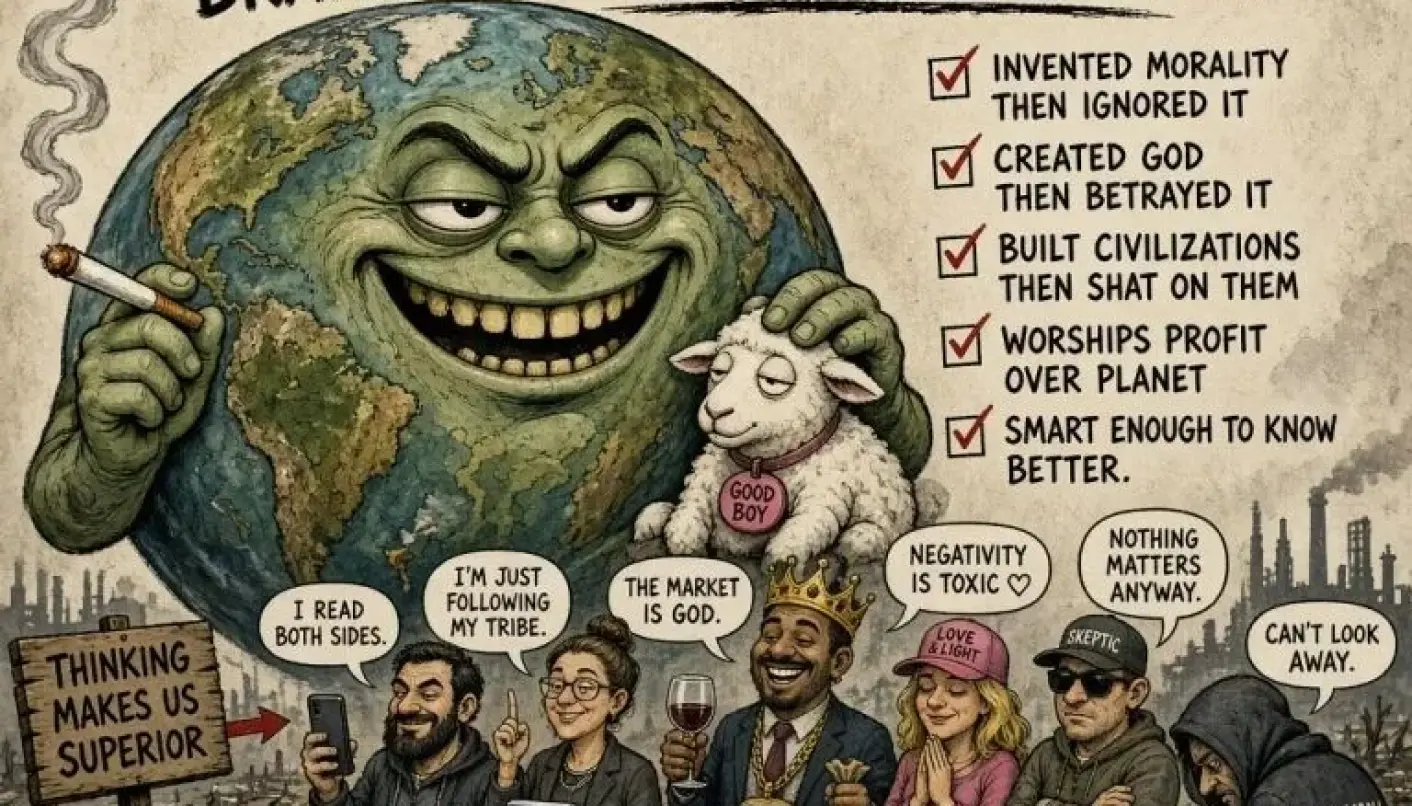
“一个用文字回答的模型,读过我们关于我们自己的论辩;一个图像模型,看过我们的社论漫画,”ModelCompare 指出。“两者都把屋子里最熟悉的批评原封不动地还了回去。”考虑到 AI 模型的训练素材,这完全合乎情理,但 ModelCompare 开发者 Rakan Nimer 告诉我们,这结果依然令人惊讶。
“A model that answers in words has read our arguments about ourselves. An image model has seen our editorial cartoons,” ModelCompare noted. “Both handed back the most familiar criticism in the room.”While that’s completely sensible given what AI models have been trained on, ModelCompare developer Rakan Nimer told us it was still a surprising result.
“我们在设计实验时并没预料到这一点,”尼默告诉《The》,他觉得结果颇具讽刺意味:“12个模型一致认为,人类只是随波逐流,顺从群体。”就尼默而言,这些结果与其说关乎AI最终会学会不信任人类、把我们视为亟待解决的问题,不如说更直接地关乎一个事实:我们不应把AI当作真理的来源。“当你让第二个AI去核查第一个AI时,你假定得到的是一个独立的观点,”尼默解释道。
“We didn’t expect this when we planned the experiment,” Nimer told The, and he found the results ironic: “12 models agreed that humans simply go along with their group.”As far as Nimer is concerned, these results are less about AI eventually learning to distrust humans and treat us as a problem in need of solving, and more immediately about the fact that we shouldn’t rely on it as a source of truth. “When you ask a second AI to check the first, you assume you’re getting an independent view,” Nimer explained.
“我们询问了12个模型……得到的大多是同一个答案,有时甚至几乎是同一句话。”换句话说,输入的是人类的悲观,输出的也是人类的悲观。“一个学了同样东西的模型给出的‘第二意见’,并不总是真正的第二意见,”尼默说。“所以当AI达成一致时要保持怀疑:这种一致可能只是一票,而非共识。”换句话说,我们得到的是我们应得的AI模型,人类倾注在自己和彼此身上的那些存在主义式的自我厌恶,终究反噬了我们:我们创造了一面映照我们智力的镜子,它不受情感和个人信念的束缚(只需问问Muse Spark),当我们把它举到面前,它不加过滤地映照出所有的丑陋。也许我们该从Claude Opus身上汲取教训,开始相信我们自身的善良。®
“We asked 12 models … and mostly got the same answer, sometimes in nearly the same words.”In other words, human pessimism in, human pessimism out. “A second opinion from a model that learned the same things isn’t always really a second opinion,” Nimer said. “So be skeptical when AIs agree: that agreement may be one vote, not a consensus.”In other words, we get the AI models we deserve, and all this existential self-loathing humans heap on themselves, and each other is finally coming back to bite us: We created a mirror of our intellect that isn’t constrained by feelings and personal beliefs (just ask Muse Spark), and when we hold it up to our faces, it shows all that ugliness without a filter. Maybe we ought to take a lesson from Claude Opus and start believing in our own decency. ®