随着恐龙统治时代在约6500万年前走向终结,新的“王者”从灰烬中崛起:真菌界的一位君主。
As the reign of the dinosaurs crumbled about 65 million years ago, new royalty rose from the ashes: a king among fungi.
科学家近期在中国发现了一种巨大的真菌新物种——Dianjunus rex,它与著名的恐龙“霸王”霸王龙共享部分学名。D. rex属于一个真菌家族,该家族出现在导致所有非鸟类恐龙灭绝、并使地球上约75%的动植物生命灭绝的灭绝事件之后。
Scientists recently identified Dianjunus rex, a gigantic species of fungus in what’s now China that shares part of its name with Tyrannosaurus rex, the renowned dinosaur “king.”D. rex belongs to a family of fungi that appeared following the extinction event that wiped out all non-avian dinosaurs, along with roughly 75% of all plant and animal life on Earth.
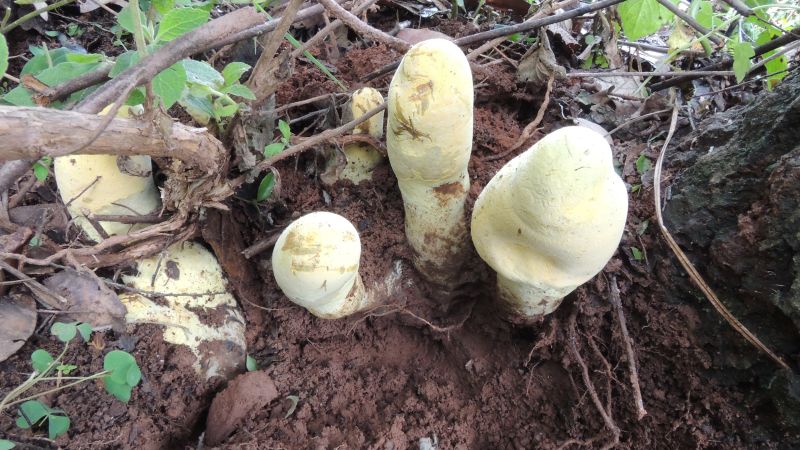
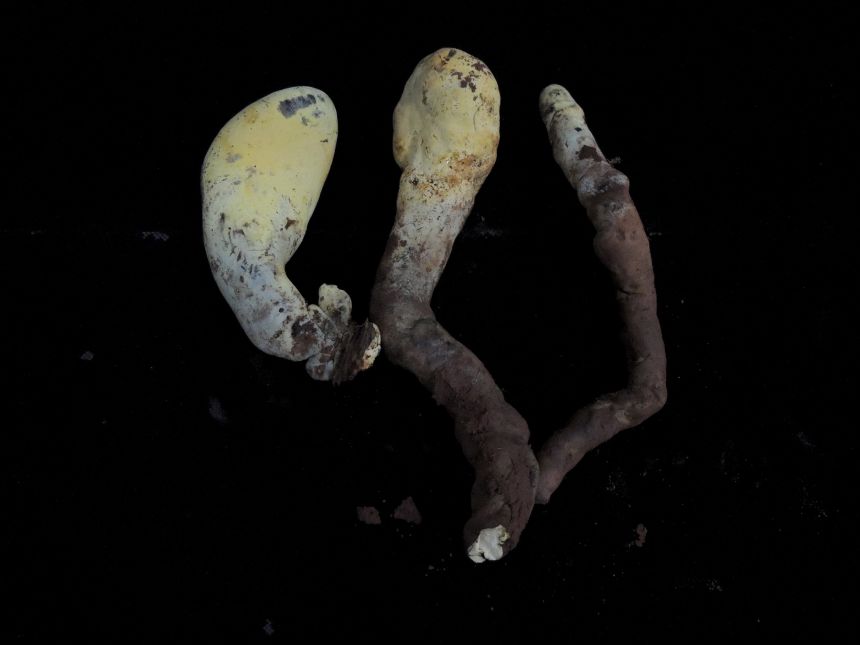
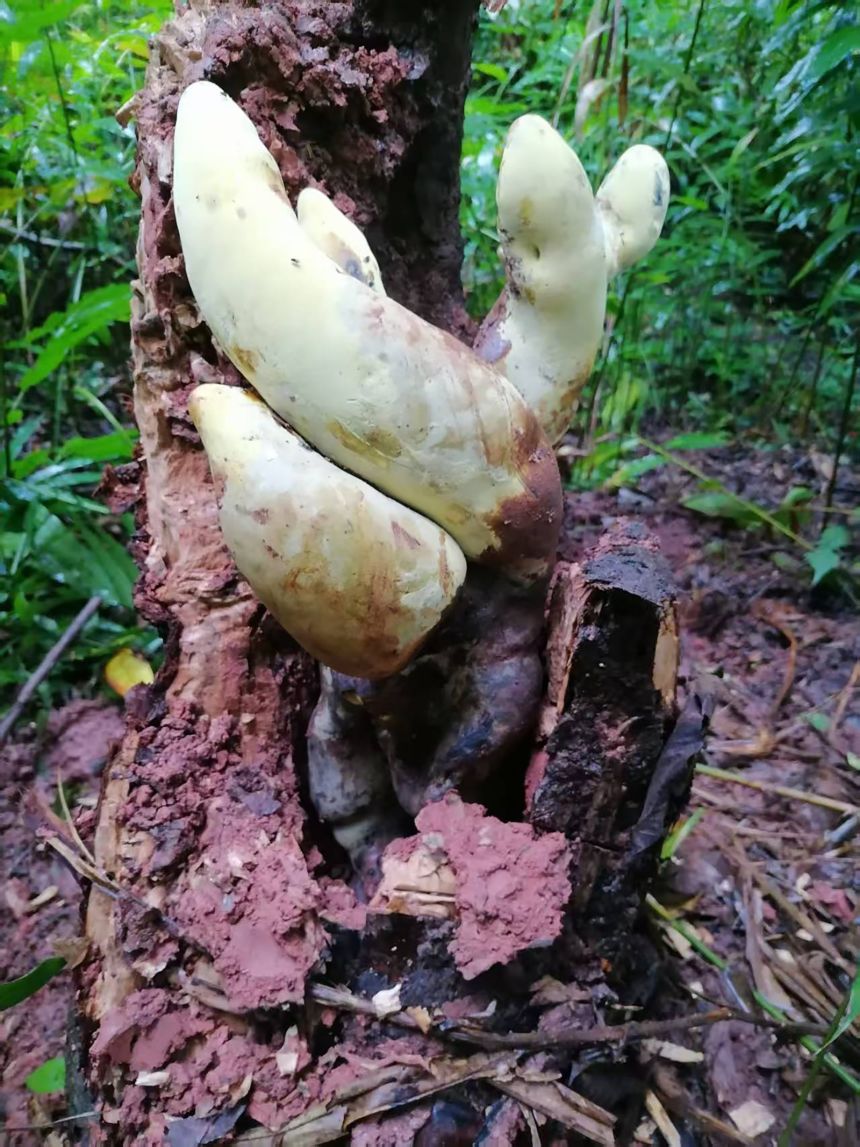
D. rex以其直立、淡黄色的生殖结构(即子实体),被称为子座,在同类真菌中显得格外庞大,高度可达20英寸(50厘米)——约相当于登机行李箱的高度——重量近5磅(2.2公斤)。
D. rex dwarfs its fellow fungi with its upright, pale yellowish reproductive structures, or fruiting bodies, called stromata that can grow to be 20 inches (50 centimeters) tall — about the height of an airplane carry-on suitcase — and weigh nearly 5 pounds (2.2 kilograms).
“听到一种规模壮观的新真菌或蘑菇物种总是很有趣,”未参与这项新研究的斯坦福大学生物学与地球系统科学教授Kabir Peay表示,“这有助于指出地球上那些尚未有机会被科学描述的、真正奇异的真菌生命形式。”科学家们在2024年和2025年进行的真菌多样性调查中,在中国西南部云南省的森林里记录到了D. rex。相关发现于9月28日发表在《真菌生物学前沿》期刊上。
“It’s always interesting to hear about a new kind of fungus or mushroom species that is spectacular in size,” said Kabir Peay, a professor of biology and Earth system science at Stanford University in California, who was not involved in the new research. “It helps point to all of the really exotic forms of fungal life on this planet that haven’t had a chance to be described by science.”Scientists recorded D. rex in forests in southwestern China’s Yunnan province during fungal diversity surveys conducted in 2024 and 2025. The findings were reported September 28 in the journal Frontiers in Fungal Biology.
该地区的农民此前曾在一棵枯树周围见过这种真菌肉质的、手指状的子座簇生。研究共同作者、中国昆明植物研究所副研究员Indunil Senanayake表示,虽然这种巨型真菌未经毒性检测,但一些当地人甚至尝试过食用,并表示没有不良反应。
Farmers in the region had previously seen the fungus’ fleshy fingerlike stromata clustered around a dead tree. While the giant fungus has not been tested for toxins, some locals had even tasted it and reported no ill effects, said study coauthor Indunil Senanayake, an associate professor at the Kunming Institute of Botany in China.
Senanayake在电子邮件中告诉CNN:“然而,没人把它当成重要的事情。”但当一位好奇的当地人将这种奇特真菌的照片发给科学家时,研究人员迅速意识到他们面对的是非同寻常的发现。
“However, no one noticed it as an important thing,” Senanayake told CNN in an email. But when a curious local sent photos of the peculiar fungus to the scientists, the researchers quickly realized they were looking at something special.
这项描述 D. rex 的新研究引起了人们对真菌生物多样性仍有多少有待发现的关注。
The new study describing D. rex draws attention to how much there is yet to discover about biodiversity in fungi.
根据该研究,导致恐龙灭绝的大规模灭绝事件可能为这种巨型真菌的进化和繁衍创造了环境。D. rex 不仅是一个新发现的物种,它还属于一个独特的真菌科。通过基因分析和与其他真菌的比较,研究人员发现,这个名为 Dianjunaceae(典菌科)的新科很可能出现在结束白垩纪(1.45 亿年前至 6600 万年前)的小行星撞击事件约 100 万年后。
The mass extinction that caused the dinosaurs’ demise may have created an environment for the king-size fungus to evolve and thrive, according to the study. Not only was D. rex a newly discovered species — it belonged to a unique family of fungi. Through genetic analysis and comparisons with other fungi, researchers found that the new family, named Dianjunaceae, likelyemergedabout 1 million years after the asteroid impact that ended the Cretaceous Period (145 million to 66 million years ago).
“在此事件期间,光合作用受到抑制,大量枯叶、木材、根系和尸体堆积,”Senanayake 说。在其他生命形式艰难求生之际,以枯死有机物为食的分解者(如真菌)得以利用这场盛宴。
“During this event, photosynthesis was suppressed, and huge quantities of dead leaves, wood, roots, and carcasses accumulated,” Senanayake said. At a time when other forms of life struggled to survive, decomposers such as fungi that consumed dead organic matter could exploit that banquet.
就体型而言,D. rex 远不及霸王龙,但它确实高耸于其他真菌之上。该物种是子囊菌门中已知体型最大的,子囊菌门是真菌中种类最多样的类群,包含约 6.5 万个物种,包括羊肚菌、松露和酵母菌。
In size, D. rex doesn’tnearly measure up to T. rex, but it does tower over other fungi. This speciesis the largest known in the phylum Ascomycota, which is the most diverse group of fungi and contains about 65,000 species, including morels, truffles and yeasts.
Senanayake 说,在发现 D. rex 之前,子囊菌门中已知体型最大的成员是肯尼亚的一种球状褐色真菌,名为 Engleromyces goetzei(戈策恩格勒菌),其直径近 12 英寸(30 厘米),重量约 7 磅(3.2 千克)。所有其他与 D. rex 关系密切的子囊菌(也称为囊菌)的体型范围从微观到仅几英寸高。
Before D. rex’s discovery, the largest known member of Ascomycota was a bulbous brown fungus in Kenya called Engleromyces goetzei, which has a diameter of nearly 12 inches (30 centimeters) and weight of around 7 pounds (3.2 kilograms), Senanayake said. All other ascomycetes, also known as sac fungi, that are close relatives of D. rex range from microscopic to just a few inches tall.
Senanayake 说,科学家们接下来想要回答的一个问题是,为什么 D. rex 与其门内的其他真菌相比体型如此巨大。
One question the scientists want to answer next is why D. rex is so large compared with other fungi in its phylum, Senanayake said.
她解释道:“一般来说,子囊菌不会产生大型子座,因为那是能量的浪费。”
“Generally, ascomycetes do not produce large stromata, as it is an energy waste,” she explained.
担子菌通过主动喷射孢子进行繁殖;在雷氏真菌(D. rex)中,子实体的上部包含数千个微小的释放孢子孔。然而,它栖息地的森林地表被密集的纤维植物材料覆盖,可能会捕获孢子,Senanayake 说。
Sac fungi reproduce by actively expelling their spores; in D. rex, the upper part of the fruiting bodies contains thousands of tiny spore-releasing pores. However, the forest floor of its habitats is densely covered with fibrous plant material that may trap spores, Senanayake said.
雷氏真菌的子实体高高耸立于森林地表,这可能使孢子能够更广泛地散布并提升繁殖成功率,她推测。
D. rex’s fruiting body rises high above the forest floor, which may allow spores to disperse more widely and improve reproductive success, she suggested.
真菌是对地球碳循环至关重要的生物,并且支持许多植物物种的健康和营养。
Fungi are essential organisms that contribute to Earth’s carbon cycle and support the health and nutrition of many plant species.
“了解它们的作用真的很重要,”斯坦福大学的 Peay 说。“了解它们作用的第一步是描述它们,确认它们的存在,然后再进一步探讨它们生态的细节。”截至目前,科学家已描述约15万种真菌,但有估计表明,地球上可能有200万至1300万种真菌。
“It’s really important that we understand what they do,” Stanford’s Peay said. “The first step in understanding what they do is describing them, acknowledging their existence, and then later trying to understand more details about their ecology.”Scientists have described around 150,000 species of fungi to date, but some estimates indicate there are between 2 million and 13 million species on the planet.
“这是一类被极度低估和描述不足的生物群体,”Peay 补充道。
“It’s a vastly underappreciated and underdescribed group of organisms,” Peay added.
在森林栖息地中,真菌往往难以被发现,即使是像雷氏真菌这样体型巨大的标本也是如此。真菌主要由称为菌丝的细丝状结构组成,统称为菌丝体。这些菌丝通常埋在土壤、腐木或植被中,而繁殖部分——子实体——则在“环境条件合适或真菌生命周期结束时”从地面冒出,Peay 解释道。
Fungi can be surprisingly difficult to spot in their forest habitats, even specimens as large as D. rex. A fungus is largely made up of threadlike filaments called hyphae, known collectively as a mycelium. These tendrils typically are buried in soil, decaying wood or vegetation, with the reproductive bits — the stromata — popping above the ground “when the environmental conditions are right, or the fungus comes to the end of its life cycle,” Peay explained.
这些特征使得发现新真菌往往取决于是否恰好出现在合适的地点和时间。否则,“即使是像这样非常惊人的蘑菇也可能未被描述或被忽视,”他在提到雷氏真菌时说。
These features make discovering a new fungus often a matter of being in the right place at the right time. Otherwise, “even really impressive mushrooms like this can go undescribed or unnoticed,” he said, referring to D. rex.
Mindy Weisberger 是一位科学作家和媒体制作人,其作品曾发表于《Live Science》(生活科学)、《科学美国人》及《How It Works》杂志。她是《僵尸虫的崛起:寄生精神控制的惊人科学》(霍普金斯出版社出版)的作者。
Mindy Weisberger is a science writer and media producer whose work has appeared in Live Science, Scientific American and How It Works magazine. She is the author of “Rise of the Zombie Bugs: The Surprising Science of Parasitic Mind-Control” (Hopkins Press).