使用谷歌的产品和服务从根本上说一直都很不稳妥——这样做会让全球最大的广告公司掌握大量诱人的个人数据。谷歌长期以来表示,不会利用 Gmail、云端硬盘和相册等产品中的敏感数据进行广告个性化,但该公司隐私政策的一项变更似乎拆除了这道防火墙。
Using Google's products and services has always been fundamentally precarious—doing so gives the world's largest advertising company a lot of juicy personal data. Google has long said it won't use the sensitive data from products like Gmail, Drive, and Photos for ad personalization, but a change to the company's privacy policy appears to dismantle that firewall.
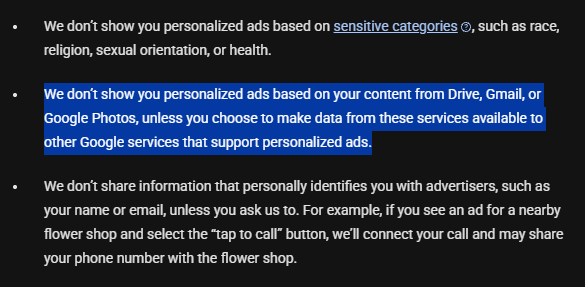
据 Android Authority 发现,谷歌于 10 月 16 日发布了隐私政策更新。广告个性化部分过去包含对某些应用数据的明确限制。文件曾写道:“我们不会根据你来自云端硬盘、Gmail 或相册的内容向你展示个性化广告。”现在,谷歌已将其更新为以下措辞。
On October 16, Google issued an update to its privacy policy, spotted by Android Authority. The ad personalization section used to include a clear limit on data from certain apps. "We don’t show you personalized ads based on your content from Drive, Gmail, or Photos," the document said. Now, Google has updated it with the following language.
关于你的敏感数据何时可能用于广告的更新措辞。 他谷歌服务共享,而谷歌恰好拥有这样一种机制,即“个人智能”。该公司于 2026 年初推出了个人智能,允许用户将多个应用的数据交给谷歌 AI 产品。初衷是利用你现有数据提供的额外上下文来获得更好的 AI 回答,但这也正被证明是一个隐私雷区。
Updated language on when your sensitive data might inform ads. Credit: Google This equivocation opens the door to using data from apps like Gmail and Photos in ads when it's shared with other Google services, and it just so happens Google has a mechanism for doing that, with Personal Intelligence. The company released Personal Intelligence in early 2026, allowing users to hand data from multiple apps to Google AI products. The idea is that the added context from your existing data will lead to better AI answers, but it's also proving to be a privacy minefield.