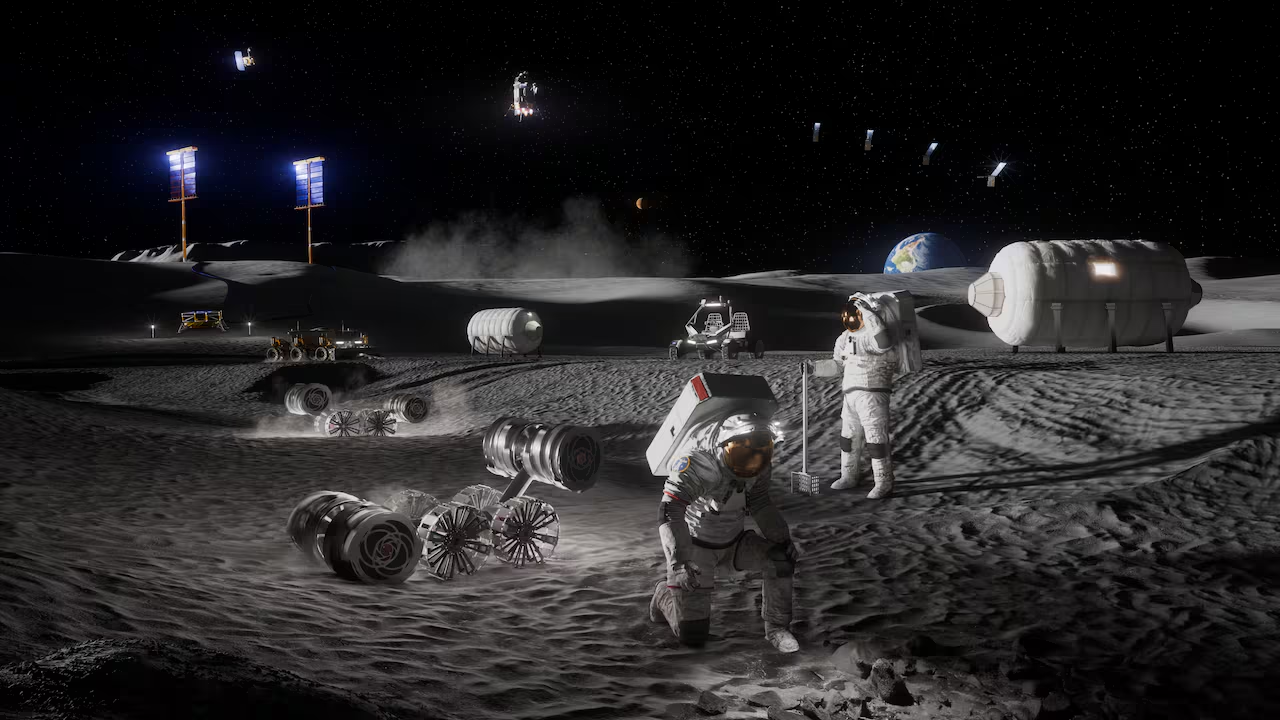
人类长期以来一直梦想着触及并探索太空。大多数科幻作品往往描绘的是尘土飞扬的月球和火星表面的城市。
Humans have long dreamed about reaching out and exploring space. Most science fiction, more often than not, portrays cities on the dusty lunar surface and Mars.
如果你听信埃隆·马斯克和杰夫·贝索斯等某些亿万富翁的话,月球上的城市很快就会到来。
And if you listen to some billionaires like Elon Musk and Jeff Bezos, cities on the moon are coming soon.
事实上,今年2月,SpaceX首席执行官马斯克在社交媒体上发帖称,该公司正将重心从在火星定居上移开——这是马斯克过去十年一直热衷的事情。
In fact, in February, SpaceX CEO Musk posted on social media that the company was shifting its focus away from settling on Mars — something Musk has been passionate about for the past decade.
他写道:“对于不知情的人,SpaceX已经将重心转向在月球上建立一个自我生长的城市,因为我们可能在不到10年的时间里实现这一目标,而火星则需要20多年。”
“For those unaware, SpaceX has already shifted focus to building a self-growing city on the moon, as we can potentially achieve that in less than 10 years, whereas Mars would take 20+ years,” he wrote.
SpaceX的使命保持不变:将我们所知的意识和生命延伸到群星之中。
The mission of SpaceX remains the same: extend consciousness and life as we know it to the stars.
只有当行星每26个月排列成一线时才有可能前往火星(航程6个月),而我们每10天就可以向月球发射一次(航程2天)。这意味着我们可以更快地进行迭代,以完成月球城市而非火星城市。
It is only possible to travel to Mars when the planets align every 26 months (six month trip time), whereas we can launch to the Moon every 10 days (2 day trip time). This means we can iterate much faster to complete a Moon city than a Mars city.
话虽如此,SpaceX也将努力建设火星城市,并在大约5到7年后开始这样做,但首要任务是确保文明的未来,而月球的速度更快。
That said, SpaceX will also strive to build a Mars city and begin doing so in about 5 to 7 years, but the overriding priority is securing the future of civilization and the Moon is faster.
这一声明——以及蓝色起源公司首席执行官贝索斯的声明(贝索斯曾声称到2045年将有“数百万人在太空生活”)——引起了哈佛大学史密森尼天体物理天文台资深天体物理学家马丁·埃尔维斯的兴趣。
elonmusk This statement — and those of Blue Origin CEO Bezos, who has claimed“millions of people” will be living in space by 2045— intrigued Martin Elvis, senior astrophysicist at Harvard University’s Smithsonian Astrophysical Observatory.
他和英国达勒姆大学太空研究中心名誉教授、天体物理学家乔纳森·麦克道威尔决定研究这些数字。
He, along with astrophysicist Jonathan McDowell, honorary professor at the Durham University Space Research Centre in England, decided to take a look at the numbers.
但事实证明,他们的研究结果对月球文明来说并不算好,所以先别急着收拾行李。
But their findings, it turns out, aren't great for a lunar civilization, so don’t start packing just yet.
在这两人发表在《太空技术前沿》杂志上的论文中,他们决定检查维持月球人类生存所需的电力和水。
their paper published in the journal Frontiers in Space Technologies, the pair decided to examine power and water needed to sustain humans on the moon.
在电力方面,他们发现太阳能和核能将足以维持月球表面一百万人的生存。但随后还有水的问题。
When it comes to power, they found that solar and nuclear would be enough to sustain one million people on the lunar surface. But then there's water.
这可能令一些人感到意外,但月球上确实存在水。人们认为,其中大部分蕴藏在永久阴影区(PSR)内,即两极那些永不见阳光的区域。
It may be surprising to some, but there is water on the moon. It’s believed that most of it is contained in permanently shadowed regions (PSR), areas at the poles that never see sunlight.
然而,这项研究发现,月球上的水量不足以维持大规模人类在月表长期生存。
But in this study, they found that there’s not enough on the moon to sustain a large human presence on the lunar surface.
美国国家航空航天局(NASA)分享月球基地计划 5月26日 时长“我们的研究表明,是的,如果你想在未来几百年里在月球上建立一个类似南极科考站那样的基地,没问题。如果你想建一个小镇,那是可行的。但如果你想像最棒的科幻小说那样,让城市覆盖月球表面,那你就得想办法把水运过去,因为月球上目前没有那么多水,”麦克道威尔说。
NASA shares plans for moon base May 26 Duration“Our work shows that, yeah, if you want to have an Antarctic base on the moon for the next few hundred years, no problem. If you want to have a small town, that's doable. If you want to cover the face of the moon with cities, like in the best science fiction, then you have to find a way to get the water there, because it's not there right now,” McDowell said.
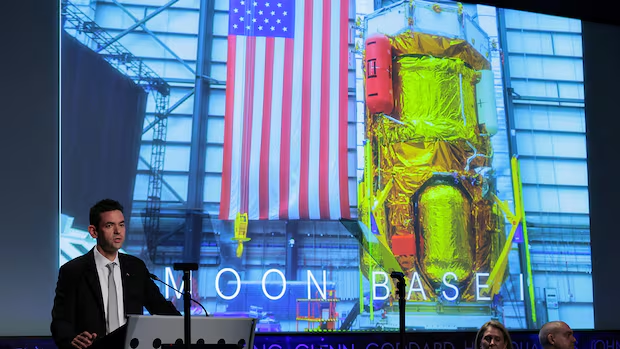
假设月球上大约有10亿吨水,这符合目前的估算,他们发现,一个拥有100万人口的文明仅能在月球上生存约100年。这还得以我们能回收利用98%的水为前提,这正是国际空间站正在做的。“一座小湖”埃尔维斯表示,虽然10亿吨水听起来很多,但必须放在具体背景下看。
Assuming that there is roughly one billion tonnes of water on the moon, which is in line with current estimates, they found that a civilization of one million people would only be able to live on the moon for roughly 100 years. And that’s only if we can recycle 98 per cent of the water, which is what is done on the International Space Station. 'A small lake' Elvis said that while one billion tonnes of water sounds like a lot, you have to put it in perspective.
“如果你有一个巨大的水族馆,大小相当于曼哈顿的中央公园,你可以往里注水,直到自由女神像刚好被淹没,那才是你拥有的水量。所以从某种角度看它很巨大,但……它只是一座小湖。而一座小湖无法长久供应一座大城市。”这并非说人类永远无法在月球生活。他们发现,如果是一个1万人的小镇,则可持续几个世纪。不过,这建立在10亿吨水这一估算准确的前提下。
“If you had a huge aquarium the size of Central Park in Manhattan, you could fill it up to where the Statue of Liberty was just underwater and that's the amount of water you've got. So it's huge in one way, but … it's a small lake. And a small lake is not going to supply a big city for very long.”That’s not to say that humans can’t ever live on the moon. If it were a town of 10,000, they found that would be sustainable for centuries. However, that's assuming that the one billion tonnes of water is an accurate estimate.
“基本可以肯定,10亿吨是高估了。实际量可能只有这个数字的二十分之一到三十分之一,”埃尔维斯说。
"Very likely a billion is way overestimating. It's probably 20 or 30 times too big," Elvis said.
阿耳忒弥斯2号如何为下一阶段太空探索做准备 4月7日 他还表示,我们不太可能回收所有可用的水。相反,实际回收量更可能是现有水量的三分之一到二分之一。
How Artemis II is setting up the next stage of space exploration April 7 He also said that it's unlikely that we'd be able to recover all the water that's available. Instead, it would be more like one-third to half of what is present.
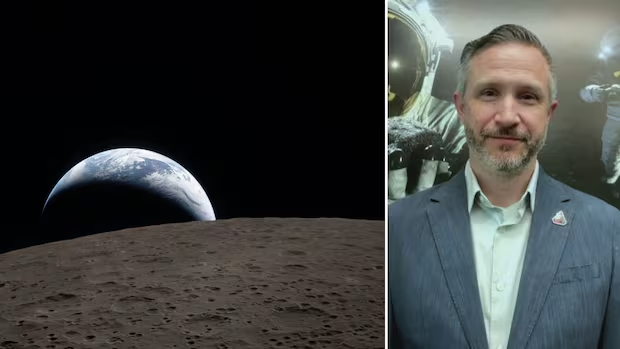
“因此,我最好的猜测是,我们可以相当确定的实际可用水量,是我们以前所说数量的百分之一。所以,原本能用100年的水,现在只能用1年了。”还有一件事:我们不知道这些水是以什么形式存在的。我们需要弄清楚这一点。我们已经去过月球了,为什么还要再去?
"So my best guess is the real amount of water available that we can be fairly confident about is one per cent of what we said before. So instead of 100 years, it's one year." And there's one other thing: We don't know in what form that water exists. And we need to figure that out. We’ve already been to the moon, so why are we going again?
美国宇航局已经将目光投向了月球基地。以下是加拿大如何发挥重要作用的方式安大略省伦敦市西安大略大学行星地质学教授戈登·奥辛斯基表示:“通过卫星探测是一回事,但……这些测量存在不确定性。”
NASA has set its sights on a moon base. Here's how Canada can play an important role "It's one thing to detect it from satellites, but ... there are uncertainties in those measurements," said Gordon Osinski, a professor in planetary geology at Western University in London, Ont.
“我认为水确实存在,但让我们去进行实地验证并加以确认。此外,水以何种形式存在还是更大的未知数……它更像北极地区的永久冻土吗?那里基本上是含有亚毫米级冰晶的土壤,很难将其提取出来?”
"I think it is there, but let's go and ground-truth that and confirm it. And then there's the bigger unknowns of what form it's in…. Is it more like the permafrost up in the Arctic, where it's basically soil with, you know, sub-millimetre size ice crystals, which are hard to get out of?"
虽然这对于人类探索宇宙的计划来说可能听起来是个悲观的消息,但麦克道尔表示,最好还是弄清楚你面对的是什么。
While this may sound like pessimistic news for humanity's plans to explore the cosmos, McDowell said it's best to know what you're dealing with. "The truth is never negative," he said.
他说:“真相绝不是消极的。消极的是去尝试做一件根本行不通的事情。”
"What's negative is to actually go and try and do something that isn't going to work."