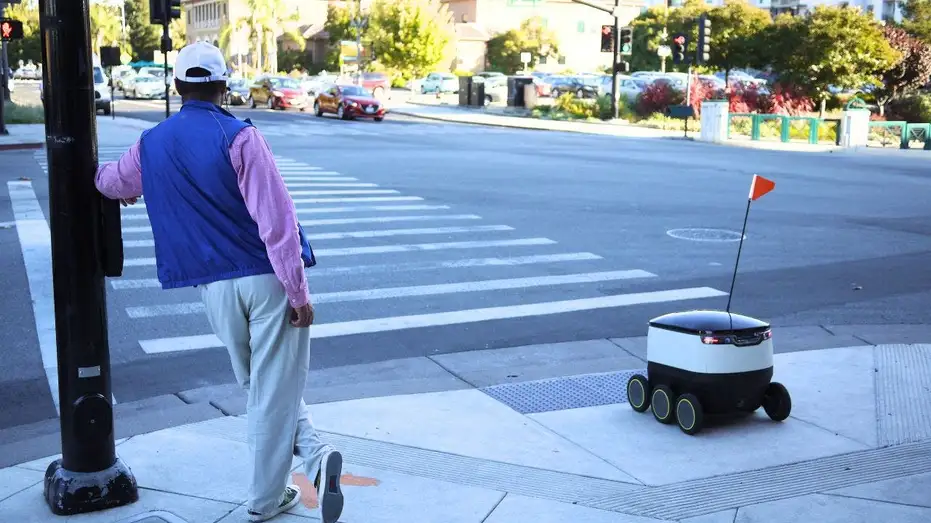
大多数人看到外卖配送机器人在人行道上行驶,只会绕道而行。但费城一名女子决定寸步不让。她直接站在一台 Uber Eats 外卖配送机器人前方,拒绝让其继续前行。警方随后赶到现场,这位 78 岁的退休教授最终被戴上手铐。
Most people see a food delivery robot rolling down the sidewalk and simply walk around it. But one Philadelphia woman decided she wasn't moving. She stood directly in front of an Uber Eats delivery robot, refusing to let it continue. Police eventually arrived, and the 78-year-old retired professor ended up in handcuffs.
她的抗议行动引发了一场更大范围的讨论,关乎机器人取代人类工作,以及这些机器应在多大程度上占用人行道空间。而宾夕法尼亚州法律中的一个令人意外的细节,让整件事变得更加耐人寻味。
Her protest has now sparked a much bigger conversation about robots taking over human jobs and how much space these machines should get on our sidewalks. And there's a surprising detail about Pennsylvania law that makes this whole situation even more interesting.
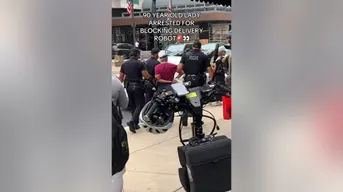
10 月 14 日,退休于宾夕法尼亚大学的教授 Carolyn Marvin 在费城市中心完成流感疫苗接种预约离开时,发现了一台 Uber Eats 外卖配送机器人。她没有选择避让,而是将自己置于阅读终端市场附近费尔伯特街上这台机器的正前方。据报道,警方在接到目击者报告称发生骚乱后赶到现场。警方称,Marvin 多次拒绝遵照指示离开机器人的行驶路径。最终将其逮捕,并开具了扰乱秩序传票。
On Oct. 14, Carolyn Marvin, a retired University of Pennsylvania professor, was leaving a flu shot appointment in Center City Philadelphia when she spotted an Uber Eats delivery robot. Instead of stepping aside, she positioned herself in front of the machine near Reading Terminal Market on Filbert Street. Police reportedly responded after witnesses reported a disturbance. Officers said Marvin repeatedly refused instructions to move out of the robot's path. They eventually arrested her and issued her a disorderly conduct citation.
这次冲突被拍成视频并迅速在网络上引发关注。然而,Marvin 对此并不感到意外。几个月来,她一直刻意阻挡外卖配送机器人,将原本可能只是一次奇怪的人行道遭遇,变成了她个人的公开抗议形式。
The encounter was captured on video and quickly attracted attention online. However, Marvin wasn't surprised by the attention. She had been deliberately blocking delivery robots for months, turning what might look like a strange sidewalk encounter into her own form of public protest.
在接受 PhillyVoice 采访时,Marvin 表示,她认为企业正利用自主机器取代人类外卖骑手。她辩称,自己的行为属于《第一修正案》赋予的抗议权利。Marvin 被带往警局,后获释。她表示计划在法庭上抗辩该传票,并在有机会时继续阻挡外卖配送机器人。她还鼓励其他反对这些机器的人加入她的抗议行动。
In an interview with PhillyVoice, Marvin explained that she believes corporations are using autonomous machines to displace human delivery workers. She argued that her actions fall under her First Amendment right to protest. Marvin was taken to police headquarters and later released. She said she plans to fight the citation in court and continue blocking delivery robots when she has the opportunity. She also encouraged others who oppose the machines to join her protests.
Marvin的不满不仅仅在于机器人共享人行道。她认为机器人对靠送餐谋生的人构成了直接威胁。每一个由机器人完成的订单,都代表着本可能流向人类外卖员的工作机会。这种担忧出现之际,越来越多的外卖公司正在尝试自动化以削减运营成本。
Marvin's frustration goes beyond having robots share the sidewalk. She sees them as a direct threat to people who earn their living delivering food. Every order completed by a robot represents work that potentially could have gone to a human courier. That concern comes as more delivery companies experiment with automation to reduce operating costs.
与人类外卖员不同,机器人不会收取小费,也不会因每单配送获得收入。公司希望自动化最终能降低运营成本,尽管机器仍需维护和监控。
Unlike a human courier, a robot doesn't collect tips or earn money for each delivery. Companies hope automation will eventually reduce operating costs, although the machines still require maintenance and monitoring.
然而,费城的机器人项目是否真正消减了外卖岗位仍不清楚。Uber此前曾表示,其机器人旨在补充而非取代人类外卖员。尽管如此,随着机器人车队扩大,依靠外卖收入维生的人们很容易就会质疑这种安排将如何运作。
However, whether Philadelphia's robot program has actually eliminated delivery jobs remains unclear. Uber has previously said its robots are intended to complement human delivery workers rather than replace them. Still, it's easy to understand why people who depend on delivery income might question how that arrangement will work as fleets expand.
Marvin还把抗议视为与其他行人交流的机会。她说,人们经常停下来询问她为何拦阻机器人。这些对话是她坚持下去的动力之一,甚至在她被捕之后也是如此。
Marvin also sees her protests as an opportunity to engage other pedestrians. She says people regularly stop to ask why she's blocking the machines. Those conversations are part of what motivates her to continue, even after her arrest.
你可能会以为,Marvin被捕意味着送餐机器人在费城人行道上拥有优先通行权。但宾夕法尼亚州法律给出的答案截然不同。
You might assume that Marvin's arrest means delivery robots have the right of way on Philadelphia sidewalks. But Pennsylvania law offers a rather different answer.
该州车辆法典将个人配送设备归类为行人,并通常要求其遵守行人交通规则。然而,机器人必须在行人区域让行或安全绕行行人和骑行者。这是一个重要细节:送餐机器人并不自动拥有优于步行者的优先权。
The state's vehicle code classifies personal delivery devices as pedestrians and generally requires them to follow pedestrian traffic rules. However, the robots must yield the right-of-way or safely navigate around pedestrians and cyclists in pedestrian areas. That's an important detail. A delivery robot does not automatically have priority over someone walking down the sidewalk.
当然,要求机器人让行并不一定赋予人们故意阻挠送货的合法权利。警方称,在警员响应骚乱报警后,马文拒绝了多次要求其离开的指令。她被指控的扰乱秩序罪,并未确立机器人对行人享有优先权,也未解决她的具体抗议行为是否受法律保护。
Of course, requiring robots to yield does not necessarily give people the legal right to deliberately obstruct deliveries. Police say Marvin refused repeated instructions to move after officers responded to a disturbance. Her disorderly conduct charge does not establish that robots have priority over pedestrians or settle whether her particular protest was legally protected.
与此同时,宾夕法尼亚州法律要求运营商在开始送货机器人运营前至少 30 天通知市政当局。市政官员在咨询运营商后,若认定机器人会构成危险,也可禁止机器人在特定区域运行。这留下了一个有趣的问题:城市未来应如何处理行人与商用机器人之间的冲突。
Meanwhile, Pennsylvania law requires operators to notify municipalities at least 30 days before beginning delivery robot operations. Municipal officials can also prohibit the machines in areas where, after consulting the operator, they determine the robots would pose a hazard. That leaves an interesting question about how cities should handle future confrontations between pedestrians and commercial robots.
尽管存在争议,企业仍在持续投资自主送货,因为该技术提供了一些实际优势。Uber Eats 与机器人公司 Avride 合作,运营小型四轮送货机器人,在相对较短的距离内运送食物。这些机器人利用摄像头和传感器在城市街道上导航。据 Avride 介绍,其行驶速度最高可达每小时 5 英里(约 8 公里),可携带最多 55 磅(约 25 公斤)的食物或其他货物。
Despite the controversy, companies continue investing in autonomous delivery because the technology offers some practical advantages. Uber Eats partnered with robotics company Avride to operate small, four-wheeled delivery machines that transport food over relatively short distances. The robots use cameras and sensors to navigate city streets. According to Avride, they travel at speeds of up to 5 mph and can carry up to 55 pounds of food or other goods.
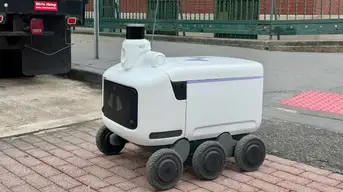
该服务于 2026 年 3 月在费城上线。这些机器人能够完成短途送货,无需再派一辆车进入车流,也无需快递员寻找停车位。对顾客而言,便利显而易见:食物被放置在一个安全隔间内,顾客通过 Uber Eats 应用程序解锁取餐。据报道,在费城,顾客可以选择退出机器人送货。不过,可用性和送货选项取决于具体订单和服务区域。
The service launched in Philadelphia in March 2026. These robots can complete short deliveries without sending another car through traffic or requiring a courier to find parking. For customers, the convenience is obvious. Your food arrives inside a secure compartment that you unlock through the Uber Eats app. In Philadelphia, customers can reportedly opt out of robot delivery. However, availability and delivery options depend on the order and service area.
推广范围还在扩大。10月21日,Avride宣布在费城扩大机器人外卖服务,涉及Wonder的Rittenhouse门店以及Grubhub平台上的更多餐厅。目前,Rittenhouse门店的25个Wonder餐厅概念品牌已提供机器人外卖服务,Grubhub平台上还有9家额外餐厅参与其中。公司未说明此次扩大是否需要在费城人行道上投入更多机器人,还是由现有车队承担额外订单。
And the rollout is expanding. On Oct. 21, Avride announced an expansion of robot delivery in Philadelphia involving Wonder's Rittenhouse location and additional restaurants on the Grubhub platform. Robot delivery is now available from 25 Wonder restaurant concepts at the Rittenhouse location, with nine additional restaurants on Grubhub also participating. The company has not said whether the expansion will require more robots on Philadelphia sidewalks or whether its existing fleet will handle the additional orders.
费城的冲突发生之际,公众对自主机器在公共空间运行的不满情绪日益高涨。9月,我们报道了芝加哥发生的机器人“交通堵塞”,至少十几台Coco外卖机器人聚集在人行道上。该公司将原因归咎于部署失误,并表示已修正问题。
Philadelphia's confrontation comes amid growing frustration with autonomous machines operating in public spaces. In September, we reported on a robot traffic jam in Chicago, where at least a dozen Coco delivery robots clustered along a sidewalk. The company blamed a deployment error and said it corrected the problem.
该事件引发了对行人通行无障碍的担忧,特别是对使用轮椅或助行器的人群。被堵塞的人行道,会给无法轻易绕行马路或挤过机器的人造成严重障碍。
The incident raised concerns about pedestrian accessibility, particularly for people who use wheelchairs or mobility aids. A blocked sidewalk can create a serious obstacle for someone who cannot easily move into the street or squeeze past a machine.
费城也发生过自己的机器人意外。4月,一名女子报称,在15街和Locust街交叉口附近,一台Uber Eats外卖机器人从后方撞上了她。据报道,Li Gordon-Washington受了点擦伤,后来还为难于该向哪个机构投诉。Avride承认,其机器人在完成转弯时与她发生了轻微接触。
Philadelphia has experienced its own robot mishaps. In April, a woman reported that an Uber Eats delivery robot bumped into her from behind near 15th and Locust streets. Li Gordon-Washington reportedly suffered a scratch and later struggled to determine which agency should handle her complaint. Avride acknowledged that its robot made minor contact with her while completing a turn.
这些事件有助于解释为何部分居民耐心尽失。尽管机器人设计初衷是绕行避让行人,但它们仍须应对难以预测的人类行为和拥挤的公共空间。
These incidents help explain why some residents are losing patience. While the machines may be designed to navigate around people, they still have to handle unpredictable human behavior and crowded public spaces.
送餐机器人很快可能会成为你社区里熟悉的一部分,特别是如果你住在繁忙餐馆或购物区附近。你可能会发现自己正与运送别人晚餐的机器共享人行道空间。这引发了关于安全和无障碍通行的实际问题,同时也引发了对就业的担忧。
Delivery robots may soon become a familiar part of your neighborhood, especially if you live near busy restaurants or shopping districts. You could find yourself sharing sidewalk space with machines carrying someone else's dinner. That raises practical questions about safety and accessibility, along with concerns about jobs.
如果你遇到机器人挡住路缘坡道或造成隐患,请保持距离,并向运营商或当地政府部门报告问题。在宾夕法尼亚州,送餐机器人必须展示运营商的身份标识和联系信息。记录地点和机器人的识别编号有助于官方调查投诉。
If you encounter a robot blocking a curb ramp or creating a hazard, keep your distance and report the problem to the operator or local authorities. In Pennsylvania, delivery robots must display operator identification and contact information. Documenting the location and the robot's identification number can help officials investigate a complaint.
在送餐机器人项目扩大之前,居民也有机会参与其中。地方政府可以评估这些机器的运行区域,以及特定路线是否会造成安全隐患。关注这些决策,让社区有机会对人行道的使用方式发表意见。
There's also an opportunity for residents to get involved before delivery robot programs expand. Local governments can evaluate where these machines operate and whether particular routes create safety hazards. Paying attention to those decisions gives communities a chance to have a say in how their sidewalks are used.
对于靠送餐维生的人来说,问题更为深层。他们理应获得明确信息,了解公司计划如何使用自动化技术,以及这对未来工作机会可能意味着什么。
For people whose livelihoods depend on deliveries, the questions run deeper. They deserve clear information about how companies plan to use automation and what that could mean for future work opportunities.
我报道过许多能做令人印象深刻事情的机器人,也能欣赏这些送餐机器背后的技术。但我万万没想到会看到一位78岁的退休教授因拒绝让机器人送别人的午餐而被捕。真正引起我注意的是宾夕法尼亚州的法律要求机器人必须让行给行人。这让这场冲突显得更加发人深省。
I've covered plenty of robots that can do impressive things, and I can appreciate the technology behind these delivery machines. But I never expected to see a 78-year-old retired professor arrested after refusing to let one deliver somebody's lunch. What really caught my attention was Pennsylvania's law requiring robots to yield to pedestrians. That makes the confrontation even more thought-provoking.
我理解警方为何会在公共纠纷升级时出面干预,我当然不会鼓励任何人干扰送货。与此同时,我也理解马文的沮丧。我们正目睹企业推出能够完成人们传统上靠薪水维生的工作的机器,而我们仍然没有明确的答案,说明最终可能会有多少工作岗位消失。
I understand why police would respond when a public dispute escalates, and I certainly wouldn't encourage anyone to interfere with a delivery. At the same time, I understand Marvin's frustration. We're watching companies introduce machines that can perform work people have traditionally been paid to do, and we still don't have clear answers about how many jobs could eventually disappear.
我认为,引入这项技术的企业需要对其对工人的影响保持更高的透明度。当它们想要在公共人行道上运营时,居民理应在如何运营的问题上拥有真正的发言权。我希望这一事件能在另一起冲突以某人被戴上手铐告终之前,推动一场关于这些问题的严肃对话。
I think companies introducing this technology need to be much more transparent about its impact on workers. And when they want to operate on public sidewalks, residents deserve a genuine say in how that happens. I hope this incident encourages a serious conversation about those issues before another confrontation ends with someone in handcuffs.
如果送货机器人让外卖更便捷,但最终导致人类工人失去工作,城市还应允许它们在公共人行道上运营吗?
If delivery robots make food delivery more convenient but eventually cost human workers their jobs, should cities still allow them to operate on public sidewalks?