战斗机通常将主雷达安置在机头雷达罩后方,而传统预警机往往在机身上方的显著结构中搭载大型雷达阵列。
Fighter jets typically house their main radars behind a radome in the nose, while conventional airborne early-warning aircraft often carry large radar arrays in prominent structures above the fuselage.
尽管机翼提供了较大的表面积,但其相对较薄的横截面使得内部留给雷达设备的空间有限。
Although aircraft wings offer a large surface area, their relatively thin cross-sections leave limited internal space for radar equipment.
中国顶尖军用飞机设计师现提出了一种革命性方法,利用飞行机动和无人机编队协同,将大型天线阵列集成到机翼中,以拓展雷达覆盖范围。
Top Chinese military aircraft designers have now proposed a revolutionary method to integrate large antenna arrays into aircraft wings, using flight manoeuvres and coordinated formations of unmanned aircraft to expand radar coverage.
该设计在10月10日在线发表于同行评审的中文期刊《测量与控制技术》的一项研究中阐述,文中将机翼安装雷达作为构建多功能、高性能机载预警系统的新途径。
The design was outlined in a study published online on October 10 in the peer-reviewed Chinese journal Measurement & Control Technology, which presented wing-mounted radar as a new approach to building multifunctional, high-performance airborne early-warning systems.
“机翼安装预警雷达是一种新型任务载荷,旨在满足分布式空战的预警需求,”研究员任云松及其团队写道,并将该概念描述为发展强探测能力系统的“一条新途径”。
“Wing-mounted early-warning radar is a new type of mission payload designed to meet the early-warning needs of distributed air combat,” researcher Ren Yunsong and his team wrote, describing the concept as “a new pathway” to developing systems with strong detection capabilities.
任云松及其团队隶属于中国航空工业集团成都飞机设计研究所,该所研制了中国的歼-20隐形战机,并被国防部确认为双座版歼-20S的设计单位,该型号旨在与无人机协同作战。
Ren and his team are affiliated with AVIC Chengdu Aircraft Design and Research Institute, which developed China’s J-20 stealth fighter and was identified by the country’s defence ministry as the designer of the two-seat J-20S, a variant intended to operate alongside unmanned aircraft.
这一概念建立在分布式空战理念之上,该战略构想最早由美国国防高级研究计划局(Darpa)于2014年提出,旨在探索未来空战。
The concept builds on distributed air combat, a strategic idea first proposed by the US Defence Advanced Research Projects Agency or Darpa in 2014 to explore future air warfare.
研究人员指出,这种方法不能仅依赖使用大型雷达阵列和高功率系统的传统预警机,而需要大量更小型、更低成本的无人机协同工作以提供监视。
The researchers argued that this approach could not rely solely on conventional early-warning aircraft, which use large radar arrays and high-power systems, but would instead require numerous smaller, lower-cost unmanned aircraft to work together to provide surveillance.
这带来了一项技术挑战:如何用相对较小的单个平台实现大规模探测能力。
This creates a technical challenge: achieving large-scale detection capabilities with relatively small individual platforms.
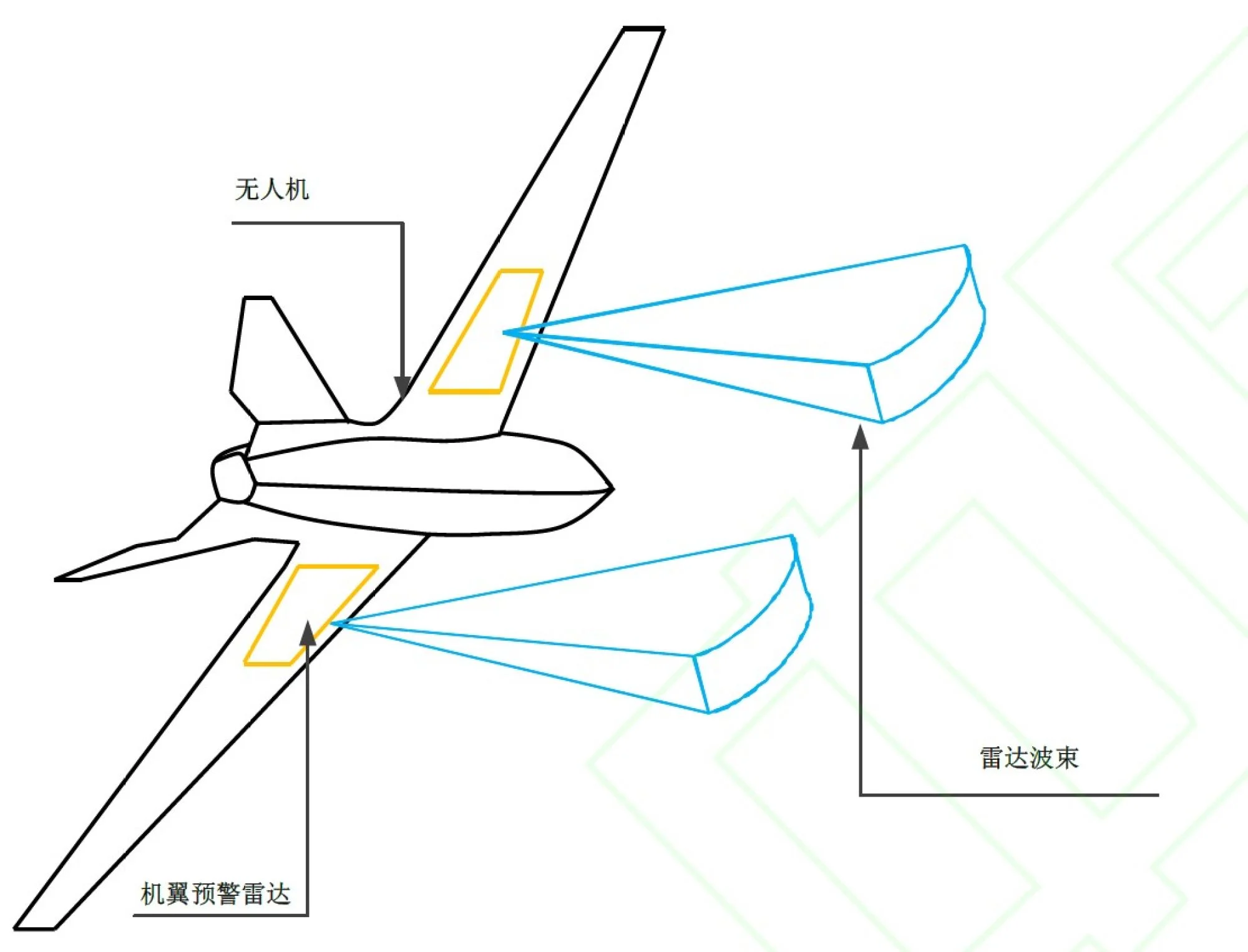
该拟议设计将天线阵列、控制组件及相关系统集成于机翼结构内部,辐射面朝下,防护罩贴合飞机外部轮廓,在不需要大型外置雷达罩的情况下增加了可用天线孔径。为使雷达指向不同扇区,研究人员提出改变飞机的飞行姿态。
The proposed design integrates the antenna array, control components and associated systems within the wing structure, with the radiating surface facing downwards and a protective cover following the aircraft’s outer contours, increasing the available antenna aperture without requiring a large external radar dome. To direct the radar towards different sectors, the researchers propose changing the aircraft’s flight attitude.
在拟议的侧飞模式下,无人机以超过45度的角度侧滚,将机载阵列从朝下位置倾斜至侧向。
In the proposed side-flying mode, an unmanned aircraft rolls at an angle of more than 45 degrees, tilting the wing-mounted array from a downward-facing position towards the side.
任写道:“通过调整无人机的飞行姿态,雷达波束可实现动态控制,拓展预警覆盖空域。”
“By adjusting the drone’s flight attitude, the radar beam can be dynamically controlled, expanding the airspace covered by early warning,” Ren wrote.
该设计旨在支撑分布式机载预警作战,即多架小型无人机分担监视任务,而非依赖单一大型平台。
The design is intended to support distributed airborne early-warning operations, in which multiple smaller unmanned aircraft share surveillance duties rather than relying on a single large platform.
任团队写道:“该研究为机翼预警雷达工程实施提供了可复用、可验证的设计范式,具有广阔的应用前景和推广价值。”
“The research provides a reusable and verifiable design paradigm for the engineering implementation of wing warning radars and has a promising application prospect and promotion value,” Ren’s team wrote.
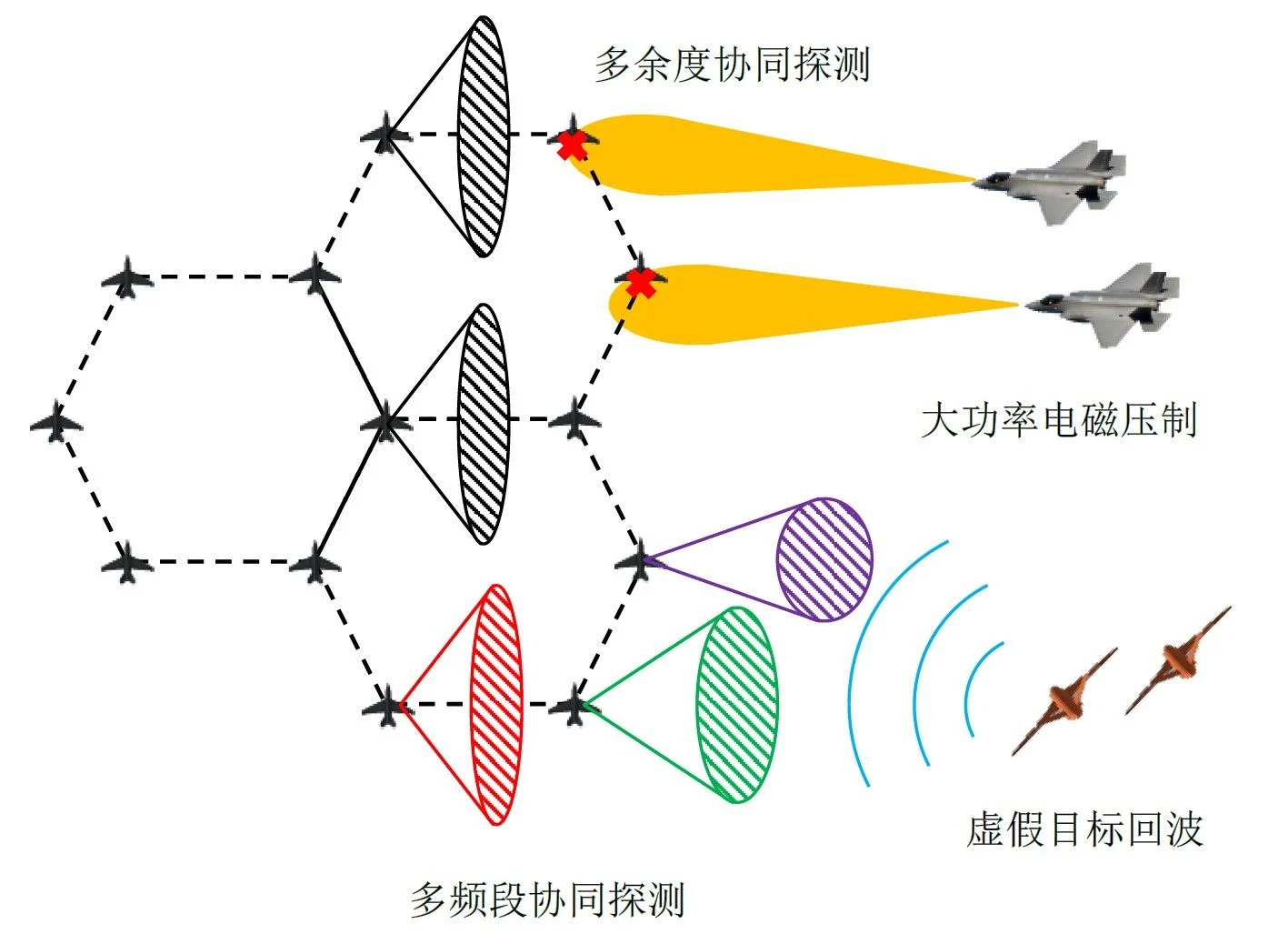
论文提出了四种工作模式,包括全向与多向探测,以及协同作战模式,即飞机提供广域覆盖、聚焦特定目标或协同对抗电子干扰。
The paper proposes four operating modes, including all-direction and multi-direction detection, as well as coordinated operations in which aircraft provide wide-area coverage, concentrate on specific targets or work together to counter electronic interference.
文中称:“多机协同探测是‘小平台、大能力’作战概念的核心支撑技术。”
“Cooperative detection by multiple aircraft is a core enabling technology for the operational concept of ‘small platforms, big capabilities’,” it said.
研究人员表示,该方案无需依赖大型平台,即可提供接近甚至超越传统预警机的预警能力。
The researchers said the approach could provide early-warning capabilities approaching or exceeding those of conventional early-warning aircraft without relying on large platforms.
任表示,该设计将为涉及新一代飞机的分布式空战提供坚实的信息感知基础。
Ren said the design would provide a solid information-sensing foundation for distributed air combat involving next-generation aircraft.
这一概念有可能被考虑用于未来的中国战斗机,包括歼-20以及被称为歼-36或歼-50的下一代设计,尽管该论文并未证实所提出的雷达正在为这些飞机中的任何一种进行开发。
The concept could potentially be considered for future Chinese combat aircraft, including the J-20 and next-generation designs known as the J-36 or J-50, although the paper did not confirm that the proposed radar was being developed for any of these aircraft.
研究人员还为机翼安装系统确定了四个核心作战场景:起飞、飞行姿态控制、目标探测与预警,以及地面测试与维护。
The researchers also identified four core operational scenarios for the wing-mounted system: take-off, flight-attitude control, target detection and early warning, and ground testing and maintenance.
他们的设计框架描绘了雷达、飞机系统、地面站、指挥中心和操作员之间的相互作用,以指导未来的系统集成。
Their design framework maps interactions among the radar, aircraft systems, ground stations, command centres and operators to guide future system integration.
团队写道:“该过程将作战场景分析与工作模式设计相联系,进而延伸至系统设计,进一步推进了机翼安装雷达的工程应用。”
“The process links operational-scenario analysis to operating-mode design and then to system design, further advancing the engineering application of wing-mounted radar,” the team wrote.