悲观情绪笼罩中国股市,随着投资者面对经济现实——疲软到足以侵蚀企业利润,却又不至于触发强有力的新刺激政策——这轮不断加深的抛售似乎没有尽头。
Pessimism has gripped Chinese stocks, with no end in sight for a deepening selloff as investors confront the realities of an economy that’s weak enough to erode corporate profits but not to trigger forceful new stimulus.
彭博汇编的数据显示,全球第二大股市自5月见顶以来已蒸发3.5万亿元市值。跌势上周加剧,将在岸基准沪深300指数推入熊市,并令香港一科技板块指数逼近抹去北京两年前推出全面增长支持组合政策以来的全部涨幅。
The world’s second-largest equities market has lost $3.5 trillion in value from a peak in May, data compiled by Bloomberg show. The rout intensified last week, pushing the onshore benchmark CSI 300 Index into a bear market and a technology sector gauge in Hong Kong toward erasing all its gains since Beijing’s sweeping growth support package two years ago.
投资者悲观情绪的核心,在于一个令人不安的认知:持久的消费低迷和企业间“逐底竞争”心态,正对从银行到电动车制造商再到AI模型开发商等各行业盈利造成更沉重打击。进一步令前景蒙上阴影的是,市场越发认为中国领导人并不急于重启一个虽在放缓但速度尚在可容忍范围内的经济。
At the heart of investor gloom is an unsettling realization that a protracted consumption slump and the race-to-the-bottom mentality among businesses is taking a heavier toll on earnings across industries from banks to electric car makers and AI model developers. Further darkening the outlook is the growing perception that Chinese leaders are in no rush to jump-start an economy that is slowing but at a tolerable speed.
“断言最坏时期已过为时过早,”贝伦贝格银行多资产策略与研究主管乌尔里希·乌尔班表示。“最大担忧依然是盈利能力:中国在生产和出口上的优势,并未持续转化为更强的国内需求、定价权和企业盈利。” 第三季度财报季开局令人失望,电池巨头宁德时代出现利润不及预期,这既是需求疲软、也是竞争激烈的缩影。
“It is too early to conclude that the worst is over,” said Ulrich Urbahn, head of multi-asset strategy and research at Berenberg. “The biggest concern remains profitability: China’s strength in production and exports is not translating consistently into stronger domestic demand, pricing power and corporate earnings.”The third-quarter reporting season got off a disappointing start, with battery giant Contemporary Amperex Technology Co. Ltd., or CATL, suffering a profit miss that was symptomatic of both weak demand and fierce competition.
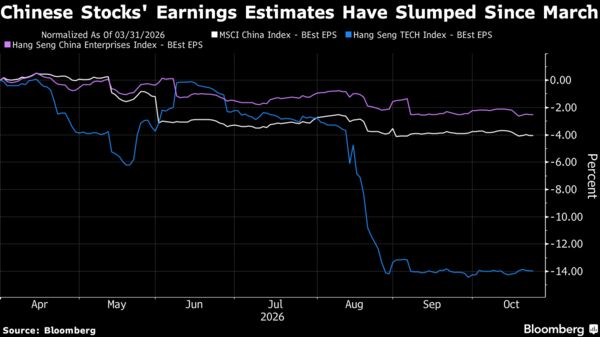
彭博汇编的数据显示,自3月底以来,MSCI中国指数成分股2026年盈利预测共识已下调逾4%。以陷入电商价格战的中国互联网企业为主的恒生科技指数,同期盈利预测暴跌逾13%。
The consensus 2026 earnings forecasts for the MSCI China Index members has declined by over 4% since the end of March, according to data compiled by Bloomberg. The Hang Seng Tech Index, dominated by Chinese Internet firms mired in e-commerce price wars, has seen profit projections plunge more than 13% during the period.
即使在预期已被下调的情况下,已发布业绩的 MSCI 中国指数成分股仍平均偏离市场共识预测 9%,根据彭博社的计算,这将是两年来第二大的季度业绩“爆冷”。
Yet even against the lowered expectations, the MSCI China’s constituents that have released results have missed consensus forecasts by an average of 9%, set for the second worst quarterly miss in two years, according to Bloomberg calculations.
其中,AI 基础设施建设者中国移动有限公司 1 月至 9 月净利润同比暴跌 8%,主要受成本压力影响;主要材料企业赣锋锂业集团股份有限公司也因价格下跌而未达预期。
Among them, AI infrastructure builder China Mobile Ltd.’s January-September net profit tumbled 8% on year amid cost pressures, while major materials firm Ganfeng Lithium Group Co. also missed estimates on falling prices.
Bold Wealth Partners 首席投资官 Jason Lemire 表示:“宁德时代是当前局势的最佳缩影:一家极具创新能力、业绩斐然的优秀企业,却沦为残酷竞争和利润挤压的牺牲品。中国鼓励竞争,且竞争普遍惨烈,不利于股东利益。” 业绩压力使得企业,尤其是正处于激烈竞争中、需为昂贵的 AI 基础设施建设筹资的中国互联网巨头,日益陷入资金短缺。这迫使其中一些公司转向股权市场融资,例如阿里巴巴集团控股有限公司 100 亿美元的后续股票发行,进一步稀释了股票价值。
“CATL is the best poster child of what’s going on: great innovative company that’s doing great things but a victim of cut-throat competition and margin squeeze,” said Jason Lemire, chief investment officer at Bold Wealth Partners. “Competition is encouraged and generally brutal in China, not shareholder friendly.”The earnings pressure has left companies, particularly China’s Internet behemoths that are in a tense race to fund costly AI infrastructure build-outs, increasingly out of cash. That has forced some of them to tap the equities market to raise funds, such as Alibaba Group Holding Ltd.’s $10 billion follow-on stock sale, which further diluted share value.
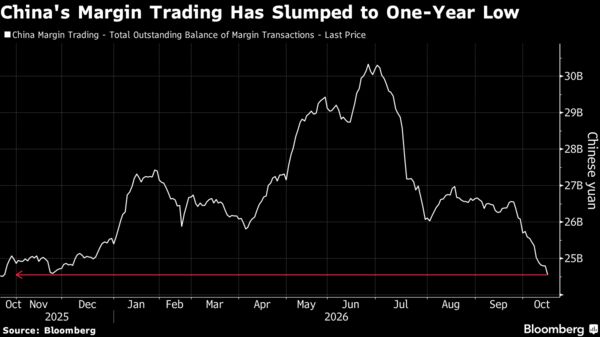
住友三井 DS 资产管理高级投资组合经理 Stanley Tang 表示:“我永远会优先考虑日本、韩国和台湾企业,因为它们的盈利更好。如果问我中国能做什么,很难想出任何办法——即使进一步实现技术本地化,也可能无法提振股价。” 投资者信心减弱也体现在其他指标上。中国境内股市成交额徘徊在去年 7 月以来的最低水平附近,而融资融券余额——即借入资金进行的交易——降至一年来的最低点。
“I’d always weigh Japan, Korea and Taiwanese firms over China because they have better earnings,” said Stanley Tang, senior portfolio manager at Sumitomo Mitsui DS Asset Management. “If you ask me what China can do, hard to think of any - even further localization of tech may not help to boost share prices.”Weakening investor confidence is also showing up via other measures. Turnover in China’s onshore stock market is hovering near the lowest level since July last year, while the outstanding amount of margin trades — bets funded by borrowed cash — fell to the least in a year.
可以肯定的是,低迷的市场行情已促使当局调动被称为“国家队”的国家资金,以防止股价失控下跌。
To be sure, the slumping market has already prompted authorities to mobilize state funds known as the national team to prevent stock prices from spiraling out of control.
与此同时,近期的暴跌也让中国股市对部分投资者更具吸引力。桥水基金中国分公司便表示,已对本地股票转为“审慎乐观”,称第三季度的跌幅主要由流动性因素驱动,而估值并不高。该公司还认为,政策有利于长期资本形成,鉴于债券收益率低迷,更多资金可能流入股市。
Meanwhile, the recent rout has boosted the appeal of Chinese equities to some investors. Bridgewater Associates’ China arm, for one, said it has turned “prudently optimistic” on local stocks, saying the declines in the third quarter were largely driven by liquidity while valuations aren’t high. It also argued that policy favors long-term capital formation and more money may flow into equities given low bond yields.
尽管如此,质疑声依然普遍,认为“国家队”的救市举措可能只是暂时的修补,鉴于决策者不愿采取大规模刺激措施来加速经济增长,市场的长期前景依然黯淡。
Still, skepticism abounds that while the national team’s rescue efforts may be a temporary fix, the market’s long-term prospect remains dim given policymakers’ reluctance to adopt big-bang stimulus measures to accelerate economic growth.
中国第三季度国内生产总值同比增长4.5%,使前三季度的增速重回政府全年4.5%至5%左右的年度目标区间。这种达标表现让当局有更多理由坚持“滴灌式”的增长支持,而不必妥协财政纪律,或进一步压低本已处于历史低位的借贷成本。
China’s third-quarter gross domestic product grew 4.5% from a year ago, nudging expansion in the first nine months back into the government’s annual goal of 4.5%-5%. That target-meeting performance has given authorities more reason to stick to a drip-feed style of growth support, without compromising fiscal discipline or further reducing historically low borrowing costs.
“决策者对经济增长的性质感到满意,”法国巴黎银行亚太区现货股票研究主管威廉·布拉顿表示。“因此,无论是因为他们有意保留政策空间,还是出于理念上不相信大规模刺激,他们都没有紧迫感动用财政手段来大力促进消费。”
“Policymakers are comfortable with the nature of economic growth,” said William Bratton, head of cash equity research for Asia Pacific at BNP Paribas. “As a result, either because they’re consciously keeping it in reserve or because philosophically they don’t believe in it, there’s no urgency to use fiscal measures to promote large scale consumption.”