有超过1400名罗姆人曾在捷克斯洛伐克参与抗击德国纳粹占领。布拉格的一场新展览展示了这些游击队员和士兵的故事,他们的命运几十年来几乎未曾受到任何关注。
More than 1,400 Roma fought against the German Nazi occupation in Czechoslovakia. A new exhibition in Prague showcases the stories of partisans and soldiers whose fates barely received any attention for decades.
自二战结束以来,罗姆人抵抗战士的角色在很大程度上鲜为人知。对于捷克和斯洛伐克的50多万罗姆人来说,2026年10月15日标志着一个重要的里程碑。
Since the end of WWII, the role of Roma resistance fighters was largely unknown For more than half a million Roma Czechia Slovakia October 15, 2026, marks an important milestone.
当天,一个关于捷克历史上一个大体被遗忘的篇章的展览在布拉格的罗姆民族复兴博物馆开幕。该展览探讨了1938年至1945年纳粹德国占领和拆解捷克斯洛伐克期间,捷克和斯洛伐克罗姆人抵抗战士的角色。
That day, an exhibition on a largely forgotten chapter of Czech history opened at the Museum of the Romani National Revival in Prague. The exhibit explores the role of Czech and Slovak Romani resistance fighters during the Nazi German occupation and the dismantling of Czechoslovakia from 1938 to 1945.
直到现在,捷克和斯洛伐克的罗姆人在第二次世界大战历史中几乎完全以针对罗姆人和辛提人的大屠杀受害者身份出现。在所谓的波希米亚和摩拉维亚保护国,纳粹德国在二战期间谋杀了大约90%的捷克罗姆人。
Until now, Czech and Slovak Roma appeared in the history of World War II almost exclusively as victims of the Holocaust against Roma and Sinti. In the so-called Protectorate of Bohemia and Moravia, Nazi Germany murdered approximately 90% of the Czech Roma during World War II.
然而,人们不太了解的是,大量捷克和斯洛伐克罗姆人曾作为抵抗组织中的游击队员、捷克斯洛伐克地下军(或称“保卫祖国”组织ON)的士兵,与德国占领者进行了战斗。
However, what is less well known is that a large number of Czech and Slovak Roma fought against the German occupiers as partisans in resistance groups and as soldiers in the Czechoslovak Underground Army, or Defense of the Nation, ON.
展览组织者希望人们带着孩子和孙辈来看展,以表明罗姆人和辛提人有他们自己的英雄,罗姆人也有英雄。因此,罗姆民族运动博物馆的这场展览标志着二战期间罗姆人被看待方式的一个转折点。博物馆馆长埃米尔·斯库卡(Emil Scuka)——一位律师、前检察官兼捷克最著名的罗姆人活动家之一——至少抱有这样的希望。
The organizers of the exhibition hope that people will bring their children and grandchildren to show that Roma and Sinti have their own heroes Roma have heroes, too The exhibition at the Museum of the Roma National Movement therefore marks a turning point in how the Roma are viewed during World War II At least that is the hope of museum director Emil Scuka, a lawyer, former prosecutor and one of the best-known Czech Roma activists.
斯库卡在向出席展览开幕式的数百名与会者(其中大多数是来自捷克和斯洛伐克的罗姆人)发表讲话时表示:“我们不仅是受害者,我们也是英雄。”他指出:“许多人,甚至包括罗姆人自己,都不知道我们罗姆人曾抗击过纳粹主义。”在他看来,“组织并举办这场展览,是我这一代人对这些罗姆人英雄欠下的债,而今天我们正在偿还这笔债务。”
"We were not only victims; we were also heroes," Scuka said in his speech to several hundred attendees at the exhibition opening, most of whom were Roma from Czechia and Slovakia. "Many people, not even among the Roma themselves, are aware that we Roma fought against Nazism," he noted. In his view, "organizing and opening the exhibition was something my generation owed to these Roma heroes and today we are repaying that debt."
斯库卡向在场的人呼吁:“把你们的孩子和孙辈带到这里来,让他们亲眼看看并意识到,罗姆人也有英雄!”他还指出,几十年来,这个话题在捷克和斯洛伐克的历史著作中被彻底边缘化,因此罗姆人决定自己记录他们战争英雄的命运。
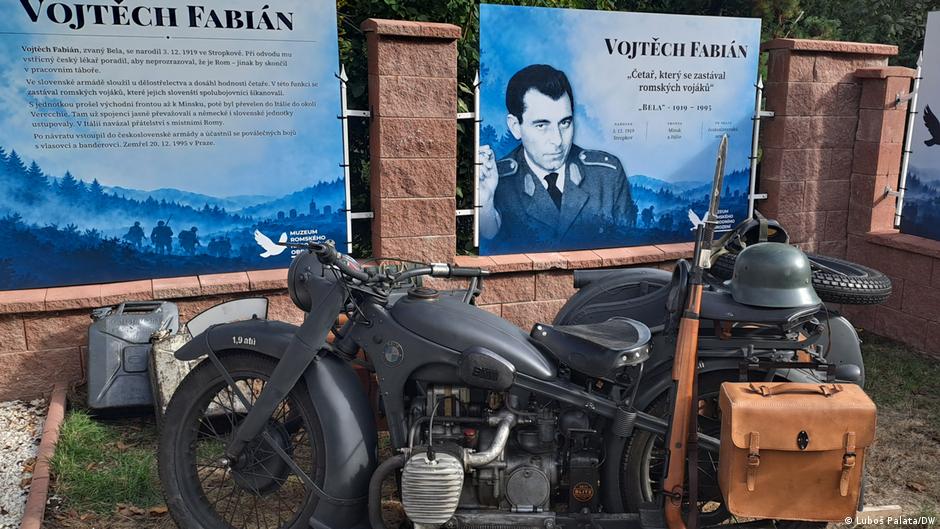
该展览详细呈现了100位最杰出的罗姆人游击队员以及来自捷克地下军和抗击纳粹抵抗组织的罗姆人士兵的生平故事。
Scuka called on those present: "Bring your children and grandchildren here so they can see for themselves and realize that the Roma have heroes too!" He also pointed out that this topic had been completely marginalized in Czech and Slovak historical writing for decades and that the Roma had therefore decided on their own to document the fates of their war heroes.
展览策展人拉多斯拉夫·斯库卡(Radoslav Scuka)在开幕式上表示:“我们在档案馆里找到了1,400多名罗姆人战士。从中我们挑选了100个最有趣的故事用于这次展览。”
The exhibition presents the detailed life stories of 100 of the most significant Roma partisans and Roma soldiers from the Czech underground army and resistance groups who fought against the Nazis.
隐形的英雄——辛提人和罗姆人抗击纳粹。观看此视频,以及关于罗姆人抵抗战士的突破性研究。在这些人物中,有一位是美国情报机构战略情报局(OSS)的军官安东·法库纳(Anton Facuna),他于1944年10月执行秘密任务被空投到斯洛伐克。斯洛伐克曾在1939年至1945年间成为希特勒的傀儡国。
"We found over 1,400 Romani fighters in the archives. From among them, we selected the 100 most interesting stories for this exhibition," said exhibition curator Radoslav Scuka at the opening. Unseen heroes — Sinti and Roma resist Nazis To view this video , and Groundbreaking research on Roma resistance fighters Among these figures is Anton Facuna, a sergeant in the American intelligence agency Office of Strategic Services (OSS), who was flown to Slovakia in October 1944 on a secret mission. Slovakia had been a puppet state of Hitler from 1939 to 1945.
另一位是被称为“维索奇纳的黑色游击队员”的约瑟夫·谢里内克(Josef Serinek),他设法从位于莱蒂的纳粹罗姆人集中营逃脱,随后在波希米亚-摩拉维亚高地创建并指挥了大型恰帕耶夫-切尔尼(Capajev-Cerny)游击队。
Another is Josef Serinek, known by the nickname "Black Partisan from Vysocina," who managed to escape from the Nazi concentration camp for Roma in Lety and subsequently founded and commanded the large Capajev-Cerny partisan unit in the Bohemian-Moravian Highlands.
2022年,捷克总统米洛什·泽曼追授他英雄主义勋章。在生命接近尾声时,谢里内克与历史学家扬·捷萨尔(Jan Tesar)分享了自己的回忆,后者后来写下了三卷本书籍《捷克吉普赛狂想曲》(Ceska cikanska rapsodie)。
In 2022, Czech President Milos Zeman posthumously awarded him the Medal for Heroism. Toward the end of his life, Serinek shared his memories with historian Jan Tesar, who later wrote the three-volume book "Ceska cikanska rapsodie", which translates to Czech Gypsy Rhapsody.
除了捷萨尔的书之外,罗姆人抗击纳粹主义的历史至今仍未得到捷克和斯洛伐克历史学家的研究。布拉格军事历史研究所的历史学家普罗科普·托梅克(Prokop Tomek)对《德国之声》表示:“据我所知,没有任何学术历史著作探讨罗姆人抗击纳粹主义的历史。”
Except for Tesar's book, the history of Roma resistance against Nazism has not been researched by Czech and Slovak historians to this day. "I am not aware of any scholarly historical work that deals with Roma resistance against Nazism," Prokop Tomek, a historian at the Military History Institute in Prague told DW.
托梅克说:“作为抵抗组织成员或在外国军队中参与抗击纳粹的1,400名罗姆人这一数字,在我看来并不夸张,且与捷克斯洛伐克罗姆人人口的比例相符。”他补充说,“关于战时罗姆人抗击纳粹主义的展览无疑是具有突破性的。”抵抗战士安东·法库纳的生活是展出的约100个例子之一。对暴露罗姆人身份的恐惧时至今日,捷克和斯洛伐克的许多罗姆人仍未公开承认其族裔身份。
"The number of 1,400 Roma who took part in the fight against Nazism as members of the resistance or in the foreign army does not strike me as an exaggeration and corresponds to the proportion of the Roma population in Czechoslovakia," Tomek said, adding that the "exhibition on the Roma resistance against Nazism during the war is undoubtedly groundbreaking." The life of resistance fighter Anton Facuna is one of around 100 examples on display Fears of revealing one's Roma identity To this day, many Roma in Czechia and Slovakia do not publicly acknowledge their ethnic identity. This is partly due to experiences with the Holocaust during the Nazi era that have been passed down through generations.
这部分是因为代代相传的纳粹时期大屠杀经历。捷克历史学家和政治家继续就保护国捷克当局在多大程度上参与灭绝捷克罗姆人展开辩论。
Czech historians and politicians continue to debate the extent to which the Czech authorities of the Protectorate were complicit in the extermination of the Czech Roma.
然而,有一点是确定的:自1927年以来捷克斯洛伐克法律明文规定的所有罗姆人警察登记,为德国纳粹灭绝罗姆人提供了便利。
However, one thing is certain: the police registration of all Roma, which had been enshrined in law in Czechoslovakia since 1927, facilitated the extermination of the Roma by the German Nazis.
根据捷克政府的估计,目前该国大约生活着25万名罗姆人。然而,在2021年的人口普查中,仅有2.1万人认同自己是罗姆人。
According to estimates by the Czech government, approximately 250,000 Roma live in the country today. In the 2021 census, however, only 21,000 people identified as Roma.
在人口1,000万的捷克的所有族群中,罗姆人就数量而言是三大少数族裔之一。然而,他们在社会上处于最不利地位,几乎没有政治代表权,因此在捷克政治中几乎不见踪影。在二战中遭受迫害的罗姆人和辛提人仍在为争取承认而战
Of all ethnic groups in Czechia, which has a population of 10 million, the Roma are among the three largest ethnic minorities in terms of numbers. However, they are the most socially disadvantaged, have very little political representation, and are therefore scarcely present in Czech politics. Roma, Sinti persecuted in WWII still fight for recognition