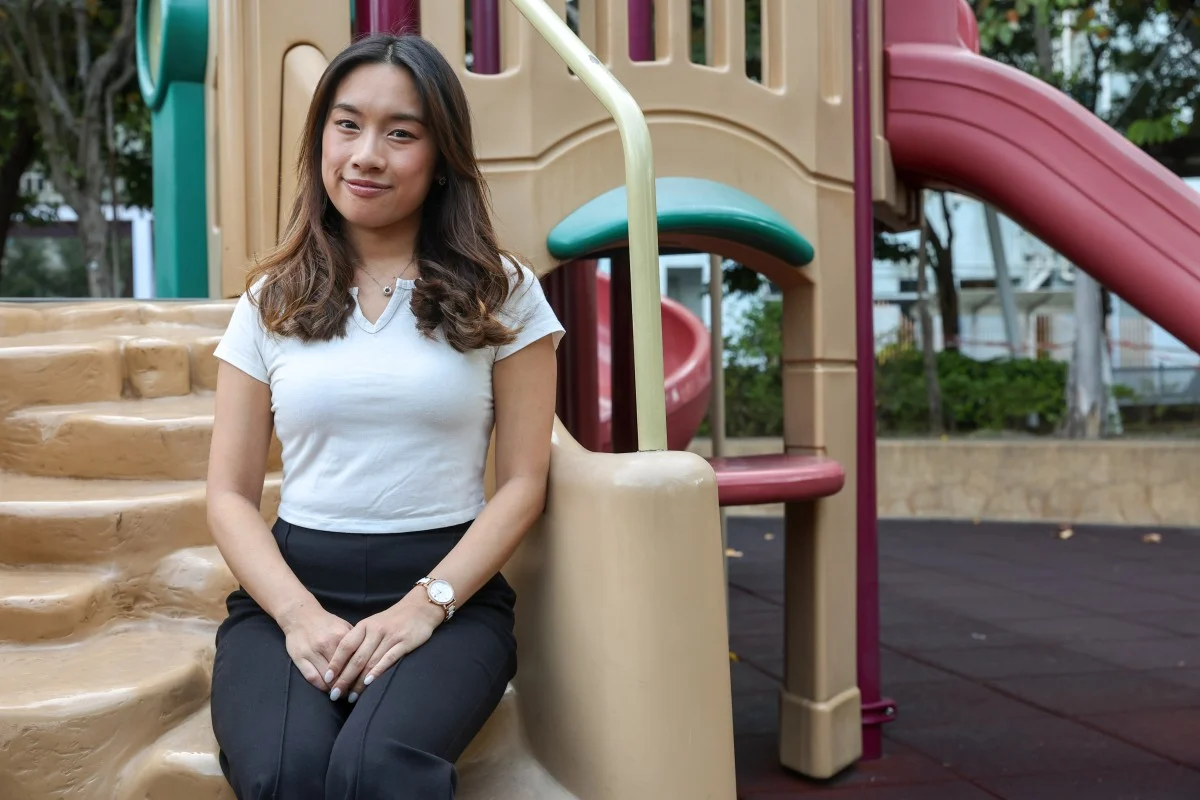
它始于奥黛丽·关(Audrey Kwan)颈部的一个类似痘痘的肿块。一个月内,它已肿胀至乒乓球大小。
It began with a pimple-like lump on Audrey Kwan’s neck. Within a month, it had swollen to the size of a table tennis ball.
但在香港,她当时只有20岁,经过血液检查、活检和CT扫描后,才在六年前被诊断为二期淋巴瘤。
But it took blood tests, a biopsy and CAT scans before the Hongkonger, then aged 20, was diagnosed with stage two lymphoma six years ago.
关回忆说,她在公立医院等待活检结果的日子里,肿瘤不断增大,疼痛剧烈,最终被紧急送入急诊科。她说,只有在那时,结果才被加急处理,第二天送达。
Kwan recalled waiting days for her biopsy results at a public hospital, until the growing tumour caused such severe pain that she was rushed to the emergency department. Only then, she said, were the results expedited, arriving the following day.
“我和家人真的很害怕,因为我们根本不知道发生了什么。检测结果和各种其他程序都需要时间,”她说。
“My family and I were really terrified as we had no idea what was going on. The test results and various other procedures all took time,” she said.
“最后,我不禁想:如果我们早点发现,是否就不会发展到二期?会不会是一期?”现年26岁、已康复的关表示,她相信更快、更简便且更经济的癌症检测方式,能够让患者摆脱部分不确定性和痛苦。
“In the end, I couldn’t help but wonder: if we had found out earlier, would it not have progressed to stage two? Could it have been stage one instead?”Now 26 and recovered, Kwan said she believed faster, easier and more affordable ways to detect cancer could spare patients some of that uncertainty and distress.
然而,在一两年后,香港患者或许可以接受一种筛查检测,能够在三至四小时内检测出癌症,费用仅为几千港元。
In one or two years, however, Hong Kong patients may be able to take a screening test that detects cancer within three to four hours – for a few thousand Hong Kong dollars.
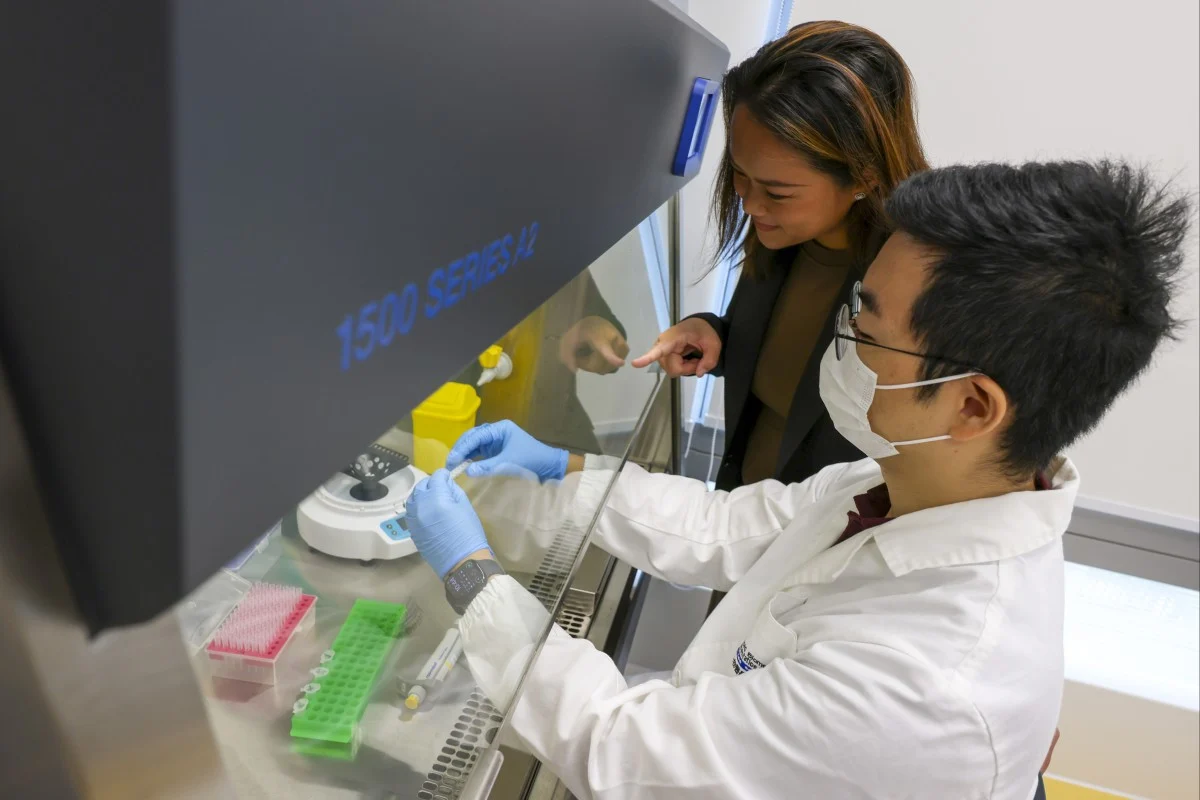
位于城市科学园的先进生物医学仪器中心正进行其新研发的第四代聚合酶链式反应(PCR)系统的临床试验,该系统据称可检测癌症、传染病和先天缺陷。
The Advanced Biomedical Instrumentation Centre at the city’s Science Park is conducting clinical trials of its newly developed fourth-generation polymerase chain reaction (PCR) system, which it says can detect cancer, infectious diseases and birth defects.
该中心商务发展主管陈思洁(Sigrid Chen Sijie)表示,这一系统可以为部分现有诊断工具提供更快且更经济的替代方案。
Sigrid Chen Sijie, the centre’s head of business development, said the system could offer a faster and more affordable alternative to some existing diagnostic tools.
她说,CT扫描可能漏检极小的肿瘤,而基因组测序则可能耗时超过一周,费用高达数万港元。
While CT scans might miss very small tumours, genomic sequencing could take more than a week and cost tens of thousands of Hong Kong dollars, she said.
“PCR是一项众所周知的技术,一直是分子、DNA或基因检测的先锋,已渗透到我们的日常生活中。我们的第四代PCR主要聚焦于提升其可读取的信息量,”陈说。
“PCR is a well-known technology that has always been a pioneer in molecular, DNA or genetic testing, appearing in our daily lives. Our fourth-generation PCR primarily focuses on increasing the amount of information it can read,” Chen said.
“我们正在将一种快速、经济且最重要的是易于获取的技术,应用于更复杂的医疗决策过程中,”她说。
“We are applying a fast, affordable and, most importantly, accessible technology to a more complex medical decision-making process,” she said.
“在更小的池塘里‘捕鱼’” PCR是一种实验室技术,用于快速生成特定DNA片段的数百万至数十亿个拷贝,使其能够被更详细地研究。
‘Fishing’ in smaller ponds PCR is a laboratory technique used to rapidly produce millions to billions of copies of a specific segment of DNA, allowing it to be studied in greater detail.
该过程利用称为引物的短合成DNA片段来选择基因组的一个片段进行扩增,然后通过多轮DNA合成来复制它。
The process uses short synthetic DNA fragments called primers to select a segment of the genome for amplification, and then uses multiple rounds of DNA synthesis to copy it.
这种方法在冠状病毒大流行期间广为人知,当时它被采用为检测体内病毒最有效的方法之一。
The method became widely known during the coronavirus pandemic, when it was adopted as one of the most effective ways to detect the virus in the body.
但传统PCR在速度、灵敏度和多重检测——即一次检测多个靶标的能力——方面存在局限。
But conventional PCR has limitations in speed, sensitivity and multiplexing – the ability to test for multiple targets at once.
该新系统的开发项目于2021年在该中心启动,由香港大学牵头,与哈佛大学合作。
The project to develop the new system began in 2021 at the centre, led by the University of Hong Kong in partnership with Harvard University.
陈表示,该中心成立的目的是将前沿科学研究转化为实用工具,帮助医生更好地评估患者健康状况。
Chen said the centre was established to turn cutting-edge scientific research into practical tools that could help doctors better assess patients’ health.
“PCR是一种广泛采用的技术,大家都知道其关键局限在于多重检测能力。这自然成为了该领域研究人员一直在努力攻克的主要挑战之一,”她说。
“PCR is a widely adopted technology, and everyone knows its key limitation lies in its multiplexity. That naturally has become one of the major challenges researchers in the field have been trying to tackle,” she said.
新系统将分子条形码技术与液滴微流控技术相结合,可在单次检测中同时检测数百万个靶点位置。
The new system combines molecular bar coding with droplet microfluidics to simultaneously detect millions of target locations in a single test.
微流控技术是指在狭窄通道中移动微量流体的技术。与传统方法相比,它能实现更快的反应和分析,以及更高的精度。
Microfluidics is the technology of moving tiny amounts of fluid through narrow channels. Compared with conventional methods, it can enable faster reactions and analysis, as well as greater precision.
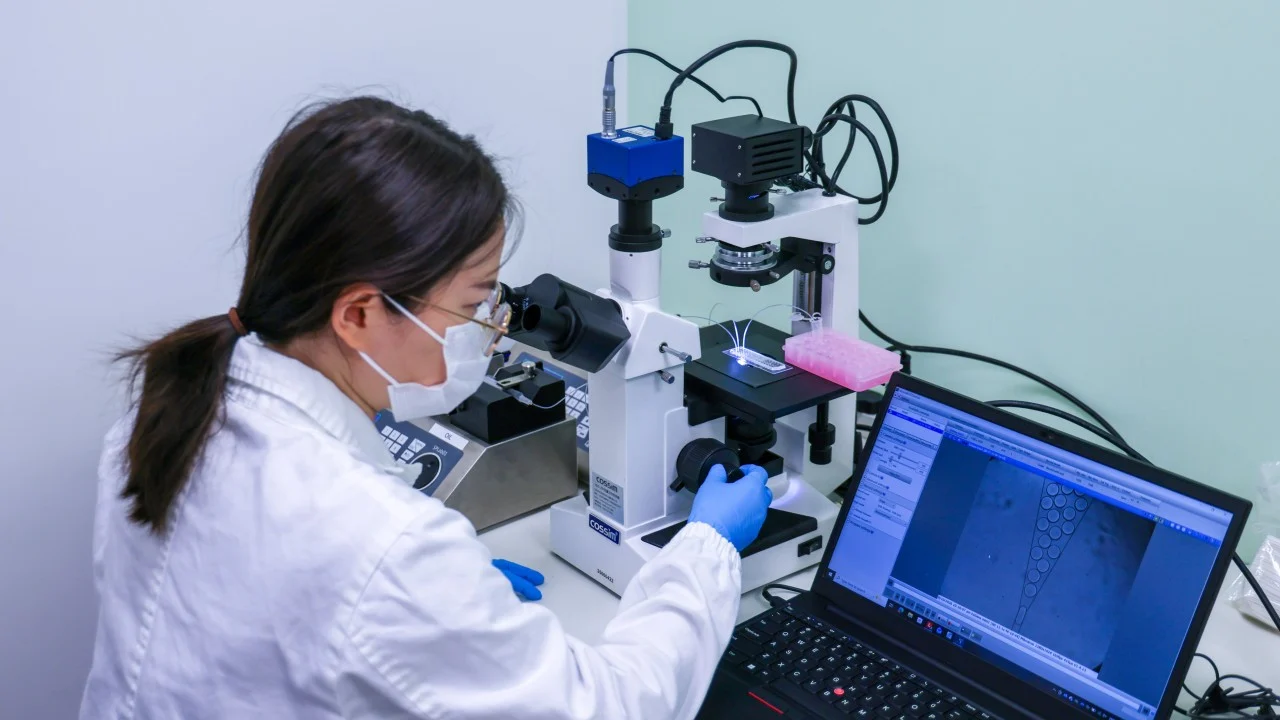
陈表示,在新程序中,首先从患者的血液样本中提取DNA信息,然后利用微流控芯片将其分散成数百万个液滴。
In the new procedure, DNA information was first extracted from a patient’s blood sample before being dispersed into millions of droplets using microfluidic chips, Chen said.
“我们将来自大样本池的样本分散到单个微滴中,并对每个微滴进行拍摄。这使我们能够近距离观察每个微滴内部的过程,从而实现更精准的靶标检测并提高灵敏度,”她说。陈女士用钓鱼打比方解释这一概念。
“We disperse samples from a large pool into individual droplets and photograph each one. This allows us to observe the processes within every droplet close up, enabling more precise target detection and enhancing sensitivity,” she said. Chen used a fishing analogy to explain the concept.
“假设我知道池塘里有10条鱼,我想把这10条鱼全抓上来。如果池塘很大,可能要花五六天也抓不到这10条鱼,”她说。“但如果我把它分成一杯杯水,你就能很容易看出哪一杯里有鱼。”她补充说,这种提高的灵敏度对于在早期检测癌症等疾病至关重要。
“Suppose I know there are 10 fish in a pool and I want to catch all 10 of them. If the pool is huge, it might take five or six days without catching those 10 fish,” she said. “However, if I divide it into individual cups of water, you can easily see which cup contains a fish.”The heightened sensitivity, she added, was crucial to detecting diseases such as cancer at an early stage.
与时间赛跑 陈女士表示,该检测可在采血后三至四小时内出具报告。预计费用亲民,从几百元到几千港元不等。
A race against time The test could produce a report within three to four hours of a blood sample being taken, Chen said. It is expected to be affordable, costing from a few hundred to several thousand Hong Kong dollars.
她说,更快的结果能帮助医生更快做出治疗决定——这对危重患者可能至关重要。
Faster results, she said, could help doctors make treatment decisions more quickly – a difference that could be critical for seriously ill patients.
“以败血症为例,我们需要这种仪器的主要原因是其时间效率和可控性,”她说。“治疗每延迟一小时,死亡风险就会增加8%。”败血症是一种危及生命的疾病,机体对感染的反应会损伤自身组织和器官,目前的诊断往往依赖血液培养——一种在实验室鉴别血液中细菌、真菌或其他微生物的检测。
“Taking sepsis as an example, the main reason our instrument is needed is its time efficiency and control,” she said. “For every hour treatment is delayed, the risk of death increases by 8 per cent.”Current diagnosis of sepsis, a life-threatening condition in which the body’s response to an infection damages its own tissues and organs, often relies on a blood culture – a laboratory test that identifies bacteria, fungi or other micro-organisms in the bloodstream.
“因为我身边的亲人其实经历过败血症,我亲身知道,等待血液培养结果对一个家庭来说有多么煎熬,”陈女士说。
“Because someone in my close family actually experienced sepsis, I know first-hand how agonising it is for a family to wait for blood culture results,” Chen said.
“血液培养是指从患者身上抽血,放在适合细菌生长的环境中培养。大约两三天后,细菌培养出来后,再进行药敏试验,以确定哪些抗生素有效。”
“Blood culture means taking blood from the patient and incubating it in an environment suitable for bacterial growth. After about two to three days, once the bacteria have been cultured, a drug test is then conducted to determine which antibiotics work.
“但患者可能等不了几天才能拿到结果。”这种新型PCR系统主要针对三类疾病:癌症、传染病和出生缺陷。陈女士表示,未来还会增加更多疾病类型。
“But the patient may not be able to wait several days for a result.”The new PCR system mainly targets three categories of diseases: cancers, infectious diseases and birth defects. Chen said more types of illness would be added later.
从原型到患者 一个可投入使用的原型机于去年2月完成。该仪器目前正在香港、中国内地、美国、新加坡和泰国等地进行临床试验。
From prototype to patient A ready-to-use prototype was completed in February last year. The instrument is undergoing clinical trials in Hong Kong, as well as in mainland China, the United States, Singapore and Thailand, among other places.
陈女士解释说:“因为我们实际处理的是基因信息,不同族群之间存在细微差异。”
“As we are actually dealing with genetic information, there are slight variations across different ethnicities,” Chen explained.
她承认,构建技术只是挑战的一部分。中心还必须汇聚来自微流控、力学、电子学和生物学等截然不同领域的专家,以及擅长将实验室研究转化为可上市产品的人才。
She acknowledged that building the technology was only part of the challenge. The centre also had to bring together specialists from fields as varied as microfluidics, mechanics, electronics and biology, along with people experienced in turning laboratory research into market-ready products.
她说:“现在的挑战是如何让医生尽快认可这一实用工具,通过一系列评估测试,并确保患者能尽早从中受益。”
“The challenge now is how to get doctors to endorse this useful tool as quickly as possible, pass a series of evaluation tests and ensure patients can benefit from it at the earliest opportunity,” she said.
为建立这种信心,中心将与临床合作伙伴合作,在更大体量的样本上运行该系统,以展示其潜力。
To build that confidence, the centre would work with its clinical partners and run the system on a larger volume of samples to demonstrate its potential.
陈女士表示,最终目标是将该技术融入医疗体系和日常诊疗决策中。
The ultimate goal, Chen said, was to integrate the technology into the medical system and everyday treatment decisions.
她预计,这种检测方法将在一到两年内在实验室环境下可供患者使用,随后再推广至医院。
She expected the testing method to be available to patients in laboratory settings within one to two years, before being introduced in hospitals.
她说:“香港肯定会成为我们的首个试点地点,但我们相信这项技术的商业价值不会局限于香港,我们将进一步将其推广至全球。”
“Hong Kong will definitely be our first pilot location, but we believe the commercial value of this technology will not be limited to Hong Kong, and we will further extend it to the rest of the world,” she said.
将科研成果转化为医疗方案 该中心在政府“创新香港健康”计划下成立,设址科学园,旨在弥合学术研究与医疗服务之间的鸿沟,将生物医学创新转化为临床应用。
Turning research into remedies Established under the government’s Health@InnoHK initiative and based at the Science Park, the centre aims to bridge the gap between academic research and healthcare by turning biomedical innovations into clinical applications.
陈女士表示,近年来,在政府支持下,香港的创新科技领域不断发展,因为该市致力于确立其作为国际健康医疗创新枢纽的地位。
Chen said Hong Kong’s innovation and technology sector had grown in recent years, buoyed by government support as the city sought to establish itself as an international hub for health and medical innovation.
“我自己也是STEM(科学、技术、工程和数学)背景毕业,记得我毕业时的高年级同学没有那么幸运,”她说。
“I graduated with a STEM background myself, and I remember that my senior schoolmates were not as fortunate when they graduated,” she said.
“当时,如果他们想留在该领域,只有两条路:攻读博士成为教授,或者进入公司向医院推销产品。”陈女士补充道,现在随着更多初创企业涌现,研究人员有了将创新理念转化为实体产品的新途径。
“Back then, if they wanted to stay in the field, there were only two paths: pursue a PhD and become a professor or join a company and sell products to hospitals.”Now, with more start-ups emerging, there was a new route for researchers to turn innovative ideas into real products, Chen added.
“我们看到,在过去几年中心的发展过程中,我们吸引了大量海外人才来港合作,将本地科研成果转化为我们日常生活中可见的实体产品,”她说。
“We have seen that, throughout our centre’s development over the past few years, we have attracted much overseas talent to Hong Kong to collaborate on turning local scientific research into real-world products we see in our daily lives,” she said.
为进一步发展该领域并扶持初创企业,陈女士呼吁政府在连接企业与医生方面发挥更大作用,以便企业更好地了解临床需求,并相应改进技术。
To further develop the sector and support budding start-ups, Chen called on the government to play a bigger role in connecting firms with doctors, so that companies could better understand clinical needs and refine their technologies accordingly.
“我们相信我们的平台蕴藏无限潜力,”她说。“这包括水污染和食品安全等领域,这些领域需要解读多层次信息,而我们的技术正是所需。”
“We believe our platform holds infinite potential,” she said. “This includes areas such as water pollution and food safety, where reading multiple layers of information is essential and our technology is needed.”