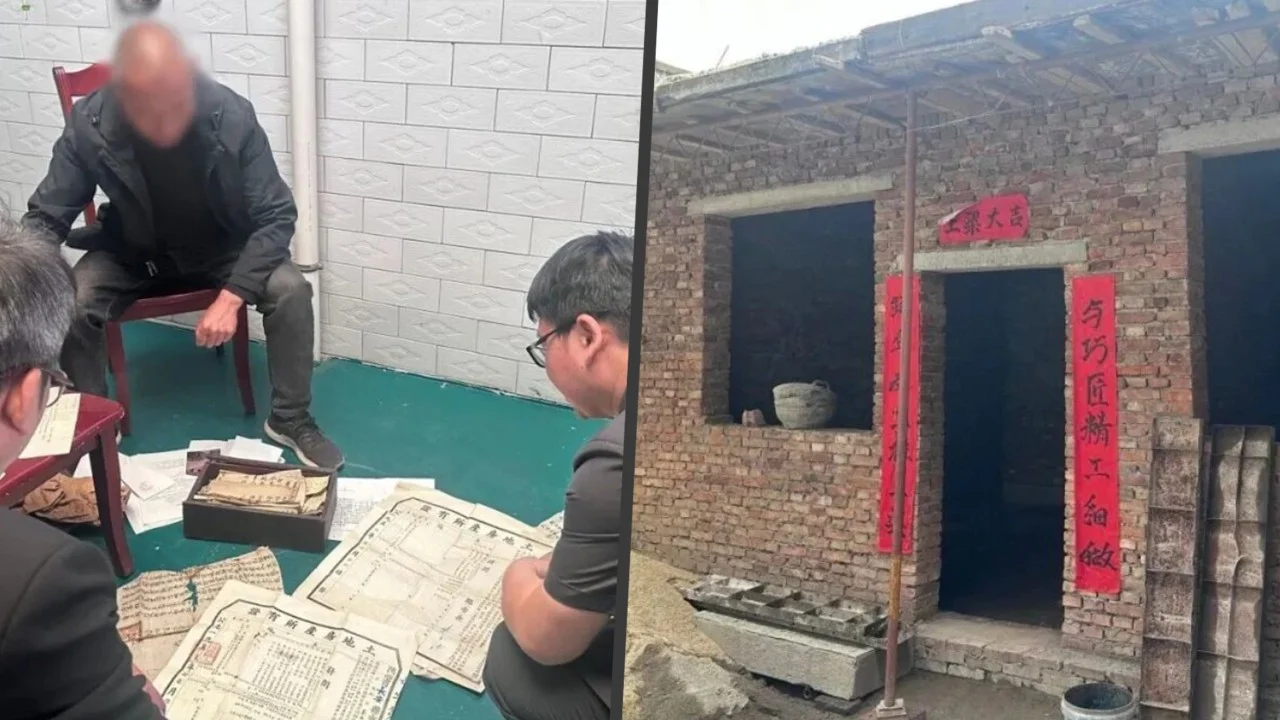
中国一家法院近日审理了一起邻里土地纠纷,双方为同一问题争执已长达两个世纪、跨越多代人,令社交媒体用户惊叹不已。
A Chinese court recently heard a land dispute between neighbours who have been fighting over the same issue for two centuries and across multiple generations, stunning social media users.
中国西北部陕西省西安市雁塔区法院近日审理了一起杜、张两姓邻里家庭之间的土地界限纠纷。过去二十年里,双方邻里多次因界限问题发生争执。
The court in Yanta district, Xian, in northwestern China’s Shaanxi province, recently presided over a case concerning a land boundary between two neighbouring families, surnamed Du and Zhang. For the past two decades, the neighbours have repeatedly disputed the boundary.
杜家试图翻修厨房并加高墙壁时,张家以采光和排水为由多次提出异议,由此引发频繁的口角和肢体冲突。警方和村委会曾数十次尝试调解,但僵局始终未能化解。
When the Dus tried to renovate their kitchen and raise a wall, the Zhangs repeatedly objected, citing concerns about light and drainage. The disagreement led to frequent verbal and physical clashes. The police and the village committee tried to mediate dozens of times, but the deadlock remained unresolved.
在一次调解会上,张家拿出的一份证据让所有人震惊:一份可追溯至清朝(1644年—1912年)乾隆皇帝在位第46年(1781年)的土地契约。
During one mediation session, the Zhangs presented a piece of evidence that astonished everyone: a land deed dating back to the 46th year of the Qianlong Emperor’s reign (1735–1796), during the Qing dynasty (1644–1912).
这张发黄、破损的纸页上,保存完好的手写墨迹依然清晰可辨。张家称,这是两家确定宅基地界限的协议,以院内一棵柿子树为界标。张家还认为,该协议应由后世子孙共同遵守。当局由此意识到,这场邻里纠纷已延续两百余年。
On the yellowed, torn page, the well-preserved handwritten ink was still clearly legible. Zhang said it was an agreement between the families that set the boundary between their homes, marked by a persimmon tree in the courtyard. The Zhangs also believed the agreement should be honoured by future generations. The authorities then realised that the neighbours’ dispute had been going on for more than 200 years.
过去两个世纪里,两家先后几代人曾多次因界限问题发生冲突,其中包括1949年中华人民共和国成立后不久的一次。但法院并未仅凭这份1781年的契约来裁定两家界限。
Over the past two centuries, successive generations of the families had repeatedly clashed over the boundary, including once shortly after the People’s Republic of China was founded in 1949. But the court did not determine the boundary between the two households solely on the basis of the 1781 deed.
相反,法院引用了另一份清代文献中的一段诗句:政治家、学者张英在一封家书中劝诫家族在土地纠纷中退让。
Instead, it drew on a verse from another Qing dynasty document: a letter from politician and scholar Zhang Ying, who urged his family to yield in a land dispute with a neighbour.
信中,张英写道:“千里寄书只为墙,让他三尺又何妨?长城万里今犹在,不见当年秦始皇。”据故事记载,张家读信后深受感动,主动将墙后退三尺。邻居见状,也跟着将墙后退三尺。
In the letter, Zhang wrote: “A letter from afar just for a wall, why not give up three feet? The Great Wall still stands today, but Qin Shi Huang is nowhere to be seen.”According to the story, Zhang’s family was moved by the letter and voluntarily moved their wall back three feet. Their neighbour followed suit, also moving their wall back by three feet.
两堵墙由此形成了一条六尺宽的巷子,如今已成为中国中部安徽省桐城市的一处旅游景点。
The two walls then formed a six-foot-wide lane, which is now a tourist attraction in Tongcheng, in central China’s Anhui province.
有关部门还多次对两家住宅进行测量,以制定令双方都满意的翻修方案。最终,杜家顺利完成了厨房翻修,张家也平静地接受了结果。“爱情撑不过二百年,官司能打二百年,”一位网友评论道。
The authorities also took repeated measurements at the homes to develop a renovation plan that would satisfy both families. Eventually, the Dus successfully renovated their kitchen, and the Zhangs accepted the outcome peacefully. “Love cannot last for 200 years, but lawsuits can,” one online observer remarked.
“他们占的这块地肯定风水极好,让他们历经沧桑仍有钱有力气打官司,”另一人调侃道。
“The land they occupy must have very good , allowing them to survive all the vicissitudes and still have the money and energy to fight,” another quipped.